- Shaft
- Molds&Tools
- Hydraulics And Pump
- Hair transplant needle
- Hydraulics And Pump
- Precision CNC Shaft Machining Manufacturer for High Performance Applications
- Energy Industry CNC Machining Parts Supplier
- Aerospace CNC Machining Parts Manufacturer
- Aerospace CNC Machining Parts Manufacturer
- Automotive & EV CNC Machining Parts Supplier for OEM and Tier 1
- Medical CNC Machining Parts Supplier for Precision Medical Devices
Sourcing Aerospace CNC Parts: What Tier 1 Suppliers Look For

Sourcing Aerospace CNC Parts: What Tier 1 Suppliers Look For
Executive Summary
For Tier 1 aerospace suppliers, sourcing CNC-machined components is not a conventional purchasing exercise. A machined bracket, actuator housing, structural fitting, valve body, shaft, or engine-adjacent component can affect aircraft safety, assembly throughput, maintenance intervals, and program economics. The supplier selected must therefore demonstrate more than the ability to machine a print. Tier 1 organizations evaluate whether a manufacturing partner can consistently convert demanding engineering requirements into traceable, repeatable, inspection-ready parts at the required production cadence.
The most capable aerospace CNC suppliers combine engineering discipline, process control, material expertise, quality documentation, capacity planning, and transparent communication. They understand that aerospace procurement teams are managing risk across a long program lifecycle. A component may need prototype support today, low-rate initial production next year, and stable serial production with controlled revisions for many years afterward. The right supplier supports this lifecycle without compromising dimensional integrity, material traceability, or delivery performance.
Dixin Technology, operating through IndustryApex CNC, supports global OEMs and Tier 1 suppliers requiring precision-machined components and integrated supply-chain coordination. When assessing a potential aerospace CNC partner, buyers should focus on five connected areas: technical capability, quality and traceability, manufacturability support, supply-chain resilience, and scalable commercial execution. These criteria determine whether a supplier can become a dependable program partner rather than a short-term machine shop.
Technical Deep Dive
Aerospace CNC machining begins with a precise interpretation of the engineering definition. Tier 1 suppliers expect a machining partner to review drawings, models, geometric dimensioning and tolerancing requirements, critical-to-quality characteristics, surface-finish specifications, and material callouts before production begins. Ambiguities should be identified early through a formal technical query process. Assumptions made at the machine often become expensive nonconformances later in inspection or assembly.
Complex aerospace parts commonly require 3-axis, 4-axis, or 5-axis machining because features may be located on multiple faces, at compound angles, or within deep cavities. Five-axis capability is especially valuable for reducing setups on structural components and complex titanium parts. Fewer setups can improve positional accuracy, reduce handling damage, shorten lead time, and create a more stable process. However, machine count alone is not enough. Tier 1 buyers examine fixture design, toolpath strategy, in-process verification, tool-life management, and the manufacturer’s ability to control distortion in difficult materials.
Titanium alloys, aluminum aerospace grades, stainless steels, nickel-based superalloys, and high-strength steels all introduce distinct manufacturing risks. Titanium can generate heat at the cutting interface and demands carefully managed feeds, speeds, coolant delivery, workholding, and cutter selection. Thin-wall aluminum structures can move after material removal, requiring balanced machining sequences and robust fixturing. Hard alloys may require specialized tooling and a controlled approach to burr removal. A credible supplier explains how its process choices protect dimensions, surface integrity, and consistency rather than simply confirming that the material can be machined.
Inspection is another central evaluation area. Tier 1 suppliers generally expect first article inspection planning, calibrated measurement equipment, documented inspection results, and a clear path for handling nonconforming product. Depending on the part, measurement may involve coordinate measuring machines, gauges, optical systems, surface-finish testing, thread verification, and material certification review. Critical dimensions should be controlled through documented inspection plans, with measurement methods appropriate to the stated tolerance and feature geometry.
Traceability must remain intact from incoming raw material through final shipment. This includes material certificates, lot segregation, process records, revision control, inspection reports, and packaging identification. Aerospace sourcing teams look for evidence that a supplier can prevent a material lot, drawing revision, or inspection record from becoming disconnected from the finished part. Effective traceability supports containment, corrective action, customer audits, and downstream regulatory obligations.
Tier 1 procurement decisions also weigh manufacturability engineering. A supplier that provides practical design-for-manufacturing feedback can reduce avoidable cost and lead-time pressure before release. Examples include identifying unnecessarily restrictive tolerances, recommending datum schemes that improve inspection access, proposing suitable stock forms, reducing nonfunctional deep-pocket features, or combining operations where part geometry permits. This feedback must respect the design authority held by the customer. The objective is not to alter the part without approval, but to expose manufacturing implications early enough for informed engineering decisions.
Finally, technical readiness includes controlled change management. Aerospace programs cannot tolerate undocumented substitutions in material, tooling strategy, finishing source, or inspection method. Buyers should establish in advance which changes require notification, validation, or formal approval. Suppliers that maintain disciplined revision and change-control processes are better positioned to protect continuity throughout the life of a program.
The ODM & Supply Chain Advantage
For global OEMs and Tier 1 suppliers, the strongest sourcing model often extends beyond single-process machining. Dixin Technology is positioned as a supply-chain integrator and ODM solution provider, coordinating precision manufacturing requirements across product development, machining, secondary operations, quality control, and delivery. This model reduces the number of interfaces a customer must manage while preserving visibility into the factors that affect quality, cost, and lead time.
Dixin Technology’s manufacturing edge is a fully controlled precision manufacturing system supported by ERP management and more than 30 years of manufacturing experience. ERP-enabled coordination improves control of purchasing, production scheduling, work orders, inventory status, lot tracking, and delivery commitments. For aerospace customers, this operating discipline matters because a late raw-material release, missing inspection record, or unmanaged outside process can interrupt an assembly schedule just as easily as a machining issue.
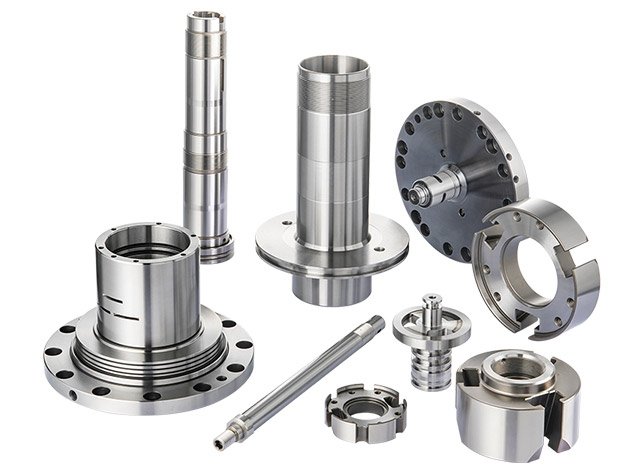
The available process range includes 3-5 axis CNC machining, EDM, precision grinding, and industrial ceramics. This breadth is important when a component requires a combination of milled geometry, difficult internal details, highly controlled finished surfaces, or material properties not addressed by conventional metal machining alone. EDM can support complex features and hard materials where traditional cutting is constrained. Precision grinding supports demanding diameter, flatness, roundness, and surface requirements. Industrial ceramic capabilities can address specialized high-temperature, wear-resistant, electrically insulating, or chemically resistant applications.
An ODM-oriented approach also supports earlier engineering engagement. Rather than receiving a fully mature drawing only at quotation stage, the supplier can review component architecture, expected volumes, assembly interfaces, sourcing risks, and probable production methods. This is particularly useful for new aircraft platforms, subsystem redesigns, and legacy-part transitions where documentation may be incomplete or a previous supply source is no longer viable.
Supply-chain integration should not mean reduced transparency. Tier 1 teams need a single accountable point of contact with access to meaningful program information: quotation assumptions, material availability, production status, quality documentation, delivery dates, and corrective-action progress. Clear reporting allows procurement, supplier quality, and engineering teams to make decisions before a minor risk develops into a schedule disruption.
The commercial value comes from aligning technical feasibility with total landed cost. A lower piece price may be offset by long logistics routes, fragile packaging, excessive setup time, costly rework, poor yield, or recurring expedited freight. An experienced precision manufacturing partner evaluates the complete production pathway. That includes material utilization, machining cycle time, fixture investment, inspection workload, secondary processing, packaging protection, and shipment planning. This broader view helps customers create a more predictable cost structure over the program lifecycle.
Industry Applications
Aerospace CNC sourcing requirements span a wide range of applications. Structural components may include brackets, frames, fittings, ribs, mounts, housings, and machined interfaces that connect systems or assemblies. These parts often combine tight positional tolerances with weight-sensitive material choices. Customers evaluating suppliers for these needs can review Dixin Technology’s aerospace CNC machining capabilities for titanium aircraft parts and structural components.
Fluid-power and motion-control systems represent another relevant category. Aerospace hydraulic systems use precision components where sealing surfaces, internal passages, thread quality, and dimensional consistency directly affect function. The manufacturing knowledge applied to hydraulic pump parts is valuable for buyers assessing controlled machining of housings, sleeves, shafts, valve-related components, and other fluid-control hardware.
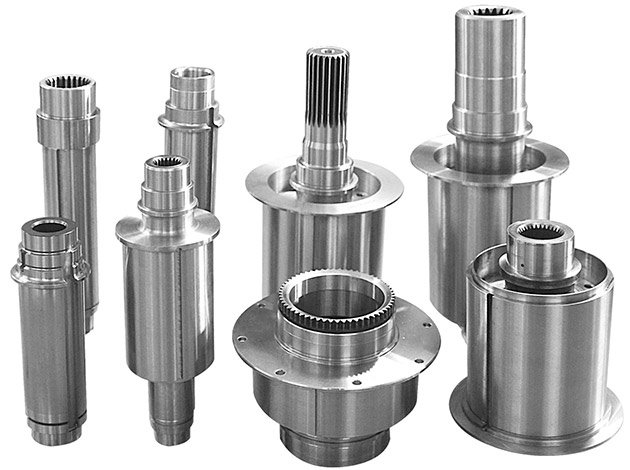
Cross-industry manufacturing experience can also improve aerospace program execution when the underlying quality challenges are comparable. Medical manufacturing, for example, requires rigorous attention to high-precision materials, complex geometries, traceability, and process consistency. Dixin Technology’s work with ISO-certified CNC machining for medical components demonstrates relevant expertise in titanium machining and precision part production.
For aerospace buyers, the key is to distinguish transferable process capability from unsupported claims. A supplier should be able to show how its machining, inspection, materials, and documentation systems translate to the specific aerospace application. Program teams should request representative capability data, discuss critical features, verify capacity assumptions, and align quality deliverables before awarding a production package.
Call to Action
Tier 1 aerospace suppliers need machining partners that can protect quality while supporting program speed, cost control, and long-term supply continuity. Dixin Technology combines precision manufacturing capability, ODM support, ERP-controlled operations, and supply-chain integration for global OEM and Tier 1 requirements.
To discuss an aerospace CNC part, drawing package, prototype requirement, production transfer, or supply-chain challenge, contact Dixin Technology. The engineering team can review material requirements, tolerances, process risks, expected volumes, inspection expectations, and delivery objectives to define a practical manufacturing path.