- Shaft
- Molds&Tools
- Hydraulics And Pump
- Hair transplant needle
- Hydraulics And Pump
- Precision CNC Shaft Machining Manufacturer for High Performance Applications
- Energy Industry CNC Machining Parts Supplier
- Aerospace CNC Machining Parts Manufacturer
- Aerospace CNC Machining Parts Manufacturer
- Automotive & EV CNC Machining Parts Supplier for OEM and Tier 1
- Medical CNC Machining Parts Supplier for Precision Medical Devices

Custom Gear Manufacturing: From Prototyping to Mass Production

Custom Gear Manufacturing: From Prototyping to Mass Production
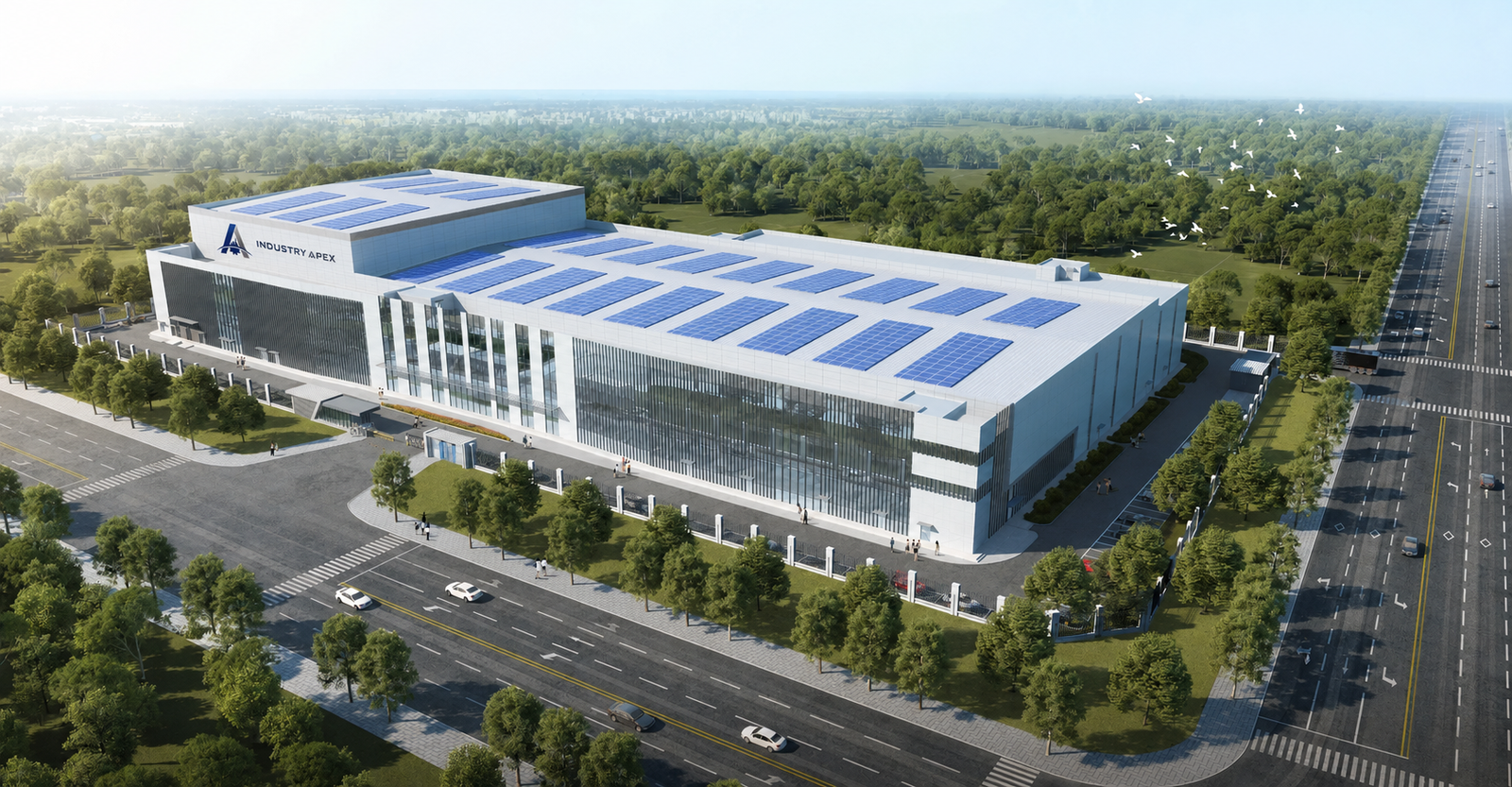
Custom gear manufacturing is no longer limited to cutting teeth into a drawing and shipping finished components. For global OEMs and Tier 1 suppliers, successful gear production requires coordinated engineering, material selection, process control, inspection, documentation, and supply chain management from the first prototype through repeat mass production. Dixin Technology, operating through IndustryApex CNC, supports this complete path with precision machining and ODM capabilities for demanding industrial applications.
1. Executive Summary
Custom gears are mission-critical components in transmissions, robotics, pumps, construction machinery, aerospace systems, medical devices, and automated production equipment. Their performance depends on more than nominal dimensions. Tooth geometry, runout, surface finish, hardness, alignment, lubrication compatibility, and resistance to fatigue all influence the service life of the final assembly.
The most reliable manufacturing programs begin with a design-for-manufacturing review. Engineers evaluate the gear type, module or diametral pitch, pressure angle, tooth count, face width, bore, keyway, spline interface, material, heat treatment, and inspection requirements before committing to a production route. Prototype quantities may be produced through flexible CNC and gear machining processes, while larger volumes require optimized tooling, stable fixtures, controlled thermal processing, and repeatable inspection plans.
Dixin Technology combines a fully controlled precision manufacturing system with ERP-based production management and more than 30 years of manufacturing experience. This allows the company to act as both a precision manufacturer and a supply chain integrator. Customers can move from early samples to production quantities while maintaining engineering traceability, delivery visibility, and consistent quality across the program lifecycle.
2. Technical Deep Dive
Gear production starts with a clear definition of the operating environment. Engineers need to understand transmitted torque, rotational speed, shock loading, duty cycle, backlash limits, operating temperature, lubrication method, expected noise level, and available installation space. These parameters determine whether a spur, helical, bevel, worm, planetary, internal, rack, or spline-related gear solution is appropriate.
Material selection is equally important. Common choices include alloy steels, stainless steels, tool steels, aluminum alloys, bronze, engineering plastics, and specialty materials for corrosion, weight, or temperature requirements. Alloy steel may provide the strength and fatigue resistance needed for high-load transmissions, while stainless steel can be preferable where corrosion resistance or cleanability is important. Nonmetallic gears may reduce noise and weight in lower-load mechanisms. The material must be matched with the selected cutting method and heat treatment because thermal distortion and hardness can affect final tooth accuracy.
During prototyping, manufacturers typically prioritize flexibility and rapid feedback. CNC turning can establish the blank diameter, bore, shoulders, and mounting features. CNC milling, gear hobbing, shaping, wire EDM, or form grinding can then produce the tooth profile and functional interfaces. For complex or low-volume designs, 3-axis, 4-axis, and 5-axis CNC machining can reduce the need for dedicated tooling. EDM is especially useful for intricate profiles, narrow slots, hard materials, and geometries that are difficult to access with conventional cutting tools.
A prototype should be treated as an engineering validation stage rather than simply a smaller production order. Dimensional inspection should verify the bore, outside diameter, pitch-related dimensions, face width, concentricity, parallelism, and runout. Gear-specific inspection may include profile deviation, lead deviation, tooth thickness, pitch error, contact pattern, and backlash. Functional testing with mating components can reveal assembly or noise issues that are not obvious from isolated dimensional measurements.
Once the design is approved, the production process is optimized for repeatability and cost. The manufacturing team may introduce dedicated soft jaws, modular fixtures, cutting tools with defined replacement intervals, automated loading, and standardized inspection sequences. Process capability studies help determine whether critical characteristics remain within specification over multiple batches. For high-volume programs, cycle time and tool life become important commercial factors, but they cannot be optimized at the expense of tooth accuracy or long-term reliability.
Heat treatment often defines the transition from machined blank to performance gear. Carburizing, nitriding, induction hardening, through hardening, and other treatments can improve wear resistance, contact fatigue strength, and bending fatigue performance. Each treatment introduces different risks, including distortion, dimensional change, residual stress, and surface hardness variation. A mature supplier plans machining allowances around the heat treatment route and may use post-treatment grinding or finishing to achieve the required accuracy.
Precision grinding is frequently used for high-performance gears, hardened bores, faces, and other critical features. Grinding can improve surface finish and correct controlled amounts of distortion after heat treatment. However, grinding burns, inadequate coolant control, wheel wear, and unstable dressing conditions can damage the component or create inconsistent results. Process records, calibrated equipment, and inspection at appropriate stages are essential for preventing these defects from reaching assembly.
Quality assurance should combine incoming material controls, in-process checks, final inspection, and documentation. Material certificates, heat-treatment reports, coating records, first article inspection, capability data, and measurement reports may be required by the customer or regulated industry. A robust ERP system connects work orders, drawings, revisions, material lots, inspection results, and shipment records. This traceability is particularly important when a gear is used in an aircraft structure, medical device, hydraulic system, or safety-related machine.
Design-for-manufacturing decisions made early can significantly reduce total cost. Avoiding unnecessarily tight tolerances, selecting standard tooling where practical, allowing suitable clamping surfaces, and separating cosmetic requirements from functional requirements can improve yield and shorten lead time. At the same time, critical interfaces should be specified precisely enough to protect performance. The objective is not to minimize every dimension, but to control the characteristics that determine function.
3. The ODM & Supply Chain Advantage
For international OEMs and Tier 1 suppliers, custom gear sourcing is often a supply chain challenge as much as a machining challenge. A gear project may involve raw material suppliers, heat-treatment partners, grinding operations, coating providers, inspection laboratories, packaging requirements, export documentation, and multiple production locations. Managing these interfaces independently can create schedule risk, duplicated quality work, and uncertainty about accountability.
Dixin Technology’s core identity is that of a supply chain integrator and ODM solution provider. This means the company can participate beyond the role of a build-to-print machine shop. Engineering teams can work with the customer to review drawings, recommend practical manufacturing routes, identify cost drivers, and coordinate the external processes required to deliver a complete component or assembly. When a product needs refinement, the ODM model supports structured feedback between design intent and manufacturing reality.
The manufacturing edge is based on a fully controlled precision manufacturing system supported by ERP and more than 30 years of experience. ERP-based control helps organize revisions, purchasing, production scheduling, work instructions, inspection records, and delivery commitments. For customers managing global programs, this provides a clearer view of order status and reduces the risk of producing against obsolete specifications.
Dixin Technology’s technical capabilities include 3-axis to 5-axis CNC machining, EDM, precision grinding, and industrial ceramics. This range is valuable when a gear program includes more than a conventional steel gear. A supplier may need to machine a complex housing, produce a precision shaft, finish a hardened interface, or integrate ceramic components into a high-temperature, electrically insulating, or wear-resistant application. Consolidating related work under one manufacturing system can simplify supplier qualification and improve communication.
The ODM approach also supports production transfer. A prototype process may rely on flexible equipment and manual inspection, while mass production may require specialized fixtures, optimized cutting parameters, automated measurement, and defined subcontractor controls. The supplier must preserve the approved design intent while changing the process economically. Clear process validation, engineering change control, and first-article approval provide the evidence needed for a controlled transition.
Supply chain resilience is another advantage. Customers increasingly require dual-source planning, stable raw material availability, realistic capacity commitments, and contingency options for critical processes. A manufacturing partner with established supplier relationships and internal process knowledge can identify alternatives before a disruption affects delivery. This is especially important for components with long heat-treatment cycles, special alloys, imported materials, or unique inspection requirements.
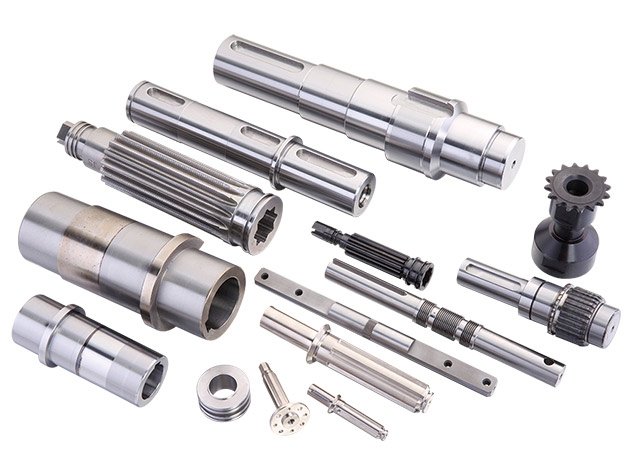
For buyers, the practical result is a more accountable development path. Instead of coordinating every manufacturing stage separately, the OEM can work with a partner that understands the gear, the assembly, and the commercial requirements surrounding it. The right partner should be able to discuss tolerances and torque in the same conversation as production capacity, lead time, packaging, and total landed cost.
4. Industry Applications
Custom gears appear in nearly every sector where motion, torque, speed reduction, or precise positioning is required. In automotive and drivetrain systems, gears must withstand repeated loading, vibration, temperature changes, and strict noise requirements. Production programs may involve transmission gears, differential components, planetary elements, spline-related parts, and custom shafts. Consistent tooth geometry and heat treatment are central to durability and assembly performance.
Aerospace applications impose demanding requirements for weight reduction, fatigue resistance, traceability, and process documentation. Gear-driven actuators, auxiliary systems, and aircraft mechanisms may require specialized alloys, complex geometry, and tightly controlled inspection. Dixin Technology supports customers seeking aerospace CNC machining and precision aircraft components, including programs where gear-related parts must be integrated with machined structural or titanium components.
Medical equipment and surgical systems often require compact, quiet, corrosion-resistant, and highly repeatable mechanisms. Gears may be used in positioning systems, imaging equipment, robotics, pumps, and instrument actuation. Materials and finishes must be compatible with cleaning, sterilization, or controlled manufacturing environments. Buyers evaluating a qualified supplier can review Dixin Technology’s capabilities for ISO-certified CNC machining for medical components.
Hydraulic and fluid-control equipment uses gears, shafts, spools, sleeves, and pump components that depend on accurate interfaces and controlled leakage. Surface finish, roundness, concentricity, and material compatibility can directly affect efficiency and service life. Custom gear manufacturing may be part of a broader hydraulic assembly, where the supplier must coordinate several precision components. IndustryApex CNC provides further information on hydraulic pump parts and precision fluid-control components.
Construction machinery, agricultural equipment, mining systems, and industrial automation place high demands on impact resistance and reliability. These applications may use large gears, worm gears, bevel gears, drive shafts, and custom transmission components. Prototypes need to validate load capacity and fit, while mass production requires consistent processes capable of handling variable demand and replacement-part requirements.
Energy, semiconductor, food-processing, and packaging equipment introduce additional constraints such as cleanliness, corrosion resistance, chemical exposure, low particle generation, temperature stability, or continuous operation. In these environments, an engineering review should consider the complete system rather than the gear alone. Lubrication, sealing, adjacent materials, maintenance access, and cleaning procedures can influence the correct design and manufacturing route.
Across all of these industries, early supplier involvement reduces the likelihood of late redesigns. Sharing the 3D model, drawing revision, anticipated annual volume, inspection standard, material preference, and target launch date allows the manufacturer to propose a realistic prototype and production strategy. It also gives procurement teams a stronger basis for comparing quotations because the offers are aligned with the same technical and supply chain assumptions.
5. Call to Action
Custom gear manufacturing succeeds when engineering, quality, and supply chain decisions are connected from the beginning. Whether the requirement is a single prototype, a validated pilot run, or a recurring mass-production program, Dixin Technology can help evaluate the design, select the manufacturing route, coordinate supporting processes, and establish a controlled path to delivery.
For global OEMs and Tier 1 suppliers, the next step is to share the gear drawing or 3D model, material and heat-treatment requirements, expected volumes, tolerance standards, and application conditions. Contact the IndustryApex CNC engineering team to discuss manufacturability, prototype timing, production capacity, inspection documentation, and a supply strategy suited to your program. Explore the Dixin Technology precision manufacturing platform to identify the capabilities that can support your next custom gear project from prototype to mass production.