- Shaft
- Molds&Tools
- Hydraulics And Pump
- Hair transplant needle
- Hydraulics And Pump
- Precision CNC Shaft Machining Manufacturer for High Performance Applications
- Energy Industry CNC Machining Parts Supplier
- Aerospace CNC Machining Parts Manufacturer
- Aerospace CNC Machining Parts Manufacturer
- Automotive & EV CNC Machining Parts Supplier for OEM and Tier 1
- Medical CNC Machining Parts Supplier for Precision Medical Devices

Navigating ISO Standards for Medical CNC Machined Parts: A B2B Guide to Compliance, Quality, and Supply Chain Control

1. Executive Summary
Medical device manufacturers operate in one of the most demanding industrial environments in the world. For CNC machined parts, ISO standards are not just compliance checkboxes; they define how quality is built into every stage of design, machining, inspection, cleaning, packaging, and traceability. For global OEMs and Tier 1 suppliers, the ability to source reliable medical components depends on a supplier’s discipline in process control, documentation, and risk management.
At Dixin Technology, under the IndustryApex CNC brand, we support customers with precision medical manufacturing aligned to the expectations of regulated markets. Our medical parts manufacturing capability is built for buyers who need consistent quality, supply assurance, and engineering support across complex projects.
This article explains the ISO framework most relevant to medical CNC machined parts, why it matters to procurement and engineering teams, and how an ODM-oriented supply chain partner can reduce risk while improving responsiveness, cost control, and scalability.
2. Technical Deep Dive
Medical CNC machined parts must satisfy a multi-layered standard system. In practice, the most important ISO references include ISO 13485 for medical device quality management, ISO 9001 for general quality discipline, ISO 14971 for risk management, ISO 10993 for biocompatibility considerations, and ISO 14644 where cleanroom classification affects cleanliness control. Together, these standards shape the way a supplier selects materials, controls processes, validates output, and documents each lot.
The first technical requirement is material control. For implants, surgical instruments, and diagnostic device parts, material selection is not only about mechanical performance. It also affects corrosion resistance, sterilization compatibility, wear behavior, and patient safety. Titanium, stainless steel, cobalt-chrome, PEEK, and advanced ceramics are common choices, but each requires a different machining strategy and verification plan.
The second requirement is process capability. ISO-aligned manufacturing means the supplier must consistently hold tight tolerances, maintain repeatability, and prove that the process can produce conforming parts over time. This is especially important for parts with micro features, thin walls, complex contours, and interface-critical dimensions. CNC programs, fixture design, tool wear compensation, and in-process inspection all contribute to process stability.
The third requirement is traceability. Medical buyers increasingly ask for lot-level or even serial-level traceability from raw material to final shipment. A strong supplier should be able to link certificates of conformity, heat numbers, machining records, inspection data, and corrective actions. This is where digital systems matter. ERP-based control helps ensure that each order is tracked with clarity from quotation to delivery.
The fourth requirement is cleanliness and contamination control. Medical CNC machined parts often require specific deburring, washing, passivation, packaging, and controlled handling to reduce particulate contamination. Even when parts are not manufactured in a full cleanroom, the supplier must still manage environmental conditions, handling practices, and post-process cleaning in a way that supports downstream sterilization and assembly.
The fifth requirement is validation and change control. ISO expectations are especially strict when a process, fixture, toolpath, or material source changes. Buyers should expect a disciplined approach to first article inspection, process qualification, revision control, and documented approval before releasing changes to production. For regulated products, a small machining change can have a large regulatory impact.
In practical sourcing terms, the supplier’s role extends beyond machining. The best partners help engineering teams optimize manufacturability, reduce unnecessary cost, and preserve functional intent. That includes advising on tolerances, wall thickness, internal corner geometry, surface finishing, and inspection strategy. A capable partner can also compare the medical requirements with standards learned from other high-stakes sectors such as aerospace, where traceability and precision are similarly non-negotiable. For example, Dixin Technology also supports complex aerospace CNC machining projects that demand comparable discipline in quality assurance and production control.
For buyers, the key takeaway is simple: ISO compliance is strongest when it is designed into the manufacturing system, not inspected in after production. The winning supplier is the one that can combine engineering precision, documentation rigor, and responsive supply chain execution.
3. The ODM & Supply Chain Advantage
Medical OEMs and Tier 1 suppliers do not only need a machinist. They need a partner that can integrate design intent, process engineering, sourcing, production, inspection, and logistics. This is where the ODM and supply chain advantage becomes decisive.
Core Identity: Dixin Technology serves as a supply chain integrator and ODM solution provider. That means we help customers move from concept to production with fewer handoffs, fewer communication gaps, and better control over quality and lead time. For medical programs, this integrated model reduces the risk of fragmented accountability across multiple vendors.
Manufacturing Edge: Our manufacturing system is fully controlled through ERP, backed by more than 30 years of experience in precision production. This matters because medical sourcing is not only about machine accuracy; it is about scheduling reliability, traceable lot control, disciplined documentation, and the ability to scale without losing compliance behavior.
Tech Capabilities: We support 3-axis to 5-axis CNC machining, EDM, precision grinding, and industrial ceramics. These capabilities are important for medical products that require complex geometry, fine surface control, hard-material machining, or advanced ceramic components used in wear-critical and chemically resistant applications.
Target Audience: Our service model is built for global OEM and Tier 1 suppliers that require dependable production partners for regulated markets. Whether the program involves implants, surgical devices, diagnostic housings, or high-precision subassemblies, the sourcing priority is the same: predictable quality with controlled cost and delivery performance.
From a supply chain perspective, the greatest advantage of an ODM-capable supplier is design-to-production alignment. Engineering teams can collaborate earlier on manufacturability, material selection, inspection planning, and packaging strategy. Procurement teams benefit from fewer supplier touchpoints and better forecast response. Quality teams benefit from more consistent documentation and easier audit readiness.
This model also improves resilience. In medical manufacturing, a single delayed component can disrupt assembly schedules, regulatory submissions, and customer commitments. A vertically coordinated supplier can help buffer those risks by combining material planning, production control, and post-processing under one management system. That is especially valuable for buyers who source not only medical components but also other precision products such as hydraulic and pump parts, where reliability and dimensional consistency are similarly important.
When you evaluate suppliers, ask whether they can do more than machine to print. Can they support DFM feedback? Can they document change control? Can they handle special packaging and batch segregation? Can they scale across multiple programs without sacrificing quality? These are the questions that separate a commodity vendor from a strategic manufacturing partner.
4. Industry Applications
ISO-aligned medical CNC machined parts are used across a wide range of healthcare technologies. The most common applications include orthopedic components, dental instruments, surgical instrument bodies, minimally invasive device parts, fluid-handling manifolds, imaging-device components, and precision housings for diagnostic equipment.
Orthopedic and implant-related components: These parts demand excellent dimensional control, corrosion resistance, and surface integrity. Titanium and advanced stainless steels are frequently chosen because they balance strength, compatibility, and machinability. Surface finish and cleanliness become especially important when the part interfaces with biological tissue or subsequent coating processes.
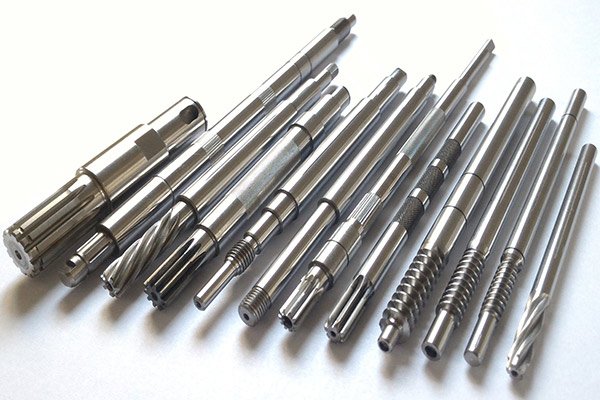
Surgical instruments: Forceps, guides, handles, shafts, and cutting tools require repeatable geometry and durable edge or interface performance. Depending on the design, suppliers may need a combination of CNC machining, EDM, precision grinding, and finishing. For reusable tools, sterilization compatibility and wear resistance are critical.
Diagnostic and analytical equipment: Medical devices used in laboratories and imaging systems often rely on precision machined frames, mounts, connector bodies, and fluidic components. These parts may not be implanted, but they still require traceability, low contamination, and consistent fit across long production cycles.
Fluid control and microfluidics: In drug delivery, sample handling, and laboratory automation, small internal channels and sealing faces can determine product performance. Close cooperation between engineering and manufacturing is essential. This is where a supplier experienced in fluid-path components and precision sealing interfaces can add real value.
Cross-industry precision transfer: Many of the best practices used in medical machining are shared with aerospace, optics, and high-performance fluid systems. This cross-pollination improves quality maturity. For example, precision inspection discipline from aerospace and component complexity from specialized automation projects can strengthen the medical manufacturing workflow.
To explore the broader manufacturing capability behind these applications, customers often start with the IndustryApex CNC home page and then connect with engineering support through our Contact Us page when a new program requires quoting, DFM review, or production planning.
For medical buyers, the most important point is that application success depends on matching the part’s clinical function with the right quality system, machining process, and supply chain model. ISO standards give the framework; manufacturing discipline makes the framework real.
5. Call to Action
If your team is sourcing medical CNC machined parts and needs a supplier that understands ISO-driven quality, documentation, and scalable manufacturing, Dixin Technology can help. We support global OEM and Tier 1 customers with engineering collaboration, precision machining, and supply chain control designed for regulated industries.
Whether you are developing titanium implants, surgical instrument components, diagnostic device parts, or custom medical subassemblies, our team can help align design requirements with a production system built for consistency and traceability.
Start the conversation today through our Contact Us page, or review our dedicated medical CNC machining capabilities to see how we support demanding healthcare programs from prototype through production.