- Shaft
- Molds&Tools
- Hydraulics And Pump
- Hair transplant needle
- Hydraulics And Pump
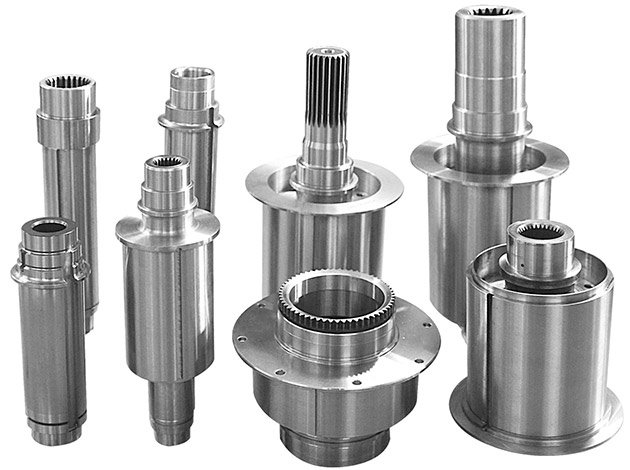
- Precision CNC Shaft Machining Manufacturer for High Performance Applications
- Energy Industry CNC Machining Parts Supplier
- Aerospace CNC Machining Parts Manufacturer
- Aerospace CNC Machining Parts Manufacturer
- Automotive & EV CNC Machining Parts Supplier for OEM and Tier 1
- Medical CNC Machining Parts Supplier for Precision Medical Devices
How ERP Systems Ensure Quality Control in CNC Mass Production

Executive Summary
In CNC mass production, quality control is no longer only a final inspection activity. For global OEMs and Tier 1 suppliers, quality must be engineered into every step: quotation, material purchasing, process planning, tool management, machine scheduling, in-process inspection, nonconformance handling, packaging, and shipment. An ERP system is the digital backbone that connects these stages into one controlled manufacturing environment.
At Dixin Technology, operating as IndustryApex CNC, ERP-driven manufacturing control is central to how we manage complex, high-mix and volume CNC programs. Whether producing titanium aerospace structural parts, medical components, hydraulic valve sleeves, pump components, shafts, gears, or custom precision assemblies, ERP allows engineering, production, quality, purchasing, and logistics teams to work from the same validated data. This eliminates many of the traditional causes of defects: outdated drawings, uncontrolled material substitutions, incorrect machining routes, missed inspection steps, and poor lot traceability.
For buyers, the value is practical and measurable. A properly implemented ERP system improves first-pass yield, reduces scrap, shortens corrective action cycles, stabilizes delivery performance, and creates the documentation needed for audits and supplier qualification. In CNC mass production, where a small tolerance deviation can multiply across thousands of parts, ERP acts as both a control system and a business risk reduction tool.
This article explains how ERP systems ensure quality control in CNC mass production, how they integrate with inspection and manufacturing processes, and why ERP-based supplier management is becoming essential for global sourcing teams that need repeatable quality at scale.
Technical Deep Dive
CNC quality control begins before the first chip is cut. In an ERP-controlled environment, the quality plan is linked to the part number, drawing revision, bill of materials, routing, inspection standard, material specification, and customer requirements. This means production cannot simply rely on operator memory or isolated spreadsheets. The system defines what must be made, how it must be made, what must be inspected, and which records must be retained.
One of the most important ERP functions is revision control. In CNC mass production, a part may go through multiple engineering changes during its lifecycle. A hole diameter may be adjusted, a surface finish requirement may become tighter, a coating may change, or a datum structure may be revised. If these changes are not controlled, old drawings can remain on the shop floor, leading to mixed production and costly rejection. ERP helps prevent this by linking active work orders only to approved revisions. Purchasing, machining, inspection, and shipment teams all reference the same controlled data.
Material control is another key quality function. Many precision parts require certified alloys, heat treatment, hardness ranges, or special material properties. Aerospace titanium, stainless steel for surgical instruments, engineering plastics, ceramics, tool steels, and carbide components all require strict verification. ERP connects purchase orders with approved suppliers, incoming inspection, material certificates, heat numbers, and production lots. If a future issue occurs, the manufacturer can trace which batch of material was used, which machines processed it, which inspection results were recorded, and which shipments included the affected parts.
ERP also strengthens process routing control. Each CNC part has a defined manufacturing route: sawing, turning, milling, 5-axis machining, EDM, grinding, deburring, cleaning, surface treatment, inspection, and packaging. In a manual environment, operations can be skipped or performed out of sequence, especially during urgent delivery periods. With ERP, each operation is assigned to a work center with defined instructions, labor reporting, machine status, and quality checkpoints. Operators confirm completion, inspectors record results, and supervisors can see bottlenecks in real time.
Inspection planning is where ERP directly supports dimensional quality. Control plans can be linked to work orders so that critical dimensions, geometric tolerances, thread specifications, surface roughness, and appearance criteria are checked at the correct production stage. First article inspection can be required before batch release. In-process inspection can be triggered after a defined number of pieces or machining hours. Final inspection can be blocked until all prior operations are complete. This reduces the risk of discovering defects only after a full batch has already been manufactured.
Tooling management is equally important in mass production. Tool wear is a common cause of dimensional drift, burr formation, poor surface finish, and feature position error. ERP can work with tool life records, tool issue logs, maintenance schedules, and production quantities to ensure worn tools are replaced before they damage a production lot. For high-volume CNC turning or milling, this is critical because one deteriorated insert can affect hundreds of components before the problem becomes visible.
Nonconformance management is another major ERP advantage. When a defect is found, ERP enables structured reporting: affected part number, work order, lot number, machine, operator, operation, inspection data, defect category, disposition, root cause, and corrective action. Instead of informal communication, the issue becomes a controlled quality event. The system can quarantine inventory, prevent shipment, request engineering review, and track corrective action closure. Over time, this data helps identify recurring process weaknesses, unstable suppliers, machine problems, or training gaps.
Finally, ERP supports quality analytics. Scrap rate, rework rate, on-time delivery, supplier defect rate, machine utilization, inspection pass rate, and customer complaint trends can be monitored by part family, customer, process, or material type. This turns quality control from a reactive inspection function into a continuous improvement system. For CNC mass production, this is the difference between simply finding defects and systematically preventing them.
The ODM & Supply Chain Advantage
Dixin Technology is not only a machining vendor. We operate as a supply chain integrator and ODM solution provider for global OEM and Tier 1 suppliers that need engineered components, stable production capacity, and disciplined quality control. This role requires more than machines. It requires a fully controlled precision manufacturing system where ERP, engineering review, supplier coordination, production execution, inspection, and logistics are integrated.
With more than 30 years of manufacturing experience, our team understands that buyers are not only purchasing parts; they are purchasing risk reduction. A global customer may need a precision titanium bracket, a stainless medical instrument component, a hydraulic spool, a ceramic wear component, a gear shaft, or a machined structural part. Each product has different materials, tolerances, compliance requirements, packaging needs, and demand patterns. ERP allows these programs to be managed with controlled workflows rather than disconnected manual processes.
Our manufacturing edge comes from combining ERP-based management with diverse in-house and partner capabilities, including 3-axis, 4-axis, and 5-axis CNC machining, EDM, precision grinding, industrial ceramics processing, and complex finishing coordination. This is especially valuable for components that require multiple manufacturing methods. For example, a part may need CNC milling for the main geometry, EDM for sharp internal features, precision grinding for tight flatness or diameter tolerance, and specialized surface treatment before final inspection. ERP ensures that every process step is connected to the correct drawing revision, schedule, and quality requirement.
As an ODM solution provider, Dixin Technology can support customers from design optimization through mass production. During early engineering review, manufacturability feedback can reduce machining time, improve tolerance strategy, select more stable materials, and simplify inspection. Once the product enters production, ERP converts engineering decisions into repeatable process routes, purchasing rules, inspection points, and delivery plans. This creates a bridge between design intent and production reality.
The supply chain advantage is especially important when a component requires externally sourced materials, heat treatment, coating, anodizing, passivation, plating, or special testing. ERP provides visibility into supplier qualification, purchase status, incoming inspection, outsourcing progress, and delivery commitments. For procurement teams, this reduces the uncertainty often associated with overseas custom manufacturing. Instead of relying only on verbal updates, ERP-backed project control creates traceable status, controlled documentation, and clearer accountability.
For global OEMs and Tier 1 suppliers, supplier consolidation is another benefit. Rather than managing many separate shops for machining, grinding, EDM, ceramics, and finishing, customers can work with one integrated partner that coordinates the technical and supply chain requirements. Dixin Technology’s ERP-controlled system supports this model by linking each external and internal activity under one production and quality plan.
Industry Applications
ERP-based quality control is valuable across all precision CNC industries, but it becomes essential in sectors where failure risk, regulatory expectations, or assembly performance requirements are high.
In aerospace manufacturing, traceability and process discipline are mandatory. Components such as titanium brackets, aircraft structural parts, housings, and high-strength machined assemblies require controlled materials, strict dimensional inspection, and reliable documentation. For customers sourcing aerospace CNC machining and titanium aircraft parts, ERP helps ensure that every lot is connected to material certificates, approved drawings, operation records, and inspection results. This is particularly important for 5-axis machining, where complex geometries and tight datum relationships require stable process control.
In the medical sector, quality control must support cleanliness, biocompatible materials, precision finishing, and documentation. Components such as titanium implants, surgical instruments, orthopedic device parts, and precision medical housings require consistent machining and careful handling. For ISO-certified CNC machining for medical components, ERP helps manage material traceability, special inspection requirements, controlled production routes, and packaging instructions. It also supports the documentation discipline that medical device supply chains expect from qualified manufacturing partners.
In hydraulics and fluid control, precision determines sealing performance, pressure stability, and service life. Hydraulic valve spools, sleeves, pump shafts, pistons, bodies, and flow control parts often require tight roundness, cylindricity, surface finish, and clearance control. For hydraulic pump parts, ERP helps connect grinding, honing, CNC machining, deburring, cleaning, and final inspection into one controlled workflow. If a dimension trends toward the edge of tolerance, inspection data and production records help engineers identify whether the root cause is tool wear, fixture movement, material variation, or process instability.
In automotive, drivetrain, energy, industrial automation, food packaging, semiconductor equipment, and optical equipment supply chains, ERP also supports mass production stability. Many of these industries require repeat orders over long periods. The challenge is not only making one good batch but producing the same quality again six months or two years later. ERP preserves validated process knowledge, including routing, inspection plans, tooling records, supplier choices, and packaging methods, so repeat production does not start from zero.
For industrial ceramics and hard materials, ERP control is equally valuable. Ceramic components, carbide parts, sapphire or ruby components, and wear-resistant tooling often involve specialized processes with longer lead times and higher scrap risk. ERP helps plan material availability, process sequencing, inspection timing, and customer delivery commitments. When combined with experienced engineering judgment, this improves both quality and predictability.
Call to Action
ERP systems ensure quality control in CNC mass production by connecting engineering data, material traceability, production routing, inspection planning, tooling control, supplier management, and shipment documentation into one disciplined operating system. For global buyers, this means fewer surprises, stronger repeatability, better documentation, and more confidence when scaling from prototype to mass production.
Dixin Technology, through IndustryApex CNC, helps OEM and Tier 1 customers source complex precision components with an integrated ODM and supply chain approach. Our ERP-controlled manufacturing system, 30-plus years of precision manufacturing experience, and capabilities in 3-5 axis CNC machining, EDM, precision grinding, and industrial ceramics allow us to support demanding applications across aerospace, medical, hydraulics, automation, energy, and industrial equipment sectors.
If your team is developing a new component, transferring production from an unstable supplier, or scaling CNC mass production with tighter quality requirements, we can help evaluate manufacturability, process control, cost drivers, inspection strategy, and supply chain risk. To discuss your drawings, materials, tolerances, and annual demand, please contact Dixin Technology for an engineering and sourcing review.