- Shaft
- Molds&Tools
- Hydraulics And Pump
- Hair transplant needle
- Hydraulics And Pump
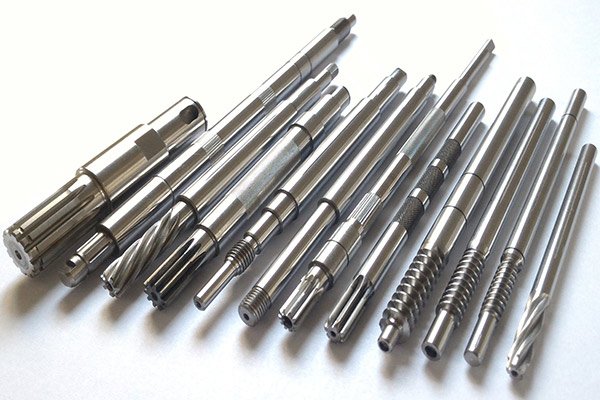
- Precision CNC Shaft Machining Manufacturer for High Performance Applications
- Energy Industry CNC Machining Parts Supplier
- Aerospace CNC Machining Parts Manufacturer
- Aerospace CNC Machining Parts Manufacturer
- Automotive & EV CNC Machining Parts Supplier for OEM and Tier 1
- Medical CNC Machining Parts Supplier for Precision Medical Devices

Cold Heading Tooling vs. CNC Machining: Which Manufacturing Route Is Right for Your Project?

Executive Summary
Choosing between cold heading tooling and CNC machining is not simply a question of process preference. It is a supply chain decision that affects piece price, lead time, mechanical performance, scalability, and long-term sourcing risk. At Dixin Technology, the IndustryApex CNC team evaluates both routes from a manufacturing and ODM perspective, helping OEMs and Tier 1 suppliers align design intent with the most efficient production model.
Cold heading tooling is typically the superior solution for high-volume parts with repeatable geometry, especially fasteners, pins, shafts, connectors, and other axisymmetric components. It delivers excellent material utilization, strong grain flow, and very low unit cost once tooling is amortized. However, it requires upfront die investment, careful DFM, and stable demand to justify the setup.
CNC machining, by contrast, offers rapid flexibility, tighter design freedom, and lower entry cost for prototypes, low-volume production, and complex parts with features that cannot be formed efficiently by cold heading. It is often the better choice for parts with tight tolerances, multi-face geometry, internal cavities, and frequent engineering changes.
The most effective decision framework is not “which process is better,” but “which process fits the part lifecycle.” If your project is early-stage, design-variable, or low-to-mid volume, CNC machining is usually the safer route. If your part is mature, repeatable, and destined for scale, cold heading tooling can unlock major cost and performance advantages. For many global programs, a hybrid strategy works best: CNC for prototypes and pilot runs, then cold heading for volume production.
Technical Deep Dive
Cold heading is a high-speed forming process that reshapes metal at room temperature through compressive force. The material is plastically deformed inside a die rather than cut away. This creates parts with minimal waste and superior mechanical continuity. For fastener-like products, the process can deliver strong fatigue resistance and consistent dimensions across very high volumes. But it is constrained by geometry. Parts must be designed for formability, die flow, and ejectability. Sharp internal corners, deep cavities, and highly asymmetric shapes can make cold heading impractical or uneconomical.
CNC machining removes material from billet, bar, or forged stock through milling, turning, drilling, grinding, and related operations. It excels when the design demands flexibility. Complex contours, precision pockets, multi-axis surfaces, and difficult tolerances are all well suited to CNC. Because the process is subtractive, it generally produces more scrap than cold heading and has higher cycle cost per part. Yet for lower volumes or high-mix production, CNC often wins because tooling is minimal and design changes are easy to absorb.
The decision should be evaluated across five engineering variables:
- Geometry: Simple, rotational, or near-symmetrical parts favor cold heading; complex freeform or internal geometries favor CNC.
- Volume: High recurring demand supports tooling amortization; low volume does not.
- Material: Ductile metals form well in cold heading; harder alloys and challenging materials may be better suited to machining.
- Tolerance and finish: CNC offers more direct control, while cold heading often needs secondary finishing for critical surfaces.
- Lifecycle: If design change risk is high, CNC reduces exposure; if the design is stable, cold heading lowers total cost.
From an engineering economics standpoint, cold heading tooling carries a higher upfront barrier, but its marginal cost drops sharply with scale. CNC machining has lower launch cost, but per-part cost remains tied to cycle time, machine utilization, tooling wear, and scrap. In practical terms, a project that needs 10,000 parts may strongly favor CNC or a hybrid route, while a project that needs 1,000,000 parts with stable print requirements often justifies cold heading tooling quickly.
Another important factor is downstream processing. Cold headed parts may still require trimming, threading, heat treatment, or selective machining. CNC parts may require deburring, surface treatment, or secondary grinding. The optimal answer depends on total route cost, not just the primary operation.
The ODM & Supply Chain Advantage
Dixin Technology is more than a machine shop. We operate as a supply chain integrator and ODM solution provider, which means we look beyond individual operations and optimize the complete production pathway. For global OEMs and Tier 1 suppliers, this is often the difference between a part that is merely manufacturable and a program that is commercially sustainable.
Our manufacturing edge comes from a fully controlled precision manufacturing system supported by ERP, with more than 30 years of experience coordinating demanding production requirements across industries. That control matters when you are comparing cold heading tooling to CNC machining, because the true question is not only how a part is made, but how reliably it can be sourced, inspected, traced, and delivered over time.
Our technical capabilities support both decision paths. We provide 3-axis to 5-axis CNC machining, EDM, precision grinding, and industrial ceramics solutions. This allows us to produce prototypes, bridge parts, and final production components within one managed system. When a design is still evolving, CNC is often the right answer. When the design is mature and production volumes justify tooling, we can support the transition to higher-efficiency methods through a controlled supply chain plan.
As an ODM partner, we also help customers make early design adjustments that can dramatically improve manufacturability. For example, a part originally drawn for CNC may be re-engineered to reduce secondary operations or to enable cold heading on selected features. Likewise, a cold headed part may need critical interfaces machined after forming to meet tolerance or surface finish requirements. This hybrid engineering mindset reduces cost without compromising function.
For customers in regulated or performance-driven markets, traceability and process stability are essential. If your program involves aerospace structures, see how precision machining supports demanding requirements on our Aerospace Parts capability page. For implantable and device-related components, our Medical Parts offering shows how controlled machining supports critical quality expectations. For fluid-power systems, the same logic applies to Hydraulics & Pump components, where sealing integrity, wear resistance, and dimensional stability are essential.
Because we manage the process through ERP and a disciplined quality system, we can help customers compare not only unit price, but also supplier risk, inventory burden, and launch complexity. That is the core ODM advantage: one accountable partner for engineering alignment, production planning, quality control, and supply continuity.
Industry Applications
Different industries place different weights on geometry, volume, regulatory burden, and cost. That is why the choice between cold heading tooling and CNC machining should always be made in context.
1. Automotive and Mobility
Automotive programs often need large volumes of identical fasteners, pins, bushings, and shafts. Cold heading is frequently the better option when the geometry is stable and annual demand is high. CNC machining remains important for low-volume performance parts, prototypes, and engineering validation samples.
2. Aerospace
Aerospace projects commonly demand tighter traceability, higher complexity, and more material variety. CNC machining is often preferred for structural brackets, precision housings, and titanium components. Where geometry and load path allow it, formed features can reduce cost, but only after rigorous qualification. For more on these applications, review our Aerospace Parts capability.
3. Medical Devices
Medical components frequently require biocompatible materials, clean surfaces, and exact dimensional repeatability. CNC machining is usually the default for implants, surgical instruments, and device housings because of design complexity and regulatory sensitivity. For this reason, our Medical Parts page is a good reference for customers assessing precision and compliance.
4. Hydraulics and Fluid Power
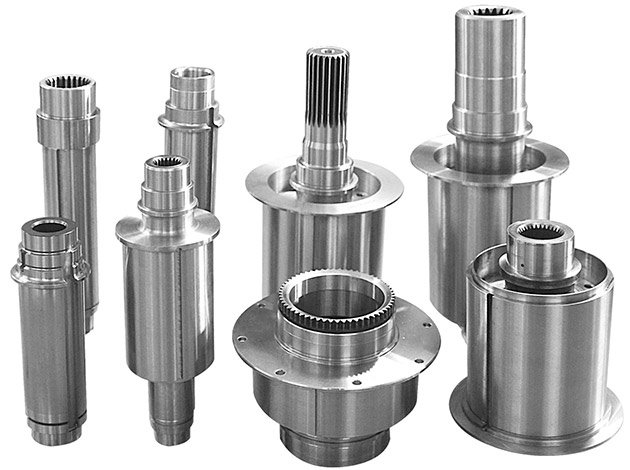
Hydraulic spools, sleeves, pump components, and valve bodies can benefit from either process depending on design. Cold heading is attractive for high-volume, feature-simple elements, while CNC machining is better for sealing-critical interfaces and precision flow paths. Our Hydraulics & Pump capability supports these demanding applications.
5. Industrial Equipment and Custom OEM Programs
For machine builders and custom equipment manufacturers, the best route often changes over time. CNC machining is ideal for pilot builds, test fixtures, and design iterations. Once field demand stabilizes, converting repeatable features to cold heading tooling can reduce cost and strengthen supply resilience. If you are building a new sourcing strategy, start from our home page to explore the broader IndustryApex CNC capability set.
As a practical rule, choose cold heading tooling when the part is stable, symmetrical, high-volume, and cost-sensitive. Choose CNC machining when the part is complex, design-sensitive, lower volume, or subject to ongoing revision. In many programs, the winning approach is staged: prototype by CNC, validate by pilot run, and scale by the most economical high-volume method.
Call to Action
If your team is evaluating cold heading tooling versus CNC machining, Dixin Technology can help you make the decision with engineering clarity and supply chain discipline. We support OEM and Tier 1 sourcing teams with DFM feedback, process selection, cost modeling, and controlled production planning across multiple manufacturing technologies.
Whether your project requires precision CNC, hybrid manufacturing, or a shift toward scale-ready forming strategies, our goal is to reduce total landed cost while protecting quality and delivery performance. To discuss your project, request a manufacturability review, or compare sourcing scenarios, please Contact Us.