- Shaft
- Molds&Tools
- Hydraulics And Pump
- Hair transplant needle
- Hydraulics And Pump
- Precision CNC Shaft Machining Manufacturer for High Performance Applications
- Energy Industry CNC Machining Parts Supplier
- Aerospace CNC Machining Parts Manufacturer
- Aerospace CNC Machining Parts Manufacturer
- Automotive & EV CNC Machining Parts Supplier for OEM and Tier 1
- Medical CNC Machining Parts Supplier for Precision Medical Devices
Advanced EDM and Wire Cutting for Hard and Brittle Materials: An Engineering and Supply Chain Analysis

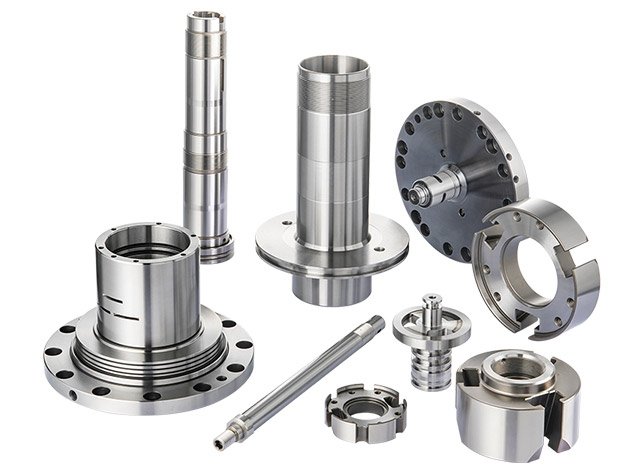
Advanced EDM and Wire Cutting for Hard and Brittle Materials
For global OEMs and Tier 1 suppliers, hard and brittle materials create a manufacturing challenge that extends well beyond tool selection. Tungsten carbide, technical ceramics, sapphire, silicon, hardened tool steels, and other difficult-to-machine materials deliver wear resistance, thermal stability, electrical performance, or extreme hardness. However, these same properties can increase cutting forces, accelerate tool wear, generate microcracks, and complicate inspection and downstream assembly.
Advanced electrical discharge machining (EDM) and wire cutting provide a controlled alternative to conventional subtractive methods. By removing material through localized electrical discharges rather than direct mechanical contact, EDM can produce intricate geometries, narrow slots, sharp internal corners, and high-precision features in electrically conductive hard materials. When combined with precision grinding, CNC machining, ceramics processing, process engineering, and supply chain control, EDM becomes part of a broader manufacturing strategy for reliable production.
1. Executive Summary
EDM is particularly effective when a component is too hard, too delicate, or too geometrically complex for economical milling, turning, or sawing. The process uses a shaped electrode or a continuously moving wire to create controlled electrical sparks between the tool and workpiece. Each discharge removes a minute quantity of material, while dielectric fluid carries away debris and stabilizes the machining zone.
Wire EDM is well suited to profiles, through-cuts, narrow openings, punches, dies, carbide components, and precision inserts. Sinker EDM is more appropriate for blind cavities, complex three-dimensional forms, and features that cannot be produced with a wire path. Small-hole EDM can create starting holes and deep, narrow passages in hardened materials. The right process depends on electrical conductivity, thickness, geometry, tolerance, surface-finish requirements, and production volume.
From a supply chain perspective, the main value is not simply the ability to cut a difficult material. The greater advantage comes from integrating material sourcing, process planning, EDM, secondary finishing, inspection, documentation, and delivery under one accountable manufacturing system. This reduces handoff risk and helps OEM engineering teams maintain consistent specifications across prototypes, qualification builds, and serial production.
Dixin Technology, operating through IndustryApex CNC, supports this integrated approach for customers requiring high-precision components and dependable production control. Its capabilities combine 3-5 axis CNC machining, EDM, precision grinding, and industrial ceramics with ERP-managed manufacturing coordination and more than 30 years of experience.
2. Technical Deep Dive
EDM performance begins with the material’s electrical behavior. Conventional EDM requires an electrically conductive workpiece, which includes many tool steels, stainless steels, nickel alloys, titanium alloys, copper alloys, graphite, and tungsten carbide grades. Most structural ceramics are electrically insulating and therefore cannot be processed directly by standard EDM. However, selected conductive ceramics, ceramic-metal composites, and hybrid component designs may be compatible with specialized methods or may require grinding, laser processing, ultrasonic machining, or a combined process route.
The workpiece and electrode are separated by a precisely controlled spark gap. A voltage pulse creates a plasma channel through the dielectric fluid, producing localized thermal energy that melts or vaporizes a small volume of material. The machine then extinguishes the discharge, flushes the debris, and repeats the cycle thousands of times. Because the tool does not exert significant cutting force, EDM can machine hardened materials after heat treatment and can reduce the distortion risk associated with heavy mechanical cutting.
Wire EDM uses a thin brass, coated brass, zinc-coated, or other engineered wire as a continuously renewed electrode. Computer numerical control guides the wire through the workpiece along a programmed contour. Multiple skim passes can improve dimensional accuracy and surface finish after the initial rough cut. This is important for precision dies, carbide punches, medical components, aerospace subcomponents, and wear-resistant inserts where edge quality and repeatability affect service life.
Several variables govern the result. Pulse duration and peak current influence removal rate, crater size, recast layer, and surface roughness. Wire tension affects straightness and contour stability. Flushing pressure must remove debris without deflecting the wire or damaging fragile features. Workpiece thickness, thermal conductivity, residual stress, and internal geometry also affect cutting behavior. A process optimized only for speed may leave excessive recast material, microcracking, taper, or corner inaccuracy.
For brittle materials, the thermal cycle requires particular attention. Localized heat can create a heat-affected zone or alter the surface condition even when the bulk component remains dimensionally stable. Process engineers therefore balance energy per spark, machining speed, dielectric cleanliness, and finishing passes. Inspection may include dimensional measurement, surface roughness testing, edge microscopy, hardness verification, and checks for cracks or delamination. Where the component is used in a fatigue-sensitive or sealing application, surface integrity can be as important as nominal tolerance.
EDM is not a universal replacement for CNC machining. It is most valuable when its strengths align with the part’s requirements. CNC roughing may remove accessible stock efficiently, followed by wire EDM for the final profile. Precision grinding may establish flatness, parallelism, or a controlled surface finish after EDM. For industrial ceramics, diamond grinding and ultrasonic-assisted techniques may be more suitable than conventional EDM, while EDM can remain useful for conductive inserts, fixtures, or mating components in the same assembly.
Design for manufacturability also has a measurable effect on cost. Designers should identify datum structures early, avoid unnecessarily narrow slots, provide suitable wire-entry locations, and define whether sharp corners are functionally necessary. Internal corner radius is limited by wire diameter and discharge conditions, while start holes may be required for enclosed profiles. Tolerances should be assigned according to function rather than applied uniformly. A clear definition of critical dimensions, surface zones, edge conditions, and inspection methods helps prevent expensive interpretation differences during production.
Material preparation is another important consideration. Heat treatment, stress relieving, blank thickness, and surface condition can influence wire stability and final geometry. A component that enters EDM with uneven residual stress may distort during stock removal. For high-value carbide or ceramic-related components, controlled fixturing and staged processing reduce the risk of chipping, warpage, or scrap. Process validation should include representative material lots and the actual production thickness, not only a convenient laboratory sample.
3. The ODM & Supply Chain Advantage
For OEM and Tier 1 procurement teams, advanced EDM is most effective when delivered as part of an ODM and supply chain integration model. The supplier must understand not only how to generate a toolpath, but also how the part functions within a larger product, which characteristics are critical to assembly, and how production can remain stable across changing demand.
Dixin Technology’s core identity is that of a supply chain integrator and ODM solution provider. This means engineering, manufacturing, inspection, and production coordination are connected from the initial drawing review through final shipment. Instead of treating EDM as an isolated subcontracted operation, the supplier can evaluate the complete process route, including material procurement, CNC pre-machining, heat treatment, EDM, grinding, ceramic processing, coating, cleaning, packaging, and documentation.
The manufacturing edge is a fully controlled precision manufacturing system supported by ERP and more than 30 years of experience. ERP control provides a structured basis for production scheduling, revision management, material traceability, work-order status, purchasing coordination, and delivery planning. For global programs, these controls help reduce uncertainty when multiple part numbers, engineering changes, inspection reports, and release milestones must be managed simultaneously.
The technical platform includes 3-5 axis CNC machining, EDM, precision grinding, and industrial ceramics. This combination supports both conductive and non-conventional materials, enabling engineers to select the most appropriate process for each feature. For example, CNC may establish reference surfaces, wire EDM may produce a precise profile in hardened carbide, and grinding may achieve the final flatness and surface condition. Where a ceramic component is required, ceramic-specific process knowledge can be applied to material selection, shaping, sintering considerations, grinding, and inspection.
ODM collaboration also improves manufacturability before a purchase order is released. Dixin engineers can review tolerance stacks, identify features that drive cycle time, recommend practical datum schemes, and distinguish functional requirements from legacy drawing conventions. These discussions can reduce cost without weakening performance. They also help establish a repeatable quality plan for samples, first article inspection, process qualification, and ongoing production.
Supply continuity depends on more than machine capacity. A resilient source should manage approved materials, backup process routes, critical consumables, maintenance planning, operator expertise, and inspection resources. Wire, dielectric filtration, electrodes, diamond tools, grinding wheels, and specialized fixtures all affect throughput and consistency. A controlled system makes these dependencies visible and supports better production decisions when demand changes or a component requires an engineering update.
For customers sourcing multiple product families, an integrated partner can consolidate technical communication and reduce the number of supplier interfaces. The same manufacturing organization may support aerospace CNC machining and titanium aircraft parts, medical components and high-precision surgical instruments, and hydraulic pump parts. The benefit is a common framework for quality communication, documentation, and production governance across different material and geometry requirements.
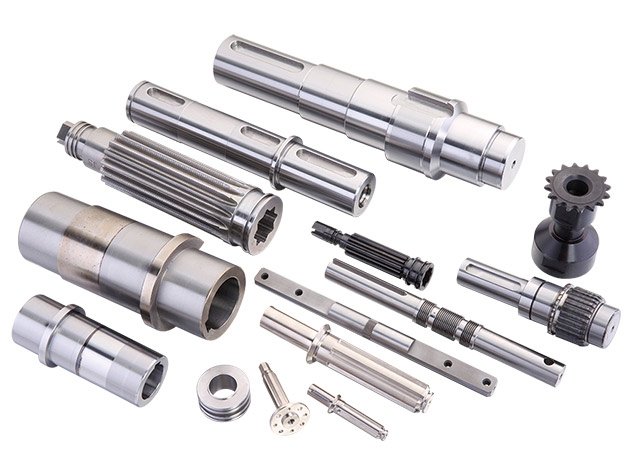
4. Industry Applications
Advanced EDM and wire cutting serve industries where dimensional accuracy, wear resistance, and difficult materials intersect.
Aerospace and Defense
Aerospace programs use hardened alloys, titanium, nickel-based materials, and specialized wear-resistant components. Wire EDM can produce accurate profiles in heat-treated parts, turbine-related tooling, seals, brackets, and structural components where distortion must be controlled. The process is also valuable for manufacturing fixtures, inspection masters, and replacement parts with complex profiles. Traceability, documentation, and repeatable inspection are essential because component performance and regulatory requirements are closely linked.
Medical and Surgical Equipment
Medical parts often combine demanding geometry with strict cleanliness and documentation expectations. EDM can produce precision features in stainless steel, titanium, cobalt-chrome, and other conductive materials used for surgical instruments, cutting tools, implant-related components, and high-precision device parts. Fine wire paths and controlled skim cuts help produce repeatable edges and slots, while post-processing and inspection must be selected to support the required surface condition and cleaning protocol.
Tooling, Dies, and Mold Components
Tool and die manufacturing remains one of the most established EDM applications. Hardened tool steels, carbide inserts, punches, dies, and mold components can be machined after heat treatment, reducing the need for extensive soft machining followed by correction. Wire EDM is effective for precision contours and clearance features, while sinker EDM produces cavities, ribs, and complex internal forms. The result can be improved tool life, better part repeatability, and reduced manual fitting.
Hydraulics, Pumps, and Fluid Control
Hydraulic valves, pump components, flow-control elements, and sealing interfaces require precise diameters, slots, lands, and surface conditions. EDM and grinding can support the production of hardened spools, sleeves, wear components, and precision inserts. Small deviations in concentricity, roundness, or edge condition can influence leakage and efficiency, so process capability and inspection planning are important. EDM may be paired with turning and grinding to establish accurate functional surfaces.
Semiconductor and Electronics Equipment
Manufacturing equipment for semiconductors and electronics frequently uses hard, wear-resistant, thermally stable, or chemically resistant materials. Precision cutting can support component profiles, tooling, fixtures, and alignment features. Because contamination and surface integrity may affect downstream processes, suppliers must control machining fluids, cleaning, packaging, and handling as carefully as dimensional production.
Energy and Industrial Machinery
Energy equipment, industrial automation, agricultural machinery, and construction machinery use components exposed to high loads, abrasion, heat, and corrosive environments. EDM can produce durable tooling and replacement parts in hardened materials, while grinding and ceramics processing address wear-resistant applications. For low-volume or engineered-to-order products, an ODM partner can combine technical review with flexible production planning to avoid over-investing in dedicated tooling.
5. Call to Action
Choosing EDM for a hard or brittle material requires a complete assessment of material conductivity, geometry, tolerance, surface integrity, production volume, inspection requirements, and supply chain risk. The most successful programs define these factors early and align them with a practical process route.
Dixin Technology provides integrated engineering and manufacturing support for global OEMs and Tier 1 suppliers seeking precision components, EDM wire cutting, grinding, CNC machining, and industrial ceramic solutions. Share your drawings, material specifications, target volumes, and critical performance requirements with the team through the IndustryApex CNC contact page. For broader capability information, visit the Dixin Technology manufacturing resource.
A structured technical review can clarify feasibility, recommend the correct process combination, establish inspection requirements, and identify opportunities to improve cost and delivery reliability before production begins. For hard and brittle materials, that early engineering discipline is often the difference between a difficult one-off process and a stable, scalable supply solution.