- Shaft
- Molds&Tools
- Hydraulics And Pump
- Hair transplant needle
- Hydraulics And Pump
- Precision CNC Shaft Machining Manufacturer for High Performance Applications
- Energy Industry CNC Machining Parts Supplier
- Aerospace CNC Machining Parts Manufacturer
- Aerospace CNC Machining Parts Manufacturer
- Automotive & EV CNC Machining Parts Supplier for OEM and Tier 1
- Medical CNC Machining Parts Supplier for Precision Medical Devices
Custom Worm Wheel and Worm Gear Manufacturing Techniques for Precision OEM Supply Chains

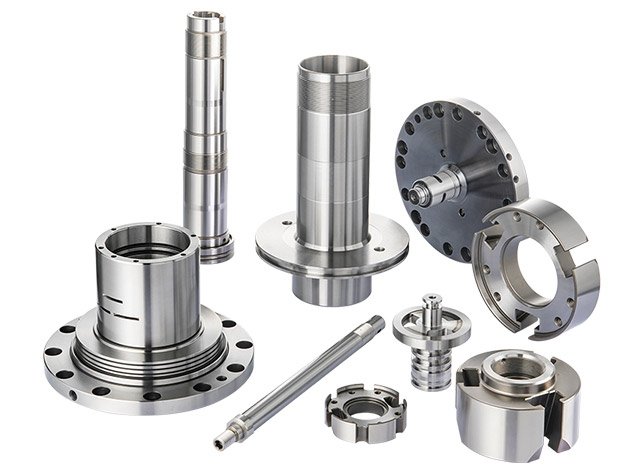
Custom Worm Wheel and Worm Gear Manufacturing Techniques for Precision OEM Supply Chains
Worm wheel and worm gear assemblies remain essential wherever machinery requires compact, high-ratio speed reduction, controlled motion, and reliable torque transmission. From industrial automation and hydraulic equipment to aerospace mechanisms and medical devices, these components must deliver consistent performance under load while fitting demanding dimensional and material requirements. For global OEMs and Tier 1 suppliers, the challenge is not simply finding a shop that can cut gear teeth. It is establishing a repeatable manufacturing system that connects engineering interpretation, material control, precision machining, inspection, surface treatment, and supply chain execution.
1. Executive Summary
Custom worm gear manufacturing combines geometric accuracy with application-specific engineering. A worm wheel is typically produced from bronze, brass, steel, or engineered materials, while the mating worm is commonly manufactured from hardened alloy steel, stainless steel, or other wear-resistant grades. The pair must be designed and produced as a matched transmission system. Tooth profile, lead angle, center distance, backlash, contact ratio, lubrication, hardness, and surface finish all influence efficiency, noise, service life, and thermal behavior.
The most reliable sourcing model begins with a complete review of the operating environment. Required torque, input speed, duty cycle, reversing loads, shock loading, temperature, contamination, lubrication method, allowable backlash, and expected life should be established before production begins. These parameters determine material selection, heat treatment, tooth geometry, machining sequence, and inspection criteria.
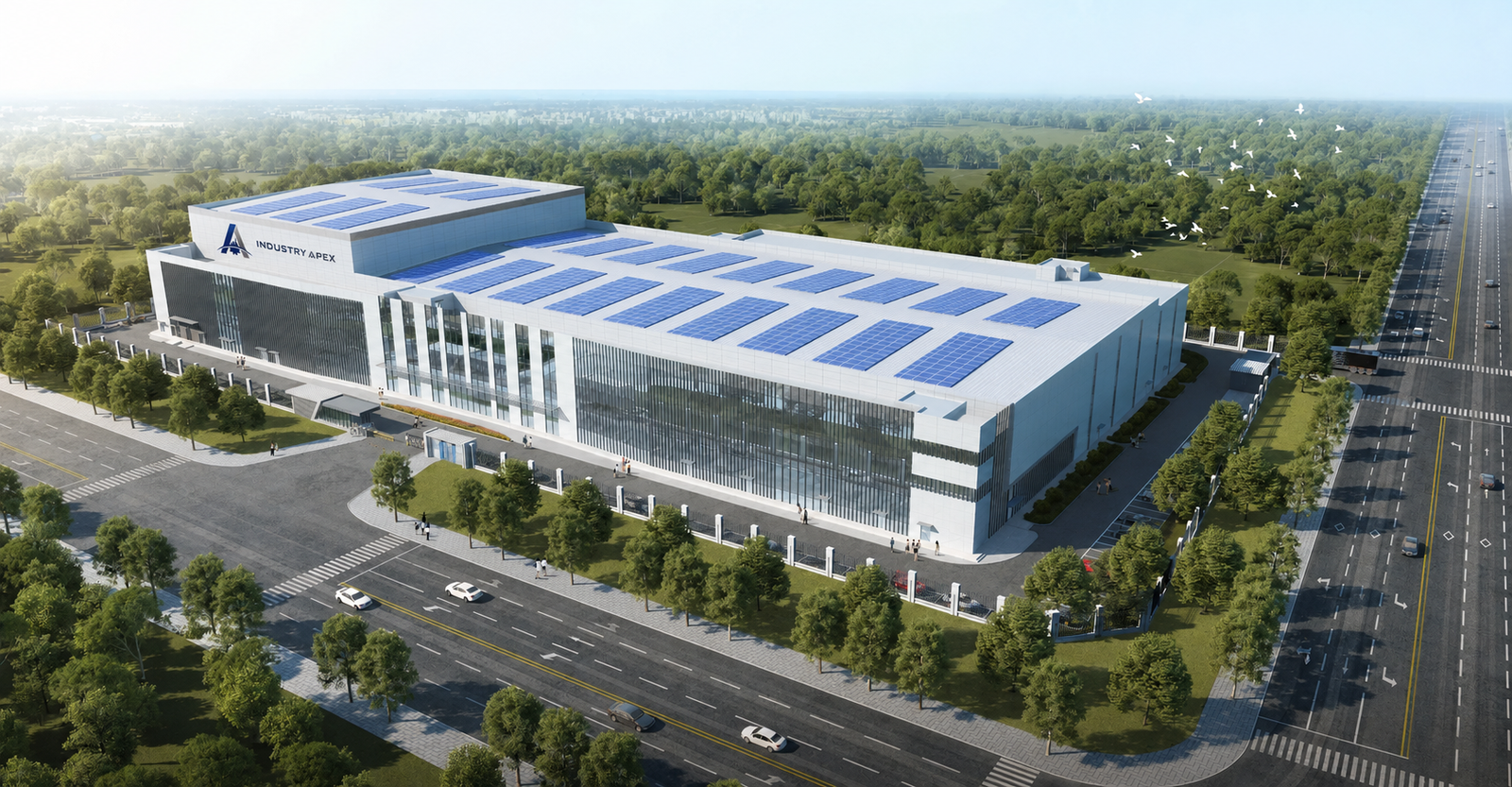
Dixin Technology, operating through IndustryApex CNC, supports custom precision components for global OEM and Tier 1 customers. Its role extends beyond contract machining: the company operates as a supply chain integrator and ODM solution provider, connecting product development with controlled manufacturing and production delivery. This approach is valuable when a customer needs a complete worm wheel and worm gear solution rather than an isolated machined part.
2. Technical Deep Dive
Worm wheel and worm gear geometry
A worm drive consists of a screw-like worm and a toothed worm wheel. The worm rotates around its axis and drives the wheel through sliding and rolling contact between the tooth surfaces. Depending on the design, a single-start worm can provide a high reduction ratio, while multi-start worms can improve efficiency and increase output speed. The lead angle directly affects self-locking behavior, transmission efficiency, heat generation, and sensitivity to lubrication conditions.
Custom production starts with the engineering definition of the pair, including normal module or diametral pitch, pressure angle, number of starts, helix direction, center distance, outside diameter, root diameter, face width, bore, keyway, and mounting features. These details must be interpreted together because a change in one parameter can alter tooth contact and assembly behavior. A drawing review should also identify datums, critical-to-function dimensions, geometric tolerances, inspection references, and any requirements for traceability or material certification.
Material selection and compatibility
Material pairing is one of the most important decisions in worm gear design. Bronze worm wheels are widely used because bronze provides favorable sliding characteristics and helps reduce the risk of adhesive wear against a hardened steel worm. Aluminum bronze may be selected for higher strength and load capacity, while phosphor bronze can offer good wear resistance and dimensional stability. Steel wheels may be appropriate for high-load or specialized applications, but they require careful consideration of lubrication, hardness, surface treatment, and contact stress.
The worm is often manufactured from alloy steel and then case hardened, induction hardened, or nitrided. The selected treatment should provide a durable working surface while preserving dimensional control and core toughness. Excessive distortion after heat treatment can affect lead accuracy, runout, and tooth contact. For that reason, finishing operations such as cylindrical grinding, thread grinding, or precision gear finishing may be required after hardening.
Manufacturing sequence
For a custom worm, the process commonly begins with turning the blank, establishing reference diameters, and machining the bore, shoulders, or mounting features. The worm thread is then generated using a suitable cutting process. Depending on the geometry, batch size, material, and accuracy class, this may involve CNC thread milling, thread hobbing, specialized worm grinding, or another controlled generating method. When the worm requires a hardened and ground surface, the manufacturing plan must reserve sufficient stock for heat treatment and final finishing.
Worm wheels may be manufactured from cast, forged, or bar-stock blanks. The blank is turned and bored before the teeth are generated. Hobbing is widely used for standard and medium-volume geometries, while CNC milling or specialized gear cutting may be more suitable for low-volume custom designs. For high-precision work, tooth flank finishing, lapping, or matched running-in may be used to improve contact quality and reduce operating noise.
EDM can support complex auxiliary features, hard-material processing, and tooling requirements that are difficult to complete using conventional cutting. Precision grinding is particularly important for bearing seats, sealing diameters, reference surfaces, and hardened worm threads. Industrial ceramics may also be integrated into specialized component assemblies where customers require electrical insulation, chemical resistance, low wear, or high-temperature stability.
Accuracy, contact pattern, and inspection
Dimensional inspection alone does not guarantee transmission performance. A worm and wheel can each meet individual drawing dimensions yet produce poor contact if their lead, profile, center distance, or alignment is inconsistent. Inspection should therefore combine dimensional measurement with functional evaluation. Critical checks may include tooth thickness, lead error, profile error, pitch diameter, radial runout, axial runout, bore size, concentricity, surface roughness, hardness, and heat-treatment depth.
Assembly testing can reveal the actual contact pattern between the mating components. A controlled marking compound or specialized gear inspection method can show whether contact is centered across the working face. Excessive edge contact may indicate misalignment, incorrect geometry, or insufficient support stiffness. Backlash should be measured at the operating position and across the specified rotation range, especially when the assembly is used for positioning or reversing motion.
Production quality also depends on process control. CNC programs should use stable datums and documented offsets. Tool wear, cutting temperature, burr formation, and chip evacuation must be monitored because they can influence tooth geometry and surface condition. For repeat orders, first-article inspection data should be connected to the production control plan so that the same critical characteristics are verified throughout the program.
Lubrication and service-life considerations
Because worm drives generate substantial sliding contact, lubrication is a design input rather than an afterthought. Oil viscosity, additive package, operating temperature, sealing arrangement, and lubricant compatibility with the wheel material should be evaluated together. Some extreme-pressure additives can attack particular bronze alloys, while insufficient viscosity can increase wear and heat. Housing design, cooling, alignment, and contamination control also influence service life.
Manufacturers should avoid treating efficiency, self-locking, and load capacity as interchangeable benefits. A highly self-locking design may produce greater sliding losses and heat. A design optimized for efficiency may require a brake or holding mechanism where back-driving is unacceptable. The production supplier should be able to identify these relationships during design-for-manufacturing and design-for-assembly reviews.
3. The ODM & Supply Chain Advantage
For OEM procurement teams, the central question is often broader than whether a supplier can manufacture a gear. The question is whether the supplier can manage the complete technical and commercial path from concept to stable delivery. Dixin Technology’s core identity is that of a supply chain integrator and ODM solution provider. This means the company can coordinate engineering review, material sourcing, process planning, precision manufacturing, inspection, packaging, and production support within a defined program structure.
Its manufacturing edge comes from a fully controlled precision manufacturing system supported by ERP and more than 30 years of manufacturing experience. ERP control improves visibility across work orders, material status, routing, inspection records, production capacity, and shipment planning. For custom worm gear programs, this reduces the risk of undocumented process changes and gives customers a more consistent record of how each production lot was made.
The technical platform includes 3-axis to 5-axis CNC machining, EDM, precision grinding, and industrial ceramics. These capabilities allow the manufacturing plan to be tailored to the component rather than forcing every feature through a single process. Multi-axis machining can reduce setups and improve access to complex surfaces. EDM supports intricate or hardened features. Grinding provides controlled finishing for critical fits and working surfaces. Ceramic capability expands the material range for demanding electrical, chemical, and wear-related applications.
This integrated structure is particularly relevant for global OEM and Tier 1 suppliers. Large customers need more than competitive piece pricing: they need documented quality, repeatable lead times, engineering responsiveness, controlled changes, export coordination, and a scalable path from prototype quantities to production volumes. A supplier capable of handling these requirements can reduce the number of handoffs between design offices, machine shops, heat-treatment vendors, inspection providers, and logistics partners.
ODM engagement can begin with a customer drawing, a sample, a worn component, or a performance requirement. During technical review, engineers can examine whether the specified material, geometry, tolerances, and finishing operations are appropriate for the intended duty cycle. Where the design is not fully defined, the supplier may help develop the component architecture, manufacturing route, and inspection plan. The result is a clearer division of responsibility and a lower risk of discovering manufacturability problems after tooling or production has started.
Supply chain resilience also depends on managing the less visible details. These include approved material sources, heat-treatment documentation, spare tooling, inspection equipment calibration, packaging protection, lot traceability, and contingency planning for constrained processes. For a worm gear assembly, a delay in one component can stop the entire customer production line. Coordinating the worm and wheel as a matched program helps protect assembly schedules and reduces the risk of dimensional incompatibility.
4. Industry Applications
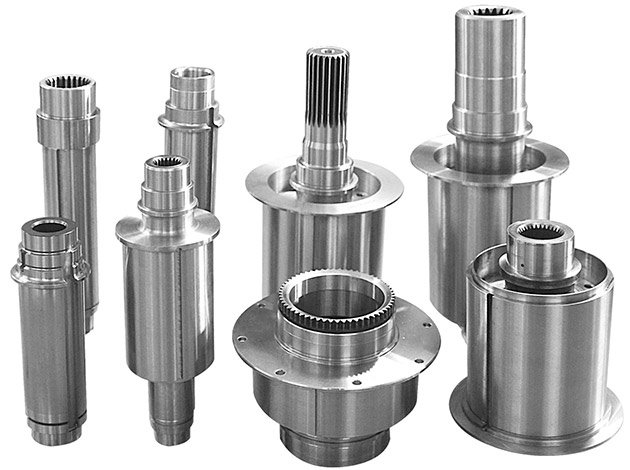
Custom worm wheel and worm gear assemblies are used in applications where compact reduction, controlled movement, or high output torque is required. In industrial automation, they support rotary tables, indexing mechanisms, conveyor adjustments, actuator systems, and packaging equipment. The manufacturing priority in these systems is often low backlash, smooth motion, repeatable positioning, and long operating life under frequent cycling.
In hydraulics and pump equipment, worm-driven mechanisms may be used for valve actuation, adjustment systems, drive accessories, and auxiliary positioning. Corrosion resistance, sealing compatibility, contamination control, and reliable operation under variable loads become important. Dixin Technology’s hydraulics and pump parts manufacturing capability provides a relevant supply chain reference for customers managing fluid-control equipment.
Aerospace applications place greater emphasis on material traceability, weight control, high reliability, inspection documentation, and performance across changing temperatures. Worm mechanisms may appear in actuation, positioning, access, or support systems where compact packaging is valuable. Customers sourcing related aerospace CNC machining and titanium aircraft parts can evaluate the supplier’s ability to manage demanding structural and precision-machined component requirements.
Medical equipment uses custom worm drives in positioning platforms, imaging mechanisms, laboratory automation, surgical equipment, and adjustment systems. These parts may require stainless steel, titanium, specialized coatings, clean manufacturing practices, and detailed inspection. For broader medical sourcing needs, Dixin Technology provides ISO-certified CNC machining for medical components, including high-precision device parts and surgical instruments.
Construction, agricultural, and material-handling machinery often exposes worm gear assemblies to shock loads, dust, moisture, vibration, and irregular maintenance. In these environments, robust materials, suitable sealing, adequate lubrication, and realistic fatigue analysis are essential. The manufacturing process must preserve functional accuracy without making the component unnecessarily sensitive to field conditions.
Energy, food-processing, packaging, and chemical equipment each introduce additional requirements. Energy systems may require high reliability and extended service intervals. Food and packaging machinery may require corrosion-resistant materials and cleanable surfaces. Chemical equipment may need material compatibility and protective finishes. In every case, successful customization depends on connecting the component specification to the actual operating environment rather than selecting a standard gear solely by nominal size.
5. Call to Action
Custom worm wheel and worm gear manufacturing should be evaluated as a complete engineering and supply chain program. The right supplier will review the duty cycle, geometry, material pairing, heat treatment, lubrication, inspection requirements, and production volumes before committing to a process. This reduces development risk and creates a stronger basis for repeatable global supply.
Contact Dixin Technology through IndustryApex CNC to discuss custom worm gear assemblies, precision transmission components, or related CNC manufacturing requirements. Share drawings, samples, performance data, target quantities, and quality standards through the Contact Us page. Dixin Technology can then assess manufacturability, recommend an appropriate production route, and develop a controlled ODM and supply chain solution for your organization.