- Shaft
- Molds&Tools
- Hydraulics And Pump
- Hair transplant needle
- Hydraulics And Pump
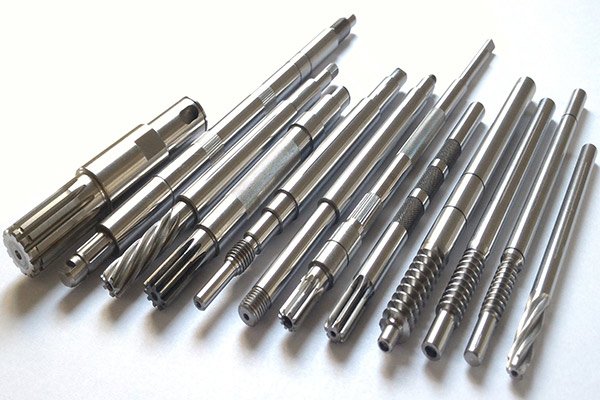
- Precision CNC Shaft Machining Manufacturer for High Performance Applications
- Energy Industry CNC Machining Parts Supplier
- Aerospace CNC Machining Parts Manufacturer
- Aerospace CNC Machining Parts Manufacturer
- Automotive & EV CNC Machining Parts Supplier for OEM and Tier 1
- Medical CNC Machining Parts Supplier for Precision Medical Devices
Titanium Implants: Challenges and Solutions in Medical CNC Machining

Executive Summary
Titanium Implants: Challenges and Solutions in Medical CNC Machining
Titanium remains one of the most important materials for orthopedic, dental, spinal, and trauma implants because it combines high strength-to-weight ratio, corrosion resistance, biocompatibility, and favorable osseointegration characteristics. However, producing titanium implants is considerably more demanding than machining many conventional metals. Low thermal conductivity, high chemical reactivity, work hardening, elastic recovery, burr formation, and strict surface-finish requirements all create risk across the manufacturing process.
For medical device OEMs and Tier 1 suppliers, the challenge is not simply cutting titanium accurately. It is establishing a repeatable, documented, and scalable manufacturing system that protects material traceability, dimensional integrity, cleanliness, delivery performance, and regulatory readiness. Tool selection, fixture design, machining strategy, inspection, secondary processing, and supply-chain coordination must operate as one controlled process.
Dixin Technology, operating through the IndustryApex CNC platform, supports global customers with precision manufacturing and ODM-oriented supply-chain integration. Its capabilities cover 3-5 axis CNC machining, EDM, precision grinding, industrial ceramics, process engineering, and production coordination. For organizations evaluating a qualified manufacturing partner, the Dixin Technology CNC components platform provides an overview of its broader precision-machining resources.
Technical Deep Dive: Why Titanium Implant Machining Is Difficult
Titanium alloys such as Ti-6Al-4V are widely used in implantable medical components. The alloy provides a useful balance of mechanical performance and corrosion resistance, but those same properties make it difficult to machine efficiently. Titanium transfers heat poorly compared with steel or aluminum. During cutting, much of the generated heat remains concentrated near the tool-workpiece interface rather than being carried away through the chip. Excessive heat can accelerate flank wear, cause coating degradation, alter the surface layer, and reduce process stability.
Titanium also has a strong chemical affinity with cutting-tool materials at elevated temperatures. If cutting speed, feed rate, tool geometry, or coolant delivery is poorly selected, adhesion and built-up edge can develop. The result may be unpredictable tool life, dimensional drift, roughness variation, or damage to the implant surface. A stable process therefore requires controlled cutting parameters, sharp and appropriate tools, sufficient chip evacuation, and coolant delivery aimed directly at the cutting zone.
Work hardening creates a second major concern. If a tool rubs instead of cutting, or if the machine follows an unstable path, the material surface can harden locally. A subsequent pass may then encounter a harder layer, increasing cutting forces and tool wear. Programming should maintain consistent engagement and avoid dwelling, repeated rubbing, or unnecessary tool recutting. High-quality toolpaths are especially important for porous structures, small radii, deep cavities, and complex anatomical surfaces.
Part rigidity is another consideration. Many implant geometries are small, thin-walled, curved, or interrupted by holes and slots. Titanium’s relatively low modulus of elasticity allows more elastic deflection than steel under comparable cutting forces. A workpiece that appears dimensionally correct after unclamping may move slightly when internal stresses are released. Engineers must account for this behavior through fixture design, support strategy, machining sequence, stock allowance, and measurement under defined conditions.
Implant quality depends on more than nominal dimensions. Surface integrity can influence fatigue performance, wear behavior, cleaning effectiveness, and biological response. Features such as threads, taper interfaces, bearing surfaces, porous zones, and bone-contacting textures may each require different surface specifications. Burrs, torn material, embedded particles, sharp transitions, and localized overheating are unacceptable risks. Deburring and finishing must therefore be treated as engineered operations, not informal manual cleanup.
Inspection planning should begin during design review. Critical-to-function dimensions may include hole location, thread form, taper angle, concentricity, flatness, profile, and positional tolerances. Depending on geometry and risk, inspection may use calibrated optical systems, tactile or scanning coordinate measuring machines, surface-roughness instruments, thread gauges, air gauges, and visual magnification. Measurement systems must be selected according to the feature, tolerance, material condition, and customer documentation requirements.
Material control is equally important. Medical production should maintain heat-lot traceability, material certificates, approved supplier records, and a clear link between incoming material and finished parts. Titanium stock must be protected from contamination, mix-ups, and damage during storage and handling. Segregated workholding, controlled cleaning, dedicated containers, and documented inspection checkpoints can reduce the risk of foreign-material transfer.
For a deeper view of Dixin Technology’s medical manufacturing scope, including titanium implants, surgical instruments, and precision device parts, visit the medical CNC machining service page.
Process Solutions for Higher Repeatability
A robust titanium implant process typically combines several controls. First, engineers establish a design-for-manufacturing review covering datums, tool access, minimum wall thickness, corner radii, clamping surfaces, and inspection accessibility. Second, machining is divided into roughing, semi-finishing, finishing, and verification stages so that each operation has a clear objective. Third, tool-life monitoring and first-article inspection are used to identify drift before it affects a larger production lot.
Five-axis machining can reduce setups and improve access to complex surfaces, but it must be supported by machine calibration, collision checking, post-processor validation, and experienced programming. For features that require extreme dimensional precision or specialized geometries, EDM and precision grinding may complement CNC machining. The correct combination depends on material condition, geometry, volume, tolerance, surface requirement, and validation strategy.
The ODM & Supply Chain Advantage
Medical OEMs often need more than a machine shop. They need a manufacturing partner capable of translating product requirements into a controlled production route, coordinating multiple technologies, managing documentation, and supporting design refinement. This is the practical value of an ODM and supply-chain integration model.
Dixin Technology’s core identity is that of a supply-chain integrator and ODM solution provider. Rather than treating each operation as an isolated transaction, the company can align engineering review, process selection, manufacturing, inspection, finishing, packaging coordination, and delivery planning around the customer’s product objective. This approach is valuable when an implant program includes multiple part families, changing volumes, tight launch schedules, or a combination of metallic and ceramic components.
The manufacturing edge is based on a fully controlled precision manufacturing system supported by ERP and more than 30 years of experience. ERP-based coordination can connect quotations, production planning, material status, work orders, inspection records, and shipment information. For global OEM and Tier 1 suppliers, visibility matters because an implant component may pass through several technical and commercial gates before it reaches an approved production status. A structured information flow reduces avoidable delays and makes responsibility clearer.
Dixin Technology’s technical capabilities include 3-5 axis CNC machining, EDM, precision grinding, and industrial ceramics. This combination supports projects in which titanium components must be produced alongside ceramic parts, precision inserts, tooling elements, or specialized production aids. It also gives engineering teams more options when a single process cannot economically or technically achieve the required result.
Supplier selection should still be based on the specific quality system, validation scope, certifications, customer requirements, and applicable regulatory responsibilities for each project. An experienced supplier can help define those boundaries early, prepare realistic process documentation, and identify where customer approval is required before production changes. Clear ownership is particularly important for special processes such as surface treatment, cleaning, passivation, coating, sterilization-related packaging, and other outsourced operations.
Supply-chain resilience also depends on practical details. Qualified alternate sources for raw material and tooling can reduce exposure to shortages. Planned safety stock may protect stable programs, while lot-based production and forecast sharing can improve capacity allocation. Packaging should prevent contact damage, particle generation, and mix-ups during transport. Export documentation, labeling, and delivery terms should be aligned with the customer’s receiving process from the beginning.
ODM collaboration can create value before production starts. Engineers may recommend changes such as increasing tool access, replacing unnecessarily deep pockets, adjusting corner radii, separating cosmetic and functional surfaces, or adding inspection datums. These changes can preserve clinical intent while improving manufacturability, yield, and cost. The goal is not to redesign the medical function without authorization; it is to identify controllable improvements and route them through the customer’s formal engineering-approval process.
What Global OEMs Should Evaluate
A useful supplier evaluation should examine more than equipment lists. Buyers should review sample inspection reports, material-traceability practices, change-control procedures, nonconformance handling, calibration management, subcontractor controls, capacity planning, and communication routines. Questions should address how the supplier handles tool wear, process deviations, engineering changes, and urgent technical feedback. A supplier that communicates clearly before problems become shipments is often more valuable than one that only offers a low initial unit price.
Industry Applications
Titanium CNC machining supports a broad range of medical applications. In orthopedics, it is used for bone plates, screws, spinal components, joint-related parts, trauma fixation systems, and specialized instruments. These products may combine threads, countersinks, anatomical contours, locking interfaces, and tight positional relationships. Consistent machining is essential because assembly performance and clinical handling can depend on small geometric details.
Dental applications include implant bodies, abutments, surgical guides, and custom restorative interfaces. Dental components often require precise threads, small diameters, smooth mating surfaces, and reliable repeatability across high part counts. The production strategy must balance cycle time with inspection coverage and tool-life control.
Spinal and cranial devices may involve complex curved surfaces, porous or lattice features, and patient-specific geometries. Five-axis CNC machining can support efficient access to these forms, while careful simulation and inspection are needed to avoid collisions, residual cusps, or inaccessible defects. When the design includes highly intricate structures, the manufacturing partner should confirm the achievable resolution, cleaning method, inspection approach, and production volume before finalizing the route.
Medical machining expertise can also transfer to adjacent regulated industries. Aerospace components, for example, demand traceability, controlled processes, and high-performance titanium machining, although the applicable specifications and validation requirements differ. Dixin Technology’s aerospace titanium machining resources illustrate how similar material challenges are addressed in another high-performance sector.
Beyond implants, precision manufacturing supports diagnostic equipment, laboratory instruments, fluid-control assemblies, and specialized tooling. Components for pumps and hydraulic systems may require tight fits, smooth bores, and controlled surface finishes; Dixin Technology’s hydraulic pump parts capability reflects this broader precision-engineering background. The relevant lesson for medical buyers is that process discipline, metrology, and production coordination are transferable foundations, even when the final compliance requirements are application-specific.
Call to Action
Successful titanium implant production depends on coordinated engineering, disciplined machining, reliable inspection, and transparent supply-chain control. The most effective manufacturing partner is one that can engage during design review, explain process limitations, manage multiple technologies, preserve traceability, and scale production without losing control of critical characteristics.
Share your implant drawings, material specifications, annual volume, tolerance requirements, surface-finish expectations, and validation needs with Dixin Technology’s engineering team. The team can review manufacturability, recommend a suitable process route, identify inspection requirements, and develop an ODM or precision-manufacturing solution for global OEM and Tier 1 programs. Contact Dixin Technology to discuss your titanium implant machining project.