- Shaft
- Molds&Tools
- Hydraulics And Pump
- Hair transplant needle
- Hydraulics And Pump
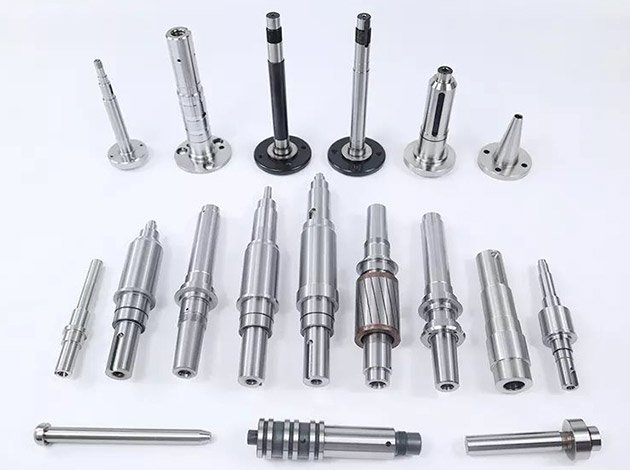
- Precision CNC Shaft Machining Manufacturer for High Performance Applications
- Energy Industry CNC Machining Parts Supplier
- Aerospace CNC Machining Parts Manufacturer
- Aerospace CNC Machining Parts Manufacturer
- Automotive & EV CNC Machining Parts Supplier for OEM and Tier 1
- Medical CNC Machining Parts Supplier for Precision Medical Devices

How ODM Solution Providers Are Transforming Medical Device Manufacturing

How ODM Solution Providers Are Transforming Medical Device Manufacturing
Medical device manufacturers are under growing pressure to launch innovative products faster, control costs, maintain traceability, and meet increasingly demanding quality requirements. At the same time, devices are becoming more compact, more precise, and more integrated. These conditions are reshaping the role of the manufacturing partner. Instead of relying on a machine shop for an isolated component, global OEMs and Tier 1 suppliers are increasingly working with ODM solution providers that can connect engineering, production, quality, and supply chain execution in one coordinated system.
For medical technology companies, this shift offers more than outsourced capacity. A capable ODM partner can help convert an early design into a manufacturable product, select suitable materials and processes, manage supplier relationships, and establish repeatable production controls. The result is a more resilient path from prototype to serial manufacturing.
1. Executive Summary
ODM solution providers are transforming medical device manufacturing by combining product-oriented engineering with controlled precision production. Their value lies in integrating several activities that have traditionally been managed by separate organizations: design-for-manufacturing review, process planning, CNC machining, special processes, inspection, documentation, procurement, and delivery coordination.
This integrated model is particularly important for components such as surgical instruments, implantable hardware, diagnostic equipment parts, fluid-control elements, and high-precision device assemblies. These products often require tight tolerances, complex geometries, biocompatible or corrosion-resistant materials, and complete process traceability. A fragmented supply chain can create delays, inconsistent quality, and communication gaps. An ODM provider reduces those risks by establishing a single technical and operational interface.
Dixin Technology, operating through IndustryApex CNC, supports this model as a supply chain integrator and ODM solution provider. With more than 30 years of manufacturing experience, an ERP-managed operating system, and capabilities spanning 3- to 5-axis CNC machining, EDM, precision grinding, and industrial ceramics, the company is positioned to support global OEM and Tier 1 programs from development through production. Manufacturers can review the broader precision manufacturing offering through the IndustryApex CNC home page.
2. Technical Deep Dive
Medical device manufacturing begins with a demanding technical problem: the final component must satisfy functional, dimensional, material, cleanliness, and documentation requirements simultaneously. A successful ODM provider therefore evaluates more than whether a part can be machined. The provider must determine whether the design can be produced consistently, inspected efficiently, and scaled without introducing avoidable risk.
Design for manufacturability
Design-for-manufacturing analysis is one of the earliest opportunities to improve a medical component program. Engineers review wall thickness, internal radii, deep cavities, datum structures, tool access, clamping strategy, burr risks, and the relationship between critical features. Small changes to a radius, tolerance, or surface specification can reduce cycle time and improve process stability without compromising device performance.
For complex titanium, stainless steel, cobalt-chrome, aluminum, and engineering polymer components, this review also considers cutting forces, heat generation, tool wear, workholding, and the possibility of distortion. When a device includes thin sections or free-form surfaces, 5-axis machining can reduce setups and improve positional accuracy. When a component includes intricate cavities or hardened features, EDM may provide a practical alternative to conventional cutting.
Precision grinding adds another layer of control where tight dimensional tolerances, flatness, roundness, or surface finish are essential. Industrial ceramics extend the material portfolio for applications requiring wear resistance, electrical insulation, thermal stability, or chemical resistance. The important point is not the availability of individual machines, but the ability to select and combine processes around the product requirement.
Process control and inspection
Medical manufacturing also depends on process repeatability. A reliable ODM partner translates product requirements into process documentation, inspection plans, approved material routes, tooling standards, and clearly defined acceptance criteria. In-process checks can identify drift before it affects a full batch, while final inspection verifies critical dimensions and functional interfaces.
Quality records should connect the finished part to its material source, production route, inspection results, and revision status. An ERP-supported system helps coordinate these records with purchasing, inventory, work orders, scheduling, and shipment information. This visibility is valuable during routine production and becomes especially important when a customer needs to investigate a nonconformance, update a design revision, or forecast demand across multiple programs.
Prototype-to-production continuity
A common source of delay is the transition from prototype manufacturing to production manufacturing. A prototype may prove that a design works, yet the process used to produce one or two parts may not be economical or stable at volume. ODM providers address this gap by considering scalability from the beginning. They can identify which features require dedicated tooling, which tolerances should be prioritized, how inspection time can be managed, and whether a component should be redesigned for fewer setups or more repeatable fixturing.
This continuity reduces the risk of transferring a component between unrelated suppliers after development. It also helps preserve technical knowledge, including lessons learned about material behavior, tool selection, surface treatment, cleaning, and packaging.
3. The ODM & Supply Chain Advantage
The central advantage of an ODM solution provider is integration. Rather than acting only as a contract manufacturer, the provider participates in the full chain of technical decisions that determine cost, quality, lead time, and supply reliability.
Core identity: supply chain integrator and ODM solution provider
A supply chain integrator coordinates the activities required to deliver a finished component or assembly. This can include design review, raw-material sourcing, machining, EDM, grinding, ceramic processing, secondary operations, inspection, packaging, and logistics. The ODM role adds engineering ownership: the partner helps shape a manufacturable solution instead of simply accepting drawings and quoting operations in isolation.
Manufacturing edge: controlled precision production
Dixin Technology combines a fully controlled precision manufacturing system with more than 30 years of experience. That experience matters because medical programs often contain difficult tradeoffs. A part may need an aggressive delivery schedule, a difficult alloy, a complex geometry, and strict dimensional control at the same time. An established manufacturing organization is better prepared to assess those tradeoffs and build a realistic production route.
ERP integration supports this manufacturing edge by connecting planning, purchasing, production status, inventory, quality data, and delivery commitments. For customers, this creates a clearer view of project progress and makes communication more actionable. Instead of receiving disconnected updates from several vendors, the OEM can work through one coordinated technical contact.
Technology capabilities
The technology base includes 3- to 5-axis CNC machining, EDM, precision grinding, and industrial ceramics. These capabilities support a broad range of medical applications, from small high-precision device parts to complex instrument components and wear-resistant elements. The same engineering discipline can also serve other demanding sectors. For example, IndustryApex CNC provides dedicated expertise in ISO-certified CNC machining for medical components.
The advantage of a broad process portfolio is flexibility. A project can be assigned to the process that best fits its geometry and performance requirements, while related operations remain under a coordinated quality and supply chain structure. This can reduce handoffs, shorten response times, and improve accountability when requirements change.
Value for global OEMs and Tier 1 suppliers
Global OEMs and Tier 1 suppliers typically need suppliers that can support long product lifecycles, engineering changes, forecast variability, and consistent documentation. An integrated ODM partner can help standardize communication across regions, reduce the number of active supplier interfaces, and provide a more stable basis for capacity planning.
Risk management is another benefit. A provider with established sourcing and production controls can identify material lead-time exposure, capacity constraints, process bottlenecks, and dependence on single sources earlier in the program. The customer can then decide whether to qualify alternative materials, reserve capacity, adjust inventory policy, or redesign a difficult feature before the issue becomes a delivery crisis.
4. Industry Applications
ODM manufacturing has applications across the medical device value chain. The most suitable model depends on the technical complexity, regulatory risk, annual volume, and level of engineering support required.
Surgical instruments
Surgical instruments often combine ergonomic requirements with precise interfaces, smooth surfaces, corrosion resistance, and repeated sterilization. CNC machining and grinding can produce handles, jaws, shafts, guide components, and instrument bodies with controlled geometry. An ODM provider can also review assembly interfaces and recommend process changes that improve consistency across production lots.
Implant and orthopedic components
Titanium and cobalt-chrome components require careful control of material certification, machining parameters, burr formation, surface condition, and dimensional accuracy. The manufacturing route must be selected with the final clinical and assembly requirements in mind. A specialized partner can support prototypes, low-volume launches, and production programs while maintaining the documentation expected for a controlled medical supply chain.
Diagnostic and laboratory equipment
Diagnostic instruments frequently use small precision parts, fluid paths, optical interfaces, alignment features, and chemically resistant components. Dimensional variation in a valve seat, carrier, or sensor housing can affect system performance. Integrated machining and inspection capabilities help maintain the relationships between these features and reduce the risk of assembly-level problems.
Fluid-control and pump systems
Medical pumps, dosing equipment, and fluid-control assemblies depend on reliable sealing, controlled clearances, and compatible materials. Components such as valve spools, sleeves, manifolds, impellers, and pump bodies may require different combinations of CNC machining, grinding, and specialized finishing. IndustryApex CNC also supports hydraulic pump parts and fluid-control components, demonstrating the relevance of its precision manufacturing experience to demanding flow-control applications.

Cross-industry manufacturing discipline
Medical programs benefit from manufacturing disciplines developed in aerospace, semiconductor, optics, and industrial equipment production. Aerospace components, for example, require strict material control and complex multi-axis machining, as shown in IndustryApex CNC’s capabilities for 5-axis aerospace parts and titanium aircraft components. While each industry has different standards and validation requirements, the underlying skills of process control, traceability, precision inspection, and production planning are transferable.
For OEMs, this cross-industry capability can be useful when a new medical product incorporates challenging materials or geometries that are not well served by a narrowly specialized supplier. The ODM partner can apply established precision methods while adapting documentation and quality controls to the customer’s medical program.
5. Call to Action
The transformation of medical device manufacturing is being driven by the need for faster development, stronger supply chain visibility, and reliable precision at production scale. ODM solution providers answer this need by bringing engineering judgment and manufacturing execution into one accountable system.
Dixin Technology and IndustryApex CNC support global OEMs and Tier 1 suppliers with integrated precision manufacturing, from design-for-manufacturing review and prototyping to controlled production and delivery coordination. Whether the requirement involves titanium implant components, surgical instruments, diagnostic equipment, ceramic parts, or fluid-control assemblies, the first step is to align the product requirements with a practical manufacturing route.
Share your drawings, material specifications, tolerance requirements, forecast, and target schedule with the engineering team through the IndustryApex CNC contact page. A structured review can identify process risks, improve manufacturability, and establish a supply plan suited to your next medical device program.