- Shaft
- Molds&Tools
- Hydraulics And Pump
- Hair transplant needle
- Hydraulics And Pump
- Precision CNC Shaft Machining Manufacturer for High Performance Applications
- Energy Industry CNC Machining Parts Supplier
- Aerospace CNC Machining Parts Manufacturer
- Aerospace CNC Machining Parts Manufacturer
- Automotive & EV CNC Machining Parts Supplier for OEM and Tier 1
- Medical CNC Machining Parts Supplier for Precision Medical Devices

Large-Scale Machining Explained: Gantry Milling and Crankshaft Grinding for Global OEM Supply Chains

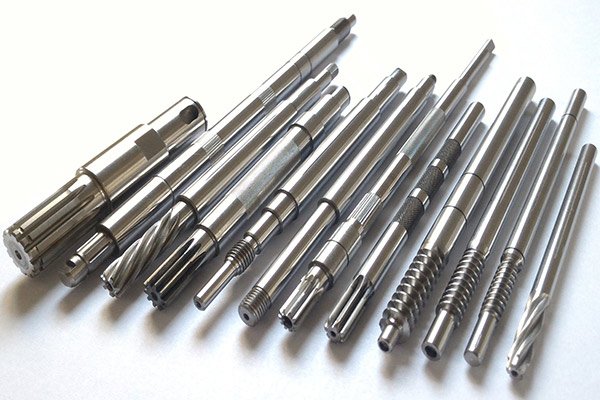
Large-Scale Machining: Gantry Milling and Crankshaft Grinding for Global OEM Supply Chains
Large-scale machining is a manufacturing discipline where equipment capacity, geometric control, process stability, and supply-chain coordination must work together. Gantry milling and crankshaft grinding are two particularly demanding operations. Gantry mills produce accurate, large-format structural components, while crankshaft grinding creates the precision journals and bearing surfaces required for engines, compressors, pumps, and heavy industrial powertrains.
For global OEMs and Tier 1 suppliers, the engineering challenge extends beyond selecting a machine. A reliable program must address material behavior, datum strategy, fixturing, thermal compensation, cutting-tool performance, inspection, documentation, packaging, and delivery continuity. Dixin Technology, operating through IndustryApex CNC, combines large-scale machining capability with an integrated ODM and supply-chain model for customers that require repeatable production rather than isolated workshop capacity.
1. Executive Summary
Gantry milling and crankshaft grinding serve different geometric purposes, but both require disciplined control of accuracy over large or complex workpieces. Gantry milling uses a bridge-style machine architecture to process wide, long, or tall components such as machine bases, frames, structural plates, molds, energy equipment, and heavy machinery housings. Its value comes from stable access over a large envelope, controlled multi-axis movement, and the ability to maintain positional relationships between multiple machined features.
Crankshaft grinding is a specialized finishing process for rotating shafts with multiple main journals, crankpins, fillets, counterweights, and oil passages. The operation must manage concentricity, stroke geometry, surface finish, journal diameter, crankpin indexing, and fillet integrity. Even small errors can increase vibration, reduce bearing life, create lubrication problems, or compromise engine performance.
In both processes, the best commercial result is determined by total manufacturing performance. A low hourly rate cannot compensate for unstable quality, excessive setup time, inconsistent inspection data, or late delivery. OEM procurement teams should therefore evaluate the supplier’s complete system: engineering review, process planning, machine resources, quality controls, production scheduling, traceability, and logistics.
Dixin Technology supports this evaluation with a fully controlled precision manufacturing system, ERP-based production management, and more than 30 years of manufacturing experience. Its capabilities include 3- to 5-axis CNC machining, EDM, precision grinding, and industrial ceramics. The result is a practical manufacturing route for global customers seeking complex components, assemblies, or ODM support from a single accountable partner. Explore the broader IndustryApex CNC manufacturing platform to review available precision component solutions.
2. Technical Deep Dive
Gantry Milling for Large and Complex Components
A gantry milling machine positions the workpiece beneath a rigid bridge supported by columns on both sides of the machining table. This arrangement improves access across large components while reducing the limitations associated with conventional vertical machining centers. Machine selection depends on table length, width, height capacity, spindle power, tool reach, axis travel, and the required tolerance over the entire working envelope.
Large components create several process risks. Their mass can cause fixture deformation or uneven support. Their size can amplify thermal expansion and make a local measurement appear different from a global measurement. Long tools may deflect under cutting loads, and interrupted cuts can generate vibration. For these reasons, large-format machining begins with a carefully defined datum structure and a support plan that reflects the component’s installed condition as well as its free-state condition.
Process engineers typically establish primary, secondary, and tertiary datums before roughing. Stock allowance must be sufficient for distortion removal without creating unnecessary cutting time. Roughing strategies may use adaptive toolpaths, balanced material removal, and staged stress relief. Semi-finishing then establishes stable reference surfaces, followed by finishing passes for bores, mounting faces, guideways, pockets, and complex contours. Where several faces must remain related, probing and in-process verification reduce the risk of cumulative setup error.
Gantry milling is especially effective for structural components that need coordinated machining across multiple surfaces. These may include aerospace frames, tooling bases, construction equipment components, energy-sector housings, and large automation assemblies. When tight tolerances are required, the supplier should document machine calibration, environmental conditions, tool qualification, and inspection methodology rather than relying only on a final dimensional report.
For aerospace programs, large structural parts often combine difficult materials with strict traceability requirements. Dixin Technology’s aerospace CNC machining services address titanium aircraft parts, 5-axis machining, and structural components where material control and geometric accuracy are central to qualification.
Crankshaft Grinding and Rotational Geometry
Crankshaft grinding converts a forged, cast, or semi-finished blank into a precision rotating component. Main journals define the primary rotational axis, while crankpins are positioned according to the engine’s stroke and firing configuration. Grinding must maintain journal diameter, roundness, cylindricity, taper, spacing, angular indexing, and the transition geometry at each fillet.
The grinding wheel, dressing cycle, coolant delivery, workholding method, and machine control all influence the result. Excessive heat can create burn, residual stress, or metallurgical damage. Poor coolant flow may reduce wheel life and affect surface integrity. An unsuitable dressing strategy can cause loading or unstable removal rates. Modern production therefore uses controlled stock removal, optimized wheel specifications, frequent dressing where necessary, and coolant filtration appropriate to the material and finish requirement.
Crankshaft fixturing is equally important. The workpiece must be supported without distorting the shaft, and the machine must accurately follow the required eccentric orbit for each crankpin. Measuring systems verify journal dimensions and detect taper or out-of-round conditions. Final inspection may include roundness analysis, surface roughness measurement, fillet gauging, magnetic particle inspection, dynamic balancing, and runout verification.
Grinding allowances should be established during upstream forging, casting, turning, or milling operations. If the blank arrives with inconsistent stock, the grinding stage becomes slower and less predictable. A coordinated supplier can optimize the complete routing, including rough turning, oil-hole machining, heat treatment coordination, straightening, grinding, polishing, balancing, and inspection. That coordination reduces handoffs and improves responsibility for final performance.
Crankshafts are not limited to automotive engines. They are used in marine power systems, reciprocating compressors, agricultural machinery, mining equipment, hydraulic power units, and industrial generators. The same principles apply to eccentric shafts, pump shafts, and other rotating parts where journal geometry directly affects reliability.
3. The ODM & Supply Chain Advantage
For a global OEM or Tier 1 supplier, large-scale machining is often part of a broader product requirement. The customer may need design-for-manufacturing feedback, prototype development, process validation, repeat production, subassembly, documentation, and export logistics. A supplier that performs only one machining operation may leave the customer managing the most important interfaces.
Dixin Technology’s core identity is that of a supply chain integrator and ODM solution provider. This means the engagement can begin with drawings, samples, CAD models, performance requirements, or a production problem rather than a fixed process route. Engineering teams can review tolerances, material specifications, datum references, access limitations, inspection criteria, and potential opportunities to reduce cost or improve manufacturability.
The manufacturing edge is a fully controlled precision manufacturing system supported by ERP and more than 30 years of experience. ERP control provides visibility into work orders, material status, routing, capacity, inspection records, and delivery planning. For customers operating multi-site production networks, that visibility supports better forecasting and reduces uncertainty around long-lead components.
Technology capability is also broader than a single machine category. Dixin Technology combines 3- to 5-axis CNC machining, EDM, precision grinding, and industrial ceramics. This combination is useful when a large machined component includes difficult pockets, hardened features, close-tolerance surfaces, wear-resistant inserts, or ceramic elements. Coordinating these processes through one manufacturing system can reduce external transfers, repeated inspection, and communication delays.
Supplier qualification should examine how the organization handles nonconforming material, engineering changes, revision control, first-article inspection, process capability, and corrective action. It should also assess whether the supplier can scale from prototype quantities to stable production without changing the process logic or quality ownership. A documented escalation path matters when a large workpiece reveals distortion, stock variation, or an unexpected material condition during production.
For medical customers, the requirements may include biocompatible materials, high cleanliness, controlled finishing, and detailed traceability. Dixin Technology provides ISO-certified CNC machining for medical components, including titanium implants, surgical instruments, and high-precision device parts. The same manufacturing discipline used for demanding rotating or structural components can be adapted to regulated production environments.
4. Industry Applications
Large-scale gantry milling and crankshaft grinding support several sectors where downtime, dimensional variation, and component failure carry significant financial consequences.
- Heavy equipment: Construction and mining machinery use large frames, housings, shafts, and powertrain components that must withstand high loads and harsh operating conditions. Gantry machining establishes accurate mounting and alignment surfaces, while grinding supports dependable rotating assemblies.
- Energy and power generation: Generators, compressors, turbines, pumps, and auxiliary systems require precision shafts, bases, housings, and structural components. Long service intervals make surface integrity, balance, and traceability important procurement criteria.
- Automotive and commercial vehicles: Engine and drivetrain programs depend on repeatable crankshaft journal geometry, fillet quality, balance, and oil-hole positioning. High-volume production benefits from stable grinding cycles, automated measurement, and process data that identifies drift before parts leave the line.
- Marine and industrial engines: Marine propulsion and stationary engines often use large crankshafts with demanding alignment and balancing requirements. Production planning must account for special handling, long components, protective packaging, and inspection at multiple stages.
- Hydraulics and fluid control: Pump shafts, valve bodies, sleeves, and other fluid-control parts need accurate bores, sealing surfaces, and wear-resistant finishes. Dixin Technology’s hydraulic pump parts capabilities support components used in hydraulic systems and industrial fluid equipment.
- Aerospace and defense: Structural parts and high-value machined components require robust process control, documentation, and material traceability. 5-axis access can reduce setups and preserve feature relationships on complex geometries.
- Medical and laboratory equipment: Precision housings, surgical instruments, implants, and device parts place greater emphasis on surface condition, cleanliness, repeatability, and quality records than on raw machining speed.
Across these applications, the sourcing decision should reflect the component’s total lifecycle cost. A supplier that improves first-pass yield, reduces setup count, controls subcontracting, and provides predictable delivery may generate more value than a supplier offering a lower nominal piece price.
5. Call to Action
Large-scale machining projects should be evaluated as integrated engineering and supply-chain programs. Gantry milling requires control of structure, fixturing, thermal behavior, and multi-face geometry. Crankshaft grinding requires control of journal dimensions, eccentricity, surface integrity, fillets, balance, and rotational alignment. Both demand capable equipment, experienced process engineers, disciplined inspection, and reliable production planning.
Dixin Technology and IndustryApex CNC help global OEMs and Tier 1 suppliers move from design intent to qualified production through ODM support, precision manufacturing, grinding, EDM, industrial ceramics, ERP-controlled operations, and supply-chain coordination. To discuss a large structural component, crankshaft, eccentric shaft, hydraulic part, or related production requirement, contact the Dixin Technology team with your drawings, material requirements, target quantities, tolerance specifications, and delivery objectives.