- Shaft
- Molds&Tools
- Hydraulics And Pump
- Hair transplant needle
- Hydraulics And Pump
- Precision CNC Shaft Machining Manufacturer for High Performance Applications
- Energy Industry CNC Machining Parts Supplier
- Aerospace CNC Machining Parts Manufacturer
- Aerospace CNC Machining Parts Manufacturer
- Automotive & EV CNC Machining Parts Supplier for OEM and Tier 1
- Medical CNC Machining Parts Supplier for Precision Medical Devices

The Future of Robotics Components in 2026: Micron-Level Precision, ODM Strategy, and Supply Chain Resilience

The Future of Robotics Components in 2026: Micron-Level Precision, ODM Strategy, and Supply Chain Resilience
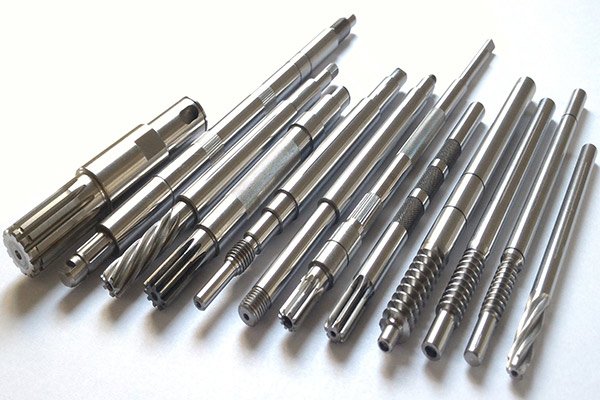
As robotics moves from controlled factory cells into warehouses, laboratories, operating rooms, aerospace systems, and complex production environments, the performance requirements for every component are becoming more demanding. In 2026, robot builders and automation integrators will increasingly compete on repeatability, service life, energy efficiency, and responsiveness rather than on motion alone. These outcomes depend on the quality of the components inside the system: precision shafts, gear elements, housings, valve spools, end-effector parts, ceramic insulators, and other engineered components that determine how accurately a robot senses, moves, and repeats.
1. Executive Summary
The future of robotics components is being shaped by a convergence of micron-level manufacturing, intelligent production control, advanced materials, and more integrated supply chains. A robotic joint may be specified to achieve sub-millimeter positioning, but its actual performance depends on the cumulative tolerances of bearings, gears, shafts, couplings, motor interfaces, seals, and structural parts. Small deviations can create backlash, vibration, heat, noise, and premature wear. For this reason, global OEMs and Tier 1 suppliers are looking beyond individual machining operations and evaluating complete manufacturing systems.
In 2026, successful component suppliers will provide more than parts. They will support design for manufacturability, material selection, process validation, inspection planning, production traceability, and scalable delivery. The most competitive model combines ODM engineering with controlled precision manufacturing and supply chain coordination. This approach allows customers to reduce development time, limit supplier fragmentation, and obtain consistent quality across prototype, pilot, and mass-production phases.
Dixin Technology, operating through IndustryApex CNC, is positioned around this requirement. Its capabilities in 3-5 axis CNC machining, EDM, precision grinding, industrial ceramics, ERP-controlled production, and long-term manufacturing experience support the complex needs of modern robotics programs. For an overview of precision component and custom manufacturing capabilities, visit the IndustryApex CNC home page.
2. Technical Deep Dive
Micron-level precision does not mean that every dimension in a robotic component must be manufactured to a one-micron tolerance. Instead, it refers to a controlled engineering strategy in which critical interfaces, geometric relationships, surface conditions, and process variation are managed at the micron scale where necessary. The objective is functional precision: reliable movement, stable load transmission, low friction, accurate feedback, and predictable service life.
Robotic drive assemblies illustrate the challenge. A harmonic drive, planetary gearbox, or precision belt transmission must maintain alignment between rotating elements while handling repeated acceleration and deceleration. Shaft runout, concentricity, cylindricity, and bearing-seat accuracy directly influence vibration and positioning error. A component can meet a basic dimensional tolerance and still produce poor system performance if its datum structure, surface finish, or geometric profile is not controlled correctly.
Precision grinding is therefore becoming increasingly important for selected bearing seats, guide surfaces, sealing diameters, and hardened components. Grinding can provide stable surface quality and tighter geometric control after heat treatment. EDM is valuable when a design requires intricate internal features, narrow slots, small radii, or hard materials that are difficult to machine conventionally. These processes complement multi-axis CNC machining, which is used to create complex housings, brackets, links, and structural components with fewer setups and better datum continuity.
Material engineering is another major factor. Aluminum and titanium remain attractive for lightweight robot arms and mobile platforms, while alloy steels and tool steels are used where stiffness, fatigue strength, or wear resistance is critical. Industrial ceramics can provide electrical insulation, thermal stability, chemical resistance, and low mass in applications where metal is not ideal. As robots enter high-temperature, vacuum, medical, and chemically aggressive environments, the ability to combine metallic and ceramic components will become a significant design advantage.
Inspection must be integrated into the process rather than applied only at final release. Coordinate measuring machines, optical measurement, surface-finish inspection, form measurement, and in-process probing help identify drift before a batch becomes nonconforming. Digital records linked through ERP systems can connect material certificates, machine settings, inspection results, operator actions, and shipment data. This traceability is essential for customers who need repeatable global production and rapid root-cause analysis.
Designers should also consider thermal behavior. Robotic components experience temperature changes caused by motors, brakes, friction, ambient conditions, and nearby processes. Thermal expansion can alter preload, clearance, gear mesh, and sensor alignment. Precision suppliers can help evaluate these effects through material selection, tolerance allocation, surface treatment, and production testing. In 2026, the best component specifications will describe not only nominal dimensions but also functional performance under realistic operating conditions.
Another emerging priority is sustainability without compromising precision. Reduced material waste, optimized machining paths, longer component life, repairable designs, and efficient coolant management can lower the environmental impact of production. Lightweight parts can reduce the energy consumed by moving robot axes, but only when their stiffness and fatigue performance remain adequate. The engineering target is not simply the lowest mass or tightest tolerance; it is the best lifetime performance per unit of material and energy.
3. The ODM & Supply Chain Advantage
Robotics OEMs and Tier 1 suppliers increasingly need a partner that can connect product development with manufacturing execution. This is the role of an ODM solution provider and supply chain integrator. Instead of treating design, process planning, machining, inspection, finishing, and logistics as separate transactions, an integrated supplier manages them as one coordinated program.
Dixin Technology’s core identity is built around supply chain integration and ODM support. This model is particularly valuable when a customer has a performance requirement but needs assistance translating that requirement into a manufacturable component. Engineers can review drawings, identify tolerance risks, recommend appropriate materials, simplify setups, and assess whether a feature should be produced by CNC machining, EDM, grinding, or ceramic processing.
The manufacturing edge comes from a fully controlled precision manufacturing system supported by ERP and more than 30 years of experience. ERP visibility helps coordinate purchasing, production scheduling, work orders, inspection status, inventory, and delivery commitments. For global robotics programs, this control reduces uncertainty when demand changes, engineering revisions are introduced, or multiple part numbers must be synchronized for assembly.
The technology platform includes 3-5 axis CNC machining, EDM, precision grinding, and industrial ceramics. Each process addresses a different portion of the robotics component spectrum. Five-axis machining can reduce repositioning and preserve complex geometric relationships. Three- and four-axis machining remains efficient for repeatable production features. EDM supports hard and intricate geometries. Grinding refines critical interfaces after heat treatment. Ceramic manufacturing supports insulating, wear-resistant, and temperature-stable components.
ODM collaboration also improves launch readiness. During the prototype phase, the supplier can help define inspection points and establish realistic process capability targets. During pilot production, it can validate fixtures, tool life, measurement methods, and packaging. During volume production, it can monitor variation and coordinate replenishment. This continuity reduces the risk of transferring knowledge between disconnected suppliers.
Supply chain resilience is now a technical issue as much as a purchasing issue. A delayed bearing seat, missing ceramic insulator, or inconsistent shaft batch can stop a complete robotic assembly. An integrated partner can help identify approved material alternatives, maintain controlled safety stock, develop dual-source strategies where appropriate, and preserve revision discipline. The objective is not to add inventory indiscriminately; it is to protect the components that create the greatest production risk.
For aerospace robotics, the same principles apply to lightweight structural links, actuation interfaces, and high-strength parts. Dixin Technology’s aerospace CNC machining capabilities demonstrate how titanium and complex structural components can be managed within demanding quality requirements. Medical robotics requires an even stronger focus on traceability, biocompatibility, surface quality, and controlled documentation. Relevant solutions are described in the company’s medical component machining resources.
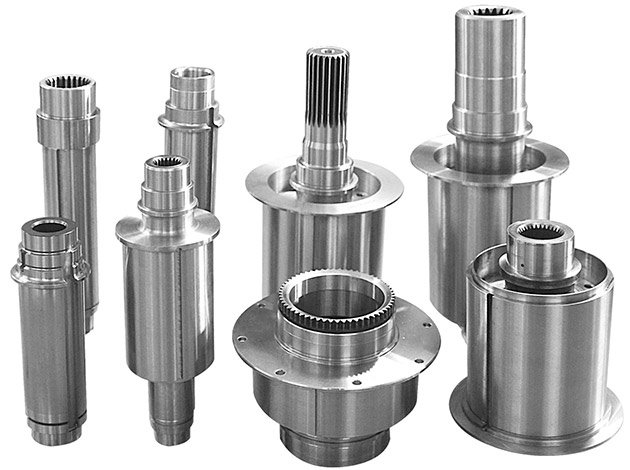
For procurement teams, the practical advantage is measurable. Fewer handoffs can reduce communication errors, engineering changes can be implemented more consistently, and quality data can be reviewed across the entire production chain. For engineering teams, the advantage is earlier feedback on feasibility. For operations teams, it is improved delivery predictability. Together, these benefits help OEMs bring robotics products to market faster while maintaining the precision expected by industrial customers.
4. Industry Applications
Micron-level robotics components will support a broad range of applications in 2026. In industrial automation, robotic arms used for welding, assembly, dispensing, and inspection will require durable links, accurate shafts, low-backlash transmission parts, and repeatable end-effector interfaces. As production lines become more flexible, components must withstand frequent reconfiguration and high cycle counts without losing alignment.
Warehouse and logistics robots create a different set of demands. Mobile platforms require lightweight structural parts, compact drive components, wear-resistant wheels or hubs, and reliable fluid or electrical interfaces. Manufacturing consistency is especially important because these robots are often deployed in large fleets. A small variation in a high-volume component can become a significant maintenance issue across thousands of units.
Robotics for semiconductor and electronics production requires clean, stable, and highly repeatable components. Low-particle surfaces, precise motion interfaces, nonmagnetic materials, and ceramic elements may be necessary depending on the environment. In these applications, component cleanliness and process control can be as important as dimensional accuracy.
Medical and laboratory robots use precision parts for surgical positioning, diagnostic automation, sample handling, and minimally invasive systems. Components must support smooth movement, sterilization compatibility, corrosion resistance, and strict documentation. The supplier’s role may extend from machining a single part to coordinating material certifications, special finishes, inspection reports, and controlled packaging.
Hydraulic and electro-hydraulic robotic systems depend on components that control pressure and flow with exceptional consistency. Valve spools, sleeves, pump parts, and actuator interfaces must maintain accurate clearances and surface finishes to prevent leakage and unstable control. Dixin Technology provides specialized information on hydraulic pump parts, supporting applications where fluid control and precision machining intersect.
Aerospace and defense-adjacent civil applications will use robotics for aircraft inspection, maintenance, composite processing, and remote operation. These systems prioritize low weight, high stiffness, fatigue resistance, and reliable performance over wide temperature ranges. Precision-machined titanium and high-strength alloy components can help achieve these targets when supported by appropriate process and inspection controls.
Finally, collaborative robots and service robots will expand the market for compact, quiet, and safe motion systems. Their components must balance precision with low mass, low noise, and controlled force. This will encourage greater use of optimized geometries, engineered polymers, ceramics, miniature shafts, and integrated sensor interfaces. Across every segment, the common requirement is dependable performance over the complete product life cycle.
5. Call to Action
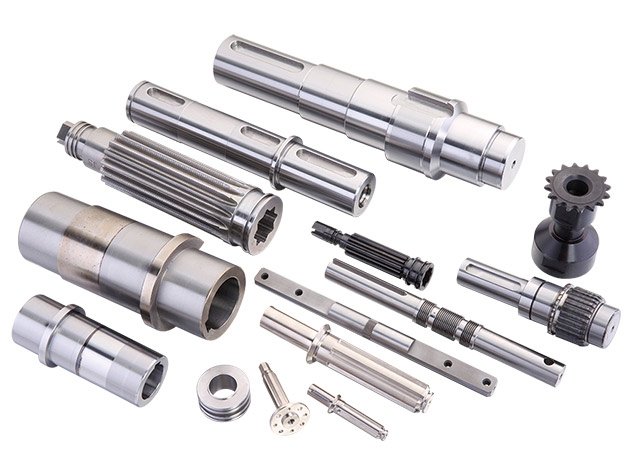
Robotics manufacturers planning for 2026 should evaluate components at the system level. Review critical interfaces, define functional tolerances, assess thermal and fatigue conditions, and identify which features require CNC machining, EDM, precision grinding, or industrial ceramics. Early supplier involvement can reveal cost, lead-time, and manufacturability risks before they affect the production schedule.
Dixin Technology supports global OEMs and Tier 1 suppliers with ODM engineering, precision manufacturing, ERP-based production control, and supply chain coordination. To discuss a new robotics component, an existing drawing, or a complete sourcing program, contact the IndustryApex CNC team with your application requirements, materials, tolerances, annual volume, and quality documentation needs.