- Shaft
- Molds&Tools
- Hydraulics And Pump
- Hair transplant needle
- Hydraulics And Pump
- Precision CNC Shaft Machining Manufacturer for High Performance Applications
- Energy Industry CNC Machining Parts Supplier
- Aerospace CNC Machining Parts Manufacturer
- Aerospace CNC Machining Parts Manufacturer
- Automotive & EV CNC Machining Parts Supplier for OEM and Tier 1
- Medical CNC Machining Parts Supplier for Precision Medical Devices

Why Choose China for High-Precision CNC Shaft Machining? An OEM and Supply Chain Analysis

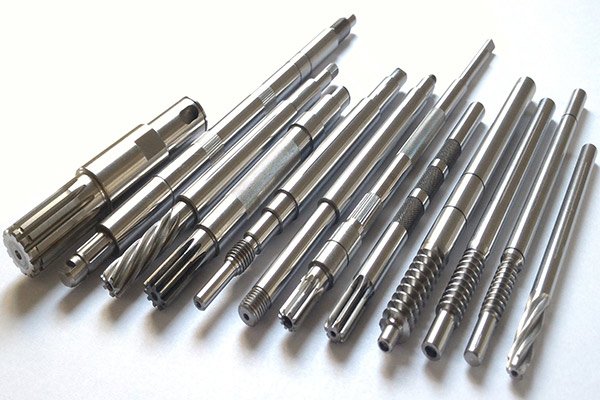
Why Choose China for High-Precision CNC Shaft Machining?
For global OEMs and Tier 1 suppliers, the decision to source precision CNC shafts is no longer based on unit price alone. Dimensional stability, material traceability, engineering support, production scalability, inspection capability, and supply continuity all influence the total cost and operational risk of a machined shaft program. China has developed into a highly capable manufacturing base for high-precision CNC shaft machining because it combines broad industrial infrastructure with increasingly sophisticated process control and supply chain coordination.
When the right manufacturing partner is selected, China can support prototype development, low-volume qualification, repeat production, and high-volume supply within one coordinated system. Dixin Technology, operating through IndustryApex CNC, works with international customers that require engineered components rather than basic machining capacity. Its approach combines precision manufacturing, process engineering, sourcing coordination, quality management, and ODM support for demanding industrial applications.
1. Executive Summary
High-precision CNC shafts are used in applications where concentricity, runout, surface finish, hardness, balance, and long-term wear performance directly affect system reliability. Typical examples include transmission shafts, splined shafts, pump shafts, valve spools, actuator components, medical drive parts, aerospace mechanisms, and precision automation assemblies.
China is an attractive sourcing destination for these components for five primary reasons:
- Deep manufacturing infrastructure: China has extensive access to CNC turning, milling, grinding, heat treatment, plating, coating, material processing, and inspection services.
- Strong engineering responsiveness: Experienced suppliers can review drawings, identify manufacturability risks, and recommend process improvements before production begins.
- Scalable production: A qualified supplier can often transition from prototypes to repeat production without changing the fundamental quality system or supply chain.
- Competitive total cost: Labor, equipment utilization, material sourcing, and process integration can create a favorable total cost when quality and logistics are evaluated together.
- ODM and supply chain coordination: A capable partner can manage more than machining, including material procurement, secondary operations, inspection documentation, packaging, and delivery planning.
The key qualification question is not simply whether a Chinese factory owns CNC machines. It is whether the supplier has a controlled process capable of producing the required shaft geometry consistently, documenting conformance, and supporting the customer throughout the product lifecycle.
2. Technical Deep Dive
Precision shaft machining begins with the relationship between design intent and process capability. A shaft may appear geometrically simple, but its performance can depend on several interacting requirements: bearing-seat tolerances, datum alignment, coaxiality, thread accuracy, spline form, surface roughness, heat-treatment distortion, and the relationship between finished dimensions and assembly conditions.
Modern CNC turning centers provide the foundation for many shaft programs. Multi-axis equipment can complete turning, drilling, threading, grooving, and live-tool operations with fewer setups. For more complex components, 3-axis, 4-axis, and 5-axis CNC machining can produce offset features, cross-holes, milled flats, keyways, and compound geometries while reducing datum transfer errors. The appropriate machine configuration depends on the shaft length-to-diameter ratio, material, production quantity, feature orientation, and tolerance requirements.
However, turning alone is rarely the complete solution for high-precision shafts. Precision grinding may be required for bearing journals, sealing surfaces, and other functional diameters. Grinding can provide tighter size control and improved surface finish, but it also requires careful control of wheel selection, dressing, coolant management, thermal effects, and workholding. Electrical discharge machining may be appropriate for difficult materials or specialized slots and profiles. Industrial ceramics can also support wear-resistant or electrically insulating components in environments where conventional steel or alloy parts are unsuitable.
Material selection is another major consideration. Stainless steels, alloy steels, tool steels, aluminum, titanium, brass, copper alloys, nickel-based alloys, and engineered ceramics may each be suitable for different operating conditions. A supplier should understand not only the nominal material grade but also the required condition, hardness range, grain structure, corrosion resistance, heat-treatment specification, and certification requirements.
Process planning should define the manufacturing sequence before cutting begins. A typical sequence may include material verification, rough turning, stress relief, semi-finishing, heat treatment, straightening, grinding, secondary milling, surface treatment, final inspection, and controlled packaging. The sequence must account for how each operation affects the next. For example, heat treatment can change shaft straightness and dimensions, while aggressive grinding can create thermal damage if coolant and process parameters are not controlled.
Inspection strategy should match the function of the component. Coordinate measuring machines can verify positional relationships and geometric tolerances. Roundness, cylindricity, concentricity, and runout may require specialized form measurement equipment. Surface roughness testers, thread gauges, spline inspection systems, hardness testers, and optical comparators may be added according to the drawing and application. For critical programs, inspection records should identify the measurement method, equipment status, sampling plan, and acceptance criteria.
Digital production management is equally important. ERP and manufacturing execution practices help connect purchasing, production scheduling, tooling, inspection, nonconformance handling, and shipping. This visibility reduces the risk of undocumented substitutions, missed revisions, incomplete inspection reports, and delivery surprises. It also provides a stronger basis for forecasting and repeat-order management.
For buyers, the practical implication is clear: evaluate a supplier’s entire process chain instead of reviewing machine lists in isolation. The strongest partner will be able to explain how the shaft is fixtured, where critical dimensions are measured, how distortion is managed, and how process data is retained for future lots.
3. The ODM & Supply Chain Advantage
For global OEM and Tier 1 suppliers, the value of a Chinese manufacturing partner increases when that partner acts as a supply chain integrator and ODM solution provider. This model is different from sending a drawing to a job shop and receiving a finished part. It creates a coordinated technical and commercial interface for the complete component program.
Dixin Technology’s core identity is built around supply chain integration and ODM support. This means the supplier can participate at the early engineering stage, assist with design-for-manufacturing reviews, coordinate qualified production resources, and support the transition from development to serial supply. For shaft components, this may include recommendations regarding stock allowance, machining datums, thread design, spline production, heat-treatment sequence, surface treatment, and inspection access.
The manufacturing edge comes from a fully controlled precision manufacturing system supported by ERP and more than 30 years of experience. A controlled system helps establish accountability across material purchasing, process planning, manufacturing, quality assurance, and logistics. Long-term manufacturing experience is particularly valuable when parts involve difficult materials, narrow tolerances, multiple subcontracted operations, or changing production volumes.
Technology capability is another differentiator. Dixin Technology supports 3-axis to 5-axis CNC machining, EDM, precision grinding, and industrial ceramics. These capabilities allow a project to be evaluated as a complete manufacturing problem rather than being restricted to one machining method. Combining operations under coordinated process control can reduce handling, improve consistency, and simplify communication for the customer.
ODM support also improves the product development cycle. An experienced supplier can flag features that add cost without improving function, identify tolerances that may be unnecessarily restrictive, and propose alternative processes based on annual volume and performance requirements. This does not mean changing the customer’s design without approval. It means creating a documented engineering dialogue before tooling, material, and production commitments are finalized.
From a supply chain perspective, China offers access to established ecosystems for raw materials, heat treatment, plating, coatings, fasteners, packaging, tooling, and industrial services. The benefit is strongest when the primary supplier manages these relationships through approved processes and defined quality controls. Otherwise, a fragmented vendor network can create inconsistent documentation and unclear responsibility.
Risk management should remain part of the sourcing decision. Buyers should assess supplier financial stability, production redundancy, quality records, change-control procedures, export experience, packaging standards, and communication discipline. A robust supplier should be able to provide a clear approval process for material changes, process changes, tooling changes, and subcontractor changes. These controls matter as much as nominal machining tolerance when a shaft is used in a safety-critical or high-duty-cycle assembly.
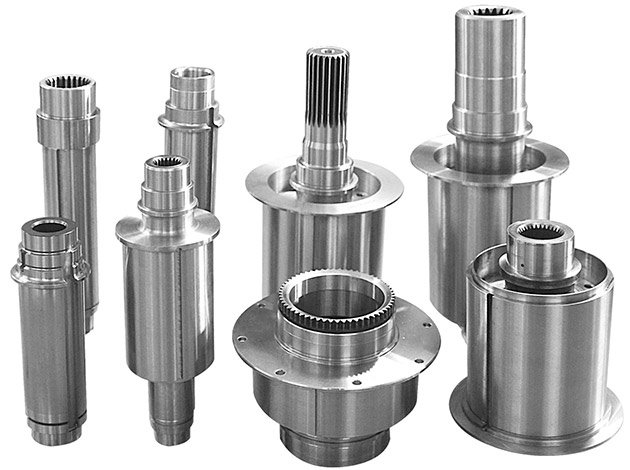
China is therefore most competitive when the customer is buying a managed manufacturing solution rather than isolated machine time. The right partner can reduce the number of interfaces between engineering, procurement, quality, and logistics teams while improving responsiveness throughout the program.
4. Industry Applications
High-precision CNC shafts support a wide range of industries, but the technical priorities vary by application.
Aerospace and Defense
Aerospace components commonly require lightweight materials, corrosion resistance, traceability, controlled processes, and detailed inspection documentation. Shafts used in actuation, transmission, landing gear, auxiliary systems, and aircraft structural mechanisms may involve titanium, stainless steel, nickel alloys, or other difficult-to-machine materials. More information about specialized production is available through the aerospace CNC machining and titanium aircraft parts resource.
Medical Equipment and Surgical Systems
Medical components demand repeatable dimensions, clean finishing, biocompatible materials where applicable, and rigorous documentation. Small shafts, drive pins, instrument components, and actuator parts may require stainless steel, titanium, or specialized alloys. Surface condition and burr control are particularly important for components used in surgical instruments and high-precision devices. Buyers can review the ISO-certified CNC machining for medical components capabilities for related applications.
Hydraulics and Fluid Control
Hydraulic pump shafts, valve spools, sleeves, and actuator components must maintain precise fits under pressure, temperature variation, lubrication changes, and repeated cycling. Surface roughness, roundness, hardness, and coating compatibility can determine seal life and leakage performance. The hydraulic pump parts resource provides a relevant example of fluid-power component requirements.
Automotive and Drivetrain Systems
Automotive shafts and drivetrain components must balance fatigue strength, geometric accuracy, production rate, and cost. Splines, bearing seats, grooves, threads, and balancing features may all need to operate within a tightly controlled assembly system. Production planning and statistical process control become increasingly important as annual volumes rise.
Industrial Automation and Energy Equipment
Automation systems use precision shafts in servo mechanisms, linear actuators, robotic joints, gearboxes, and indexing equipment. Energy and industrial machinery may require larger diameters, high torque capacity, corrosion resistance, or extended service life. In these applications, a supplier’s ability to coordinate turning, milling, grinding, heat treatment, and coating can reduce lead time and improve product consistency.
5. Call to Action
Choosing China for high-precision CNC shaft machining can provide a strong combination of engineering depth, process capability, supply chain access, and production scalability. The outcome depends on supplier qualification. OEM and Tier 1 buyers should evaluate drawing review capability, material control, machine and process coverage, inspection systems, ERP visibility, change management, and experience with international delivery requirements.
Dixin Technology supports global customers seeking a coordinated partner for precision shafts and other engineered components. Share your drawings, material requirements, annual volume, tolerance expectations, inspection standards, and delivery objectives with the engineering team. Dixin Technology can then assess manufacturability, recommend an appropriate process route, and develop an ODM or production supply solution aligned with your application.
Visit the IndustryApex CNC home page to review manufacturing capabilities, or contact Dixin Technology to discuss a high-precision CNC shaft machining project.