- Shaft
- Molds&Tools
- Hydraulics And Pump
- Hair transplant needle
- Hydraulics And Pump
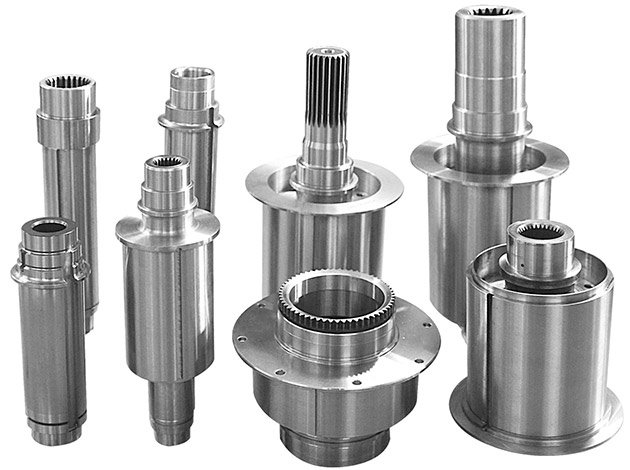
- Precision CNC Shaft Machining Manufacturer for High Performance Applications
- Energy Industry CNC Machining Parts Supplier
- Aerospace CNC Machining Parts Manufacturer
- Aerospace CNC Machining Parts Manufacturer
- Automotive & EV CNC Machining Parts Supplier for OEM and Tier 1
- Medical CNC Machining Parts Supplier for Precision Medical Devices
The Role of Supply Chain Integrators in Agile Manufacturing: A Guide for Global OEMs

The Role of Supply Chain Integrators in Agile Manufacturing
Agile manufacturing has become a strategic requirement for global OEMs and Tier 1 suppliers facing shorter product lifecycles, volatile demand, complex compliance requirements, and persistent supply chain disruption. In this environment, the traditional model of managing separate suppliers for engineering, machining, finishing, inspection, and logistics can create excessive coordination costs and avoidable risk. Supply chain integrators address this challenge by connecting product development, manufacturing execution, supplier management, quality assurance, and delivery through one accountable operating structure.
1. Executive Summary
A supply chain integrator is more than a purchasing intermediary. In a technically mature manufacturing environment, the integrator functions as an extension of the OEM engineering and operations team. It coordinates design-for-manufacturing decisions, production capacity, material procurement, process validation, quality documentation, and delivery planning. The objective is to make the complete supply chain more responsive without sacrificing precision, compliance, or cost control.
For CNC-machined components, this role is especially important. A single part may require multi-axis machining, EDM, precision grinding, heat treatment, surface finishing, industrial ceramic processing, and specialized inspection. When these activities are divided among disconnected vendors, every handoff introduces potential delays, dimensional variation, documentation gaps, and communication failures. An integrator with direct manufacturing control can reduce those interfaces and create a more predictable production system.
Dixin Technology, operating through IndustryApex CNC, supports global OEM and Tier 1 customers as a supply chain integrator and ODM solution provider. Its fully controlled precision manufacturing system combines ERP-based coordination, more than 30 years of manufacturing experience, and capabilities covering 3- to 5-axis CNC machining, EDM, precision grinding, and industrial ceramics. This combination helps customers move from drawing or concept to qualified production with fewer operational barriers.
The practical value of integration is measured through outcomes: shorter engineering response times, more reliable production schedules, faster corrective action, improved traceability, and reduced total supplier-management effort. For companies seeking a resilient manufacturing partner, the integrator model can provide both agility and technical depth.
2. Technical Deep Dive
Agile manufacturing depends on the ability to respond to change while maintaining stable process performance. Change may involve a revised CAD model, a new material specification, a demand increase, a late customer approval, or a regulatory documentation requirement. The manufacturing system must absorb that change without losing control of cost, quality, or delivery.
The first technical foundation is digital coordination. An ERP system gives the integrator a structured view of engineering revisions, bills of materials, purchasing status, work orders, machine loading, inspection requirements, and shipment commitments. This information allows production decisions to be based on current data rather than isolated spreadsheets or informal messages. When a customer changes a revision level, the system can support controlled updates across planning, purchasing, machining, and inspection activities.
The second foundation is process ownership. Precision components rarely depend on one operation alone. A machined aerospace structural component may require five-axis interpolation, deburring, surface treatment, coordinate measurement, and detailed documentation. A hydraulic component may require tight control of spool geometry, surface finish, concentricity, and sealing interfaces. A medical component may involve biocompatible material controls, complex geometry, and rigorous inspection records. An integrator that understands the complete process chain can manage these requirements as one manufacturing program.
Multi-axis CNC machining supports complex geometries and reduces the number of setups required for many components. Fewer setups can improve positional accuracy, shorten cycle time, and reduce the risk of errors caused by repeated workholding. EDM provides a solution for hard materials, intricate profiles, narrow slots, and features that are difficult to produce with conventional cutting tools. Precision grinding supports tight tolerances and controlled surface conditions, while industrial ceramics expand the material range for wear-resistant, electrically insulating, thermally stable, or chemically resistant applications.
Inspection strategy is equally important. Agile production does not mean accepting variable quality. It requires quality controls to be integrated into the routing from the beginning. Depending on the component, this may include first article inspection, in-process measurement, coordinate measuring machine verification, surface roughness checks, material certificates, and final dimensional reports. A supply chain integrator aligns these controls with the customer’s drawing, quality clauses, and industry requirements before production begins.
Another important consideration is capacity flexibility. OEM demand is often uneven: prototype quantities may be small, pilot runs may require frequent revisions, and volume production may increase quickly after approval. An integrator must understand machine capability, labor requirements, tooling availability, and outside-process lead times well enough to adjust the plan. This is where manufacturing experience becomes a tangible advantage. Capacity is not simply the number of machines available; it is the ability to deliver the required part, at the required quality level, within the required schedule.
Risk management also benefits from technical integration. Material shortages, long-lead tooling, supplier quality problems, and process bottlenecks can be identified earlier when one organization monitors the full chain. Corrective actions can then be assigned to the responsible process, verified through inspection, and reflected in the production plan. This reduces the likelihood that a problem will remain hidden until final assembly or customer inspection.
3. The ODM & Supply Chain Advantage
The difference between a conventional contract manufacturer and an ODM-oriented supply chain integrator is the level of involvement before and beyond production. An ODM solution provider contributes manufacturing knowledge during product definition, helping customers evaluate materials, tolerances, geometry, inspection methods, and process economics before the design is released.
Dixin Technology’s core identity is that of a supply chain integrator and ODM solution provider. For global OEMs and Tier 1 suppliers, this means the relationship can begin with a component drawing, development concept, or existing supplier challenge. The objective is to translate the customer’s technical requirements into a controlled and scalable manufacturing route.
Its manufacturing edge is based on a fully controlled precision manufacturing system supported by ERP and more than 30 years of experience. ERP-based control improves visibility across quotation, engineering review, purchasing, scheduling, production, inspection, and delivery. Experience contributes the judgment required to identify unrealistic tolerances, incomplete specifications, difficult materials, and hidden process risks before they become expensive production problems.
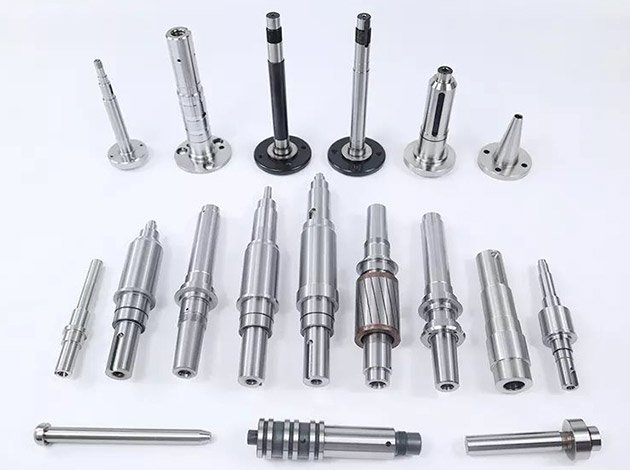
The technical platform includes 3- to 5-axis CNC machining, EDM, precision grinding, and industrial ceramics. These capabilities allow the integrator to address a broad range of precision requirements and material behaviors. A 3-axis process may be efficient for prismatic components, while 4- and 5-axis machining can reduce setups and support contoured surfaces. EDM can address fine features and hardened materials. Grinding can provide the final dimensional and surface precision required by functional interfaces. Ceramic processing can support applications where conventional metals are unsuitable.
For customers, the advantage is not merely access to individual machines. The advantage is the coordinated use of engineering, production, inspection, and supply chain resources. A supplier can recommend a manufacturing route that balances tolerance, cycle time, tooling, yield, and future volume. It can also identify which operations should remain under direct control and which qualified external processes may be appropriate.
This structure is particularly valuable for international procurement teams. Instead of managing several specialized vendors across different regions, the customer can work with one accountable partner for a defined component family or manufacturing program. Communication becomes more direct, technical questions are resolved faster, and delivery responsibility is clearer. The model also supports supplier consolidation without forcing customers to compromise on advanced process capability.
ODM involvement can further improve product scalability. A design that is acceptable for a prototype may not be efficient for repeated production. The integrator can assess fixture design, tool access, inspection points, raw material yield, batch size, and process repeatability. These decisions influence both unit cost and supply continuity. Early manufacturing input therefore protects the customer from redesigns and production interruptions later in the product lifecycle.
Commercial transparency is another important element. A mature integrator should explain cost drivers rather than simply return a unit price. Material grade, stock form, machining time, tooling, inspection complexity, secondary processing, packaging, and logistics all influence total cost. By showing how these factors interact, the integrator enables better sourcing decisions and supports long-term cost reduction.
4. Industry Applications
Supply chain integration is relevant wherever component performance, delivery reliability, and documentation are critical. In aerospace, suppliers must manage complex geometries, lightweight materials, tight tolerances, traceability, and strict inspection requirements. Dixin Technology’s aerospace CNC machining capabilities support applications involving titanium aircraft parts, five-axis components, and aircraft structural components.
Medical equipment manufacturers face similar demands, with additional emphasis on material control, surface quality, repeatability, and documentation. Components for surgical systems, diagnostic equipment, and implant-related applications often require precise interfaces and stable production processes. Customers can review the company’s ISO-certified CNC machining for medical components when evaluating a manufacturing partner.
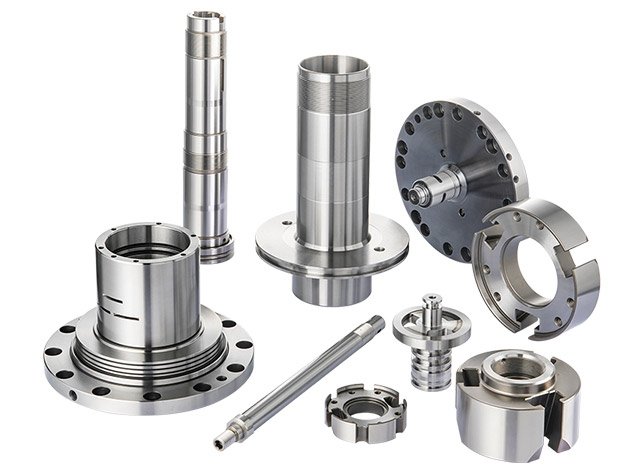
Fluid control and hydraulic equipment also benefit from integration. Hydraulic pump parts, valve spools, sleeves, manifolds, and related components depend on dimensional accuracy, surface finish, concentricity, and reliable sealing performance. The hydraulic pump parts product area illustrates how precision machining supports demanding fluid-power applications.
Additional applications include semiconductor equipment, energy systems, optics, automation, drivetrain components, industrial machinery, and specialized tooling. Across these sectors, the common requirement is a supply chain that can manage engineering complexity while remaining responsive to production changes. A well-integrated partner helps customers control quality at the component level, reduce administrative overhead, and maintain continuity from prototype through series production.
The integrator model is also useful during supplier transition. When an incumbent supplier cannot meet capacity, quality, or lead-time requirements, a new partner must understand the existing design intent and reproduce the required performance without creating unnecessary disruption. This requires drawing review, sample evaluation, process planning, inspection correlation, and controlled ramp-up. A partner with both ODM expertise and direct manufacturing capability can manage that transition more effectively than a purely transactional sourcing company.
5. Call to Action
Agile manufacturing requires more than faster machines. It requires coordinated decisions across engineering, materials, production, quality, and logistics. A supply chain integrator gives global OEMs and Tier 1 suppliers one technical partner responsible for connecting those decisions and converting them into reliable delivery.
Dixin Technology and IndustryApex CNC provide a practical route for companies seeking precision manufacturing, ODM support, and supply chain coordination. To discuss a drawing, component family, prototype, supplier transition, or production program, contact the team with your part specifications, material requirements, annual volume, tolerance information, and target schedule. You can also visit the IndustryApex CNC homepage to review the broader manufacturing platform and application capabilities.