- Shaft
- Molds&Tools
- Hydraulics And Pump
- Hair transplant needle
- Hydraulics And Pump
- Precision CNC Shaft Machining Manufacturer for High Performance Applications
- Energy Industry CNC Machining Parts Supplier
- Aerospace CNC Machining Parts Manufacturer
- Aerospace CNC Machining Parts Manufacturer
- Automotive & EV CNC Machining Parts Supplier for OEM and Tier 1
- Medical CNC Machining Parts Supplier for Precision Medical Devices
Advanced EDM and Wire Cutting for Hard and Brittle Materials: An OEM Supply Chain Guide

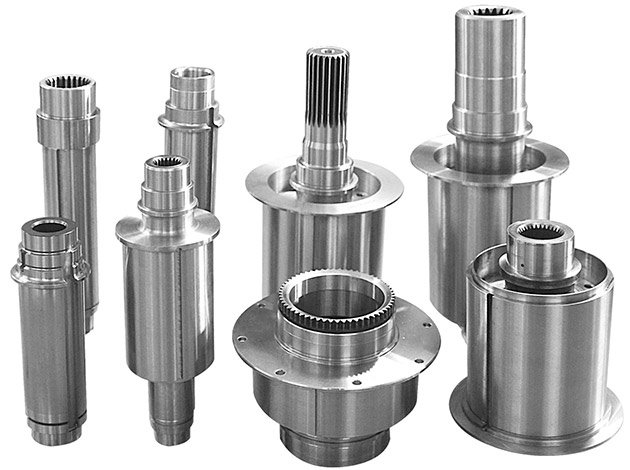
Advanced EDM and Wire Cutting for Hard and Brittle Materials: An OEM Supply Chain Guide
For global OEMs and Tier 1 suppliers, manufacturing hard and brittle materials is rarely a simple machining problem. Tungsten carbide, technical ceramics, hardened tool steels, sapphire, ruby, and other wear-resistant materials deliver exceptional performance, but their physical properties also create significant production risks. High hardness increases tool wear, while brittleness raises the probability of chipping, cracking, edge breakout, and dimensional instability.
Advanced electrical discharge machining (EDM), wire cutting, precision grinding, and disciplined supply chain control provide a practical route to repeatable production. When these technologies are integrated into an ODM and manufacturing partnership, engineering teams can move from prototype validation to qualified production with fewer handoffs, tighter process control, and improved total cost visibility.
1. Executive Summary
EDM removes conductive material through controlled electrical discharges rather than direct cutting force. This makes it particularly valuable for materials and geometries that are difficult to machine using conventional milling, turning, or drilling. Wire EDM is well suited to precise profiles, narrow slots, intricate contours, and small internal features. Sinker EDM extends the process to blind cavities, forming dies, mold inserts, and three-dimensional details.
However, EDM is not a universal solution. Conductivity, thermal behavior, material grade, thickness, geometry, surface requirements, and post-processing requirements must be evaluated together. For electrically insulating ceramics, specialized approaches may be required, including conductive coatings, hybrid machining, laser assistance, ultrasonic processes, or precision grinding. The correct process chain is therefore determined by the material and functional requirement, not by the drawing alone.
Dixin Technology, operating through IndustryApex CNC, combines CNC machining, EDM, precision grinding, industrial ceramics, and controlled production planning for demanding components. Its value to international customers is not limited to individual machine operations. As a supply chain integrator and ODM solution provider, Dixin Technology coordinates design interpretation, process planning, manufacturing, inspection, documentation, and delivery for complex parts used in aerospace, medical, fluid control, tooling, semiconductor, and industrial equipment applications.
OEM buyers can review the broader manufacturing capability through the IndustryApex CNC home page, then align technical requirements with a qualified engineering and sourcing team.
2. Technical Deep Dive
EDM depends on a controlled gap between an electrode and the workpiece. A dielectric fluid, pulse generator, servo system, and electrode work together to create localized discharges. Each discharge melts or vaporizes a minute amount of material, and the dielectric flushes the debris away. Because the tool does not apply conventional cutting pressure, EDM can produce features in hardened materials without softening the entire workpiece or introducing the same mechanical loads associated with aggressive cutting.
Wire EDM for Profiles and Fine Features
Wire EDM uses a continuously moving electrically conductive wire, commonly brass or coated wire, to cut through the workpiece along a programmed path. The process is effective for carbide punches, die components, precision shims, turbine-related features, medical tooling, and other components where profile accuracy and edge quality are important.
Multiple skim passes can improve dimensional accuracy and surface finish after the rough cut. Careful flushing is essential because unstable debris removal can cause short circuits, wire breaks, taper errors, and local overburn. For thick sections, the process plan should account for changing flushing conditions, thermal distribution, wire tension, and the possibility of profile distortion.
Sinker EDM and Formed Cavities
Sinker EDM uses a shaped electrode to create cavities, pockets, ribs, and complex internal surfaces. It is frequently applied to hardened tool steels, carbide tooling, mold inserts, and components requiring geometry that is difficult to reach with rotary tools. Electrode material, wear compensation, corner strategy, pulse parameters, and flushing design directly influence cavity accuracy and repeatability.
Machining Tungsten Carbide and Other Hard Materials
Tungsten carbide offers high wear resistance and compressive strength, but its brittleness demands controlled energy input and careful support. Excessive discharge energy may create a recast layer, microcracks, or edge chipping. A robust process typically separates material removal into roughing and finishing stages, uses stable fixturing, controls thermal loading, and verifies critical surfaces after EDM.
Hard stainless steels, hardened tool steels, nickel-based alloys, and other difficult materials may also benefit from EDM. The appropriate strategy depends on electrical conductivity, hardness, geometry, heat treatment condition, and required functional surface. EDM may be combined with CNC roughing, grinding, lapping, polishing, or ceramic processing to produce the complete component rather than treating EDM as an isolated operation.
Processing Brittle Ceramics, Sapphire, and Ruby
Many industrial ceramics are electrically insulating, so standard EDM cannot be applied directly in the same manner as conductive metals. The manufacturing route may instead combine diamond grinding, ultrasonic machining, laser processing, conductive-assisted methods, or a hybrid sequence. Sapphire and ruby components require particular attention to crystallographic orientation, edge support, heat generation, and surface damage. The goal is to prevent subsurface cracking that may not be visible during a basic dimensional inspection but can reduce service life.
For ceramic and crystalline materials, engineering review should define allowable chipping, edge radius, flatness, parallelism, surface roughness, and inspection method. Optical inspection, microscopy, coordinate measurement, and functional testing may all be needed depending on the application.
Design and Quality Considerations
Design for manufacturability should address minimum wall thickness, internal corner radii, relief features, datum selection, clamping access, and the order of operations. A drawing that specifies only nominal dimensions may leave critical questions unanswered. Buyers should also define material certification, heat treatment records, surface integrity expectations, burr and recast-layer limits, cleanliness, packaging, and traceability.
For production control, useful quality gates include incoming material verification, first-article inspection, in-process dimensional checks, final profile measurement, surface-finish verification, and documented nonconformance handling. These controls are especially important when a component combines EDM features with ground surfaces, ceramic sections, or CNC-machined reference datums.
3. The ODM & Supply Chain Advantage
For complex hard-material components, the main commercial risk often comes from fragmented responsibility. One supplier may produce the blank, another may perform EDM, a third may grind the component, and a separate organization may manage inspection and export packaging. Each handoff introduces opportunities for drawing interpretation errors, inconsistent datums, undocumented process changes, and schedule disruption.
Dixin Technology’s core identity is that of a supply chain integrator and ODM solution provider. This model gives OEM and Tier 1 customers a single engineering interface for component development, process selection, production coordination, and quality documentation. The supplier can participate earlier in the product lifecycle, helping customers evaluate manufacturability before tooling and production commitments are finalized.
Its manufacturing edge is a fully controlled precision manufacturing system supported by ERP and more than 30 years of experience. ERP-based planning can connect material purchasing, work orders, capacity scheduling, inspection status, inventory, and shipment preparation. For international programs, this visibility helps purchasing and engineering teams identify constraints earlier and make decisions based on current production information.
Dixin Technology’s technology capabilities include 3-axis to 5-axis CNC machining, EDM, precision grinding, and industrial ceramics. This combination is important because hard and brittle material projects often require several complementary processes. CNC machining may establish reference surfaces, EDM may create a detailed profile, grinding may achieve final flatness or finish, and ceramic capability may support nonmetallic components or assemblies.
For global OEMs and Tier 1 suppliers, the advantage is not simply access to equipment. It is the ability to coordinate an engineered process chain with consistent technical ownership. A capable ODM partner can review the 3D model and drawing, recommend suitable materials and tolerances, identify high-risk features, prepare a manufacturing plan, and provide samples for customer validation. Once the design is approved, the same process knowledge can be carried into repeat production.
Supply chain resilience also depends on disciplined documentation. Material certificates, inspection reports, process records, revision control, approved supplier management, and packaging specifications should be treated as part of the product. This is particularly relevant for aerospace components, medical devices, fluid-control systems, and industrial tooling where traceability and change control are essential.
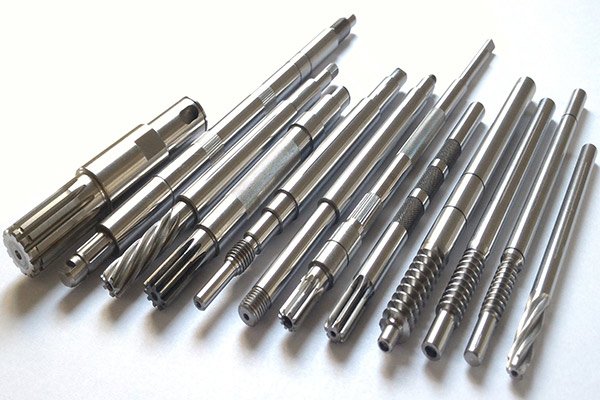
Customers evaluating a supplier should ask practical questions: Who owns the complete process plan? Can the supplier measure the required profile and surface condition? Are EDM and grinding performed under coordinated quality controls? How are engineering changes managed? Can production capacity scale after qualification? Is there a defined corrective-action process? Clear answers to these questions are often more valuable than a single machine specification.
4. Industry Applications
Advanced EDM and wire cutting support a broad range of industries where performance depends on precise, wear-resistant, or fragile components.
Aerospace and Defense Manufacturing
Aerospace programs use difficult-to-machine alloys, hardened tooling, and precision structural components. EDM can support small holes, slots, profiles, and tooling features where conventional cutting would generate excessive force or tool wear. Customers sourcing aerospace CNC machining and titanium aircraft parts should evaluate not only dimensional capability but also traceability, inspection planning, material control, and configuration management.
Medical and Surgical Components
Medical components may require fine geometries, corrosion-resistant materials, clean processing, and repeatable surface quality. EDM can be applied to surgical instruments, implant-related tooling, precision device parts, and manufacturing fixtures. For these programs, production records and process validation are as important as the physical component. Dixin Technology’s medical component machining capability provides a relevant pathway for buyers developing high-precision medical and surgical products.
Hydraulics, Pumps, and Fluid Control
Hydraulic valves, pump parts, sleeves, spools, and wear components depend on controlled clearances, roundness, straightness, and surface finish. Small deviations can affect leakage, response time, efficiency, and service life. Wire EDM and precision grinding can be combined for difficult profiles and hardened wear surfaces. Buyers can review hydraulic pump parts manufacturing when sourcing components for fluid power systems.
Mold, Die, and Tooling Production
Tooling is one of the most established applications for EDM. Carbide punches, cold-heading dies, mold inserts, precision cavities, and wear-resistant guide components often require geometry and hardness that make conventional machining inefficient. Wire EDM can produce repeatable profiles, while sinker EDM and grinding complete the cavity and finishing requirements.
Semiconductor, Optical, and Industrial Equipment
Semiconductor and optical equipment frequently requires low-defect surfaces, tight alignment, specialized ceramics, sapphire, or other brittle materials. Process planning must balance dimensional accuracy with surface integrity and cleanliness. Industrial automation, energy equipment, drivetrain systems, and advanced manufacturing machinery also use hard-material components where reliable production is a competitive requirement.
5. Call to Action
Advanced EDM and wire cutting can solve difficult manufacturing challenges, but the strongest results come from integrating process engineering, material expertise, inspection, and supply chain management from the beginning. OEM and Tier 1 purchasing teams should provide the latest drawings, 3D models, material requirements, annual volumes, target tolerances, inspection expectations, and delivery schedule for an accurate feasibility review.
Dixin Technology can support the development of hard and brittle material components through its combined capabilities in 3-5 axis CNC machining, EDM, precision grinding, industrial ceramics, ERP-managed production, and ODM supply chain coordination. To discuss a new component, request manufacturability feedback, or develop a production quotation, contact the IndustryApex CNC team.