- Shaft
- Molds&Tools
- Hydraulics And Pump
- Hair transplant needle
- Hydraulics And Pump
- Precision CNC Shaft Machining Manufacturer for High Performance Applications
- Energy Industry CNC Machining Parts Supplier
- Aerospace CNC Machining Parts Manufacturer
- Aerospace CNC Machining Parts Manufacturer
- Automotive & EV CNC Machining Parts Supplier for OEM and Tier 1
- Medical CNC Machining Parts Supplier for Precision Medical Devices
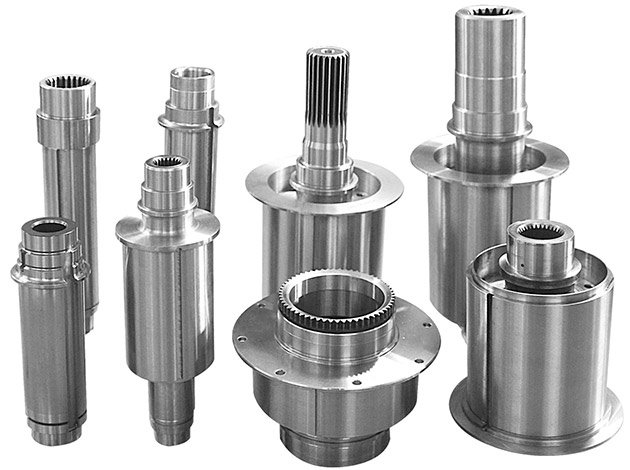
Hydraulic Pump Parts: Ensuring Reliability Through Precision Grinding

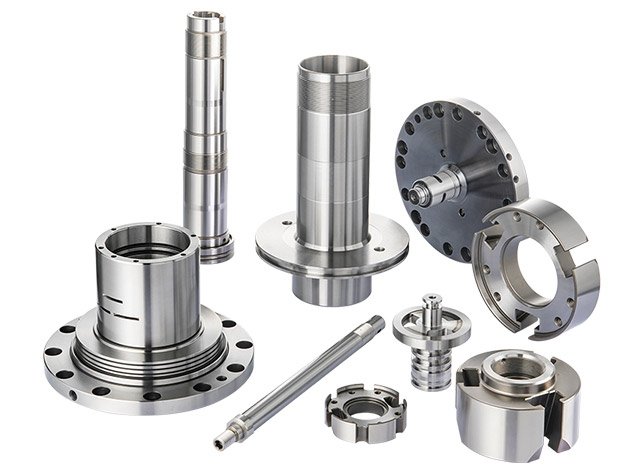
Hydraulic Pump Parts: Ensuring Reliability Through Precision Grinding
Hydraulic systems convert mechanical power into controlled fluid movement, and their performance depends on the accuracy, surface condition, and durability of every pump component. For global OEMs and Tier 1 suppliers, precision grinding is therefore more than a finishing operation: it is a reliability control that protects volumetric efficiency, pressure stability, service life, and supply continuity.
1. Executive Summary
Hydraulic pump parts operate under demanding combinations of pressure, sliding contact, cyclic loading, contamination risk, and temperature change. Small deviations in a valve spool, sleeve, shaft, bearing seat, or sealing land can increase internal leakage, accelerate wear, create noise, and reduce the useful life of the complete pump. Precision grinding addresses these risks by controlling dimensional accuracy, cylindricity, roundness, straightness, surface roughness, and edge quality at a level that conventional machining alone may not consistently achieve.
The process is especially valuable for components with close running clearances. A correctly ground mating pair maintains the intended fluid film while limiting bypass flow. Consistent geometry also improves assembly repeatability, reduces break-in variation, and makes field performance more predictable. These benefits matter across mobile equipment, industrial automation, agricultural machinery, energy systems, and specialized fluid-control equipment.
Dixin Technology, operating through the IndustryApex CNC platform, supports hydraulic component programs as a supply chain integrator and ODM solution provider. Its controlled manufacturing system combines ERP-based production management with more than 30 years of manufacturing experience. By coordinating 3-5 axis CNC machining, EDM, precision grinding, and industrial ceramics under one engineering and supply structure, the company helps OEM purchasing and engineering teams reduce handoffs while maintaining traceability and process discipline. Explore the company’s precision CNC manufacturing capabilities and its dedicated hydraulic pump parts solutions.
2. Technical Deep Dive
Why grinding determines hydraulic reliability
Hydraulic pumps rely on controlled clearances between rotating or reciprocating surfaces. If a shaft journal is undersized, if a sleeve is out of round, or if a spool has excessive waviness, fluid can escape across the pressure boundary. The result is lower volumetric efficiency and greater heat generation. Excessive tightness creates a different failure mode: insufficient lubrication, friction, scoring, and seizure during thermal expansion or contamination events.
Grinding provides a repeatable method for bringing critical features into the specified size and form envelope. Depending on the design, operations may include cylindrical grinding for journals and external diameters, internal grinding for bores and sleeves, centerless grinding for high-volume shaft-like parts, and surface grinding for reference faces. The correct process route is determined by material, geometry, tolerance, batch size, hardness, and functional requirements rather than by nominal dimensions alone.
Surface texture is equally important. A surface that is too rough can damage seals, disrupt the fluid film, and retain abrasive particles. A surface that is excessively smooth without the required texture may retain insufficient lubricant or behave poorly under boundary lubrication. Grinding parameters must therefore be selected to achieve the specified roughness and lay, while avoiding burns, tensile residual stress, pull-outs, chatter, and microcracks.
Material and heat-treatment considerations
Common hydraulic pump materials include alloy steels, stainless steels, tool steels, bronze, cast iron, aluminum alloys, and engineered ceramics. Hardened steel parts offer wear resistance but require carefully managed grinding energy. Stainless materials can work-harden and generate heat if wheel selection or dressing is inadequate. Carbide and ceramic elements provide high hardness and chemical resistance, yet their brittleness demands controlled material removal and attention to edge integrity.
Heat treatment must be considered before the final grinding plan is released. Carburized, nitrided, induction-hardened, and through-hardened components each present different grindability and allowable stock-removal conditions. Grinding too aggressively can create a thermally damaged layer that is not visible during a basic visual inspection but later becomes a crack initiation site. A qualified process uses appropriate wheel specification, coolant delivery, dressing frequency, workholding, and in-process measurement to manage this risk.
Inspection beyond size
Reliable inspection of hydraulic pump parts extends beyond checking a single diameter. A robust control plan may include roundness, cylindricity, total indicator runout, concentricity, perpendicularity, taper, bore geometry, surface roughness, hardness, and visual inspection of functional edges. CMM measurement, roundness analysis, air gauging, profilometry, and calibrated micrometers can be combined according to the feature and tolerance.
Part cleanliness also deserves formal control. Grinding debris, abrasive residue, and microscopic burrs can damage downstream components and contaminate hydraulic fluid. Deburring, washing, drying, corrosion protection, and sealed packaging should be defined as part of the manufacturing process, not treated as informal shipping activities. For OEM programs, measurement records, material certificates, first-article inspection, and lot traceability provide evidence that the delivered part conforms to the approved design.
Design-for-manufacturing review can prevent avoidable cost and risk. Suitable grinding reliefs, accessible datum features, appropriate edge breaks, realistic tolerance allocation, and clear surface-finish callouts give the manufacturer a stable process window. Tolerances should be tied to pump function: tightening every dimension without a demonstrated performance benefit can increase cost and lead time without improving reliability.
Precision-ground hydraulic pump components require controlled geometry, surface finish, cleanliness, and documented inspection to maintain stable pressure and efficiency.
3. The ODM & Supply Chain Advantage
Hydraulic pump programs frequently involve more than one manufacturing discipline. A shaft may require multi-axis CNC turning and milling, a complex flow path may require EDM, a wear-critical interface may require precision grinding, and a high-temperature or electrically insulating application may benefit from industrial ceramics. Managing these operations through disconnected suppliers increases engineering communication, transport exposure, inspection duplication, and schedule risk.
Dixin Technology’s core identity is that of a supply chain integrator and ODM solution provider. This means the engagement can cover design interpretation, process planning, material and heat-treatment coordination, machining, finishing, inspection, and delivery preparation. The objective is not simply to quote an individual operation; it is to establish a controlled route from drawing or sample through qualified production.
The manufacturing edge is a fully controlled precision manufacturing system supported by ERP and more than 30 years of experience. ERP visibility can connect purchasing, work orders, routing, inventory, inspection status, and shipment planning. For global OEM and Tier 1 suppliers, this structure supports clearer production milestones and faster response when forecasts, revisions, or qualification requirements change. Centralized documentation also makes it easier to preserve revision control and lot-level traceability.
Technology capability is organized around 3-5 axis CNC machining, EDM, precision grinding, and industrial ceramics. This combination is useful when a hydraulic assembly contains both conventional metal parts and specialized wear or insulation components. It can also support design optimization by allowing manufacturing engineers to evaluate datum schemes, tool access, grinding allowances, and material choices as one connected system.
Supply chain value should be measured in operational outcomes. A qualified integrated source can reduce the number of supplier interfaces, shorten feedback loops, improve consistency between prototype and production, and simplify nonconformance analysis. It can also help an OEM establish a repeatable package of inspection documents and packaging standards across multiple part numbers. Those advantages are particularly important where hydraulic components are safety-critical, exported across regions, or installed in equipment with expensive downtime.
IndustryApex CNC also serves demanding sectors that require disciplined process control. Its aerospace machining capabilities demonstrate relevance for high-performance materials and complex structural geometries, while its medical component manufacturing experience reflects the importance of traceability, cleanliness, and high-precision inspection.
An integrated ODM manufacturing route connects machining, EDM, grinding, ceramics, inspection, and ERP-controlled supply planning for global hydraulic equipment programs.
4. Industry Applications
Precision-ground hydraulic pump parts are used wherever fluid power must remain efficient and controllable over repeated duty cycles. In construction machinery, pump shafts, valve sleeves, swash-plate interfaces, and wear plates face shock loads, dust, thermal variation, and high utilization. Consistent ground surfaces help maintain predictable response in excavators, loaders, cranes, and other mobile platforms.
Agricultural equipment places similar demands on hydraulic systems while adding seasonal storage, contamination exposure, and rapid service expectations. Ground components with controlled finish and corrosion protection can support reliable operation in tractors, harvesters, sprayers, and irrigation machinery. Standardized part documentation also helps service networks identify approved replacement components.
Industrial automation and material-handling systems depend on repeatable motion. Hydraulic power units, servo valves, clamping systems, and injection equipment benefit from stable leakage characteristics and low friction. Here, precise spool-and-sleeve geometry can directly affect positioning accuracy, cycle time, energy consumption, and maintenance intervals.
Energy and process industries often require pumps to operate continuously under demanding pressure and temperature conditions. Component materials, coatings, grinding parameters, and inspection criteria must be matched to the medium and duty cycle. Where chemical resistance, electrical insulation, or extreme wear resistance is required, industrial ceramic components may complement precision-ground metal parts.
Hydraulic components also appear in transportation, marine equipment, machine tools, and specialized test systems. Across these sectors, the purchasing decision should consider total operating risk rather than piece price alone. A component that is slightly cheaper but produces inconsistent leakage or requires frequent replacement can create greater lifecycle cost through downtime, field service, and warranty exposure.

Applications for precision-ground hydraulic parts include construction, agriculture, automation, energy, machine tools, transportation, and industrial fluid control.
5. Call to Action
Hydraulic pump reliability begins with a manufacturing process that treats geometry, surface condition, materials, cleanliness, and supply continuity as connected requirements. Precision grinding is a central capability because it controls the interfaces that determine leakage, friction, wear, and service life.
For OEM and Tier 1 teams developing a new pump component, localizing an existing design, or improving an unstable supply chain, Dixin Technology can review drawings, samples, tolerance schemes, materials, annual volumes, inspection requirements, and delivery targets. The engineering discussion should identify which characteristics are function-critical and which can be optimized for cost and manufacturability.
Contact Dixin Technology to discuss precision-ground hydraulic pump parts and an ODM supply solution built around controlled manufacturing, documented quality, and dependable global delivery.