
- Shaft
- Molds&Tools
- Hydraulics And Pump
- Hair transplant needle
- Hydraulics And Pump
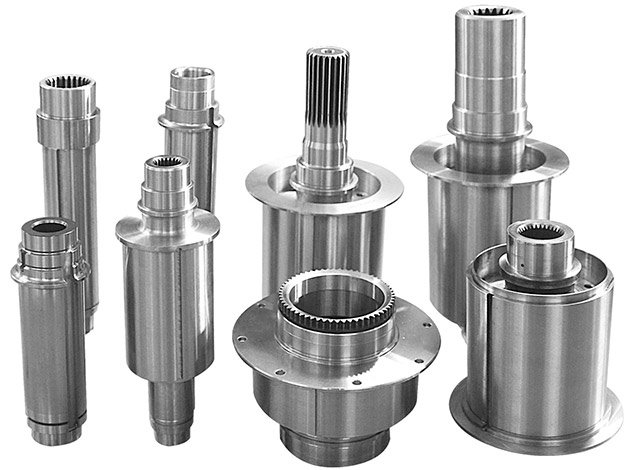
- Precision CNC Shaft Machining Manufacturer for High Performance Applications
- Energy Industry CNC Machining Parts Supplier
- Aerospace Structural Components for OEM Programs
- Aerospace Structural Components for OEM Programs
- Automotive & EV CNC Machining Parts Supplier for OEM and Tier 1
- Medical Device CNC Machining Services
The Future of Robotics Components: Micron-Level Precision and Supply Chain Resilience in 2026

By IndustryApex Technology | IndustryApex CNC
Robotics is entering a manufacturing phase in which mechanical accuracy, repeatability, and supply chain performance are inseparable. By 2026, robot builders and automation equipment manufacturers will require components capable of maintaining micron-level dimensional stability across high-cycle operation, temperature variation, vibration, and demanding production environments. The challenge is no longer simply machining a part to a tight tolerance. It is controlling the complete process, from material selection and design validation through production, inspection, documentation, and global delivery.
1. Executive Summary
The future of robotics components will be shaped by five connected requirements: tighter geometric tolerances, improved material performance, digital process control, shorter qualification cycles, and more resilient supply networks. Robotic joints, harmonic-drive housings, actuator components, precision shafts, bearing seats, grippers, optical mounts, and fluid-control elements must work together with minimal backlash and predictable service life. A small error in one interface can produce positioning drift, vibration, excessive wear, or premature failure at the system level.
Micron-level precision does not mean that every feature on every component must be measured in microns. It means that critical interfaces are engineered and controlled according to their functional role. Datum structures, concentricity, cylindricity, surface finish, flatness, and thermal behavior must be managed as a coordinated system. This requires advanced CNC machining, grinding, electrical discharge machining, specialized materials, and disciplined metrology.
For global OEMs and Tier 1 suppliers, manufacturing capability alone is insufficient. They increasingly need an integrated partner that can support design for manufacturability, prototype development, process qualification, production scaling, inspection reporting, and supply chain coordination. IndustryApex Technology, operating through IndustryApex CNC, combines more than 30 years of precision manufacturing experience with an ERP-controlled production system and a broad range of technical capabilities. This model helps robotics manufacturers reduce supplier fragmentation while improving consistency, traceability, and delivery reliability.
2. Technical Deep Dive
Robotic mechanisms amplify small manufacturing errors. In a conventional industrial assembly, a minor deviation may be absorbed by clearance or flexible mounting. In a six-axis robot, however, accumulated error across multiple joints directly affects end-effector position and repeatability. A shaft that is slightly out of concentricity can increase bearing load. A housing with uneven flatness can distort an encoder or reducer assembly. A poor surface finish can accelerate seal wear or alter friction behavior.
Component design in 2026 will therefore focus on functional tolerance chains rather than isolated dimensional targets. Engineers must identify which surfaces establish position, which bores support bearings, which threads carry load, and which features control alignment. The resulting drawing may specify micron-level tolerances for selected interfaces while using practical tolerances elsewhere. This approach controls cost without sacrificing robot performance.
Five-axis CNC machining is central to this development. Simultaneous or indexed multi-axis machining can reduce setups, preserve datum relationships, and reach complex surfaces with fewer opportunities for cumulative error. It is particularly valuable for lightweight robot arms, compact actuator housings, end-of-arm tooling, and structural components with intersecting bores or angled mounting surfaces. Stable workholding, toolpath simulation, thermal compensation, and controlled cutting parameters remain essential to achieving repeatable results.
Three-axis and four-axis machining continue to play important roles in production. They can offer highly efficient cycle times for prismatic parts, plates, brackets, shafts, and repetitive families of components. The best process is determined by geometry, volume, material, tolerance, and inspection requirements rather than by axis count alone.
EDM provides another important capability for robotics components. Wire EDM can produce intricate profiles, narrow slots, and difficult geometries in hardened materials without applying conventional cutting forces. Sinker EDM supports small cavities, sharp internal features, and tooling applications. These processes are useful where mechanical cutting would create distortion, excessive tool pressure, or poor access.
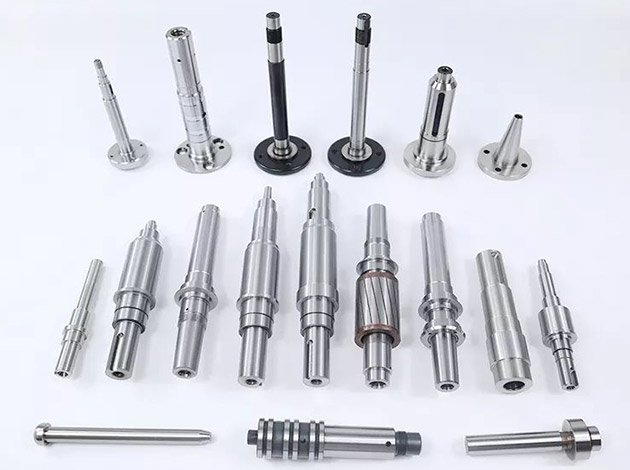
Precision grinding becomes increasingly important as robot mechanisms demand stable bearing fits, accurate cylindrical surfaces, and low-friction motion. Grinding can achieve superior surface quality and geometric consistency on shafts, sleeves, guide elements, and critical bores. However, grinding is most effective when the preceding machining process leaves a controlled and inspectable allowance. The entire process sequence must be engineered together.
Material selection is also changing. Aluminum alloys remain useful for lightweight arms and housings, while alloy steels and stainless steels provide strength, wear resistance, and dimensional stability. Tool steels and tungsten carbide may be appropriate for high-wear tooling or specialized contact surfaces. Industrial ceramics can support applications requiring electrical insulation, low thermal expansion, corrosion resistance, or extreme wear performance. Ceramic components require different machining, handling, and inspection methods, making supplier experience especially important.
Metrology is the link between process capability and customer confidence. Coordinate measuring machines, optical measurement, surface-finish analysis, roundness testing, hardness verification, and calibrated gauges may all be needed depending on the component. Inspection data should be tied to revision-controlled drawings, material certificates, process records, and serial or batch information. Digital traceability allows engineers to identify trends before they become field failures.
Thermal control is a major factor in micron-level work. Machine spindle heat, coolant temperature, ambient conditions, and material expansion can influence results. Manufacturers serving robotics OEMs must establish stable measurement conditions and define how temperature compensation is applied. The goal is not simply to produce one accurate part in ideal conditions, but to produce repeatable parts throughout an industrial production schedule.
Robotics companies should also evaluate surface treatments and finishing processes early. Anodizing, plating, passivation, nitriding, coating, and controlled polishing can alter dimensions and surface behavior. Allowances must be included in the design, and post-treatment inspection should confirm that critical fits remain within specification. This is one reason an integrated manufacturing partner can be more effective than a sequence of disconnected subcontractors.
3. The ODM & Supply Chain Advantage
The supply chain for robotics components is becoming more complex as OEMs introduce new platforms, customize end effectors, and support multiple regional markets. A component supplier may need to manage low-volume prototypes, engineering changes, pilot production, recurring orders, safety-stock requirements, and documentation for different customer sites. Fragmented sourcing can create inconsistent processes, duplicated inspections, unclear ownership, and longer response times.
IndustryApex Technology’s core identity is that of a supply chain integrator and ODM solution provider. This means the relationship can extend beyond part production to include technical review, manufacturing planning, sourcing coordination, process control, inspection, and delivery management. For global OEMs and Tier 1 suppliers, the value lies in connecting engineering intent with a stable and accountable production system.
The manufacturing edge is supported by a fully controlled precision manufacturing system and ERP management. ERP integration improves visibility into materials, production status, capacity, quality records, and shipping schedules. It also supports more disciplined revision control, which is essential when robotics platforms evolve rapidly and multiple component variants must remain interchangeable.
More than 30 years of manufacturing experience provides practical knowledge that cannot be captured by a machine specification alone. Experienced engineers understand how material condition, tool wear, workholding, sequencing, finishing, and inspection interact. They can identify manufacturability risks early, recommend suitable tolerances, and help customers avoid designs that are technically possible but unnecessarily expensive or difficult to scale.
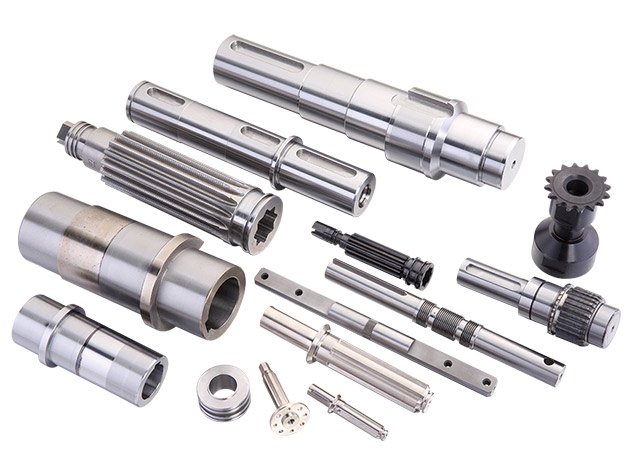
IndustryApex Technology’s technical capabilities include three- to five-axis CNC machining, EDM, precision grinding, and industrial ceramics. This breadth allows a robotics program to source related parts through a coordinated manufacturing network rather than managing every process independently. It is particularly useful for assemblies that combine machined metal structures, hardened wear components, precision shafts, ceramic insulating elements, and custom tooling.
ODM support can begin at the design stage. Engineers may review wall thickness, tool access, datum selection, internal radii, bearing fits, fastening strategy, and inspection accessibility. Design changes made before tooling or production release are generally less disruptive than corrections discovered after a component has entered qualification. A capable ODM partner can also help define realistic tolerance zones based on functional requirements, reducing unnecessary machining time while protecting robot accuracy.
Supply chain resilience requires more than holding additional inventory. It depends on qualified materials, documented alternative processes, clear capacity planning, inspection redundancy, and timely communication. ERP-supported production makes it easier to identify bottlenecks and coordinate replenishment. A structured quality system makes it easier to reproduce an approved process when demand moves between production cells or regions.
For customers evaluating a robotics component supplier, useful qualification questions include: Can the supplier demonstrate repeatability on comparable geometries? How are critical dimensions measured? Are material and finishing records traceable? Can the supplier support engineering changes without losing revision control? Is there a documented approach to nonconformance, corrective action, and process improvement? Can prototype capability transition smoothly into serial production?
A supply chain partner should also understand the commercial consequences of technical decisions. A tolerance that adds several operations may have little value if it does not improve robot performance. Conversely, an inexpensive process that creates inconsistent bearing fits can generate warranty costs and field-service disruption. Engineering and procurement must therefore assess total cost of ownership, not just quoted piece price.
4. Industry Applications
Micron-level robotics components support a wide range of automation markets. In collaborative robots, compact joints require lightweight housings, precise bearing locations, reliable encoder mounts, and carefully controlled interfaces. Because these robots operate near people and often repeat thousands of movements each day, smooth motion and predictable mechanical behavior are critical.
Industrial robot manufacturers need durable components for welding, assembly, material handling, painting, and machine tending. Structural arms and joint modules must balance stiffness with low mass. Precision-machined interfaces help maintain calibration and reduce the effect of vibration. For high-throughput systems, consistent production across large batches is as important as initial dimensional accuracy.
Automated guided vehicles and autonomous mobile robots rely on robust wheel hubs, steering components, gear interfaces, battery mounts, sensor brackets, and protective housings. These parts face shock, dust, changing temperatures, and continuous duty cycles. Manufacturing processes must account for both precision and environmental durability.
In semiconductor and electronics manufacturing, robotic handling equipment demands exceptionally clean, stable, and repeatable components. Specialized materials, surface finishes, low-particle processes, and controlled packaging may be required. Ceramic parts can be valuable where electrical insulation, low contamination, or thermal performance is important.
Medical and laboratory automation uses precision grippers, fluid-control parts, instrument mechanisms, and custom motion components. Here, traceability and material documentation are often as important as mechanical performance. Manufacturers supporting this market can draw on experience with high-precision medical components and device parts.
Robotic systems used in aerospace production require components that combine lightweight design, tight alignment, and rigorous documentation. Machined structural elements, tooling interfaces, actuator parts, and inspection fixtures may require advanced alloys and complex five-axis geometries. Related capabilities are outlined through IndustryApex Technology’s aerospace CNC machining and structural component services.
Fluid-powered automation also depends on accurately machined spools, sleeves, manifolds, pump elements, and sealing surfaces. Small geometric errors can cause leakage, pressure loss, or unstable control. Manufacturers sourcing these components can review the hydraulic pump parts capability for relevant production experience.
Across these applications, the central trend is convergence. Robotics suppliers increasingly combine mechanical motion, sensors, software, and data analytics in a single platform. The mechanical components must therefore provide a stable foundation for the digital system. Better machining and inspection are not separate from smart manufacturing; they are prerequisites for trustworthy performance data.
5. Call to Action
In 2026, robotics OEMs and Tier 1 suppliers will compete on more than speed and payload. Accuracy, uptime, maintainability, documentation, and supply continuity will influence the commercial success of every new platform. Micron-level precision should be approached as a complete manufacturing discipline that connects design intent, process capability, metrology, materials, finishing, and logistics.
IndustryApex Technology supports this requirement through integrated ODM and precision manufacturing services for global customers. With more than 30 years of experience, ERP-controlled production, three- to five-axis CNC machining, EDM, precision grinding, and industrial ceramics, the company can help transform demanding robotics designs into repeatable production programs.
Visit the IndustryApex CNC homepage to review manufacturing capabilities and application expertise. For drawings, material requirements, tolerance reviews, prototype inquiries, or supply chain discussions, contact IndustryApex Technology with your project details.