
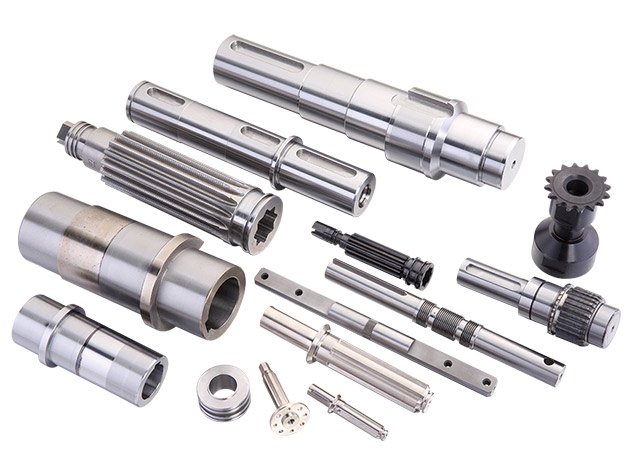
- Shaft
- Molds&Tools
- Hydraulics And Pump
- Hair transplant needle
- Hydraulics And Pump
- Precision CNC Shaft Machining Manufacturer for High Performance Applications
- Energy Industry CNC Machining Parts Supplier
- Aerospace Structural Components for OEM Programs
- Aerospace Structural Components for OEM Programs
- Automotive & EV CNC Machining Parts Supplier for OEM and Tier 1
- Medical Device CNC Machining Services
The Role of Supply Chain Integrators in Agile Manufacturing: A Strategic Guide for OEMs and Tier 1 Suppliers

The Role of Supply Chain Integrators in Agile Manufacturing
Agile manufacturing depends on more than flexible machine tools. It requires a supply chain that can respond quickly to engineering changes, fluctuating demand, material constraints, qualification requirements, and global delivery expectations without sacrificing quality or cost control. For original equipment manufacturers (OEMs) and Tier 1 suppliers, supply chain integrators provide the technical coordination and manufacturing infrastructure needed to convert complex requirements into reliable production outcomes.
IndustryApex Technology, operating through IndustryApex CNC, supports this model as a supply chain integrator and ODM solution provider. By combining engineering coordination, precision manufacturing, process control, and supply chain management, the company helps customers reduce supplier complexity while improving responsiveness across the product lifecycle.
1. Executive Summary
Agile manufacturing is often described as the ability to produce quickly and adapt to change. In practice, it is a coordinated operating system that connects product design, sourcing, process engineering, machining, inspection, documentation, logistics, and continuous improvement. When these activities are distributed across disconnected suppliers, every engineering change or production issue can create delays, duplicated communication, and inconsistent accountability.
A supply chain integrator addresses this challenge by coordinating multiple technical and commercial requirements through one accountable manufacturing partner. The integrator may support design for manufacturability, material selection, process planning, prototype production, production ramp-up, quality validation, and repeat deliveries. This approach is particularly valuable for products containing tight tolerances, difficult-to-machine materials, complex geometries, or demanding regulatory documentation.
For global OEMs and Tier 1 suppliers, the benefits include shorter decision cycles, improved visibility, lower supplier-management overhead, and greater confidence that engineering intent will be preserved during production. The model also creates a practical foundation for ODM collaboration, allowing a qualified manufacturing partner to contribute process expertise and design feedback while the customer retains control of the product definition and commercial strategy.
The central conclusion is straightforward: supply chain integration is a manufacturing capability, not merely a purchasing service. The strongest integrators combine production assets, technical expertise, enterprise resource planning, quality systems, and supplier coordination into a controlled flow from drawing to delivered component.
2. Technical Deep Dive
Agile manufacturing begins with information continuity. A component drawing, 3D model, specification, inspection plan, and purchase order must remain aligned as they move from engineering to production. A supply chain integrator establishes a controlled workflow in which revision status, approved materials, process instructions, inspection criteria, and delivery schedules are visible to the responsible teams.
This control is important because manufacturing risk often originates at the interfaces between functions. A design engineer may specify a tolerance that requires a secondary grinding operation. A procurement team may select a material with the correct grade but an unsuitable certification package. A machining supplier may meet dimensional requirements while missing surface-finish, cleanliness, or traceability expectations. Integration reduces these gaps by bringing the relevant decisions into one coordinated process.
Design and Process Collaboration
Early design-for-manufacturing review is one of the most effective tools for improving agility. Engineers can evaluate datum strategies, tool access, wall thickness, fixturing, burr control, inspection access, and the practical sequence of machining operations before production begins. These reviews do not simply reduce manufacturing cost; they also prevent late-stage redesigns that can disrupt launch schedules.
For complex components, a hybrid process plan may combine 3-axis, 4-axis, and 5-axis CNC machining with EDM, precision grinding, or industrial ceramic processing. The correct process depends on geometry, material behavior, tolerance requirements, volume, and the intended application. A supply chain integrator can select and coordinate these capabilities without forcing the customer to manage each specialist independently.
Planning, Capacity, and Change Management
Agile supply chains require capacity visibility at both the machine and process level. It is not enough to know that a supplier has CNC capacity in general. The relevant questions include whether the supplier has the correct spindle envelope, workholding capability, tooling, inspection equipment, skilled operators, and available secondary-process capacity at the time production is required.
ERP-supported planning helps connect customer demand with material purchasing, production scheduling, work-in-process status, quality release, and shipment planning. When an engineering revision or quantity change occurs, the impact can be evaluated across open orders, raw-material commitments, tooling, inspection programs, and delivery dates. This creates a faster and more accurate response than relying on separate spreadsheets and email chains.
Quality and Traceability
Quality performance is a core component of agility because unstable quality consumes capacity. Nonconforming parts generate rework, sorting, replacement production, expedited freight, and customer-side disruption. An integrated system helps establish inspection points at the stages where defects are most likely to occur, including incoming material verification, first-article inspection, in-process checks, final dimensional inspection, and documentation review.
Traceability is equally important for industries such as aerospace, medical technology, hydraulics, energy, and industrial automation. Material certificates, process records, calibration status, inspection results, and revision history should be connected to the applicable part or order. This enables faster root-cause analysis and supports customer audits without reconstructing the production history after the fact.
For OEMs evaluating a manufacturing partner, the key question is not only whether a supplier can make one acceptable sample. It is whether the supplier can repeatedly control the entire technical process while adapting to changing demand. That is the practical distinction between transactional outsourcing and integrated manufacturing support.
3. The ODM & Supply Chain Advantage
IndustryApex Technology’s core identity is that of a supply chain integrator and ODM solution provider. This positioning is designed for customers that need more than individual machining operations. Global OEMs and Tier 1 suppliers often require a partner capable of translating product requirements into a complete and controlled supply solution, from technical review through recurring delivery.
The company’s manufacturing edge is based on a fully controlled precision manufacturing system supported by ERP and more than 30 years of experience. This combination brings together production planning, process documentation, capacity coordination, quality management, and delivery execution. Customers benefit from a clearer line of accountability and a more consistent flow of information across the manufacturing program.
Integrated Technical Capabilities
The manufacturing platform includes 3-axis to 5-axis CNC machining for prismatic, contoured, and complex structural components. EDM supports intricate profiles, narrow slots, sharp internal features, and difficult-to-machine conductive materials. Precision grinding provides a path to tighter dimensional control, improved surface finish, and stable performance on functional interfaces. Industrial ceramics extend the available material and application range where wear resistance, electrical insulation, thermal stability, or chemical resistance is required.
These capabilities are valuable individually, but their strategic advantage comes from coordination. A component may require rough machining, heat treatment, EDM, finish machining, grinding, cleaning, inspection, and controlled packaging. Managing these stages through an integrated supply chain reduces handoff risk and gives the customer one technical partner responsible for maintaining the approved specification throughout the process.
ODM Support Without Losing Engineering Control
An ODM relationship can improve speed when the manufacturing partner contributes practical knowledge during product development. IndustryApex Technology can support discussions around manufacturability, process selection, tolerance allocation, material behavior, and production scalability. This helps customers identify avoidable cost and schedule risks before they become embedded in the design.
Effective ODM support does not mean replacing the customer’s engineering authority. Instead, it creates a structured collaboration in which the customer defines performance requirements and the manufacturing partner contributes production expertise. The result can be a design that is easier to make consistently, inspect objectively, and scale across demand cycles.
Why Integration Matters to Global Buyers
Global OEMs and Tier 1 suppliers commonly manage multiple plants, regional demand centers, regulatory requirements, and approved supplier lists. A supply chain integrator can reduce the number of operational interfaces while preserving access to specialized processes. This can simplify supplier qualification, improve communication, and make delivery performance easier to measure.
Integration also supports resilience. When material availability changes, demand increases, or an approved process requires adjustment, the partner can evaluate alternatives across engineering, capacity, quality, and logistics. Decisions are therefore based on the complete production system rather than on the narrow availability of a single supplier.
4. Industry Applications
Supply chain integration is most valuable where component failure, delivery interruption, or documentation gaps can create significant operational consequences. IndustryApex Technology supports applications requiring precision, repeatability, and coordinated manufacturing control.
Aerospace and Aircraft Structures
Aerospace programs require strict control over material certification, configuration, inspection, and process records. Complex titanium and aluminum components may also require 5-axis machining, controlled deburring, specialized finishing, and detailed first-article documentation. Customers developing or sourcing aerospace CNC machined titanium aircraft parts and structural components can benefit from an integrated approach that links technical review with production and quality control.
Medical Components and Surgical Devices
Medical components often combine tight tolerances with demanding requirements for material traceability, surface quality, cleanliness, and repeatable inspection. Titanium implants, surgical instruments, and high-precision device parts may require coordinated machining, grinding, finishing, and documentation. An integrated manufacturing partner can help manage these requirements from prototype evaluation through production supply. IndustryApex CNC provides information on ISO-certified CNC machining for medical components.
Hydraulics, Pumps, and Fluid Control
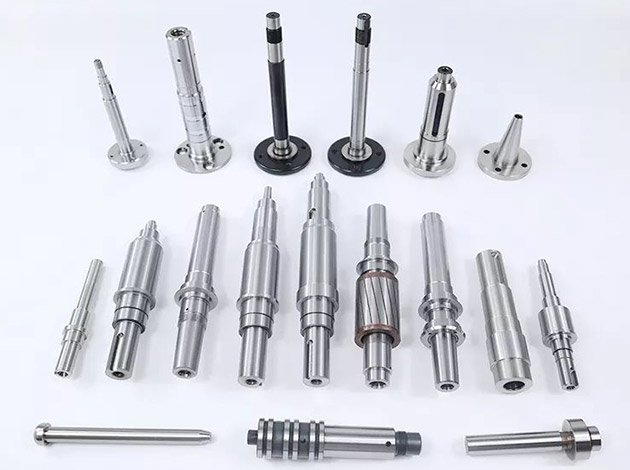
Hydraulic and pump components depend on dimensional accuracy, surface finish, concentricity, and reliable sealing or flow performance. Valve spools, sleeves, pump bodies, shafts, and related components may pass through multiple machining and inspection stages. Coordinated production helps maintain the relationship between functional features and reduces the risk that separate suppliers interpret critical requirements differently. Buyers can review hydraulic pump parts and fluid-control manufacturing capabilities as part of their supplier evaluation.
Industrial Automation and Equipment
Automation equipment manufacturers frequently manage variant-heavy product lines, short release cycles, and changing customer configurations. Integrated manufacturing can support this environment by connecting prototype work, low-volume production, repeat orders, and engineering revisions within one controlled process. Precision shafts, structural components, tooling elements, ceramic parts, and custom machine components can be planned according to application risk and production volume.
Across these industries, the value of integration is measurable in reduced administrative effort, faster technical decisions, better production visibility, and more consistent quality. The right partner does not merely add machining capacity. It strengthens the customer’s ability to respond to market and engineering change.
5. Call to Action
Agile manufacturing requires a supply chain that can connect engineering intent with controlled production. For OEMs and Tier 1 suppliers, a supply chain integrator can provide the technical depth, process coordination, ERP visibility, and manufacturing flexibility needed to support prototypes, production launches, and long-term supply programs.
IndustryApex Technology combines more than 30 years of precision manufacturing experience with 3-axis to 5-axis CNC machining, EDM, precision grinding, industrial ceramics, and ODM-oriented engineering support. Whether the requirement involves aerospace structures, medical components, hydraulic parts, or specialized industrial equipment, the first step is a clear review of the part, application, quality requirements, volume, and delivery objectives.
Visit the IndustryApex CNC homepage to review the manufacturing platform, or contact the IndustryApex Technology team to discuss drawings, models, specifications, qualification needs, and supply-chain objectives.