
- Shaft
- Molds&Tools
- Hydraulics And Pump
- Hair transplant needle
- Hydraulics And Pump
- Precision CNC Shaft Machining Manufacturer for High Performance Applications
- Energy Industry CNC Machining Parts Supplier
- Aerospace Structural Components for OEM Programs
- Aerospace Structural Components for OEM Programs
- Automotive & EV CNC Machining Parts Supplier for OEM and Tier 1
- Medical Device CNC Machining Services
Navigating ISO Standards for Medical CNC Machined Parts: A Practical OEM and Supply Chain Guide

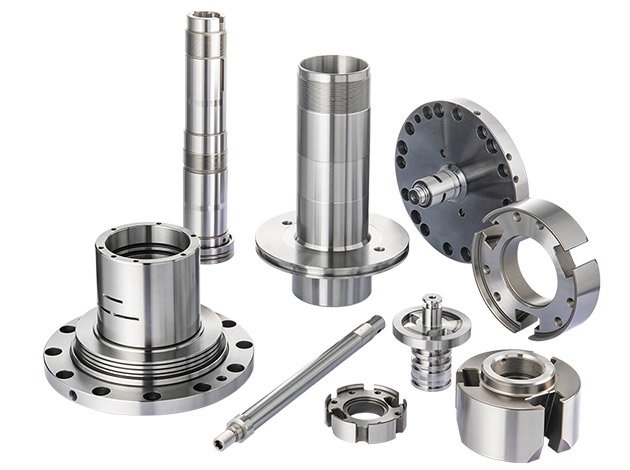
Medical CNC machining is not simply a matter of holding tight tolerances. For OEMs and Tier 1 medical device suppliers, every machined component must be supported by controlled processes, documented evidence, material traceability, risk-based thinking, and a supply chain capable of maintaining compliance from quotation through delivery.
This analysis explains how ISO standards influence the sourcing and production of medical CNC machined parts, including titanium implants, stainless steel surgical instruments, orthopedic components, diagnostic equipment parts, and precision fluid-handling assemblies. It also outlines how an experienced ODM and supply chain partner can reduce technical, regulatory, and commercial risk.
1. Executive Summary
Medical device manufacturers typically evaluate CNC machining suppliers through two lenses: technical capability and quality-system maturity. A supplier may produce an excellent prototype, but production approval depends on repeatability, process validation, inspection records, nonconformance control, and the ability to demonstrate that supplied parts conform to approved specifications.
ISO 13485 is the central quality-management reference for organizations involved in the design and manufacture of medical devices and related components. Although certification alone does not make a part compliant with a specific medical regulation, an ISO 13485-certified manufacturing environment provides a structured framework for document control, purchasing controls, production records, corrective action, training, traceability, and risk management. ISO 9001 may also support the supplier’s operational foundation, while ISO 14971 principles are relevant when manufacturing risks must be assessed in relation to the final device.
For material and biological considerations, standards such as ISO 10993 may become relevant to the finished device or patient-contacting materials. The exact requirements depend on intended use, contact duration, sterilization method, geography, and the device manufacturer’s regulatory strategy. Therefore, the CNC supplier must work from controlled drawings, material specifications, approved processes, and clearly defined customer responsibilities.
Successful sourcing begins with early alignment. OEM engineering, quality, regulatory, and procurement teams should confirm material grade, surface condition, cleanliness requirements, allowable burrs, surface roughness, dimensional tolerances, inspection methods, packaging, labeling, and lot traceability before production starts. A capable partner can then convert these requirements into a stable manufacturing plan and a transparent supply chain.
2. Technical Deep Dive
ISO standards affect medical CNC machined parts at every stage of the product lifecycle. The first stage is design transfer. A production drawing must communicate not only nominal dimensions but also geometric tolerances, datums, critical-to-quality characteristics, surface finishes, edge conditions, threads, material requirements, and revision status. Ambiguity at this stage creates downstream variation and makes objective acceptance difficult.
For medical components, material control is especially important. Common materials include implant-grade titanium, cobalt-chromium alloys, 316L stainless steel, PEEK, aluminum for non-body-contacting equipment, and specialty alloys for surgical or diagnostic applications. The supplier should obtain material certificates from approved sources, verify heat or lot numbers, and maintain traceability through cutting, machining, inspection, cleaning, and shipment. Substitution should never occur without documented customer approval.
Process planning must translate drawing requirements into controlled manufacturing steps. A typical plan may include raw-material verification, CNC milling or turning, deburring, secondary EDM, precision grinding, washing, visual inspection, dimensional inspection, and final packaging. Each operation should have defined instructions, equipment requirements, acceptance criteria, and records. When a feature is difficult to inspect after subsequent operations, an in-process inspection point may be necessary.
Medical components often require complex five-axis machining to maintain positional accuracy across contoured surfaces, angled holes, anatomical geometries, or miniature instrument features. Three-axis and four-axis equipment remain effective for many prismatic parts, while five-axis machining can reduce setups and improve feature-to-datum control. However, machine capability must be supported by qualified programming, tool-life management, fixture control, calibration, and verification of the complete process—not merely by the machine’s advertised accuracy.
Inspection planning should be risk-based. Coordinate measuring machines can verify critical dimensions, profiles, true position, and datum relationships. Optical systems may be suitable for small features, edge conditions, and visual comparison. Surface roughness instruments, thread gauges, pin gauges, roundness equipment, and calibrated hand tools may supplement CMM inspection. The inspection report should identify the drawing revision, equipment used, calibration status, measured values, and acceptance criteria.
Calibration is a core element of confidence. Measuring equipment must be uniquely identified, calibrated at defined intervals, protected from damage, and evaluated when found out of calibration. Environmental conditions such as temperature, humidity, vibration, and cleanliness can influence measurements, particularly for tight-tolerance components. A robust supplier can explain how inspection uncertainty and equipment capability are managed for critical characteristics.
Cleanliness and contamination control also deserve special attention. Burrs, chips, cutting fluids, fingerprints, abrasive residue, and particulate matter can compromise medical assemblies or interfere with sterilization and surface treatment. Cleaning requirements should specify approved chemistries, rinsing, drying, handling, and packaging conditions. If passivation, electropolishing, anodizing, coating, or other treatments are required, the external processor should be qualified and managed through documented purchasing controls.
Nonconforming product must be segregated and evaluated through a formal process. Rework, repair, use-as-is decisions, or concessions require authorization according to the customer’s quality agreement and regulatory obligations. Corrective and preventive action should address root causes rather than simply replacing rejected parts. Typical causes include tool wear, unstable fixturing, incorrect revision control, programming errors, material mix-ups, and inadequate inspection frequency.
Supplier audits should examine more than certificates on a website. Buyers should review document control, training records, process validation, traceability, equipment maintenance, calibration, nonconformance management, subcontractor oversight, cybersecurity for controlled technical data, and business continuity. A supplier that can provide objective evidence is better positioned to support design verification, process qualification, customer audits, and regulatory submissions.
ISO 13485 should therefore be viewed as a management framework that supports consistent outcomes. It does not replace the OEM’s design responsibility, regulatory assessment, or final device validation. Instead, it creates disciplined interfaces between the device manufacturer and the component supplier.
3. The ODM & Supply Chain Advantage
For global OEMs and Tier 1 suppliers, the best manufacturing relationship extends beyond purchase-order fulfillment. IndustryApex Technology, operating through the IndustryApex CNC platform, serves as a supply chain integrator and ODM solution provider. This positioning is valuable when a medical component requires coordinated engineering, machining, secondary processing, inspection, packaging, and delivery across multiple controlled stages.
Our core advantage is a fully controlled precision manufacturing system supported by ERP and more than 30 years of manufacturing experience. ERP-based control can connect quotations, material purchasing, production scheduling, work orders, inspection records, inventory, shipment status, and revision data. This visibility helps reduce manual handoffs and gives customers a clearer view of production progress and traceability.
The manufacturing edge includes three- to five-axis CNC machining, EDM, precision grinding, and industrial ceramics. These capabilities support a broad range of medical and adjacent high-precision applications. EDM can produce narrow slots, microfeatures, and difficult geometries in conductive materials. Precision grinding supports tight dimensional control and surface-finish requirements. Industrial ceramics can address applications requiring wear resistance, electrical insulation, chemical stability, or thermal performance.
An ODM relationship can begin with design-for-manufacturing feedback. Engineers may identify inaccessible features, unnecessarily tight tolerances, difficult datum schemes, unsuitable tool paths, or finishing requirements that increase cost without improving device performance. Early feedback can preserve design intent while improving yield, cycle time, inspectability, and supply continuity. Any change remains subject to the customer’s formal design-control process and approval requirements.
Supply chain integration is also important for special processes. Medical parts may require heat treatment, passivation, electropolishing, coating, laser marking, ultrasonic cleaning, sterilization compatibility studies, or controlled packaging. A qualified integrator can coordinate these steps, manage approved subcontractors, collect certificates, and maintain lot-level records. This reduces the burden on the OEM’s procurement team while preserving accountability.
For international programs, risk management should include dual-source planning where practical, long-lead material review, capacity reservations, tooling ownership, engineering-change procedures, and contingency planning. A supplier should be able to explain how it handles demand increases, obsolete equipment, workforce continuity, logistics disruption, and urgent engineering changes. These factors directly affect the medical device manufacturer’s ability to maintain uninterrupted production.
Cost analysis should include total landed cost rather than machining price alone. Scrap, inspection, packaging, freight, rework, supplier audits, quality escapes, line stoppages, and regulatory documentation all influence the true cost of ownership. A mature ODM partner helps optimize the complete value stream while protecting the characteristics that affect safety and performance.
4. Industry Applications
Medical CNC machining supports diverse products, and the applicable standards depend on the component’s role in the final device.
Orthopedic and Implantable Components
Titanium and cobalt-chromium components may require complex contours, controlled surface finishes, and complete material traceability. Implant-related parts demand especially careful coordination between the OEM’s biological evaluation, sterilization strategy, surface treatment, and manufacturing controls. IndustryApex Technology can support precision production planning for titanium implants and other high-value components through controlled machining and inspection processes. Explore our ISO-certified CNC machining for medical components.
Surgical Instruments
Instrument components often combine ergonomic contours, sharp or delicate features, tight fits, corrosion-resistant materials, and repeated cleaning or sterilization exposure. Burr control, edge treatment, passivation, surface roughness, and functional testing may be critical. Small-lot prototyping should be planned with the same document and revision discipline expected in production.
Diagnostic and Laboratory Equipment
Analyzers, sample-handling systems, imaging equipment, and laboratory automation use precision housings, brackets, fluid channels, optical mounts, and motion components. These parts may not contact patients directly, but dimensional stability, cleanliness, alignment, and chemical compatibility can influence measurement accuracy and uptime.
Medical Fluid Management
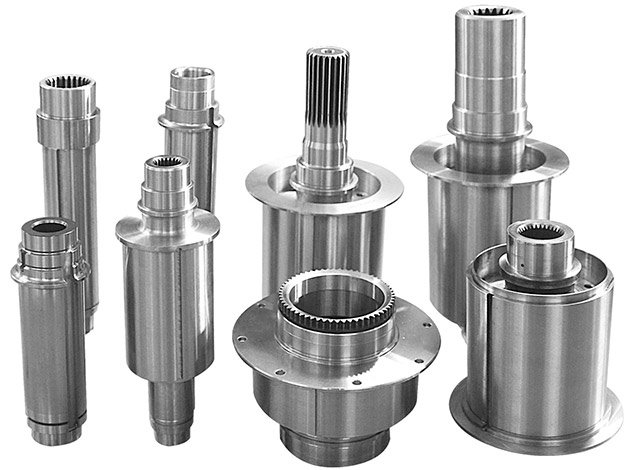
Pumps, valves, manifolds, and precision sleeves require controlled bores, sealing surfaces, concentricity, and repeatable flow characteristics. The manufacturing approach may combine turning, milling, grinding, honing, and specialized inspection. Experience with hydraulic pump parts can be relevant when medical equipment uses miniature fluid-control architectures, although medical requirements must always be specified separately.
Adjacent High-Reliability Sectors
Medical suppliers often share technologies with aerospace, semiconductor, optics, and industrial automation programs. Lessons in traceability, process discipline, contamination control, and complex five-axis machining can transfer across sectors. For example, our aerospace CNC machining capabilities demonstrate experience with demanding titanium and structural applications, while medical programs require their own approved specifications and quality controls.
5. Call to Action
Selecting a medical CNC machining partner should be based on evidence, not assumptions. Before releasing a project, prepare the latest drawing package, 3D models, material specifications, critical-characteristic list, inspection requirements, cleanliness expectations, packaging instructions, forecast, and regulatory context. Ask prospective suppliers how they manage ISO 13485 controls, traceability, calibration, process changes, special processes, nonconforming product, and customer audits.
IndustryApex Technology and IndustryApex CNC help global OEMs and Tier 1 suppliers convert demanding designs into controlled, scalable manufacturing programs. From prototype review and process development to production machining, secondary operations, inspection, and delivery, our integrated approach is designed to reduce supply chain complexity while supporting precision and compliance objectives.
Visit the IndustryApex CNC home page to review our manufacturing capabilities, explore our medical CNC machining services, or contact us with your drawings and technical requirements. Early engineering engagement is the most effective way to identify compliance gaps, improve manufacturability, and build a reliable medical component supply chain.