
- Shaft
- Molds&Tools
- Hydraulics And Pump
- Hair transplant needle
- Hydraulics And Pump
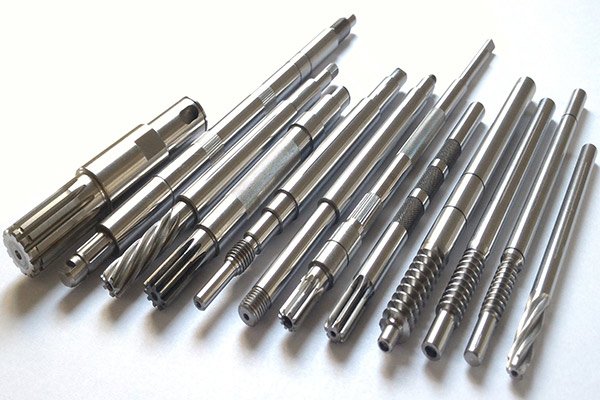
- Precision CNC Shaft Machining Manufacturer for High Performance Applications
- Energy Industry CNC Machining Parts Supplier
- Aerospace Structural Components for OEM Programs
- Aerospace Structural Components for OEM Programs
- Automotive & EV CNC Machining Parts Supplier for OEM and Tier 1
- Medical Device CNC Machining Services
The Role of Supply Chain Integrators in Agile Manufacturing: Engineering Control, ODM Execution, and OEM Resilience

Executive Summary
Agile manufacturing is no longer defined only by fast machining cycles or flexible production cells. For global OEMs and Tier 1 suppliers, true agility depends on the ability to synchronize engineering, procurement, machining, quality, logistics, and risk management into one responsive operating model. This is where the supply chain integrator has become strategically important. Instead of managing disconnected vendors for CNC machining, EDM, grinding, surface treatment, inspection, packaging, and delivery, manufacturers increasingly rely on an integrated partner capable of converting demand volatility into controlled execution.
A supply chain integrator in precision manufacturing acts as both a technical manufacturing resource and a coordination hub. The role includes design-for-manufacturability feedback, process planning, material sourcing, supplier qualification, production scheduling, inspection documentation, and delivery alignment. In industries such as aerospace, medical devices, fluid control, industrial automation, semiconductor equipment, and energy systems, this integrated model reduces handoff risk and accelerates product industrialization.
IndustryApex Technology, operating globally through IndustryApex CNC, positions itself as a supply chain integrator and ODM solution provider for high-precision components. With a fully controlled precision manufacturing system, ERP-enabled operational visibility, and more than 30 years of manufacturing experience, IndustryApex helps customers move from drawings and specifications to stable, repeatable, and scalable production. Learn more about the company’s precision manufacturing platform at IndustryApex CNC.
The central value of an integrated supply chain partner is not simply lower unit cost. It is total operational confidence: shorter development cycles, fewer engineering changes caused by manufacturability gaps, more predictable quality, better capacity planning, and stronger supplier accountability. As OEM programs become more complex and lead-time expectations become more aggressive, supply chain integrators are becoming a critical component of agile manufacturing strategy.
Technical Deep Dive
Agile manufacturing requires a technical system that can absorb variation without losing control. Product demand may change, materials may face shortages, and engineering revisions may occur late in the development cycle. A fragmented supply base often struggles under these conditions because each supplier optimizes only a narrow process step. A supply chain integrator, by contrast, manages the full manufacturing route as a connected technical workflow.
The process typically begins with engineering review. Before chips are made, the integrator evaluates tolerances, datum structures, material behavior, heat treatment requirements, surface finish expectations, and inspection feasibility. This step is essential for precision CNC components because small design decisions can have large downstream consequences. A sharp internal corner may require EDM instead of milling. A deep bore may require special tooling or staged machining. A thin-wall titanium part may require custom fixturing and stress-relief planning. A ceramic component may require grinding-focused process design rather than conventional metal-cutting assumptions.
Once manufacturability is validated, the integrator develops the process chain. For advanced components, this may combine 3-axis and 5-axis CNC machining, turning, wire EDM, sinker EDM, precision grinding, lapping, honing, deburring, inspection, and surface treatment coordination. The advantage is not only access to multiple technologies; it is the ability to sequence them correctly. Poor sequencing can cause distortion, datum loss, rework, or scrap. Strong process integration protects dimensional stability and supports repeatability across batches.
ERP integration is another critical element. In an agile manufacturing environment, production teams need real-time visibility into order status, material availability, machine loading, subcontracted processes, inspection queues, and delivery commitments. ERP is not merely an administrative tool; it is the nervous system of the supply chain. When connected with engineering documentation, procurement records, quality data, and production scheduling, ERP enables faster decision-making and stronger traceability.
Quality control must also be integrated rather than inspected only at the end. Supply chain integrators build quality gates into the manufacturing route. Incoming material verification, first-article inspection, in-process dimensional checks, tool wear monitoring, CMM inspection, surface roughness testing, hardness verification, and final documentation are managed as part of the production plan. This is particularly important for components used in high-risk assemblies, where one nonconforming feature can affect safety, reliability, or regulatory compliance.
Agile manufacturing also depends on controlled capacity. A conventional buyer may place purchase orders across multiple shops without full visibility into each supplier’s machine availability, workforce capability, or quality history. An integrator uses capacity planning to match component complexity with the right equipment and process expertise. High-mix, low-volume prototypes may require engineering-intensive cells, while repeat production may require dedicated fixturing, tool libraries, and statistical process control. The ability to shift between these modes is a major advantage in volatile markets.
From a technical perspective, the supply chain integrator reduces the number of unmanaged interfaces. Every interface between suppliers creates risk: drawing interpretation differences, inconsistent inspection methods, packaging damage, missing certifications, delayed communication, and accountability gaps. Integration does not eliminate complexity, but it centralizes responsibility and converts complexity into a managed system.
The ODM & Supply Chain Advantage
For OEMs and Tier 1 suppliers, the most valuable manufacturing partners are no longer limited to build-to-print vendors. They are engineering-aware ODM and supply chain partners capable of supporting product realization from early concept through production ramp. IndustryApex Technology’s core identity is built around this model: a supply chain integrator and ODM solution provider for precision mechanical components and assemblies.
The ODM advantage begins with technical ownership. When a customer provides performance requirements, assembly constraints, target cost, environmental conditions, and production volume expectations, an ODM-oriented partner can help refine the component strategy. This may include material selection, geometry optimization, tolerance rationalization, process selection, and supplier route design. The goal is to maintain functional performance while improving manufacturability, cost stability, and delivery confidence.
IndustryApex’s manufacturing edge comes from a fully controlled precision manufacturing system supported by ERP and more than 30 years of hands-on experience. That experience matters because precision manufacturing is filled with practical variables that are difficult to capture in drawings alone. Material stress behavior, clamping deformation, thermal expansion, burr formation, tool deflection, grinding burn risk, and inspection repeatability must be understood at the shop-floor level. An experienced integrator translates these realities into reliable production methods.
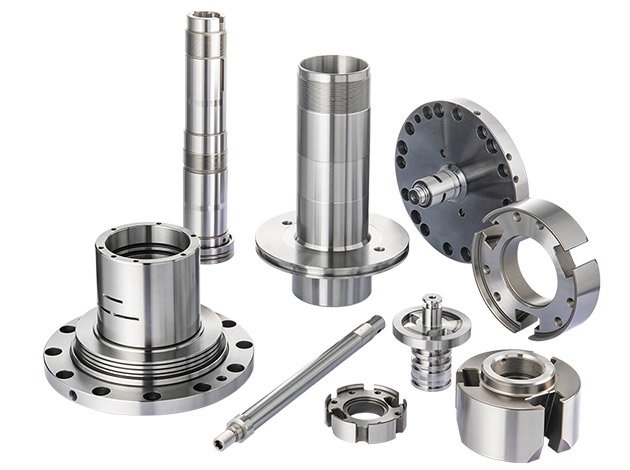
Technology capability is central to the model. IndustryApex supports 3-axis and 5-axis CNC machining for complex geometries, EDM for difficult internal profiles and hardened materials, precision grinding for tight tolerances and surface finishes, and industrial ceramics processing for demanding wear, insulation, thermal, or chemical-resistance applications. This broad capability allows the company to select processes based on engineering need rather than forcing every part through a limited equipment set.
For global OEM and Tier 1 customers, supply chain integration also simplifies commercial management. Instead of managing numerous suppliers for different part families or process steps, the customer works with a single accountable partner. This reduces administrative workload, improves communication speed, and strengthens program-level accountability. Engineering changes, delivery adjustments, and quality issues can be handled through one coordinated channel rather than a chain of disconnected emails and purchase orders.
Risk management is another major advantage. Agile manufacturers must respond to demand spikes, material shortages, geopolitical uncertainty, logistics disruption, and supplier instability. A mature supply chain integrator builds alternative sourcing paths, maintains qualified process options, monitors capacity, and uses ERP data to identify constraints early. This supports continuity of supply and reduces the likelihood of emergency firefighting.
The supply chain integrator also improves total cost management. While unit price remains important, total cost includes engineering time, supplier management time, quality escapes, rework, delayed launches, excess inventory, expedited freight, and production downtime. Integrated manufacturing reduces hidden costs by preventing problems earlier in the process. For customers launching complex programs, this can be more valuable than a marginally lower piece price from a less capable supplier.
In practical terms, IndustryApex’s ODM and supply chain model provides customers with a manufacturing extension of their own engineering and procurement teams. The customer retains control over product requirements and strategic priorities, while IndustryApex manages the technical manufacturing route, supplier coordination, process validation, and production execution. This creates the responsiveness required for agile manufacturing without sacrificing precision or traceability.
Industry Applications
The role of supply chain integrators becomes especially clear in industries where component failure, late delivery, or uncontrolled variation can create significant business risk. Precision parts are not generic commodities; they are often mission-critical elements within larger mechanical, hydraulic, aerospace, medical, or automation systems.
In aerospace, agile manufacturing must coexist with strict quality expectations and complex materials. Titanium aircraft parts, aluminum structural components, stainless fittings, and 5-axis machined brackets require advanced process planning, stable fixturing, and complete inspection documentation. Aerospace programs often experience engineering revisions during development, making integrated communication and rapid process adjustment essential. IndustryApex supports this field through capabilities aligned with aerospace CNC machining and aircraft structural components.
In medical manufacturing, agility must be balanced with biocompatibility, surface quality, traceability, and regulatory discipline. Titanium implants, surgical instruments, diagnostic device parts, and precision housings require clean process control and reliable documentation. The challenge is not only to produce accurate parts, but to maintain consistency across revisions, batches, and validated production routes. IndustryApex’s capabilities in ISO-certified CNC machining for medical components support customers that need both precision and controlled supply chain execution.
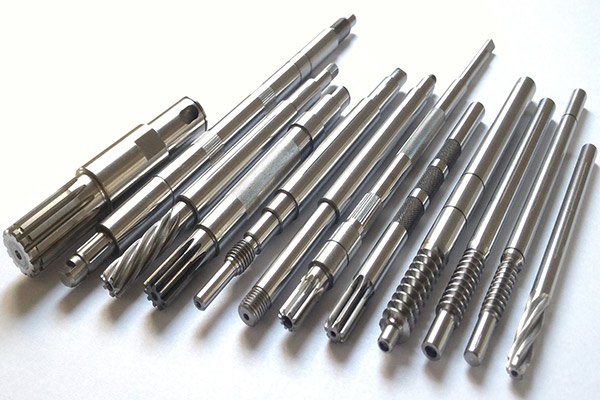
Hydraulics and pump systems represent another strong use case. Valve spools, sleeves, pump shafts, pistons, manifolds, sealing surfaces, and flow-control components often demand tight roundness, concentricity, surface finish, and material compatibility. A small dimensional error can reduce efficiency, increase leakage, or shorten service life. Agile supply chain integration helps customers coordinate machining, grinding, heat treatment, coating, and inspection for demanding fluid-power applications. IndustryApex’s experience with hydraulic and pump parts is directly relevant to these requirements.
In semiconductor equipment and optical systems, components may require exceptional flatness, cleanliness, ceramic materials, nonmagnetic metals, or ultra-precise alignment features. These sectors require suppliers that understand both machining and process contamination risks. Industrial ceramics, precision grinding, and high-stability machining routes can be essential for chambers, fixtures, handling components, and inspection-related assemblies.
Industrial automation and robotics also benefit from integrated supply chains. Custom shafts, housings, gear-related parts, actuator components, splined sleeves, and structural components must be produced with consistent quality while supporting rapid equipment design changes. OEMs in automation often face compressed development timelines, so the ability to move quickly from prototype to pilot run to production is a competitive advantage.
Energy, construction machinery, agricultural equipment, packaging machinery, and drivetrain systems all share similar needs: durable parts, controlled cost, dependable delivery, and rapid response to field-driven design changes. In these markets, supply chain integrators help reduce the operational burden on OEM sourcing teams while improving technical continuity between design and production.
Across all these industries, the common requirement is confidence. Customers need to know that the selected manufacturing partner can understand the application, plan the process, control quality, coordinate suppliers, and deliver parts that perform as intended. This is the practical role of the supply chain integrator in agile manufacturing.
Call to Action
Agile manufacturing is not achieved by speed alone. It is achieved through controlled responsiveness: the ability to react quickly while maintaining engineering discipline, quality stability, and supply chain accountability. For OEMs and Tier 1 suppliers, the right supply chain integrator can reduce complexity, accelerate product development, and strengthen long-term production resilience.
IndustryApex Technology, through IndustryApex CNC, combines ODM engineering support, precision manufacturing capability, ERP-enabled control, and decades of production experience. With capabilities including 3-5 axis CNC machining, EDM, precision grinding, and industrial ceramics, IndustryApex is positioned to support global customers that require complex components, reliable documentation, and scalable supply chain execution.
If your team is developing a new product, localizing a supply chain, improving part quality, or seeking a more accountable manufacturing partner, IndustryApex can help evaluate your drawings, specifications, and production goals. Contact the engineering and supply chain team today through the IndustryApex CNC contact page to discuss your next precision manufacturing project.