
- Shaft
- Molds&Tools
- Hydraulics And Pump
- Hair transplant needle
- Hydraulics And Pump
- Precision CNC Shaft Machining Manufacturer for High Performance Applications
- Energy Industry CNC Machining Parts Supplier
- Aerospace Structural Components for OEM Programs
- Aerospace Structural Components for OEM Programs
- Automotive & EV CNC Machining Parts Supplier for OEM and Tier 1
- Medical Device CNC Machining Services
How ERP Systems Ensure Quality Control in CNC Mass Production

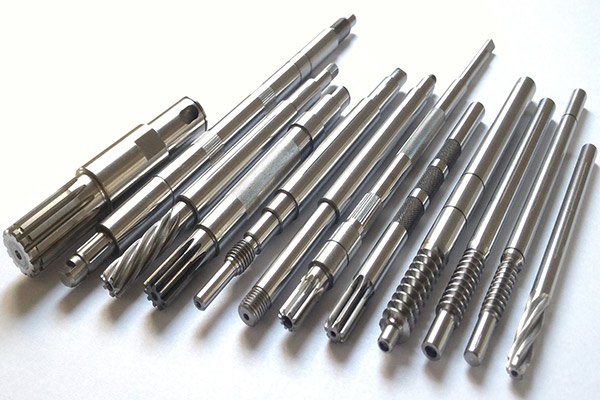
How ERP Systems Ensure Quality Control in CNC Mass Production
For global OEMs and Tier 1 suppliers, CNC mass production is not controlled by machining capability alone. Consistent quality depends on how effectively engineering data, material movement, machine capacity, inspection results, and supplier actions are connected. An enterprise resource planning system, or ERP, provides the operational framework that links these activities into one traceable production system.
1. Executive Summary
In high-volume CNC manufacturing, quality control must be repeatable, measurable, and auditable. A part can meet a drawing requirement during first-article inspection and still create downstream problems if revision data is not synchronized, material certificates are incomplete, tooling life is unmanaged, or inspection results are stored separately from the production order.
ERP systems reduce these risks by creating a controlled information flow from quotation and product engineering through purchasing, machining, inspection, packaging, and delivery. The system can assign approved part revisions, manage bills of materials and routings, preserve material heat numbers, schedule calibrated equipment, record nonconformances, and connect corrective actions to the affected production lots.
For CNC mass production, ERP is therefore more than an accounting or scheduling platform. It is a quality infrastructure. When combined with disciplined process engineering and a fully controlled manufacturing environment, ERP helps manufacturers deliver dimensional consistency, documentation accuracy, delivery reliability, and complete lot-level traceability.
IndustryApex Technology, operating through IndustryApex CNC, applies this integrated approach to support demanding global customers. Its manufacturing model combines more than 30 years of precision production experience with ERP-based control, multi-axis CNC machining, EDM, precision grinding, and industrial ceramics capabilities.
2. Technical Deep Dive
Quality in CNC mass production is created through a chain of controlled decisions. ERP systems make that chain visible and enforceable.
Revision and configuration control
Engineering revision errors are among the most expensive sources of production quality failure. A released drawing may be changed after a purchase order is issued, while an older CNC program, inspection plan, or work instruction remains on the shop floor. ERP configuration control links the approved drawing revision to the item master, routing, tooling requirement, CNC program reference, and inspection criteria.
Before production begins, planners and operators can verify that the work order is based on the current configuration. This is particularly important for aerospace structural components, medical device parts, and other products where a small geometry or material change can affect function, certification, or regulatory records.
Digital routings and process discipline
A CNC component normally passes through several operations: material preparation, turning or milling, heat treatment, EDM, grinding, deburring, cleaning, inspection, and final packaging. ERP routings define the approved sequence and identify the required machine, fixture, tooling, process parameters, operator qualification, and inspection gate for each operation.
This creates a repeatable production method across shifts and facilities. The routing can also identify hold points where work cannot proceed until an inspection result is accepted. By controlling operation sequence electronically, the manufacturer reduces the risk of skipped processes, unauthorized substitutions, and incomplete records.
Material and lot traceability
Material quality begins before the first cut. ERP purchasing and inventory modules can record supplier identity, purchase order details, material grade, heat or batch number, certificate of conformity, and receiving inspection results. That information follows the material through work-in-process and into the finished goods record.
If a material issue is discovered, the manufacturer can identify the affected lots, work orders, customers, and shipments more quickly. Conversely, when a customer requests documentation for a specific shipment, the organization can retrieve the relevant certificates and inspection records without reconstructing the history manually.
Machine, tooling, and process monitoring
Mass production quality is affected by machine condition and tool wear as much as by the original program. ERP systems can connect maintenance schedules, machine availability, tool life, and production orders. A work order may require a machine to have a current preventive maintenance status or a cutting tool to remain within its approved usage limit.
When integrated with manufacturing execution systems, machine data can provide cycle times, downtime events, alarm conditions, and process measurements. These records help engineers distinguish between isolated operator errors and systemic process drift. Tool replacement can be planned based on actual usage, reducing both premature replacement and the risk of machining with a worn tool.
Inspection planning and statistical control
ERP quality modules can connect control plans and inspection characteristics to the production order. The system may define sampling frequency, measurement method, gauge requirements, nominal dimensions, tolerances, and acceptance criteria. Results entered by inspectors can then be associated with the exact operation, machine, operator, material lot, and serial or batch number.
For critical dimensions, statistical process control data can reveal trends before a part falls outside tolerance. Engineers can monitor capability indicators, measurement variation, and recurring deviations. This supports preventive action instead of relying only on final inspection to detect defects.
Measurement equipment management is another important control. ERP records can identify calibrated gauges, calibration due dates, service history, and equipment status. If a measurement device is found to be out of calibration, the quality team can assess which inspection records may be affected and place relevant product on hold.
Nonconformance and corrective action
When a defect occurs, the quality response must extend beyond sorting the immediate batch. ERP systems provide a structured workflow for nonconformance reports, containment, disposition, root-cause analysis, corrective action, and effectiveness verification.
Because the nonconformance is linked to production and supply chain data, teams can investigate whether the same issue exists in other lots, machines, tools, or suppliers. Common corrective actions include revising a setup instruction, changing a fixture, tightening a sampling plan, qualifying an alternate supplier, or updating a preventive maintenance interval. This converts production experience into controlled process knowledge.
Documented release and delivery control
Final quality release should confirm more than dimensional compliance. ERP can verify that all required operations are complete, inspection results are accepted, certificates are attached, nonconformances are closed, and packaging requirements are satisfied. The shipment record can then include the correct quantity, revision, traceability information, and customer documentation.
This level of control is essential when customers operate regulated or safety-critical systems. It also reduces administrative errors that can delay receiving inspection, payment, assembly, or customer approval.
3. The ODM & Supply Chain Advantage
The value of ERP increases when it is embedded in a broader manufacturing and supply chain strategy. IndustryApex Technology’s core identity is that of a supply chain integrator and ODM solution provider. For OEM and Tier 1 customers, this means the supplier can participate earlier in the product lifecycle and coordinate engineering, sourcing, production, quality, and logistics through a unified operating structure.
In an ODM engagement, the manufacturer may contribute to design-for-manufacturing reviews, material selection, tolerance analysis, process development, prototype validation, and production ramp-up. ERP provides continuity across these stages. Approved engineering changes can be connected to purchasing requirements and manufacturing routings, while lessons from prototype production can be incorporated into the controlled mass-production process.
The manufacturing edge comes from a fully controlled precision manufacturing system supported by ERP and more than 30 years of experience. Control does not mean that every process must be performed in one machine or by one department. It means responsibilities, approvals, records, and handoffs are defined. This makes production performance easier to measure and supply chain risk easier to manage.
IndustryApex Technology’s technology capabilities include 3-axis through 5-axis CNC machining, EDM, precision grinding, and industrial ceramics. These processes can be coordinated through common quality and production records, even when a component requires multiple specialists or different manufacturing technologies.
For a global OEM, this structure improves supplier communication. Forecasts, purchase orders, engineering revisions, capacity requirements, quality alerts, and shipping records can be managed against the same part and customer program. The result is better visibility into production status and a faster response when demand, design, or delivery requirements change.
ERP also supports supply chain resilience. Approved supplier lists, supplier performance records, incoming inspection data, and material lead times help purchasing teams make decisions based on evidence. A supplier that consistently delivers late or produces material with recurring documentation gaps can be identified before it disrupts the customer schedule. At the same time, alternate sources can be evaluated against defined technical and quality requirements rather than selected only on price.
For Tier 1 suppliers, ERP integration is especially valuable because their own customer obligations often require reliable sub-tier data. A controlled production record from the machining supplier can support assembly traceability, customer audits, warranty investigations, and regulatory submissions. This reduces the amount of manual reconciliation required between companies.

4. Industry Applications
ERP-supported quality control is relevant across industries, but the information priorities vary by application.
Aerospace and defense
Aerospace production requires strict configuration control, material traceability, process qualification, and documented inspection. ERP helps connect titanium or high-strength alloy certificates to each work order and shipment. It can also preserve records for 5-axis machining, special processes, first-article inspection, nonconformance review, and final release. Customers requiring aircraft structural components and other precision aerospace parts can benefit from a manufacturing record that remains accessible throughout the product lifecycle. Explore IndustryApex Technology’s aerospace CNC machining and titanium aircraft parts capabilities.
Medical devices
Medical components often require tight tolerances, controlled materials, validated processes, and clean documentation. ERP can manage lot traceability for titanium, stainless steel, and specialty alloys while linking inspection results to implants, surgical instruments, or high-precision device parts. It also supports controlled changes and complaint investigations. IndustryApex Technology’s ISO-certified CNC machining for medical components reflects the level of process control expected in this sector.
Hydraulics and fluid control
Hydraulic valves, pump components, sleeves, spools, and manifolds depend on surface finish, concentricity, leakage performance, and material compatibility. ERP routings can define grinding and inspection requirements, while quality records can connect leakage tests and dimensional measurements to each batch. For customers sourcing hydraulic pump parts, this traceability helps support reliable assembly and field performance.
Automotive and industrial equipment
Automotive and industrial customers typically require high output, stable cycle times, and controlled variation. ERP supports demand planning, capacity scheduling, tooling management, supplier coordination, and production quality at scale. It also helps manufacturers compare defect rates, downtime, and delivery performance across lines or plants, making continuous improvement more objective.
Energy and specialized equipment
Energy systems and specialized machinery may combine large components, long lead times, and demanding operating conditions. ERP enables milestone tracking, material certification management, subcontract process control, and documentation packages. This is useful when the customer needs evidence of compliance years after delivery.
5. Call to Action
Quality control in CNC mass production is strongest when engineering, manufacturing, inspection, and supply chain data are managed as one connected system. ERP helps prevent revision mistakes, preserve traceability, control process steps, monitor equipment, accelerate root-cause analysis, and provide the documentation required by global OEM and Tier 1 customers.
IndustryApex Technology and IndustryApex CNC combine ERP-enabled production management with 3-axis to 5-axis CNC machining, EDM, precision grinding, industrial ceramics, and more than three decades of manufacturing experience. Whether you are developing a new component, scaling an existing program, or improving supply chain visibility, the team can support the complete ODM and precision manufacturing workflow.
Visit the IndustryApex CNC home page to review manufacturing capabilities, or contact IndustryApex Technology with your drawings, specifications, annual volume, quality requirements, and delivery targets.