
- Shaft
- Molds&Tools
- Hydraulics And Pump
- Hair transplant needle
- Hydraulics And Pump
- Precision CNC Shaft Machining Manufacturer for High Performance Applications
- Energy Industry CNC Machining Parts Supplier
- Aerospace Structural Components for OEM Programs
- Aerospace Structural Components for OEM Programs
- Automotive & EV CNC Machining Parts Supplier for OEM and Tier 1
- Medical Device CNC Machining Services
Large-Scale Machining Analysis: Gantry Milling and Crankshaft Grinding for Global OEM Supply Chains

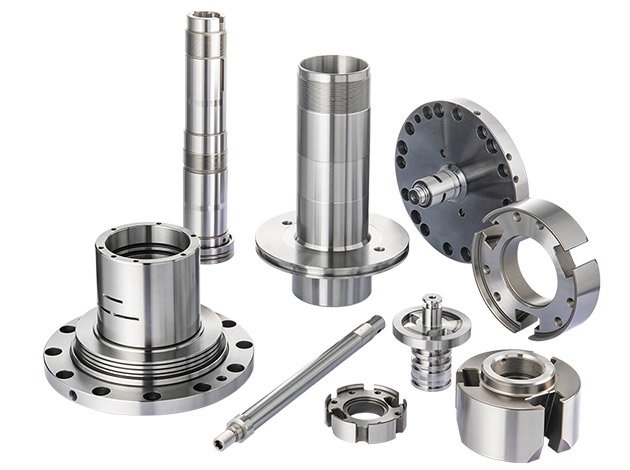
Large-Scale Machining: Gantry Milling and Crankshaft Grinding for Global OEM Supply Chains
Large-scale machining is a production discipline where structural rigidity, dimensional control, process sequencing, and supply-chain reliability must work together. Gantry milling supports the manufacture of large frames, housings, beds, structural assemblies, and complex components with substantial envelope dimensions. Crankshaft grinding addresses a different but equally demanding challenge: maintaining precise journal geometry, concentricity, surface finish, and balance across a long, irregular rotating part.
For original equipment manufacturers and Tier 1 suppliers, the commercial question is not simply whether a machine can remove material or grind a journal. The critical question is whether a manufacturing partner can repeatedly deliver conforming parts, manage technical risk, coordinate secondary processes, and provide predictable supply at production scale. IndustryApex Technology, operating through IndustryApex CNC, combines machining, engineering, quality management, and supply-chain coordination for these requirements.
1. Executive Summary
Gantry milling and crankshaft grinding represent two high-value areas of precision manufacturing. Gantry mills provide the work envelope, rigidity, and multi-axis access required for large components. Crankshaft grinding requires controlled material removal along multiple journals and fillets while protecting the part from thermal damage, dimensional drift, and geometric error. Both processes depend on fixturing, metrology, tooling strategy, cutting or grinding parameters, and disciplined process documentation.
From a supply-chain perspective, large-scale machining introduces additional variables compared with conventional small-part CNC production. Oversized material requires specialized handling, longer cycle times, higher work-in-process exposure, and more careful transportation planning. A single dimensional failure can affect significant material value and delay an entire equipment build. Early design-for-manufacturing review, realistic tolerance allocation, stable process routing, and inspection at defined control points are therefore essential.
OEMs can reduce these risks by selecting a partner able to manage both the technical process and the broader procurement system. This includes raw-material sourcing, ERP-controlled production, machining, grinding, heat treatment, surface finishing, inspection, packaging, and shipment. IndustryApex Technology offers this integrated model for global customers requiring reliable large-part machining and engineered component supply.
2. Technical Deep Dive
Gantry Milling for Large and Complex Components
A gantry milling machine uses a bridge structure that travels over or around the workpiece. Compared with a conventional vertical machining center, the gantry configuration provides a larger working envelope and improved support for heavy components. It is commonly used for machine bases, industrial frames, die structures, energy equipment, construction machinery components, large housings, and precision structural parts.
The primary engineering challenge is maintaining accuracy over distance. As the cutting head moves across a large table, errors related to guideway alignment, thermal expansion, spindle behavior, tool deflection, and workpiece distortion can accumulate. Successful production begins with a machining strategy that considers datum selection, stock allowance, clamping force, material condition, and the order of roughing and finishing operations.
Rough machining should remove bulk material while preserving enough stock for controlled finishing. For castings, weldments, and forged components, stress relief or stabilization may be required before final machining. If residual stress is not addressed, a part can move after unclamping and lose critical flatness, parallelism, or positional accuracy. A staged process may include initial datum creation, rough machining, stress relief, semi-finishing, inspection, and final finishing.
Tool selection also affects both productivity and quality. High-feed cutters can efficiently remove material during roughing, while smaller solid-carbide or indexable tools support detailed features and controlled finishing. For deep pockets and long-reach operations, engineers must balance accessibility against tool deflection and vibration. Adaptive toolpaths, reduced radial engagement, and stable feed rates can improve cutting consistency on difficult alloys.
Five-axis capability adds value when a component includes angled surfaces, compound features, or multiple faces that would otherwise require several setups. Fewer setups can reduce cumulative datum error and improve feature-to-feature relationships. However, multi-axis machining also requires accurate post-processing, collision verification, machine calibration, and skilled process planning. The benefit comes from coordinated engineering, not simply from the number of machine axes.
Crankshaft Grinding and Journal Geometry
Crankshaft grinding is a precision operation used to restore or produce main journals, crankpins, thrust surfaces, and related geometry. The component may contain multiple offset journals, counterweights, oil holes, fillets, and hardened surfaces. Grinding must deliver the specified diameter, roundness, cylindricity, taper, surface roughness, and angular relationship between journals.
Grinding wheel selection is determined by material hardness, stock removal, required finish, and thermal sensitivity. Inadequate coolant delivery or excessive grinding pressure can create burns, tensile residual stress, microcracks, or hardness changes. These defects may not be visible during a basic dimensional inspection but can significantly reduce fatigue life. Process control therefore includes wheel dressing, coolant filtration, spark-out management, and monitoring of grinding parameters.
Workholding and alignment are equally important. The crankshaft must be supported in a manner that controls deflection without restricting the geometry being produced. Center alignment, journal phasing, and counterweight clearance must be verified before production. After grinding, inspection may include precision diameter measurement, roundness analysis, surface-finish testing, magnetic particle inspection where applicable, and verification of runout and journal location.
Large crankshafts also create logistical considerations. Their mass and length affect lifting, storage, machine loading, packaging, and shipment. Protective packaging must prevent impact damage, corrosion, and contamination of finished journals. A reliable supplier plans these requirements at the quotation and process-planning stage rather than treating them as final dispatch details.
For buyers evaluating a machining source, the relevant evidence includes machine capacity, calibration records, inspection equipment, documented process controls, material traceability, nonconformance procedures, and experience with comparable part families. A supplier may have adequate nominal capacity yet lack the process discipline needed for repeatable large-part production.
3. The ODM & Supply Chain Advantage
Large-scale machining programs benefit when manufacturing expertise is involved before the purchase order is released. IndustryApex Technology operates as a supply chain integrator and ODM solution provider, helping global OEM and Tier 1 customers connect product requirements with a controlled production route. This approach is particularly valuable for parts that combine large dimensions, tight tolerances, specialized materials, and multiple downstream processes.
The first advantage is earlier technical clarification. During design review, engineers can evaluate machining access, datum structure, tolerance hierarchy, fillet radii, grinding allowances, inspection requirements, and the effect of heat treatment or coating. The objective is not to reduce necessary performance requirements, but to distinguish functional tolerances from non-functional specifications and create a design that can be manufactured consistently.
The second advantage is system-level production control. IndustryApex Technology has a fully controlled precision manufacturing system supported by ERP and more than 30 years of manufacturing experience. ERP visibility supports order release, material status, routing control, capacity planning, purchasing coordination, inspection records, and shipment management. For customers managing multiple programs or international production schedules, this visibility improves forecasting and reduces communication gaps.
The manufacturing edge extends across 3-axis to 5-axis CNC machining, EDM, precision grinding, and industrial ceramics. This breadth allows a project to be evaluated as an engineered supply package instead of a collection of disconnected subcontracting tasks. Where necessary, machining can be coordinated with grinding, electrical discharge machining, ceramic production, finishing, and inspection under a defined quality framework.
Integration also improves accountability. When dimensional problems, material deviations, or schedule risks arise, a coordinated supplier can investigate the complete process chain. Root-cause analysis can consider the drawing, raw material, fixture, machining sequence, heat treatment, grinding method, and inspection plan together. This is more effective than assigning responsibility between multiple vendors with incomplete visibility.
Supply-chain resilience requires more than maintaining a list of approved vendors. It requires qualified processes, realistic lead-time assumptions, documented change control, and contingency planning for materials and capacity. For large parts, buyers should also examine whether the supplier has adequate lifting equipment, storage space, inspection infrastructure, and packaging methods. These operational details directly affect delivery performance.
IndustryApex Technology supports customers across sectors including aerospace, medical, hydraulics, pumps, industrial machinery, and energy. Its broader capabilities can be reviewed through the IndustryApex CNC manufacturing platform, including specialized aerospace CNC machining for titanium aircraft parts and structural components and ISO-certified medical component manufacturing.
4. Industry Applications
Construction and Heavy Equipment
Construction machinery manufacturers require large frames, swing components, hydraulic bodies, shafts, and structural housings that can withstand shock loads and demanding environments. Gantry milling supports the production of accurate mounting surfaces and bores, while grinding provides controlled geometry for rotating shafts and wear-sensitive interfaces.
Power Generation and Energy Equipment
Energy equipment often includes large rotors, turbine-related components, generator parts, pump bodies, and structural assemblies. Long cycle times and high material value make first-pass quality especially important. Controlled machining and inspection help protect project schedules where a single nonconforming part could delay assembly or commissioning.
Automotive and Drivetrain Systems
Crankshafts, eccentric shafts, transmission components, and tooling require repeatable geometry and fatigue-resistant surfaces. Grinding performance affects bearing contact, lubrication behavior, vibration, and service life. Manufacturers serving automotive and drivetrain markets also need stable process capability and clear traceability across production batches.
Hydraulics and Industrial Pumps
Hydraulic and pump systems depend on precise bores, valve interfaces, sleeves, spools, shafts, and sealing surfaces. IndustryApex Technology provides dedicated hydraulic pump parts and fluid-control component manufacturing. Gantry machining can establish large datum structures and port geometry, while precision grinding supports shaft, spool, and sleeve applications requiring controlled surface finish.
Aerospace and Medical Manufacturing
Aerospace programs place strong emphasis on material traceability, process documentation, configuration control, and inspection. Large structural components may require multi-axis machining to reduce setups and preserve positional accuracy. Medical components, including implants, surgical instruments, and precision device parts, demand careful material handling, repeatable finishing, and documented quality controls. The same manufacturing discipline used for large industrial components can be adapted to these regulated environments when the process and compliance requirements are clearly defined.
Across all applications, procurement teams should evaluate total delivered cost rather than machining price alone. Relevant factors include scrap exposure, inspection delays, secondary-operation coordination, packaging, freight, engineering support, and the supplier’s ability to scale with future demand.
5. Call to Action
Large-scale machining succeeds when technical execution and supply-chain control are planned as one system. Gantry milling requires stable large-format machining, disciplined setup strategy, and accurate inspection. Crankshaft grinding requires precise alignment, thermal control, surface integrity management, and verification of complex journal geometry. Both processes benefit from an experienced partner that can coordinate engineering, production, quality, and logistics.
IndustryApex Technology helps global OEMs and Tier 1 suppliers develop and source precision components through an integrated ODM and manufacturing model. Share your drawings, material specifications, annual volumes, tolerance requirements, and delivery targets through the IndustryApex Technology contact page. The engineering team can review manufacturability, recommend a process route, identify supply-chain risks, and prepare a production proposal aligned with your quality and commercial requirements.