
- Shaft
- Molds&Tools
- Hydraulics And Pump
- Hair transplant needle
- Hydraulics And Pump
- Precision CNC Shaft Machining Manufacturer for High Performance Applications
- Energy Industry CNC Machining Parts Supplier
- Aerospace Structural Components for OEM Programs
- Aerospace Structural Components for OEM Programs
- Automotive & EV CNC Machining Parts Supplier for OEM and Tier 1
- Medical Device CNC Machining Services
Advanced EDM and Wire Cutting for Hard and Brittle Materials: A Supply Chain Guide for OEMs

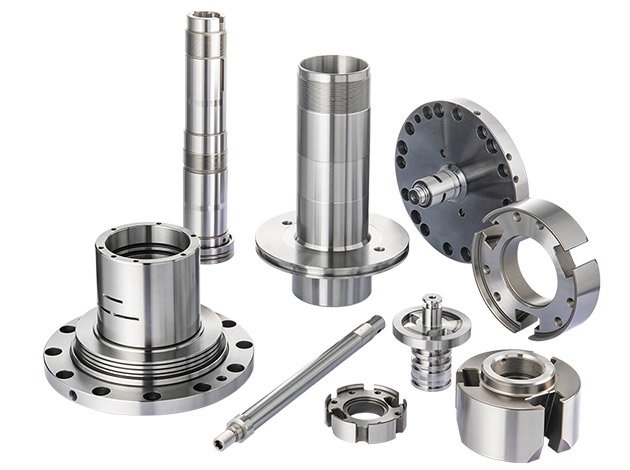
Advanced EDM and Wire Cutting for Hard and Brittle Materials
For global OEMs and Tier 1 suppliers, manufacturing hard and brittle materials is a technical challenge and a supply chain decision. Tungsten carbide, technical ceramics, hardened tool steels, sapphire, ruby, graphite, and selected superalloys deliver exceptional wear resistance, thermal stability, and dimensional performance, but they are also difficult to machine with conventional cutting tools. Poor process selection can create cracks, excessive tool wear, heat-affected zones, distortion, long lead times, and unpredictable total cost.
IndustryApex Technology, operating through IndustryApex CNC, combines advanced electrical discharge machining (EDM), wire cutting, precision grinding, CNC machining, and industrial ceramics expertise to provide a controlled manufacturing route for demanding components. This article explains how EDM and wire EDM work with hard and brittle materials, how process engineering affects quality, and why an integrated ODM and supply chain partner can reduce risk from prototype through production.
1. Executive Summary
EDM removes material through controlled electrical discharges rather than direct mechanical contact. Because the cutting force is minimal, EDM is particularly valuable for materials that are extremely hard, abrasive, thin, delicate, or prone to chipping. Wire EDM uses a continuously moving electrically conductive wire to produce intricate profiles, narrow slots, sharp internal corners, and close-tolerance features. Die-sinking EDM uses a shaped electrode to create cavities, blind features, and complex three-dimensional forms.
For brittle materials, process stability is as important as nominal accuracy. Electrical energy, pulse duration, flushing pressure, wire tension, workholding, and finishing passes must be balanced to limit microcracking and recast layers. Material conductivity also determines the practical process route. Carbides and conductive ceramics are strong EDM candidates, while nonconductive ceramics generally require specialized grinding, laser, ultrasonic, or metallized surface processes.
The best manufacturing strategy begins before production. Engineers should define functional datums, minimum wall thickness, corner radii, surface-finish requirements, inspection methods, and acceptable subsurface damage in the design stage. A supplier with integrated engineering, ERP-controlled production, and multiple precision processes can select the right combination of EDM, CNC, grinding, and ceramic manufacturing instead of forcing every feature through one method.
2. Technical Deep Dive
EDM requires three basic conditions: an electrically conductive workpiece, an electrode or wire, and a dielectric medium. A voltage is applied across a controlled gap. When the electric field becomes strong enough, the dielectric breaks down and a plasma channel forms. The resulting discharge melts and vaporizes a microscopic volume of material. Dielectric flushing then removes debris and restores the gap for the next pulse.
In wire EDM, the wire commonly travels continuously between upper and lower guides. CNC motion controls the workpiece relative to the wire, enabling profiles that may be impossible to cut economically with milling or broaching. Multi-axis wire EDM can tilt the wire to generate tapers, matched dies, variable-angle features, and complex forms. Multiple skim passes reduce surface roughness and improve dimensional accuracy after the initial rough cut.
EDM is especially effective for conductive tungsten carbide, hardened steels, nickel-based alloys, titanium alloys, and certain conductive ceramics. It does not depend on conventional hardness in the same way as milling. A hardened die steel component that would require frequent carbide tool replacement can often be processed efficiently after heat treatment, reducing distortion associated with machining before hardening.
Material behavior remains critical. Tungsten carbide contains hard carbide grains in a metallic binder, and aggressive EDM settings can produce a thick recast layer or binder depletion. Process engineers therefore control peak current, pulse-on time, pulse-off time, polarity, flushing, and finishing energy. For precision carbide parts, the objective is not simply maximum material removal; it is a stable combination of profile accuracy, edge integrity, surface finish, and subsurface condition.
Brittle materials require additional controls. Thin ribs, small holes, and sharp transitions can concentrate thermal and mechanical stress. Although EDM applies little cutting force, localized discharge energy may still generate microfractures if the pulse regime is too aggressive or debris evacuation is inadequate. Entry and exit strategy, fixture rigidity, support beneath fragile sections, and gradual finishing passes all influence the final result. In some designs, a small programmed radius is preferable to a theoretical sharp corner because it improves durability without compromising function.
Wire selection also affects performance. Brass wire is widely used for general-purpose cutting, while coated wires may improve speed, flushing behavior, or finish in demanding applications. Wire diameter determines the minimum internal radius and influences cutting speed. Wire tension and guide condition affect straightness, taper accuracy, and repeatability. Automated wire threading is valuable for unattended production, especially when multiple start holes or complex profiles are required.
For hard materials, the manufacturing sequence may combine processes. A typical route can include rough CNC machining, heat treatment, wire EDM profiling, precision grinding of datum surfaces, EDM finishing of fine features, and final dimensional inspection. This hybrid approach assigns each feature to the process that controls it best. Grinding may establish flatness and parallelism, while wire EDM produces intricate contours. CNC machining may remove bulk material efficiently before EDM completes difficult regions.
Quality assurance must address more than visible dimensions. Coordinate measuring machines verify profile geometry, hole location, taper, and datum relationships. Optical systems can inspect small edges and fragile features without contact. Surface roughness measurement evaluates functional surfaces, while metallographic analysis or specialized microscopy may be used when recast depth, heat-affected zones, or microcracks are contractually important. A documented first-article process, in-process checks, and lot traceability create confidence for regulated and safety-critical applications.
Design for EDM can reduce both cost and risk. Include suitable start holes for wire access, avoid unnecessarily deep narrow slots, specify realistic tolerances, and identify surfaces that require finishing rather than applying a single tight tolerance to every feature. Provide material grade, heat-treatment condition, conductivity information where relevant, and acceptance criteria for edge chipping. Early manufacturability review prevents late redesign and helps procurement teams compare quotations on equivalent technical assumptions.
3. The ODM & Supply Chain Advantage
For OEM procurement teams, the main question is not only whether a supplier can cut a profile. It is whether the supplier can manage the complete technical and commercial system surrounding that profile. IndustryApex Technology’s core identity is that of a supply chain integrator and ODM solution provider. This means the engagement can cover design-for-manufacturing review, material sourcing, process planning, machining, finishing, inspection, packaging, and production support.
The manufacturing edge comes from a fully controlled precision manufacturing system supported by ERP and more than 30 years of experience. ERP visibility helps connect purchase orders, material certificates, routing, work instructions, inspection records, capacity planning, and shipment status. For global customers, this control improves communication and reduces the uncertainty that can arise when EDM, grinding, heat treatment, coating, and inspection are managed through disconnected subcontractors.
IndustryApex Technology combines 3- to 5-axis CNC machining, EDM, precision grinding, and industrial ceramics capabilities. This breadth is important for hard and brittle materials because no single process is ideal for every feature. A component may require ceramic forming, carbide grinding, wire EDM, and CNC-machined mounting surfaces. Coordinating these operations under one technical framework helps maintain datums, control tolerance stack-up, and reduce transit between suppliers.
For an ODM project, engineers can work from a drawing, three-dimensional model, sample, or performance requirement. The supplier can then recommend material alternatives, adjust nonfunctional geometry, develop fixtures, define inspection checkpoints, and produce qualification samples. This is particularly useful when an OEM is commercializing a new product and needs manufacturing input before the design is frozen.
Supply chain resilience also depends on controlled documentation. A robust program should define approved materials, revision status, special-process requirements, inspection frequency, nonconformance procedures, and change-control responsibilities. For repeat orders, historical process data can support faster quoting and stable replenishment. For new programs, design review and pilot production expose risks before they affect a large production release.
Global OEMs and Tier 1 suppliers benefit when technical decisions are translated into measurable supply chain outcomes: shorter supplier chains, clearer accountability, improved schedule visibility, consistent quality, and lower total cost of ownership. IndustryApex Technology’s integrated approach is designed to support both engineered-to-order components and repeat production programs where reliability and documentation are essential.
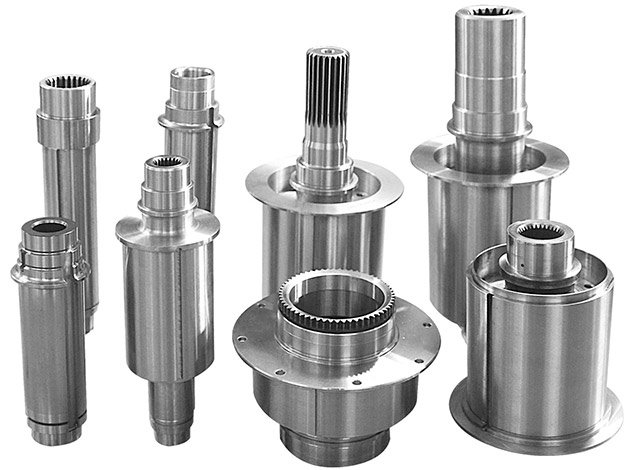
4. Industry Applications
Aerospace and defense: EDM and wire cutting support hardened tooling, precision brackets, turbine-related components, wear inserts, and complex structural details in demanding alloys. Tight weight, traceability, and performance requirements make controlled process planning essential. Explore IndustryApex Technology’s aerospace CNC machining and aircraft structural component capabilities for applications requiring advanced CNC and inspection coordination.
Medical and life sciences: Surgical instruments, implant tooling, orthopedic trial components, and precision device parts may use titanium, hardened stainless steel, cobalt-chromium, carbide, or ceramic materials. Small features and burr-free edges are often critical. Suppliers must also manage cleaning, documentation, material traceability, and repeatability. IndustryApex Technology provides ISO-certified CNC machining for medical components, including titanium implants and surgical instruments.
Fluid control and hydraulics: Valve spools, sleeves, pump wear rings, metering elements, and sealing interfaces require controlled roundness, surface finish, and clearance. EDM can generate precise slots and ports in hardened materials, while grinding establishes cylindrical accuracy. Visit the hydraulic pump parts resource for related component applications.
Tooling, molds, and dies: Carbide molds, cold heading dies, stamping inserts, extrusion tooling, and precision mold components depend on wear resistance and geometric stability. Wire EDM is valuable for profile accuracy and repeatable inserts, while sinker EDM creates cavities and fine details. Post-EDM grinding or polishing may be specified where sealing, sliding, or optical performance demands it.
Semiconductor and electronics equipment: Ceramic components, carbide wear parts, fine positioning elements, and thermal-management hardware often combine fragile materials with tight dimensional requirements. Controlled processing and noncontact inspection help protect delicate edges and reduce contamination risks.
Energy, automotive, and industrial automation: Components such as nozzles, impellers, gears, sensor mounts, wear plates, and specialized tooling can benefit from EDM when conventional cutting becomes inefficient after hardening. The right process route depends on volume, material, geometry, required finish, and inspection standard.
5. Call to Action
Advanced EDM and wire cutting can turn difficult hard and brittle materials into reliable production components, but success depends on integrated engineering rather than machine capacity alone. Material behavior, thermal control, workholding, wire strategy, finishing, inspection, and supply chain coordination must be considered together.
Whether you need a carbide insert, ceramic component, hardened die, precision fluid-control part, or aerospace and medical component, IndustryApex Technology can help evaluate the design and develop a controlled manufacturing route. Begin with the drawing, three-dimensional model, material specification, annual demand, tolerance requirements, and target delivery schedule. The engineering team can review manufacturability, recommend the appropriate combination of 3- to 5-axis CNC, EDM, wire cutting, precision grinding, and industrial ceramics, and define a practical qualification plan.
Visit the IndustryApex CNC home page to learn more about integrated precision manufacturing, or contact IndustryApex Technology to discuss your next hard-material component and supply chain requirements.