
- Shaft
- Molds&Tools
- Hydraulics And Pump
- Hair transplant needle
- Hydraulics And Pump
- Precision CNC Shaft Machining Manufacturer for High Performance Applications
- Energy Industry CNC Machining Parts Supplier
- Aerospace Structural Components for OEM Programs
- Aerospace Structural Components for OEM Programs
- Automotive & EV CNC Machining Parts Supplier for OEM and Tier 1
- Medical Device CNC Machining Services
Cold Heading Tooling vs. CNC Machining: A Total-Cost Guide for OEM Projects

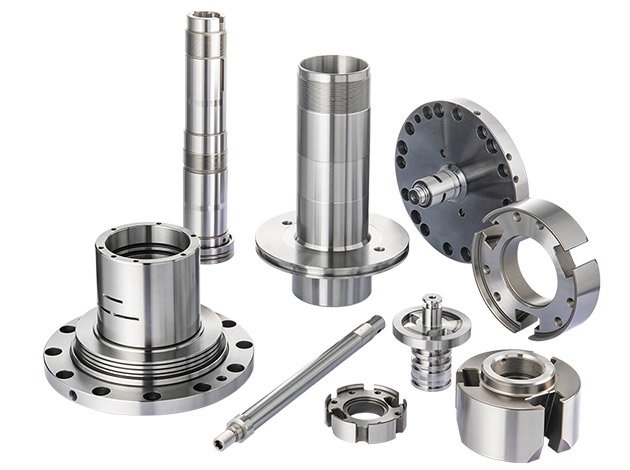
Cold Heading Tooling vs. CNC Machining: A Total-Cost Guide for OEM Projects
A practical engineering and supply chain framework for selecting between cold heading, CNC machining, or a hybrid production route.
1. Executive Summary
Cold heading tooling and CNC machining solve different manufacturing problems. Cold heading is a high-speed cold-forming process that converts wire or bar stock into near-net-shape components through controlled upsetting, extrusion, and piercing. CNC machining removes material from bar, billet, or near-net blanks to create precise features and complex geometries.
Cold heading is usually attractive when annual demand is high, the design is stable, the geometry is suitable for progressive forming, and material utilization is important. Its principal disadvantage is the front-loaded investment in dies, punches, tooling trials, maintenance, and spare sets. Engineering changes after tool release can also be expensive.
CNC machining generally offers faster launch, lower initial tooling investment, and greater design flexibility. It is well suited to prototypes, low-to-medium production volumes, difficult materials, complex contours, and parts with cross-holes, undercuts, pockets, or multiple datums. The trade-offs are longer cycle times, cutting-tool consumption, chip waste, and potentially higher recurring cost at very high volumes.
The right decision depends on total landed cost rather than piece price alone. OEM buyers should evaluate volume, program life, geometry, tolerances, raw-material cost, secondary operations, quality documentation, inventory risk, and the probability of design revision. For many projects, the strongest answer is hybrid: cold heading creates an efficient blank, while CNC turning, milling, grinding, or EDM completes the critical features.
IndustryApex Technology, through IndustryApex CNC, helps global manufacturers compare these routes within one controlled engineering and production system.
- Choose cold heading when volume and geometry support tooling amortization.
- Choose CNC when flexibility, speed to market, or geometric complexity dominates.
- Choose a hybrid route when material savings and precision finishing are both important.
2. Technical Deep Dive
The manufacturing route should be selected from the part function backward. Start with load paths, mating surfaces, fatigue requirements, tolerances, and inspection points, then determine which process creates those characteristics most efficiently.
How cold heading works
Cold heading begins with calibrated wire or bar stock, typically supplied in coil form for automated feeding. A cut-off mechanism separates a slug, and transfer tooling moves the slug through one or more forming stations. Each station performs a controlled upsetting or extrusion operation. Progressive dies can create heads, shoulders, shanks, recesses, and other features without melting the material.
The process generates favorable grain flow and can achieve excellent material utilization because the component is formed close to its final shape. High-speed presses also provide very short cycle times once the tooling is proven. Carbide inserts, tool steels, coatings, lubrication, die alignment, and reduction ratios all influence tool life and dimensional stability.
Cold heading is not limited to standard fasteners. It can produce pins, rivets, sleeves, stepped shafts, bushings, connectors, and other rotationally symmetric or partially symmetric parts. However, deep cross-holes, complex pockets, severe undercuts, thin unsupported walls, and highly irregular profiles may require additional piercing, trimming, drilling, rolling, grinding, or CNC operations.
How CNC machining works
CNC machining starts with a workpiece and removes material through programmed turning, milling, drilling, boring, or contouring operations. Multi-axis equipment can access several surfaces in fewer setups, reducing datum transfer and improving positional control. IndustryApex Technology supports 3-5 axis CNC machining, which is valuable for complex components and features that cannot be economically formed in a die.
CNC is highly adaptable during product development. Toolpaths, fixtures, and cutting tools can be revised without replacing a complete forming die. This makes CNC a practical choice when customer specifications are evolving, forecast volumes are uncertain, or multiple variants share a family of features. The process can also accommodate difficult alloys, provided cutting parameters, workholding, coolant strategy, and thermal control are properly managed.
Quality, tolerances, and secondary operations
Neither process is automatically superior for every tolerance. Cold-headed dimensions depend on incoming wire consistency, die wear, lubrication, press alignment, material condition, and forming load. A stable process can be extremely repeatable, but the drawing may still require secondary operations for threads, tight bores, finished faces, or critical runout.
CNC machining can establish accurate datums and interpolate complex features, but results depend on machine condition, fixturing, tool wear, part temperature, and inspection method. Surface finish may be controlled through tool selection, feed rates, polishing, or precision grinding. EDM can support intricate tooling details or difficult conductive materials where conventional cutting is inefficient.
Total-cost comparison
| Decision factor | Cold heading | CNC machining |
|---|---|---|
| Initial investment | Dies, punches, engineering, tryout, and spare tooling | Programming, fixtures, cutting tools, and inspection setup |
| Recurring unit cost | Usually favorable at stable, high volume | Usually favorable at low or variable volume |
| Material utilization | High when the design is near-net shape | Lower when substantial stock becomes chips |
| Design flexibility | Limited after tooling release | High, with relatively quick program changes |
| Best geometry | Symmetric heads, steps, pins, and formed blanks | Complex contours, holes, pockets, undercuts, and multi-axis features |
A useful break-even estimate divides the difference between cold-heading tooling and CNC setup costs by the difference in recurring unit cost, provided CNC has the higher unit cost. The calculation should include tool maintenance, secondary operations, scrap, inspection, packaging, and inventory carrying cost. If the program forecast is uncertain, the financial value of flexibility may outweigh a theoretical piece-price advantage.
Practical selection rules
For a prototype or a design still under review, CNC usually minimizes launch risk. For a stable component with long-term demand, cold heading becomes more compelling as volume grows. For a high-volume part with several machined features, a cold-headed blank followed by CNC finishing can reduce both material waste and machining time. For expensive titanium, nickel alloys, or specialty stainless steels, a near-net blank can be particularly valuable, although forming feasibility must be proven through trials.
3. The ODM & Supply Chain Advantage
Manufacturing selection creates the most value when engineering, tooling, production planning, and quality control are connected. IndustryApex Technology’s core identity is a supply chain integrator and ODM solution provider for global OEM and Tier 1 suppliers. Rather than treating cold heading and CNC machining as isolated quotations, the team can evaluate the complete product lifecycle from design release through replenishment.
IndustryApex operates a fully controlled precision manufacturing system supported by ERP and more than 30 years of manufacturing experience. Its technology capabilities include 3-5 axis CNC, EDM, precision grinding, and industrial ceramics. This combination allows one project to move from design-for-manufacturing review to tooling, prototype validation, precision finishing, inspection, and production planning with fewer uncontrolled handoffs.
The ODM process typically begins with a review of the 2D drawing, 3D model, material, annual volume, tolerance stack, and demand profile. Engineers then compare a machined route, a cold-formed route, and a hybrid route. The selected process is translated into tooling, fixture, inspection, and ERP-controlled production requirements. Revision control is especially important because an uncoordinated die change or CNC program change can create mixed inventory.
- DFM and cost modeling: Identify formability, machining allowances, critical datums, and likely break-even volume.
- Tooling and process development: Design dies, punches, fixtures, electrodes, cutting strategies, and inspection plans.
- Validation: Confirm dimensions, material condition, surface finish, functional fit, and process repeatability.
- Production control: Manage material lots, revisions, capacity, preventive maintenance, and traceability through ERP.
- Supply continuity: Align replenishment, safety stock, packaging, and engineering-change procedures with the customer’s program.
This integrated model is valuable for Tier 1 programs where a late delivery, unapproved substitution, or undocumented process change can affect an entire assembly. It also gives OEM engineering teams a single partner for both design optimization and production execution.
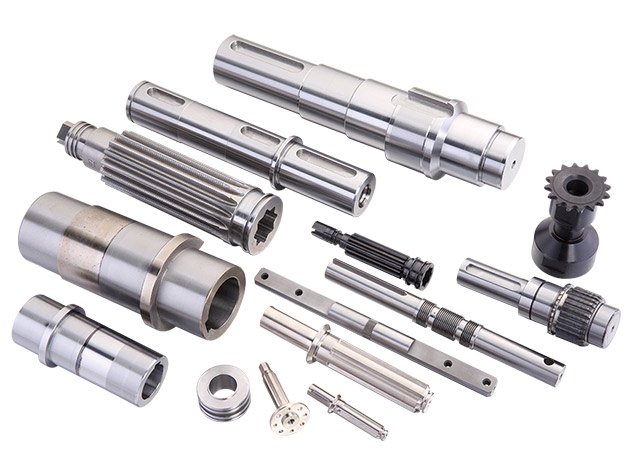
4. Industry Applications
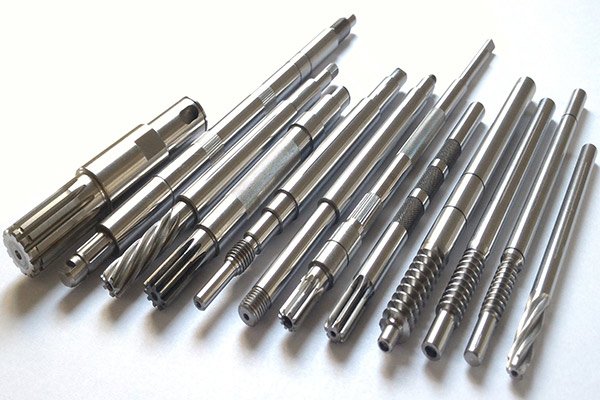
Automotive and industrial equipment
Automotive, drivetrain, and industrial equipment programs often combine high volumes with demanding functional features. Cold heading can efficiently produce fastener bodies, pins, rivet blanks, stepped shafts, and gear-related blanks. CNC machining can then add splines, cross-holes, grooves, precision shoulders, and inspection datums. A hybrid route is often appropriate when the formed blank reduces material consumption but the final geometry cannot be completed economically in the header.
Aerospace
Aerospace components generally place greater emphasis on traceability, difficult materials, configuration control, and complex geometry than on maximum press speed. CNC machining is frequently preferred for titanium aircraft parts, structural components, and low-to-medium volume production. Learn more about aerospace CNC machining and titanium aircraft parts.
Medical and surgical equipment
Medical components may require tight dimensional control, polished surfaces, biocompatible materials, and documented process discipline. CNC machining and precision grinding are useful for implants, surgical instruments, and high-precision device parts where product variants and engineering changes are common. Review the capabilities for precision medical component machining.
Hydraulics and pumps
Hydraulic valve spools, sleeves, pump parts, and fluid-control components require reliable lands, bores, concentricity, and surface finish. A cold-formed blank may reduce material waste for suitable geometries, while CNC turning, boring, grinding, or honing creates the sealing and flow-control surfaces. See the hydraulic pump parts resource for related applications.
Automation, energy, and special machinery
Automation and energy equipment often involve smaller batches, multiple revisions, and specialized materials. CNC is typically the starting point, but a repeat design with rising demand may justify a forming tool or near-net blank. Industrial ceramics and precision grinding can also support wear, insulation, high-temperature, and electrically demanding components where conventional metal processing is not sufficient.
5. Call to Action
Send IndustryApex Technology a 2D drawing, 3D CAD model, material specification, annual volume, demand forecast, critical tolerances, surface-finish requirements, and target launch date. The engineering team can compare cold heading tooling, CNC machining, and hybrid production using total cost, technical risk, and supply continuity—not piece price alone.
Contact IndustryApex CNC to request a DFM review, tooling assessment, prototype plan, or OEM supply proposal.