- Shaft
- Molds&Tools
- Hydraulics And Pump
- Hair transplant needle
- Hydraulics And Pump
- Precision CNC Shaft Machining Manufacturer for High Performance Applications
- Energy Industry CNC Machining Parts Supplier
- Aerospace CNC Machining Parts Manufacturer
- Aerospace CNC Machining Parts Manufacturer
- Automotive & EV CNC Machining Parts Supplier for OEM and Tier 1
- Medical CNC Machining Parts Supplier for Precision Medical Devices

Cold Heading Tooling vs. CNC Machining: Which Manufacturing Process Is Right for Your Project?

Executive Summary
For OEMs and Tier 1 suppliers, choosing between cold heading tooling and CNC machining is not simply a question of unit price. It is a strategic decision that affects product performance, tooling investment, lead time, material yield, quality control, scalability, and supply chain risk. Cold heading is often the right route for high-volume fasteners, rivets, pins, bushings, and near-net-shape components where material flow, grain structure, and repeatability are critical. CNC machining is usually the better choice for complex geometries, tighter feature-level tolerances, low-to-medium volumes, rapid design changes, and parts that require multi-surface precision.
At IndustryApex Technology, operating through IndustryApex CNC, we approach this decision as an engineering and supply chain optimization problem. A component should not be forced into one process because a supplier owns a particular machine. Instead, the part should be evaluated by geometry, annual demand, material, tolerance stack-up, functional risk, secondary operations, inspection requirements, and lifecycle stage. In many real projects, the best answer is not cold heading or CNC machining, but a hybrid manufacturing route: cold forming for the blank, followed by CNC turning, milling, grinding, EDM, or surface finishing for critical dimensions.
This article provides a practical engineering framework for comparing cold heading tooling and CNC machining. It examines how each process works, where costs are hidden, how tooling decisions affect long-term supply reliability, and why global buyers increasingly need integrated ODM manufacturing partners rather than single-process vendors. Whether your project involves aerospace structural hardware, medical device components, hydraulic pump parts, electric vehicle assemblies, or industrial fastening systems, the goal is the same: choose the manufacturing route that delivers stable quality, controlled cost, and predictable delivery over the full product lifecycle.
Technical Deep Dive
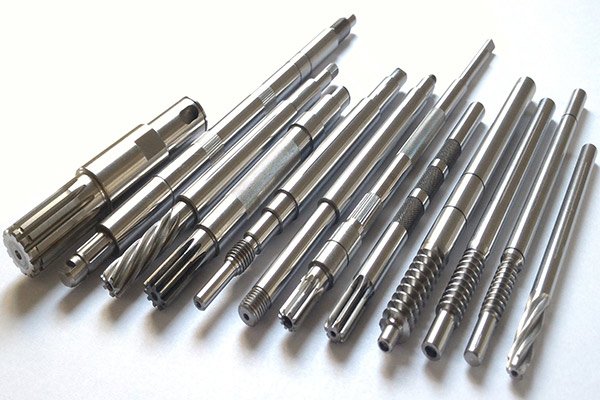
Cold heading is a high-speed forming process that reshapes wire or bar stock at or near room temperature. Material is cut to length and forced into dies by punches, creating features such as heads, shoulders, recesses, sockets, collars, flanges, and partially formed shanks. Unlike subtractive machining, cold heading does not remove large amounts of material. It displaces material through plastic deformation, which can significantly improve material utilization and create favorable grain flow. For fasteners and axisymmetric components that experience tensile, shear, or fatigue loads, this controlled grain structure can be a major technical advantage.
CNC machining is a subtractive process that removes material from bar, billet, casting, forging, extrusion, or preform stock. With 3-axis, 4-axis, and 5-axis platforms, CNC machining can produce intricate pockets, cross holes, angled faces, sealing surfaces, threads, slots, splines, thin walls, and freeform surfaces. It is highly flexible because geometry is controlled by digital programming rather than dedicated forming dies. That makes CNC machining ideal for prototypes, validation builds, low-volume production, and complex precision components where design changes are likely.
The first major comparison point is tooling investment. Cold heading requires engineered dies, punches, transfer tooling, carbide inserts, and process development before production begins. These tools must withstand high compressive loads and repeated impact cycles, so materials such as tungsten carbide and tool steel are commonly used. The upfront cost can be significant, particularly for multi-station forming. However, once tooling is stable, the per-part cost can be extremely competitive at high volume. CNC machining requires fixtures, cutting tools, programs, and inspection plans, but the initial investment is usually lower and easier to modify. If the design is still evolving, CNC machining reduces financial exposure.
The second comparison point is geometry. Cold heading performs best when the component is suitable for material flow: round parts, headed parts, stepped shafts, rivets, screws, pins, sleeves, collars, and some near-net blanks. It struggles when the design includes deep asymmetric pockets, sharp internal corners, intersecting cavities, tight positional features across multiple planes, or very thin irregular walls. CNC machining is more versatile for those requirements. A 5-axis machining center can reach multiple faces in one setup, improving positional accuracy and reducing fixture-related variation.
The third comparison point is tolerance strategy. Cold heading can hold excellent dimensional consistency on formed features after the process is dialed in, especially in high-volume production. But the achievable tolerance depends on material behavior, die wear, lubrication, wire quality, and forming sequence. CNC machining can achieve very tight local tolerances and surface finishes, especially when combined with grinding, reaming, honing, or EDM. For parts with sealing diameters, bearing fits, miniature threads, precision slots, or complex datum structures, CNC machining often provides a more direct path to capability.
Material selection also influences the decision. Cold heading requires materials with suitable ductility and controlled mechanical properties. Low-carbon steel, stainless steel, aluminum, copper alloys, and certain specialty alloys can be cold headed, but not every material behaves well under severe deformation. Work hardening, cracking, galling, and die wear must be considered. CNC machining can process a broader range of materials, including titanium, Inconel, hardened steels, engineering plastics, ceramics, and high-performance alloys, although machinability and tool life vary dramatically. For example, titanium aerospace components may require carefully controlled speeds, coolant strategy, tool paths, and stress management.
Lead time is another important factor. For a new cold headed component, engineering time is needed for die design, simulation or forming trials, tool fabrication, sampling, and approval. This can be worthwhile for stable, high-volume programs, but it may be too slow for urgent prototypes. CNC machining can often deliver first articles faster because CAM programming, fixture design, and tool selection can begin directly from CAD data. This speed is valuable during product development, supplier qualification, and design validation.
The economic break-even point depends on volume, material cost, cycle time, scrap rate, and secondary operations. Cold heading usually wins when annual volume is high and the geometry is formable. CNC machining wins when volume is lower, complexity is higher, or the cost of dedicated tooling cannot be justified. But the most sophisticated cost model looks beyond the first operation. A cold headed blank may still require CNC drilling, thread rolling, grinding, heat treatment, coating, or 100 percent inspection. A CNC-machined part may require less tooling but more machine time and more raw material waste. The correct decision comes from total landed cost, not isolated piece price.
The ODM & Supply Chain Advantage
Global sourcing teams are under pressure to reduce cost while improving traceability, delivery reliability, and engineering responsiveness. This is why IndustryApex Technology positions itself not only as a manufacturer, but as a supply chain integrator and ODM solution provider. In practice, that means we help customers evaluate the full production route: whether to machine from solid, cold form a near-net blank, apply EDM to difficult features, grind critical surfaces, or use industrial ceramics for wear and insulation performance.
Our manufacturing edge comes from a fully controlled precision manufacturing system supported by ERP management and more than 30 years of experience. ERP discipline matters because engineering decisions must connect to purchasing, inventory, production scheduling, quality documentation, and delivery commitments. A technically correct process that cannot be repeated on schedule is not a supply chain solution. For OEM and Tier 1 programs, the supplier must control both the part and the process.
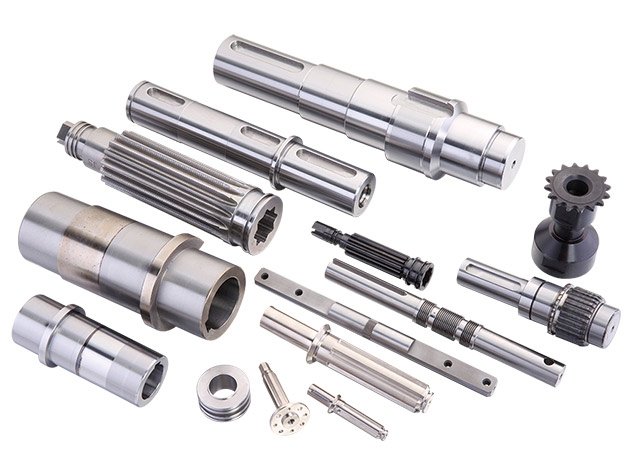
IndustryApex Technology supports projects with 3-axis to 5-axis CNC machining, EDM, precision grinding, industrial ceramics, and related precision manufacturing capabilities. This range is important because the best process route may involve several technologies. For example, a cold headed stainless steel blank might be CNC turned for a sealing diameter, centerless ground for roundness, and inspected with a CMM before assembly. A hydraulic valve component may require CNC machining, lapping, grinding, and ultra-clean handling. A wear-resistant tooling insert may require carbide or ceramic expertise rather than conventional steel machining alone.
For buyers, the ODM advantage is especially valuable during early design. Many drawings arrive with tolerances that are tighter than functionally necessary, features that are expensive to form, or material choices that increase risk without improving performance. A capable engineering partner can recommend design-for-manufacturing improvements before tooling is locked. This may include changing a radius to improve cold flow, adjusting a wall thickness to prevent cracking, selecting a more stable machining datum, replacing a milled feature with a formed feature, or separating cosmetic and functional surfaces in the inspection plan.
Supply chain integration also reduces risk when production scales. A single-process supplier may quote aggressively but depend on external partners for heat treatment, plating, grinding, or inspection. Every handoff adds lead time and quality exposure. By contrast, an integrated partner can coordinate process windows, documentation, and corrective action more efficiently. For global OEMs, this can reduce supplier management workload and improve launch confidence.
The decision between cold heading tooling and CNC machining should therefore be made with lifecycle visibility. During prototyping, CNC machining may be used to validate the design. During pilot production, a machined or partially formed route may support engineering changes. Once demand stabilizes, cold heading tooling may reduce cost and improve throughput. In mature production, hybrid optimization can further improve yield and quality. The best supplier is one that can support each stage without forcing a premature decision.
Industry Applications
In aerospace, the decision is often driven by material, certification requirements, fatigue performance, and traceability. Cold headed fasteners and pins can provide excellent strength and grain flow, while CNC machining is essential for complex aircraft structural components, brackets, titanium fittings, and precision housings. IndustryApex CNC supports demanding programs such as aerospace CNC machining for titanium aircraft parts and 5-axis structural components, where multi-axis accuracy and process documentation are critical.
In medical devices, CNC machining is frequently preferred because components often require biocompatible materials, complex geometries, tight surface finish control, and validated cleanliness. Titanium implants, stainless surgical instruments, and miniature device components may involve milling, turning, Swiss machining, EDM, grinding, passivation, and inspection. Cold forming may still be useful for certain pins, fasteners, or blanks, but geometry and regulatory requirements often push projects toward precision machining. Buyers can learn more about ISO-certified CNC machining for medical components when evaluating supplier capability.
Hydraulics and pump systems require another decision framework. Valve spools, sleeves, pump shafts, pistons, fittings, and flow-control parts often demand roundness, straightness, sealing surfaces, and controlled finishes. CNC machining provides flexibility for ports, grooves, threads, and precision diameters, while grinding and honing may be needed for final performance. Cold heading can be useful for certain fittings, plugs, and fastener-like components at volume. For related examples, see IndustryApex CNC capabilities in hydraulic pump parts.

Automotive and electric mobility programs often create the strongest case for cold heading. High-volume fasteners, battery module hardware, terminals, pins, bushings, and drivetrain-related components may benefit from near-net forming and high throughput. However, CNC machining remains essential for prototypes, complex housings, shafts, gears, splined parts, fixtures, and precision validation components. A common launch strategy is to machine early samples, validate fit and function, then transition stable features into cold forming or hybrid production once volume forecasts are reliable.
Industrial equipment, construction machinery, and automation systems use both technologies heavily. Cold heading supports durable fastening and assembly hardware, while CNC machining supports custom shafts, housings, bushings, gear blanks, robot end-effectors, and structural components. In these markets, uptime matters. A lower-cost part that causes assembly disruption, premature wear, or field failure is not economical. Process selection should therefore consider operating load, maintenance cycles, spare parts demand, and repair logistics.
Electronics, optics, semiconductor equipment, and precision instruments often favor CNC machining because of complex miniature features, high flatness requirements, tight positional tolerances, and specialty materials. However, cold formed micro-fasteners and conductive pins can be valuable when volumes are high. Again, the decision depends on the balance between geometry, quantity, material behavior, and inspection requirements.
Call to Action
Cold heading tooling is the right choice when your part is formable, demand is high, the design is stable, and the economics justify dedicated tooling. CNC machining is the right choice when your project requires design flexibility, complex geometry, tight multi-face tolerances, difficult materials, or fast first-article delivery. Hybrid manufacturing is often the best choice when you need both high-volume efficiency and precision finishing.
If you are deciding between cold heading tooling and CNC machining, IndustryApex Technology can help evaluate your drawing, material, tolerance plan, annual volume, and supply chain goals. Our team can recommend whether your project should begin with CNC prototypes, move toward cold headed tooling, or use an integrated route that combines forming, machining, EDM, grinding, ceramics, and inspection.
For global OEMs and Tier 1 suppliers, the right manufacturing process is not only about making a part; it is about building a reliable production system. Contact IndustryApex CNC to discuss your next precision component project, request a manufacturability review, or compare production scenarios with an experienced engineering team. Start here: contact IndustryApex Technology.