- Shaft
- Molds&Tools
- Hydraulics And Pump
- Hair transplant needle
- Hydraulics And Pump
- Precision CNC Shaft Machining Manufacturer for High Performance Applications
- Energy Industry CNC Machining Parts Supplier
- Aerospace CNC Machining Parts Manufacturer
- Aerospace CNC Machining Parts Manufacturer
- Automotive & EV CNC Machining Parts Supplier for OEM and Tier 1
- Medical CNC Machining Parts Supplier for Precision Medical Devices

How ERP Systems Ensure Quality Control in CNC Mass Production

Executive Summary
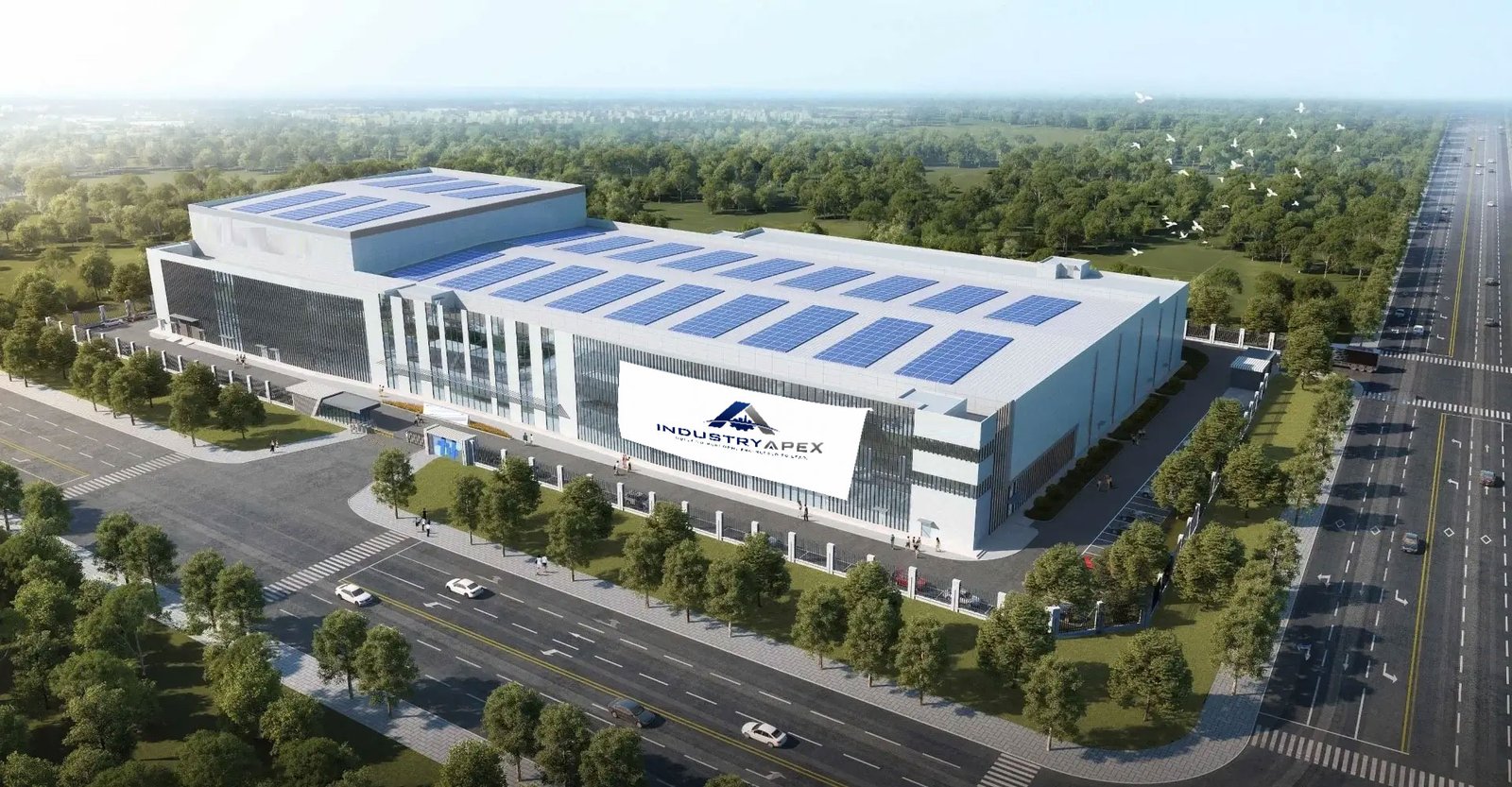
In today’s hyper-competitive global manufacturing landscape, the margin for error in CNC mass production is effectively zero. For OEM manufacturers and Tier 1 suppliers sourcing precision-machined components at scale, the ability to guarantee dimensional accuracy, traceability, and process consistency across tens of thousands of parts is not a competitive advantage — it is a prerequisite. Enterprise Resource Planning (ERP) systems have emerged as the central nervous system of modern precision manufacturing, orchestrating everything from raw material procurement and machine scheduling to in-process inspection data and final shipment compliance. At IndustryApex Technology’s IndustryApex CNC, ERP-driven quality control is not a software implementation — it is a manufacturing philosophy that underpins every component we deliver to global markets. This article examines the technical architecture, operational logic, and supply chain advantages that deep ERP integration brings to CNC mass production quality assurance.
Technical Deep Dive: ERP Architecture in Precision CNC Manufacturing
Understanding how ERP enforces quality in CNC mass production requires examining the system at each critical control point across the full production lifecycle — from design validation through final shipment.
1. Pre-Production Engineering Validation
Before a single spindle turns, an integrated ERP system performs a digital gate review of incoming customer specifications. CAD/CAM data is parsed against the ERP’s component master database, which stores historical tolerance data, tooling wear profiles, and material certifications from approved suppliers. Any specification that falls outside a pre-defined process capability index — Cpk ≥ 1.33 is the accepted industry threshold for critical-to-quality features — triggers an automatic engineering review flag. This eliminates the class of defects that originate from insufficient design-for-manufacturability (DFM) analysis, a persistent root cause in high-volume production environments.
2. Real-Time Statistical Process Control (SPC) Integration
Modern CNC machining centers generate measurement data continuously through probing cycles, in-machine gauging, and post-process CMM (Coordinate Measuring Machine) inspection. ERP systems ingest this data in real time and apply Statistical Process Control algorithms to distinguish between common-cause variation (inherent process noise) and special-cause variation (signals of process drift). When a tool wear trend pushes a critical diameter toward its upper control limit — before it breaches the tolerance band — the ERP triggers an automatic tool compensation command or schedules a tool change at the next available machine cycle. This predictive intervention capability is what separates ERP-integrated facilities from those relying on batch-end inspection, where defects are discovered only after propagating through hundreds of parts.
3. Lot Traceability and Non-Conformance Management
Full lot traceability is a non-negotiable requirement for industries operating under AS9100, ISO 13485, or IATF 16949 quality management standards. ERP systems assign unique serial or lot identifiers to every work order, linking raw material heat numbers, machine IDs, operator certifications, cutting parameters, and inspection results into a single auditable data record. If a dimensional non-conformance is identified downstream — whether at incoming inspection on the customer’s production line or in field service — the ERP enables a precise containment action: identify exactly which lots are affected, which machines produced them, and which upstream process parameters were active. This reduces mean time to containment from days to hours and eliminates the costly over-recall of unaffected inventory.
4. Supplier Quality Management and Inbound Material Control
Quality in CNC mass production does not begin at the cutting tool — it begins at the raw material stage. ERP systems manage approved supplier lists, incoming inspection sampling plans based on AQL standards per ISO 2859-1, and material test report (MTR) verification for alloys including titanium, stainless steel, aluminum, and engineering ceramics. For high-stakes applications such as structural aircraft components or implantable medical devices, the ERP enforces a mandatory material hold status until all certifications are electronically validated against purchase order requirements. No work order releases to the shop floor without a confirmed green status across all inbound material quality gates.
The ODM & Supply Chain Advantage: Why Vertically Integrated ERP Matters
The true competitive differentiation in ERP-driven quality control is realized not at the machine level, but at the supply chain architecture level. IndustryApex Technology operates as both a precision manufacturer and a full-service ODM solution provider — a combination that gives global OEM customers and Tier 1 suppliers a fundamentally different risk profile compared to sourcing from a conventional contract machining vendor.
A Fully Controlled Manufacturing System
With over 30 years of precision manufacturing experience, IndustryApex Technology has built a vertically integrated production system in which ERP does not just monitor quality — it actively controls it. Our manufacturing capabilities span 3-axis and 5-axis CNC machining, Electrical Discharge Machining (EDM), precision grinding, and industrial ceramic part production. Each of these process families operates under a unified ERP instance, meaning that a multi-process component — such as a hydraulic valve spool requiring CNC turning, internal grinding, and EDM feature generation — is tracked with a single quality record across every operation. There are no inter-department data handoffs that create traceability gaps, no paper travelers that can be lost or falsified, and no batch quality records assembled retroactively at shipment time.
Supply Chain Integration: From Component Sourcing to Program Management
For global OEM customers managing complex sourcing programs, IndustryApex Technology’s ERP infrastructure supports direct EDI (Electronic Data Interchange) connectivity, enabling automated purchase order transmission, advance shipping notice (ASN) generation, and certificate-of-conformance (CoC) digital delivery. This supply chain integration eliminates manual data re-entry errors and compresses procurement-to-delivery cycle times. As a supply chain integrator, we consolidate multi-component assemblies, manage sub-tier supplier quality on behalf of the OEM, and deliver validated component kits rather than individual parts — materially reducing the customer’s inbound inspection burden and incoming inspection cost.
ERP as a Continuous Improvement Engine
Beyond real-time quality enforcement, the longitudinal data accumulated in an ERP system powers systematic continuous improvement programs. Pareto analysis of non-conformance codes, machine OEE (Overall Equipment Effectiveness) trending, and tooling cost-per-part analytics enable engineering teams to target the highest-impact quality and cost drivers with precision. Over a 30-year manufacturing history, this compounding improvement effect produces process capabilities and first-pass yield rates that are structurally difficult for newer entrants to match. For OEM customers, this translates directly into lower incoming rejection rates, fewer production line disruptions, and a measurably lower total cost of quality.
Industry Applications: ERP-Driven Quality Control Across Critical Sectors
The strategic value of ERP-integrated quality control scales with the consequences of failure. The industries where IndustryApex Technology’s IndustryApex CNC platform delivers the most significant impact are precisely those where tolerance failures carry the highest systemic risk to human safety, regulatory standing, and operational continuity.
Aerospace Structural and Propulsion Components
Aerospace structures and propulsion systems demand dimensional tolerances measured in microns and material traceability requirements that extend to the original mill certification. Our aerospace CNC machining capabilities, covering titanium aircraft parts and 5-axis structural components, operate under AS9100 Rev D quality management protocols enforced at every ERP control point. First Article Inspection (FAI) data packages — including all measured dimensions against drawing requirements — are generated automatically from CMM data integrated into the ERP system and delivered digitally to the customer’s quality engineering team, eliminating manual report compilation delays.
Medical Device and Implant Components
For medical device manufacturers, the regulatory environment governed by ISO 13485 and FDA 21 CFR Part 820 mandates device history records (DHRs) that capture complete production and quality data for every unit or lot. Our ISO-certified CNC machining for medical components, including titanium implants and precision surgical instruments, leverages ERP-enforced DHR generation to ensure that every shipped lot arrives with a complete, audit-ready quality record — reducing the customer’s documentation burden and accelerating regulatory submission timelines.
Hydraulic and Fluid Power Systems
Hydraulic components — particularly valve spools, pump bodies, and precision-bored cylinder housings — are acutely sensitive to surface finish and dimensional consistency. In hydraulic pump parts manufacturing, bore geometry deviations of even a few microns produce measurable leakage and efficiency losses at operating pressures. ERP-integrated SPC monitoring on bore diameters, roundness, and surface roughness Ra values ensures that hydraulic components shipped to OEM assembly lines consistently meet the functional performance specifications that long-term field reliability depends upon.
Industrial Automation and Precision Drivetrain Systems
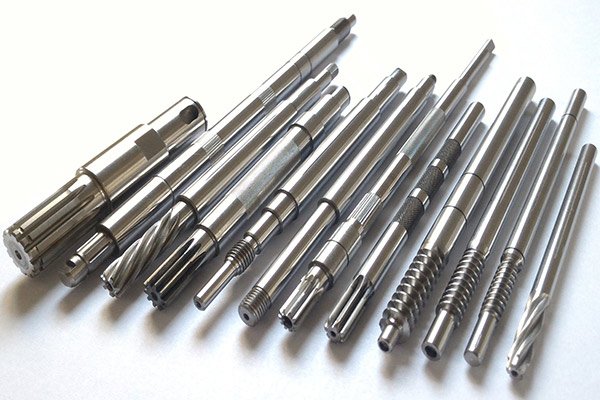
From precision gearbox components to custom shaft assemblies used in industrial automation equipment, ERP quality control ensures that high-volume production runs maintain the geometric consistency required for press-fit assembly, bearing interface performance, and dynamic balance. The ability to provide process capability data — documented Cpk values for every critical feature — is increasingly a contractual requirement from Tier 1 automotive and industrial automation OEMs, and a deeply integrated ERP system is the only scalable mechanism for generating this data reliably at production volumes.
Partner With a Quality-Driven CNC Manufacturer
For OEM procurement engineers and supply chain directors evaluating CNC component suppliers, the question is not whether a manufacturer has an ERP system — it is whether that ERP is deeply integrated into quality control at every production control point, and whether it is backed by the manufacturing expertise to act decisively on the data it generates. At IndustryApex Technology’s IndustryApex CNC, our ERP-integrated quality management system, 30+ years of precision manufacturing expertise, and full ODM service capability combine to deliver a supply chain solution that reduces your quality risk, accelerates your supplier qualification cycle, and supports your production continuity objectives at every stage of program growth.
To discuss your component requirements, request a process capability review, or explore an ODM partnership, contact our engineering team today. We deliver precision. We guarantee traceability. We partner for the long term.