- Shaft
- Molds&Tools
- Hydraulics And Pump
- Hair transplant needle
- Hydraulics And Pump
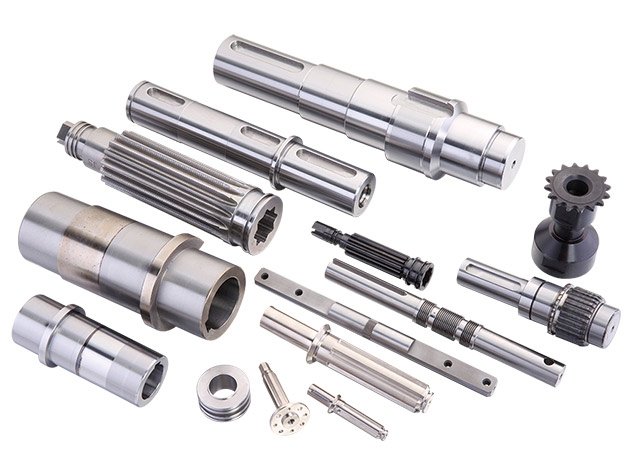
- Precision CNC Shaft Machining Manufacturer for High Performance Applications
- Energy Industry CNC Machining Parts Supplier
- Aerospace CNC Machining Parts Manufacturer
- Aerospace CNC Machining Parts Manufacturer
- Automotive & EV CNC Machining Parts Supplier for OEM and Tier 1
- Medical CNC Machining Parts Supplier for Precision Medical Devices
How ERP Systems Ensure Quality Control in CNC Mass Production

How ERP Systems Ensure Quality Control in CNC Mass Production
Executive Summary
In CNC mass production, quality control cannot depend on isolated inspections, paper travelers, or individual operator knowledge. Global OEMs and Tier 1 suppliers require repeatable conformance across high-volume orders, multiple processes, approved materials, revision-controlled drawings, and demanding delivery schedules. An enterprise resource planning (ERP) system provides the operating framework that connects these requirements into one controlled manufacturing record.
For precision-machined components, ERP quality control begins before the first chip is cut. It links customer requirements, engineering revisions, bills of materials, qualified suppliers, routing instructions, machine capacity, inspection plans, traceability records, nonconformance workflows, and shipment documentation. The result is a closed-loop system in which every lot can be planned, executed, verified, and traced against the same approved source of truth.
At Dixin Technology (IndustryApex CNC), ERP is used as a foundation for disciplined precision manufacturing and supply-chain coordination. For buyers sourcing complex CNC components at scale, this integration reduces avoidable variation, improves response time when issues arise, and supports dependable delivery without treating quality as a final-stage activity.
Technical Deep Dive
An effective ERP system ensures CNC quality by controlling the information and decisions that determine whether a part can be manufactured correctly. While coordinate measuring machines, optical systems, gauges, and skilled inspectors perform the physical verification, ERP makes their results actionable, connected, and auditable throughout production.
1. Controlled Part Master and Revision Management
The first quality requirement is to manufacture the correct version of the part. A controlled ERP part master consolidates the approved part number, customer drawing revision, material specification, critical dimensions, finish requirements, packaging instructions, and applicable inspection documentation. When an engineering change is released, the system can prevent obsolete drawings and old routing instructions from being used for new production orders.
This matters especially in mass production, where a small documentation error can affect hundreds or thousands of components before it is detected. Revision control helps production teams confirm that CNC programs, fixtures, tooling lists, inspection methods, and work instructions correspond to the active customer specification. It also preserves historical records so engineers can identify exactly which revision was used for a completed lot.
2. Process Routing and Operation-Level Quality Gates
CNC quality is built through the sequence of operations. ERP defines routing steps for material receiving, cutting, rough machining, heat treatment where required, finish machining, EDM, grinding, cleaning, inspection, marking, packaging, and shipment. Each operation can have its own approved work center, labor standard, tooling requirement, sampling rule, and quality checkpoint.
Operation-level control prevents a component from moving forward merely because production is busy. For example, a first-article inspection may be required after setup; an in-process dimensional check may be required after roughing; and a final inspection record may be required before the lot is released to packaging. If a required result is missing or fails acceptance criteria, the ERP workflow can hold the order for review rather than allowing the component to continue unnoticed.
3. Material Lot Traceability and Supplier Quality
Dimensional accuracy alone is not enough for critical components. The chemical composition, mechanical properties, heat lot, and source of raw material may all be part of the customer requirement. ERP connects incoming material receipts to purchase orders, supplier approvals, material certificates, internal lot numbers, and the manufacturing orders that consume those lots.
This creates bidirectional traceability. A manufacturer can identify which material lot was used in a shipped CNC batch, and it can identify every affected work order if a supplier quality notice or material concern is received later. Such traceability is essential for aerospace, medical, hydraulics, energy, and other applications where failure analysis must be factual, rapid, and documented.
4. First-Article, In-Process, and Final Inspection Data
ERP-supported quality plans specify what must be measured, when it must be measured, who can approve it, and what record must be retained. The plan can identify critical-to-quality characteristics such as diameter, concentricity, flatness, positional tolerance, surface roughness, thread fit, hardness, and coating thickness. Digital inspection records make it easier to compare actual values with tolerances and detect recurring process drift.
For repeat production, statistical process control data can be associated with the relevant operation and machine. Trend visibility helps engineering teams intervene before an out-of-tolerance condition becomes a large-scale rejection. Instead of relying on final inspection to discover variation, the production system supports earlier correction through tool-offset adjustment, fixture verification, tool-life review, machine maintenance, or process parameter refinement.
5. Nonconformance, CAPA, and Closed-Loop Improvement
No quality system can credibly promise that deviations will never occur. The decisive capability is how well the organization contains, documents, analyzes, and prevents recurrence. ERP quality modules can issue a nonconformance record when inspection results do not meet requirements. The record identifies the affected part, lot, quantity, operation, machine, material, defect type, disposition decision, and responsible functions.
From there, corrective and preventive action processes can connect root-cause analysis to containment actions, rework instructions, supplier corrective actions, customer communication, and verification of effectiveness. Because the nonconformance record is linked to production and purchasing data, teams can determine whether the cause is related to tooling, programming, incoming material, setup, inspection method, handling, or an upstream supplier. This structured feedback is a practical mechanism for reducing repeat defects over successive production releases.
6. Capacity, Maintenance, and Repeatability
Quality and delivery are interdependent. When capacity planning is weak, rushed setups, unplanned subcontracting, and skipped verification become more likely. ERP provides visibility into machine loading, routing alternatives, material availability, tooling needs, and production priorities. That supports realistic scheduling and gives managers earlier warning of constraints.
Preventive maintenance data can also be connected to key equipment. A machine operating outside its expected condition may introduce dimensional variation, poor surface finish, or unstable cycle times. By scheduling maintenance and monitoring recurring quality events by work center, manufacturers can protect process capability instead of treating equipment reliability as separate from quality performance.
The ODM & Supply Chain Advantage
Dixin Technology operates as a supply-chain integrator and ODM solution provider for global OEMs and Tier 1 suppliers. This role requires more than producing individual parts to print. It requires coordinating technical requirements, manufacturability, qualified material sources, process selection, production planning, inspection evidence, and delivery execution across the full component lifecycle.
With more than 30 years of experience and a fully controlled precision manufacturing system supported by ERP, Dixin Technology can turn fragmented sourcing requirements into a managed production program. The system aligns customer demand with controlled manufacturing data and procurement activity, allowing teams to manage repeated orders, engineering changes, lot traceability, and delivery commitments from a unified operational base.
Its manufacturing capabilities include 3-axis, 4-axis, and 5-axis CNC machining, EDM, precision grinding, and industrial ceramics. This breadth is important because complex assemblies and engineered systems often require different manufacturing methods while still demanding consistent documentation and quality accountability. ERP links these processes through defined routings and control points, creating one traceable record even when a component passes through several specialized operations.
For OEM procurement and engineering teams, this approach supports earlier design-for-manufacturability discussion, clearer cost and lead-time planning, and more reliable transition from prototype to mass production. It also strengthens supplier governance: approved sources, material certificates, inspection results, and delivery performance can be evaluated as connected operational data rather than separate spreadsheets or email threads.
The ODM advantage becomes particularly valuable when customers need a supplier that can manage both part-level precision and program-level coordination. By combining manufacturing engineering with ERP-driven control, Dixin Technology helps customers reduce supplier complexity while retaining visibility into the technical and quality evidence behind each delivered lot.
Industry Applications
Aerospace Components
Aerospace programs require disciplined configuration control, full material traceability, complex geometries, and tightly managed process records. ERP supports the traceability chain from certified material through machining and inspection to shipment. For high-precision aircraft structures and titanium components, explore Dixin Technology’s aerospace CNC machining capabilities.
Medical Devices and Surgical Components
Medical manufacturing demands controlled records, repeatable dimensional quality, clean handling, and robust management of engineering revisions. ERP-based planning and inspection workflows help ensure that manufacturing teams use approved specifications and retain the data required for product traceability. Learn more about ISO-certified CNC machining for medical components.
Hydraulics, Pumps, and Fluid Control
Hydraulic valves, pump parts, spools, sleeves, shafts, and fluid-control components often depend on precise fits, surface finishes, and consistent geometry to prevent leakage, pressure loss, or premature wear. ERP-controlled routing and in-process verification help maintain these characteristics across volume production. Review Dixin Technology’s experience with hydraulic pump parts.
Industrial Equipment and Advanced Manufacturing
Industrial equipment builders need dependable supply for shafts, transmission parts, molds, ceramic components, and complex machined structures. ERP supports multi-process planning, supplier coordination, inventory visibility, and corrective-action feedback, helping manufacturers maintain stable quality even when production demand changes. This is particularly important when an OEM needs consolidated sourcing across multiple precision component families.
Call to Action
Quality in CNC mass production is not created by inspection alone. It is the outcome of controlled data, disciplined process routing, qualified materials, traceable execution, and rapid corrective action. An ERP-centered manufacturing system gives OEMs and Tier 1 suppliers the visibility and process control needed to scale precision production with confidence.
Contact Dixin Technology to discuss CNC mass production, ODM support, complex precision machining, and supply-chain integration requirements for your next program.