
- Shaft
- Molds&Tools
- Hydraulics And Pump
- Hair transplant needle
- Hydraulics And Pump
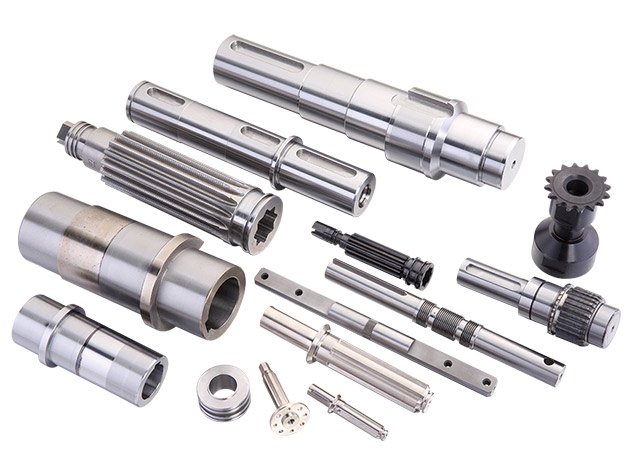
- Precision CNC Shaft Machining Manufacturer for High Performance Applications
- Energy Industry CNC Machining Parts Supplier
- Aerospace Structural Components for OEM Programs
- Aerospace Structural Components for OEM Programs
- Automotive & EV CNC Machining Parts Supplier for OEM and Tier 1
- Medical Device CNC Machining Services
Industrial Ceramics Machining: Zirconia and Alumina Applications for Global OEM Supply Chains

Industrial Ceramics Machining: Zirconia and Alumina Applications for Global OEM Supply Chains
Industrial ceramics are increasingly important in demanding applications where conventional metals and polymers cannot provide the required combination of wear resistance, electrical insulation, chemical stability, dimensional control, and high-temperature performance. Among the most widely specified technical ceramics, zirconia and alumina support critical components in medical equipment, semiconductor systems, fluid control, aerospace, energy, and industrial automation.
For OEMs and Tier 1 suppliers, the challenge is not simply selecting a ceramic grade. It is developing a repeatable manufacturing process that manages material behavior from green machining through sintering, finishing, inspection, packaging, and delivery. IndustryApex Technology, operating through the IndustryApex CNC platform, combines industrial ceramics machining with precision CNC manufacturing, grinding, engineering support, and supply chain coordination for complex production requirements.
1. Executive Summary
Zirconia and alumina offer different but complementary performance profiles. Zirconia is valued for its high fracture toughness, strength, low thermal conductivity, and resistance to wear. These characteristics make it suitable for precision wear components, medical instruments, pump parts, seals, guides, and components exposed to impact or cyclic loading. Alumina provides excellent hardness, electrical insulation, chemical resistance, thermal stability, and cost efficiency. It is widely used in semiconductor equipment, insulators, bushings, sensor components, laboratory equipment, and high-temperature fixtures.
Machining these materials requires a process strategy that accounts for shrinkage, brittleness, surface integrity, tool wear, geometry, and inspection capability. Depending on the component and production stage, manufacturers may use green machining before sintering, diamond grinding after sintering, precision lapping, laser processing, or a combination of methods. The correct route depends on tolerance requirements, batch size, geometry, material grade, and the final operating environment.
For procurement teams, the supplier’s wider manufacturing system is equally important. A capable ceramics partner should be able to integrate engineering, production planning, quality documentation, inventory control, and logistics. This reduces the risk of transferring ceramic components between disconnected suppliers and helps OEMs maintain consistent quality across global programs.
2. Technical Deep Dive
Zirconia: Toughness for Wear and Load-Bearing Applications
Zirconia is a transformation-toughened ceramic. Stabilizing additives, commonly yttria, help preserve a microstructure that improves resistance to crack propagation compared with many other technical ceramics. This makes zirconia an effective choice for applications requiring a hard, chemically stable material with greater toughness than alumina.
Common zirconia applications include pump and valve components, precision sleeves, wear rings, guides, bushings, cutting elements, dental and medical components, and tooling exposed to abrasive contact. Zirconia’s low thermal conductivity can also be useful where thermal isolation is required. However, the selected grade must be matched to the application because stabilizer content, grain structure, purity, and sintering conditions affect mechanical and thermal performance.
Alumina: Hardness, Insulation, and Chemical Stability
Alumina is one of the most established industrial ceramics because it combines high hardness, strong electrical insulation, corrosion resistance, and reliable performance at elevated temperatures. Different purity levels can be selected according to the required balance of machinability, mechanical strength, dielectric performance, thermal conductivity, and cost.
Alumina components are frequently used in electrical insulators, semiconductor handling fixtures, vacuum equipment, furnace components, wear plates, nozzles, feedthroughs, spacers, and chemical-processing hardware. High-purity alumina is particularly valuable where contamination control and stable electrical properties are important. Lower-purity grades may be appropriate for less demanding wear or structural applications.
Green Machining and Sintered Machining
The manufacturing route has a direct effect on cost and dimensional performance. In green machining, a compacted or partially formed ceramic blank is machined before final sintering. The material is easier to remove at this stage, allowing efficient production of complex shapes and reducing the amount of expensive diamond grinding required later. The process must include an accurate shrinkage model because the component changes dimensions during sintering.
After sintering, zirconia and alumina become significantly harder and more resistant to conventional machining. Diamond wheels, diamond tools, lapping systems, and specialized abrasive processes are then used to achieve tight tolerances and controlled surface finish. Sintered machining is often necessary for critical dimensions, sealing surfaces, bearing fits, holes, and features that must be verified after final thermal treatment.
Dimensional Control and Surface Integrity
Ceramic machining is sensitive to chipping, microcracks, edge breakout, residual stress, and local overheating. These defects may not be visible during a basic visual inspection but can reduce fatigue life or create failure points during assembly. Process controls should therefore address tool condition, cutting parameters, coolant management, workholding, edge preparation, and inspection frequency.
Critical characteristics may include flatness, roundness, concentricity, cylindricity, hole position, wall thickness, surface roughness, and fracture-free edges. Coordinate measurement, optical inspection, microscopy, roundness testing, and surface-finish measurement may be combined according to the component risk level. When ceramics are used in medical, semiconductor, or fluid-control systems, traceability and cleanliness controls are also central to the qualification process.
Design Considerations for OEM Components
Designing for ceramic manufacturing requires attention to geometry from the beginning. Sharp internal corners, abrupt wall transitions, deep narrow slots, unsupported projections, and uneven cross-sections can increase the risk of cracking or distortion. Radiused transitions, consistent wall thickness, accessible grinding surfaces, and realistic tolerance allocation generally improve yield and reduce production cost.
Engineers should also distinguish between functional and nonfunctional surfaces. Applying extremely tight tolerances to every feature can increase grinding time without improving system performance. A supplier with experience in both ceramics and precision CNC machining can help allocate tolerances around interfaces, sealing areas, electrical paths, and wear surfaces while keeping secondary features economical.
3. The ODM & Supply Chain Advantage
Industrial ceramics programs often involve more than the production of an individual part. OEMs may need material selection, design-for-manufacturing feedback, prototype support, process validation, inspection documentation, packaging controls, buffer inventory, and coordinated deliveries. This is where a supply chain integrator and ODM solution provider can create measurable value.
IndustryApex Technology’s core identity is built around supporting global OEM and Tier 1 suppliers with integrated manufacturing and sourcing capabilities. Rather than treating ceramics as an isolated service, the company can coordinate ceramic components with adjacent precision parts, assemblies, and production requirements. This approach is useful when a system combines zirconia or alumina parts with metal housings, shafts, seals, fasteners, electrodes, or machined structural elements.
The manufacturing edge is a fully controlled precision manufacturing system supported by ERP and more than 30 years of experience. ERP-based planning helps connect quotations, bills of material, production schedules, inspection records, inventory status, and delivery commitments. For international supply chains, this visibility supports better forecasting and reduces the communication gaps that can occur when engineering, manufacturing, and logistics are managed by separate organizations.
IndustryApex Technology’s technology capabilities include 3-axis through 5-axis CNC machining, EDM, precision grinding, and industrial ceramics processing. This combination is important because ceramic components frequently interface with metal parts or require secondary operations that benefit from different manufacturing technologies. A coordinated process can reduce supplier count, simplify quality communication, and improve responsibility for the finished component.
ODM engagement is especially valuable during the early design phase. The supplier can review ceramic grade selection, shrinkage allowances, machining stock, datum strategy, tolerance zones, inspection access, packaging, and expected annual volume. Early feedback can prevent designs that are technically possible but difficult to produce consistently. It can also identify opportunities to consolidate components, simplify assembly, or move selected features to a more economical manufacturing stage.
Supply chain resilience depends on more than having a second source. It requires clear material specifications, approved process parameters, controlled revisions, documented inspection methods, and realistic lead-time planning. For zirconia and alumina, the material specification should address grade, purity or stabilization, dimensions, density or related acceptance criteria, sintering condition, and any requirements related to contamination or color. These controls make qualification more transferable and reduce ambiguity during production ramp-up.
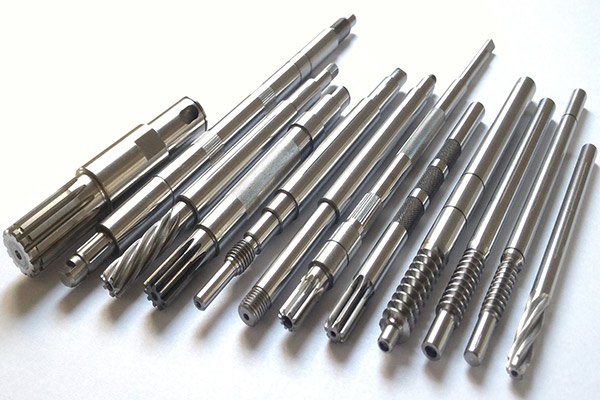
For programs involving related precision products, IndustryApex Technology provides a broader manufacturing resource through the IndustryApex CNC home platform. Aerospace customers can review capabilities for aerospace CNC machining and titanium aircraft parts, while medical OEMs can evaluate ISO-certified CNC machining for medical components. These adjacent capabilities are relevant when ceramic components form part of a larger high-precision assembly.
4. Industry Applications
Medical and Laboratory Equipment
Zirconia is used in medical and laboratory applications where wear resistance, biocompatibility, dimensional stability, and cleanable surfaces are important. Components may include instrument elements, guides, housings, dental components, and wear interfaces. Alumina supports electrical insulation, chemical resistance, and stable performance in laboratory fixtures, analytical equipment, and high-temperature systems. Production controls should reflect the applicable regulatory, cleanliness, and traceability requirements.
Semiconductor and Electronics Manufacturing
High-purity alumina is widely used in semiconductor equipment because it provides electrical insulation, thermal stability, and resistance to many process chemicals. Components can include wafer-handling fixtures, insulators, rings, spacers, process supports, and vacuum-compatible hardware. Zirconia may be selected for wear-prone guides, precision supports, or components where improved toughness is required. Surface cleanliness and particle control are often as important as dimensional accuracy.
Fluid Control, Pumps, and Valves
Ceramics can provide valuable performance in abrasive, corrosive, or chemically aggressive fluid environments. Zirconia wear rings, sleeves, valve elements, and pump components can extend service life where metallic surfaces suffer from erosion or galling. Alumina may be used for nozzles, insulators, bushings, and chemically resistant components. IndustryApex Technology’s capabilities for hydraulic pump parts are relevant to programs that combine ceramic wear components with precision-machined hydraulic hardware.
Aerospace and Energy Systems
In aerospace and energy equipment, ceramics may be used for electrical isolation, thermal protection, wear control, sensor support, and specialized high-temperature interfaces. Material selection must consider vibration, thermal cycling, shock, and qualification requirements. Ceramic components are often integrated with metallic assemblies, making accurate interface control and documented inspection essential. Suppliers supporting these programs should understand configuration management and the importance of repeatable process records.
Industrial Automation and Precision Tooling
Automation systems use zirconia and alumina for guides, wear pads, grippers, insulators, locating components, and tooling inserts. Their hardness and dimensional stability can reduce maintenance in high-cycle operations. Ceramic parts are particularly useful where lubricants are undesirable, electrical isolation is needed, or abrasive contamination is present. Proper edge treatment and assembly design help prevent damage during installation and service.

5. Call to Action
Choosing between zirconia and alumina is only the first step in developing a reliable industrial ceramic component. The final result depends on material grade, geometry, machining route, sintering control, surface finishing, inspection, packaging, and supply chain coordination. OEMs and Tier 1 suppliers should evaluate these factors together rather than treating material selection and manufacturing as separate decisions.
IndustryApex Technology supports industrial customers with ODM engineering, industrial ceramics machining, 3-axis to 5-axis CNC manufacturing, EDM, precision grinding, ERP-enabled production control, and global supply chain coordination. Whether the requirement involves a prototype, a validated production part, or a multi-component assembly, the engineering team can review drawings, performance requirements, annual volumes, tolerances, and delivery expectations.
To discuss a zirconia or alumina component, request a manufacturability review, or develop a coordinated supply plan, contact IndustryApex Technology through IndustryApex CNC.