- Shaft
- Molds&Tools
- Hydraulics And Pump
- Hair transplant needle
- Hydraulics And Pump
- Precision CNC Shaft Machining Manufacturer for High Performance Applications
- Energy Industry CNC Machining Parts Supplier
- Aerospace CNC Machining Parts Manufacturer
- Aerospace CNC Machining Parts Manufacturer
- Automotive & EV CNC Machining Parts Supplier for OEM and Tier 1
- Medical CNC Machining Parts Supplier for Precision Medical Devices

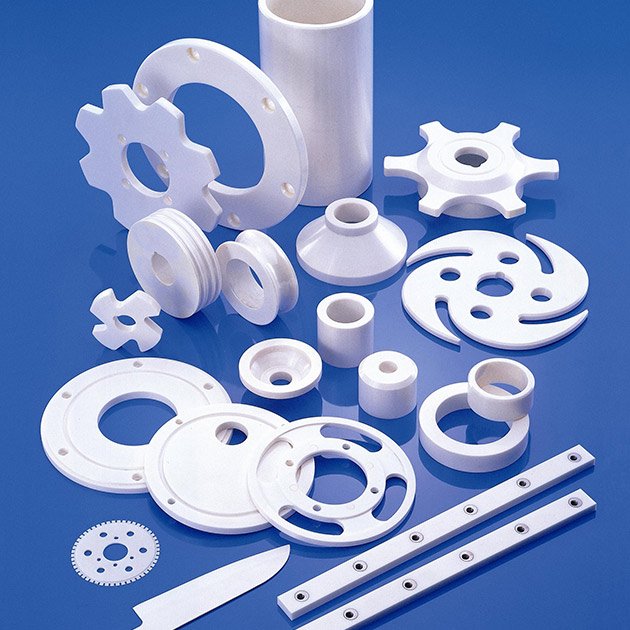
Industrial Ceramics Machining: Precision Zirconia and Alumina CNC Solutions for OEM Supply Chains

Executive Summary
Advanced industrial ceramics—particularly zirconia (ZrO₂) and alumina (Al₂O₃)—have become indispensable materials across high-performance engineering sectors. Their exceptional hardness, thermal stability, chemical inertness, and electrical insulation properties make them the material of choice for components operating in extreme environments where metals and polymers fail. However, the very properties that make these ceramics valuable also make them extraordinarily difficult to machine with precision.
For global OEMs and Tier 1 suppliers seeking reliable ceramic component sourcing, the challenge extends beyond material science. It demands a manufacturing partner with deep process expertise, tightly controlled tolerances, and an integrated supply chain capable of delivering consistent quality at scale. This analysis examines the technical requirements of zirconia and alumina machining, evaluates supply chain considerations, and outlines how vertically integrated ODM partners deliver measurable advantages in cost, lead time, and component reliability.
As industries from aerospace to medical devices push performance boundaries, the demand for precision-machined ceramic components continues to accelerate—requiring manufacturing partners who combine material knowledge with advanced CNC capabilities.
Technical Deep Dive: Machining Zirconia and Alumina
Material Properties and Machining Challenges
Zirconia and alumina represent two distinct but complementary branches of the advanced ceramics family. Alumina (Al₂O₃) offers a Vickers hardness of 1500–1900 HV, excellent electrical insulation, and thermal conductivity suitable for heat-dissipating substrates. Zirconia (ZrO₂), particularly yttria-stabilized tetragonal zirconia polycrystal (Y-TZP), delivers superior fracture toughness (6–10 MPa·m½) and flexural strength exceeding 1000 MPa—making it the strongest structural ceramic commercially available.
These properties create specific machining challenges that demand specialized approaches:
- Extreme hardness: Both materials exceed 80 HRA, requiring diamond-bonded or CBN tooling exclusively. Conventional carbide tools experience catastrophic wear within seconds of contact.
- Brittleness and fracture sensitivity: Unlike metals that deform plastically, ceramics fracture under excessive point loading. Machining parameters must maintain material removal in the ductile regime—typically requiring depths of cut below 10 μm for finish passes.
- Thermal shock susceptibility: Alumina in particular is vulnerable to thermal gradients during machining. Coolant application strategy and spindle speed optimization are critical to preventing micro-crack propagation.
- Surface integrity requirements: Many ceramic applications demand surface roughness below Ra 0.1 μm, requiring precision grinding and lapping sequences after initial CNC shaping.
Process Chain for Precision Ceramic Components
Manufacturing high-tolerance ceramic parts follows a multi-stage process chain that differs fundamentally from metallic component production:
- Green-state machining: Pre-sintered ceramic blanks (approximately 50-60% theoretical density) can be shaped using conventional CNC milling with carbide tooling. This stage allows complex geometry creation at lower cost, though dimensional allowances must account for 15-25% sintering shrinkage.
- Sintering: Controlled atmosphere furnace processing at 1400-1600°C densifies the material to >99% theoretical density. Precise temperature profiling prevents warpage and ensures uniform grain structure.
- Hard machining: Post-sintered components require diamond grinding on high-rigidity CNC platforms. Multi-axis grinding centers enable complex contour generation while maintaining positional accuracy within ±2 μm.
- Precision finishing: Lapping, polishing, and ultrasonic finishing achieve final dimensional tolerances and surface specifications. For optical or sealing applications, flatness below 1 μm across 50 mm spans is achievable.
The integration of 3-5 axis CNC machining centers with precision grinding and EDM capabilities allows manufacturers to handle the complete ceramic component process chain under one roof—eliminating inter-vendor quality variability and reducing lead times significantly.
Critical Process Parameters
Successful ceramic machining depends on precise control of interdependent variables. Spindle speeds for diamond grinding typically range from 4,000-8,000 RPM depending on wheel diameter and bond type. Feed rates must balance material removal rate against surface damage depth—typically 50-200 mm/min for finish grinding operations. Coolant delivery at 15-30 bar pressure ensures thermal management and efficient swarf evacuation from the grinding zone.
For components serving hydraulic and fluid control systems, dimensional stability and surface sealing integrity are paramount. Ceramic valve seats and pump components demand concentricity within 3 μm and surface finishes that prevent fluid bypass under operating pressures exceeding 350 bar.
The ODM & Supply Chain Advantage
Why Integrated Manufacturing Matters for Ceramics
Ceramic component procurement presents unique supply chain risks that differ from standard metallic part sourcing. The multi-stage process chain, specialized equipment requirements, and material behavior sensitivity mean that quality failures often trace back to process discontinuities between vendors. When green machining, sintering, and finish grinding occur at separate facilities, dimensional control degrades and accountability becomes fragmented.
IndustryApex Technology operates as a fully integrated supply chain partner and ODM solution provider, consolidating the entire ceramic component manufacturing process within a controlled production environment. With over 30 years of precision manufacturing experience and a comprehensive ERP-driven production system, the company delivers what fragmented supply chains cannot: end-to-end process ownership with full traceability.
Manufacturing Capabilities Aligned to Ceramic Requirements
The technical infrastructure required for precision ceramics machining includes:
- 3-5 axis CNC machining centers: High-rigidity platforms configured for both green-state milling and diamond-tool hard machining of sintered ceramics.
- Precision grinding: Surface, cylindrical, and profile grinding with sub-micron positioning resolution—essential for achieving final ceramic component tolerances.
- EDM (Electrical Discharge Machining): While ceramics are generally non-conductive, certain composite ceramics and ceramic-metal assemblies benefit from wire and sinker EDM for feature creation.
- Metrology integration: In-process measurement and CMM verification ensure that sintering shrinkage compensation and grinding allowances maintain specification compliance throughout production.
For global OEM and Tier 1 suppliers, this integrated capability eliminates the need to coordinate multiple vendors across the ceramic manufacturing process chain. A single point of contact manages material procurement, process development, production, inspection, and logistics—reducing procurement complexity while improving quality consistency.
Risk Mitigation Through Vertical Integration
Supply chain disruptions in ceramic component sourcing carry amplified consequences due to long lead times for raw material (ceramic powder and pre-sintered blanks) and the specialized nature of processing equipment. Vertically integrated partners maintain buffer inventory strategies, qualified secondary material sources, and redundant processing capacity that protect OEM production schedules against upstream disruptions.
The ERP-driven production planning system enables real-time capacity visibility, predictive lead time management, and automated quality documentation—capabilities that Tier 1 automotive and aerospace suppliers increasingly require from their supply base.
Industry Applications
Aerospace and Defense
Zirconia thermal barrier components, alumina electrical insulators, and ceramic bearing elements serve critical functions in turbine engines, avionics, and guidance systems. These applications demand aerospace-grade precision with full material certification and process traceability. Alumina radomes and sensor windows require optical-quality surface finishing combined with tight geometric tolerances.
Medical and Life Sciences
Zirconia’s biocompatibility, wear resistance, and aesthetic properties make it the material of choice for dental implant abutments, surgical instrument guides, and prosthetic joint components. Medical component manufacturing demands ISO 13485-aligned processes with validated cleaning procedures and complete batch traceability from raw material through finished component.
Semiconductor and Electronics
Alumina substrates, ceramic chuck components, and zirconia nozzles serve critical functions in wafer processing, die bonding, and electronic packaging. These applications require surface flatness specifications below 0.5 μm and edge quality that prevents particle generation in cleanroom environments.
Industrial Fluid Power and Pumps
Ceramic valve components, pump plungers, and seal faces exploit the material’s chemical inertness and wear resistance in aggressive fluid environments. Hydraulic and pump system components machined from alumina and zirconia deliver service lives 5-10x longer than hardened steel equivalents in abrasive or corrosive media applications.
Automotive and Drivetrain
Ceramic sensor housings, exhaust system components, and fuel injection elements leverage thermal stability and electrical properties unavailable from metallic alternatives. As electrification accelerates, ceramic insulators and thermal management components are finding expanded roles in battery systems and power electronics.
Partner With IndustryApex Technology for Precision Ceramic Components
Whether you require prototype development for a new zirconia component design or volume production of alumina precision parts, IndustryApex Technology delivers the integrated manufacturing capability, material expertise, and supply chain reliability that global OEMs demand. Our 30+ years of precision machining experience, combined with dedicated ceramic processing infrastructure, positions us as your single-source partner for industrial ceramic components.
Ready to discuss your ceramic machining requirements? Our engineering team provides DFM analysis, material selection guidance, and rapid quotation for zirconia and alumina components across all industry sectors.
Contact IndustryApex Technology today to request a consultation, or explore our full precision CNC machining capabilities to see how we support demanding applications across aerospace, medical, semiconductor, and industrial markets.