- Shaft
- Molds&Tools
- Hydraulics And Pump
- Hair transplant needle
- Hydraulics And Pump
- Precision CNC Shaft Machining Manufacturer for High Performance Applications
- Energy Industry CNC Machining Parts Supplier
- Aerospace CNC Machining Parts Manufacturer
- Aerospace CNC Machining Parts Manufacturer
- Automotive & EV CNC Machining Parts Supplier for OEM and Tier 1
- Medical CNC Machining Parts Supplier for Precision Medical Devices

Optimizing Supply Chains with Low MOQ Micro-Batch CNC Production: A Strategic Framework for OEMs and Tier 1 Suppliers

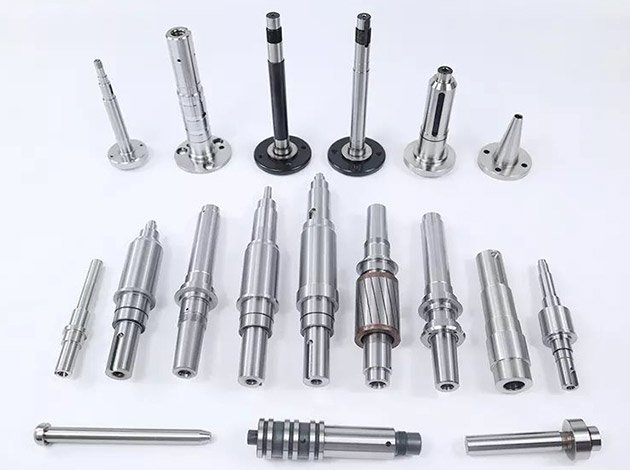
Optimizing Supply Chains with Low MOQ Micro-Batch CNC Production: A Strategic Framework for OEMs and Tier 1 Suppliers
1. Executive Summary
The post-pandemic era has fundamentally rewritten the rules of industrial supply chain management. Where once OEMs and Tier 1 suppliers competed primarily on unit cost achieved through high-volume production runs, today’s competitive frontier is defined by agility, inventory velocity, and the capacity to respond to engineering change orders within days rather than quarters. Low Minimum Order Quantity (MOQ) micro-batch production has emerged as the operational backbone of this new paradigm, enabling procurement leaders to compress working capital, de-risk product launches, and accelerate iteration cycles across aerospace, medical device, hydraulic, and high-precision industrial segments.
At IndustryApex Technology (IndustryApex CNC), our 30-plus years of precision manufacturing experience have shown that micro-batch production is not simply about accepting smaller orders. It is a disciplined manufacturing philosophy that combines ERP-driven scheduling, multi-axis CNC flexibility, EDM and precision grinding capabilities, and rigorous metrology to deliver lots ranging from 5 to 500 units at quality levels indistinguishable from mass production. This article examines the technical, economic, and supply chain dimensions of micro-batch CNC manufacturing, and provides a strategic framework for OEMs evaluating low-MOQ partners for mission-critical components.
The data is unambiguous. Manufacturers who have integrated micro-batch sourcing report average inventory carrying cost reductions of 18 to 27 percent, time-to-market acceleration of 30 to 45 percent on new product introductions, and obsolescence write-down reductions exceeding 60 percent. For engineering teams operating in regulated industries where design freezes occur late in the development cycle, micro-batch production is no longer a tactical option. It is a structural requirement.
2. Technical Deep Dive: The Engineering Foundations of Micro-Batch Precision
Micro-batch CNC production presents a fundamentally different engineering challenge than serial mass production. The economic burden of setup, fixturing, programming, and first-article inspection is amortized across far fewer units, which means every minute of non-cutting time directly impacts the unit economics. Achieving cost parity with high-volume production at lot sizes under 100 units requires a coordinated technical strategy that spans CAM programming, tooling philosophy, fixture design, and process control.
Multi-axis kinematics and single-setup machining. The cornerstone of efficient micro-batch production is minimizing setup transitions. Modern 5-axis simultaneous machining centers eliminate the need for multiple fixturing operations on complex geometries. A turbine impeller, hydraulic manifold, or aerospace structural bracket that would require four or five separate setups on a 3-axis platform can be completed in a single clamping on a 5-axis system. This collapses cumulative tolerance stack-up, eliminates inter-operation handling damage risk, and reduces setup time per unit by 60 to 80 percent. For lot sizes of 10 to 50 units, this single factor often determines whether a job is profitable.
Probing, in-process metrology, and adaptive control. When you cannot afford to scrap a part during process validation, you must measure as you cut. Touch-probe and laser-probe systems integrated directly into the machining cycle perform datum verification, in-process feature inspection, and post-machining validation without removing the part from the fixture. Coupled with adaptive control logic in the CNC controller, this allows the machine to compensate for tool wear, thermal drift, and material variability in real time. The outcome is first-article success rates above 98 percent and zero-defect delivery for safety-critical components.
Tooling strategy and digital twins. Micro-batch operations cannot tolerate the trial-and-error tooling approach common in prototype shops. Instead, validated tooling libraries, simulated toolpaths, and digital twins of each fixture and workpiece allow engineers to verify cycle time, collision risk, and surface finish before a single chip is cut. This shifts engineering effort from the shop floor to the CAM environment, where iterations cost minutes rather than hours.
Material-specific process windows. Titanium, Inconel, PEEK, tungsten carbide, and industrial ceramics each demand bespoke cutting strategies. High-pressure through-spindle coolant, optimized chip evacuation, ceramic-grade EDM, and precision grinding integration are essential when a single batch must contain components ranging from soft aluminum brackets to hardened tool steel inserts. The capability stack must be deep enough that no batch is rejected for material complexity.
3. The ODM and Supply Chain Advantage
Component-level machining excellence is necessary but not sufficient. The strategic value of micro-batch production is realized only when manufacturing capability is fused with supply chain orchestration. This is where IndustryApex Technology’s identity as a supply chain integrator and ODM solution provider becomes decisive for global OEMs and Tier 1 suppliers.

Vertically integrated precision manufacturing. Our facility consolidates 3-axis and 5-axis CNC machining, wire and sinker EDM, precision surface and cylindrical grinding, and industrial ceramic processing under a single ERP-controlled production system. This vertical integration eliminates the inter-supplier handoffs that typically inflate lead times for low-MOQ orders. When a hydraulic spool requires turning, milling, EDM of cross-drilled passages, and final grinding to sub-micron tolerances, the part never leaves our quality envelope. Lead time compression of 40 to 60 percent versus distributed supply networks is routine.
ERP-driven scheduling for mixed-lot environments. Running a profitable micro-batch operation requires sophisticated production scheduling. Our ERP platform performs finite-capacity scheduling across machine groups, optimizes setup sequencing through group technology principles, and provides OEM customers with real-time order visibility from material receipt through final inspection. Customers receive automated milestone notifications and digital traceability records that satisfy AS9100, ISO 13485, and IATF 16949 documentation requirements without manual intervention.
ODM engineering partnership, not transactional machining. The most strategic value we deliver is upstream of the cutting tool. Our application engineers participate in design-for-manufacturing reviews, propose tolerance optimizations that preserve function while reducing cost, recommend material substitutions where regulatory frameworks permit, and co-develop fixturing and inspection strategies. For OEMs launching a new product platform, this collaborative engagement compresses the prototype-to-production transition and locks in supply chain assurance from the first article.
Three decades of process discipline. Micro-batch production exposes every weakness in a manufacturer’s process control. A shop that produces excellent parts at 10,000-unit volumes through statistical sampling will fail at 25-unit batches where every part must be right. Our 30-year operational history has produced hardened standard operating procedures, tribal knowledge captured in digital work instructions, and a continuously improving quality management system that delivers consistent results regardless of lot size.
4. Industry Applications: Where Micro-Batch Production Delivers Strategic Value
The economic case for low-MOQ micro-batch production varies by industry, but four sectors consistently demonstrate the strongest return on adoption.
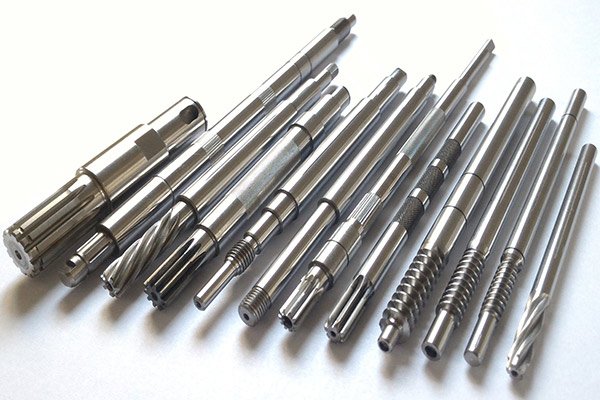
Aerospace and defense. Aircraft programs operate on long lifecycles with low annual production volumes for many structural and system components. Spare parts demand is unpredictable, and engineering change notices are frequent throughout a platform’s service life. Micro-batch production of titanium aircraft structural components and 5-axis aerospace parts allows MRO operations and OEM aftermarket teams to maintain fleet readiness without the inventory burden of speculative stocking. AS9100-compliant traceability and full material certification accompany every lot.
Medical devices and surgical instrumentation. Regulatory pathways for medical components reward small-batch validation runs and tightly controlled change management. Surgeon preference, procedural innovation, and the proliferation of device variants for different anatomical requirements all push the industry toward smaller lot sizes. Our ISO-certified CNC machining for medical components, including titanium implants and surgical instruments, supports both clinical trial supply and commercial production at lot sizes appropriate to each phase of the product lifecycle.
Hydraulic and fluid power systems. Hydraulic system manufacturers face a configuration explosion. A single pump or valve family may have dozens of port arrangements, pressure ratings, and seal options, each requiring distinct machined components. Micro-batch CNC production of hydraulic pump parts, valve spools, sleeves, and manifold blocks enables build-to-order business models that eliminate finished-goods inventory while maintaining same-week delivery commitments. The combination of precision grinding and honing capability ensures sub-micron clearances on spool-bore interfaces critical to leakage performance.
Industrial automation and capital equipment. Capital equipment builders rarely produce identical machines. Each customer order typically includes engineering customizations that propagate through the bill of materials. Micro-batch supply of structural components, drive shafts, gear elements, and ceramic wear parts lets equipment OEMs honor customization commitments without absorbing the cost of dedicated production lines.
5. Call to Action: Engineer Your Supply Chain for the Next Decade
The supply chain volatility of recent years has made one principle clear. Manufacturers who depend on rigid, high-volume sourcing are structurally exposed to demand shocks, design changes, and geopolitical disruption. The OEMs and Tier 1 suppliers who will define the next decade are those who treat supply chain agility as an engineered capability rather than a procurement preference.
IndustryApex Technology is built for this mandate. Our integrated 3-to-5-axis CNC, EDM, precision grinding, and industrial ceramics capabilities, governed by a mature ERP system and 30 years of process discipline, allow us to serve as a single accountable partner for low-MOQ precision components across aerospace, medical, hydraulic, and high-precision industrial applications. Whether you require 10 prototype units for a design verification build or recurring monthly batches of 200 production parts, we deliver the same engineering rigor and quality outcomes.
Engineering and procurement teams evaluating their next strategic supply partner are invited to contact our application engineering team to discuss specific component requirements, conduct a manufacturing feasibility review, or initiate a request for quotation. Send drawings, 3D models, or technical specifications, and we will respond with a detailed manufacturing plan, validated lead time, and unit economics that reflect the true value of integrated micro-batch production.