- Shaft
- Molds&Tools
- Hydraulics And Pump
- Hair transplant needle
- Hydraulics And Pump
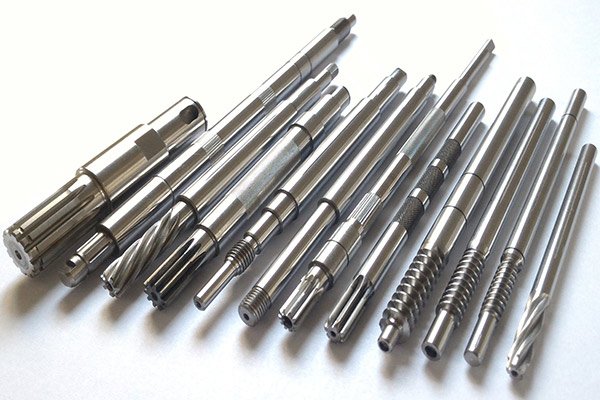
- Precision CNC Shaft Machining Manufacturer for High Performance Applications
- Energy Industry CNC Machining Parts Supplier
- Aerospace CNC Machining Parts Manufacturer
- Aerospace CNC Machining Parts Manufacturer
- Automotive & EV CNC Machining Parts Supplier for OEM and Tier 1
- Medical CNC Machining Parts Supplier for Precision Medical Devices

Precision CNC Machining for EV Motor Housings: Tight Tolerances Explained

Executive Summary
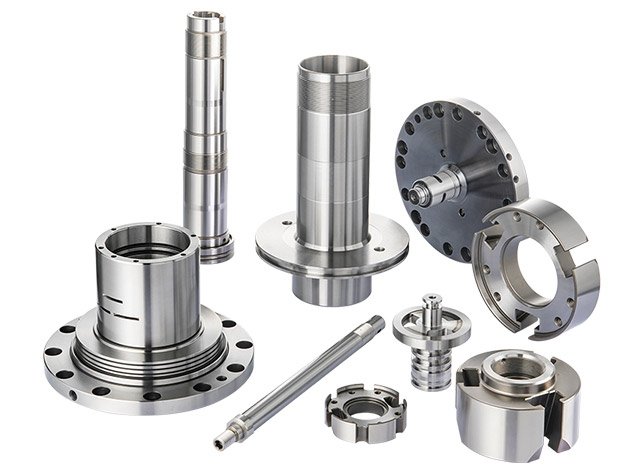
EV motor housings look simple from the outside, but they are among the most tolerance-sensitive structural components in an electric drivetrain. A housing must locate bearings, support the stator, manage heat, preserve rotor-to-stator air gap geometry, seal cooling passages, and survive vibration over the vehicle life cycle. For global OEMs and Tier 1 suppliers, the challenge is not only machining one accurate prototype; it is building a stable production system that can repeat micron-level geometry across batches, alloys, casting lots, and regional supply chains.
At Dixin Technology, operating as IndustryApex CNC, we approach EV motor housing programs as both a manufacturing engineering problem and a supply chain integration problem. The machining strategy must connect product design, casting or forging quality, fixture control, tool life, metrology, traceability, and logistics. When one of these links is weak, tight tolerances become expensive, unstable, or impossible to scale.
This article explains the engineering logic behind tight tolerances for precision CNC machined EV motor housings, including datum structures, bearing bore accuracy, stator fit, concentricity, flatness, cooling channel sealing, and production control. It also outlines how an ODM and supply chain integrator can reduce risk for EV platforms moving from design validation to mass production.
Technical Deep Dive
The first tolerance question for an EV motor housing is not, "How tight can the CNC machine hold?" The better question is, "Which features control motor performance, and how do we protect them through the full process?" EV motor housings usually include bearing bores, stator mounting diameters, end cover interfaces, coolant ports, inverter or gearbox mounting faces, cable pass-throughs, and sealing grooves. Each feature has a different function, so each needs a different tolerance philosophy.
Bearing bores are typically the most critical features. They define shaft alignment, rotor position, vibration behavior, and bearing life. A few microns of bore size variation can change press-fit force, while poor cylindricity or roundness can distort the bearing outer race. Concentricity between front and rear bearing locations is equally important because misalignment increases noise, heat, and mechanical loss. In production, these features often require finish boring, precision interpolation, or jig grinding strategies combined with in-process probing and temperature compensation.
The stator interface is another critical zone. The housing must retain the stator securely while helping transfer heat from copper windings and laminations into the cooling system. Depending on the design, the stator may use shrink fit, press fit, adhesive bonding, or a sleeve interface. Too much interference can damage laminations or change magnetic geometry; too little can reduce thermal contact and create vibration. This is why stator bore diameter, roundness, cylindricity, and surface finish must be specified together rather than treated as independent drawing notes.
Rotor-to-stator air gap is indirectly controlled by the housing. In high-efficiency EV motors, the air gap may be very small relative to housing size. The machining datum system must therefore link bearing locations, stator bore, and mounting faces in a coherent geometric dimensioning and tolerancing framework. True position, total runout, perpendicularity, and flatness are often more meaningful than simple plus-minus tolerances. A housing that passes local size checks can still fail functionally if its datums do not represent the actual assembly stack.
Material behavior adds another layer. EV motor housings are commonly machined from aluminum castings, die castings, permanent mold castings, extrusions, or billets. Aluminum offers low weight and good thermal conductivity, but residual stress, porosity, silicon content, and wall thickness variation influence machining stability. Thin walls can move after roughing. Interrupted cuts through casting skin can accelerate tool wear. Coolant jacket areas can distort when clamping pressure is excessive. A robust process usually separates roughing, stress relief or aging where appropriate, semi-finishing, and final finishing operations.
Thermal management features must be machined with both dimensional and sealing accuracy. Water jackets, O-ring grooves, cover faces, and threaded coolant ports are not just secondary details. Leakage, corrosion, burrs, or poor surface finish can create warranty risk. O-ring grooves require controlled width, depth, corner radius, and surface texture. Sealing faces require flatness and waviness control over the full interface, not just average surface roughness. For high-volume programs, leak testing should be connected to machining data so that process drift is detected before nonconforming assemblies reach the customer.
Toolpath strategy is central to repeatability. For large housing diameters, circular interpolation can introduce form errors if machine geometry, servo tuning, tool deflection, or thermal growth is not controlled. Finish boring bars, line boring, or custom tooling may be needed for the most critical bores. For complex housings, 3-axis machining may be sufficient for prismatic features, while 4-axis or 5-axis CNC machining reduces re-clamping error and improves datum continuity. EDM may support difficult slots or prototypes, while precision grinding can be used where extreme flatness or bearing interface accuracy is required.
Measurement planning is as important as cutting metal. Coordinate measuring machines, air gauges, roundness testers, surface roughness instruments, and functional gauges should be selected based on risk. A good control plan defines which features are checked 100%, which are sampled, and which are monitored through statistical process control. Capability targets such as Cpk should be agreed early. If the tolerance is tight but the measurement uncertainty is too high, the program will suffer from false rejects and customer disputes.
The ODM & Supply Chain Advantage
For EV motor housings, the strongest suppliers are not simply machine shops; they are manufacturing system owners. Dixin Technology is positioned as a supply chain integrator and ODM solution provider for global OEM and Tier 1 customers that need engineered precision parts, stable production, and coordinated supplier management. Our role is to translate product requirements into a controlled production route that includes manufacturability review, material sourcing, machining, finishing, inspection, documentation, packaging, and delivery.
The manufacturing edge comes from a fully controlled precision manufacturing system supported by ERP discipline and more than 30 years of industrial experience. ERP is not just an office tool; it connects quotations, engineering revisions, work orders, tooling status, inspection records, inventory, and shipment schedules. For an EV program, this traceability helps manage engineering changes, batch control, launch timing, and ramp-up risk. When drawings change or volumes increase, the supplier must know exactly which process version produced which parts.
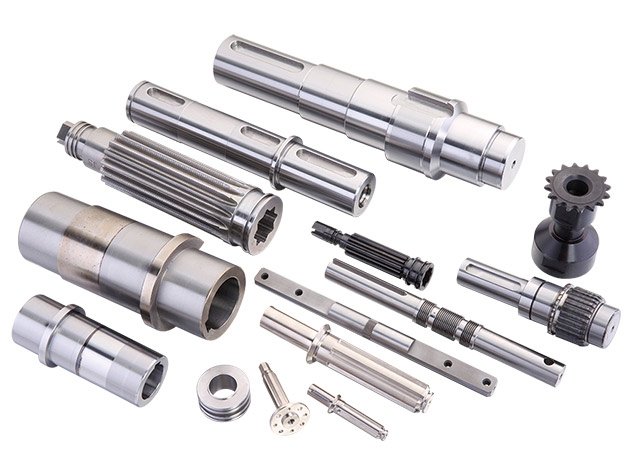
Our technical capabilities include 3-axis to 5-axis CNC machining, EDM, precision grinding, and industrial ceramics manufacturing. While an EV motor housing is usually aluminum or related lightweight alloy, the broader process knowledge matters. The same mindset used for tight-tolerance aerospace CNC machining and aircraft structural components applies to datum discipline, process validation, and failure prevention. The same cleanliness and documentation culture used for ISO-certified medical CNC components supports traceability and controlled production. The same sealing and flow-control experience used in hydraulic pump parts is relevant to coolant channels, valve interfaces, ports, and leak-critical surfaces in electrified powertrains.
An ODM-oriented approach also improves cost control. Tight tolerances are expensive when they are applied everywhere, but valuable when they protect function. During design for manufacturability, we help customers identify which dimensions require micron-level control and which can be opened without reducing performance. This may include changing datum references, adding machining access, modifying wall thickness, optimizing casting stock allowance, redesigning seal grooves, or selecting a more stable clamping strategy. The result is not merely a cheaper part; it is a more reliable production system.
Supply chain integration becomes especially important when EV programs globalize. An OEM may source castings in one region, machine prototypes in another, and assemble motors near the vehicle plant. Without unified quality planning, tolerance variation accumulates. As a partner to global OEM and Tier 1 suppliers, Dixin Technology can support consolidated manufacturing routes, supplier qualification, first article inspection, PPAP-style documentation where required, and continuous improvement loops. The goal is to reduce coordination burden while protecting launch schedules.
Industry Applications
Precision CNC machined EV motor housings are used across passenger vehicles, commercial vehicles, e-axles, hybrid drive units, industrial electric drives, two-wheelers, and off-highway electrification platforms. In passenger cars, noise, vibration, and harshness requirements are severe. Bearing alignment, motor concentricity, and end-cover sealing affect not only durability but also the perceived quality of the vehicle. In commercial vehicles, housings must handle higher loads, longer duty cycles, and more demanding thermal behavior. In e-axle modules, the motor housing may interface directly with gearbox and inverter structures, making datum strategy even more important.
Beyond automotive, the same engineering principles apply to robotics, energy storage systems with integrated drive units, electric pumps, aerospace electrification prototypes, and high-speed industrial spindles. Wherever an electric machine depends on small air gaps, accurate bearings, and efficient thermal transfer, housing precision becomes a performance enabler. This is why EV motor housing machining sits at the intersection of automotive volume production and high-precision engineering.
Several application-specific risks deserve attention. High-speed motors amplify imbalance and alignment errors. Compact motors increase heat flux and demand better contact between stator and housing. Integrated cooling increases leak path complexity. Lightweight structural designs reduce stiffness and make clamping distortion more likely. Multi-function housings that combine motor, inverter, and gearbox interfaces require more complex datum chains and often benefit from 5-axis machining to reduce accumulated setup error.
Surface finishing and post-processing also vary by application. Some housings need anodizing, conversion coating, impregnation, deburring, ultrasonic cleaning, or corrosion protection. Burr control is especially important near coolant channels, bearing seats, electrical passages, and assembly interfaces. A small chip or burr can damage a seal, contaminate a bearing, or interfere with stator insertion. Therefore, deburring and cleaning should be engineered process steps, not afterthoughts left to manual judgment.
From a purchasing perspective, buyers should evaluate potential suppliers on more than machine list and price. Key questions include: Can the supplier explain the datum structure? Can they demonstrate bore roundness and coaxiality capability? Do they understand casting variation? Can they control temperature during inspection? Do they have a documented tool life strategy? Can they link inspection results to production batches? Can they support engineering changes without losing traceability? These questions separate transactional vendors from long-term manufacturing partners.
Call to Action
EV motor housings demand a balance of precision machining, functional engineering, and disciplined supply chain execution. Tight tolerances are not just numbers on a drawing; they are commitments to motor efficiency, quiet operation, thermal performance, sealing reliability, and vehicle durability. Achieving them consistently requires early manufacturability input, controlled CNC processes, advanced inspection, and a supplier capable of integrating the full production route.
Dixin Technology, through IndustryApex CNC, supports global OEM and Tier 1 customers with precision CNC machining, ODM engineering support, and supply chain integration for demanding electromechanical components. If your team is developing an EV motor housing, e-axle component, cooling module, or other tight-tolerance machined assembly, we can help review drawings, optimize tolerances, plan production, and build a scalable manufacturing solution.
To discuss your project requirements, material selection, tolerance targets, or production ramp-up plan, contact the Dixin Technology engineering team. We welcome prototype, pilot, and production inquiries from OEMs and Tier 1 suppliers seeking a precision manufacturing partner with deep process control and supply chain capability.