- Shaft
- Molds&Tools
- Hydraulics And Pump
- Hair transplant needle
- Hydraulics And Pump
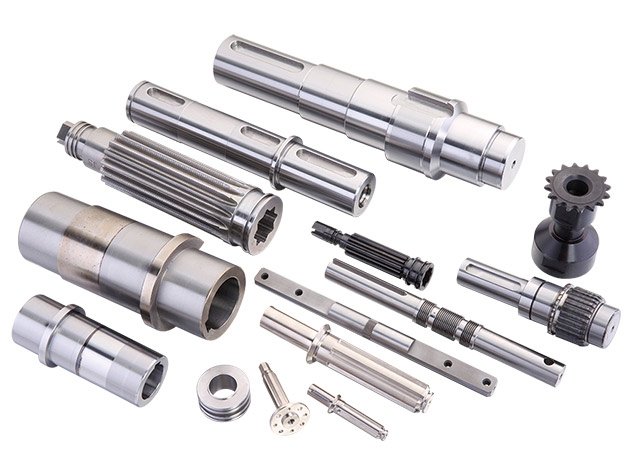
- Precision CNC Shaft Machining Manufacturer for High Performance Applications
- Energy Industry CNC Machining Parts Supplier
- Aerospace CNC Machining Parts Manufacturer
- Aerospace CNC Machining Parts Manufacturer
- Automotive & EV CNC Machining Parts Supplier for OEM and Tier 1
- Medical CNC Machining Parts Supplier for Precision Medical Devices

Ruby and Sapphire Component Machining for Fluid Control Systems: Engineering and Supply Chain Analysis

Ruby and Sapphire Component Machining for Fluid Control Systems: Engineering and Supply Chain Analysis
For global OEM and Tier 1 engineering teams, ruby and sapphire components are not exotic details; they are strategic wear surfaces that can determine the service life, accuracy, leakage control, and maintenance economics of advanced fluid control systems.
Executive Summary
Fluid control systems are becoming smaller, cleaner, more precise, and more chemically demanding. Whether the end product is a high-pressure pump, an analytical instrument, a medical dosing platform, an aerospace actuator, or a semiconductor process subsystem, the components that meter, seal, guide, and restrict fluid flow must operate under severe mechanical and chemical stress. Ruby and sapphire, both single-crystal aluminum oxide materials, offer a rare combination of hardness, dimensional stability, corrosion resistance, thermal resistance, low friction, and excellent surface finish potential.
For procurement and engineering leaders, the commercial question is not simply whether ruby or sapphire can perform. The key question is whether the supplier can consistently convert brittle crystalline material into production-ready seats, orifices, pistons, bearings, nozzles, guides, plungers, and sealing interfaces without introducing microcracks, edge chipping, subsurface damage, or uncontrolled dimensional variation. That is where manufacturing discipline becomes a supply chain advantage.
IndustryApex Technology, operating through IndustryApex CNC, positions itself as a precision manufacturing partner for high-value engineered components rather than a commodity machine shop. Through IndustryApex CNC, OEM buyers can connect ruby and sapphire component requirements with a broader precision manufacturing ecosystem that includes CNC machining, EDM, grinding, industrial ceramics, assembly-oriented engineering support, and supply chain coordination.
The strongest business case for ruby and sapphire components appears where downtime is expensive, fluids are aggressive, flow control tolerances are tight, and wear particles cannot be tolerated. In those environments, higher component cost can be offset by longer life, better repeatability, fewer warranty claims, and reduced maintenance intervention. For sourcing teams, the priority should be early design-for-manufacturing review, tolerance rationalization, inspection planning, and supplier process control before the program enters volume release.
Technical Deep Dive
Ruby and sapphire are both forms of single-crystal aluminum oxide. Ruby receives its red color from chromium content, while sapphire is typically clear or colorless in industrial use. In engineering terms, both materials deliver very high hardness, strong compressive strength, excellent chemical inertness, and resistance to abrasion. These properties make them attractive for fluid control components exposed to high-velocity media, repeated contact, chemically active liquids, and precision sliding or sealing conditions.
Common ruby and sapphire components in fluid control systems include valve seats, check balls, jewel bearings, micro-orifices, metering nozzles, flow restrictors, pistons, plungers, sleeves, guides, and sealing pads. In pumps and valves, these parts often function at the interface where mechanical load and fluid erosion concentrate. A stainless steel or polymer component may deform, gall, corrode, or wear, while ruby and sapphire can maintain geometry over a longer operating window.
The machining challenge begins with brittleness. These materials are extremely hard, but they do not behave like metals under cutting loads. Conventional chip formation is not the dominant process. Material removal usually depends on grinding, lapping, polishing, ultrasonic assistance, laser processing, or other abrasive methods. Poor process selection can create hidden subsurface fractures that may not fail during incoming inspection but can propagate under pressure cycling, vibration, or thermal shock.
For precision fluid control, edge quality is especially important. A micro-orifice with a chipped edge can change discharge behavior, disturb laminar flow, accelerate erosion, and undermine calibration. A valve seat with an inconsistent sealing land can increase leakage and reduce repeatability. A guide bore with poor roundness can create uneven contact pressure and shorten the life of a mating stem or plunger. Therefore, the process plan must consider not only nominal dimensions but also edge radius, surface roughness, cylindricity, concentricity, flatness, and inspection method.
Surface finish is another critical performance driver. Ruby and sapphire can be polished to very smooth surfaces, which is valuable for reducing friction, minimizing particle generation, and improving sealing behavior. However, over-polishing or uncontrolled lapping can distort geometry. The best manufacturing approach balances surface finish with functional tolerances. A sealing face, bore, and flow path do not always need the same finish, and unnecessary ultra-tight specifications can raise cost without improving system performance.
Thermal behavior must also be considered. Sapphire has strong thermal stability compared with many polymers and metals, but assembly design still matters. When sapphire or ruby is bonded, pressed, or captured inside a metal holder, differential thermal expansion can generate stress. This is especially relevant for pump modules, dosing assemblies, aerospace fluid systems, and analytical equipment that experience sterilization, hot fluids, cold starts, or environmental cycling.
From a manufacturing engineering standpoint, successful ruby and sapphire component production depends on process sequencing. Blank preparation, orientation, rough shaping, precision grinding, bore generation, edge conditioning, polishing, cleaning, inspection, and packaging must be controlled as one chain. Any single weak step can compromise yield. For example, a clean polished part can still fail if pre-polish grinding left deep subsurface damage. Likewise, a dimensionally correct orifice may be unsuitable if cleaning leaves abrasive residue that contaminates the customer’s fluid path.
The ODM & Supply Chain Advantage
The supply chain for ruby and sapphire components is different from the supply chain for standard turned metal parts. It requires coordination between material sourcing, brittle material processing, precision machining, surface finishing, inspection, packaging, and often integration with metallic or ceramic mating parts. For OEMs, managing each process step through separate vendors can create interface risk, longer lead times, fragmented accountability, and quality gaps during scale-up.
IndustryApex Technology’s core identity is that of a supply chain integrator and ODM solution provider. This matters because many ruby and sapphire projects begin as performance problems rather than fully mature drawings. An OEM may know that a stainless valve seat is wearing too quickly, that a metering component is drifting, or that a pump assembly is generating unacceptable particles. The ODM role is to translate that problem into a material selection, manufacturable geometry, tolerance scheme, inspection plan, and stable sourcing model.
The manufacturing edge comes from a fully controlled precision manufacturing system supported by ERP coordination and more than 30 years of experience. ERP discipline is not a marketing detail for global buyers; it affects traceability, order visibility, batch control, capacity planning, and delivery reliability. When components are small, high value, and application critical, missing traceability or unclear revision control can create significant operational exposure.
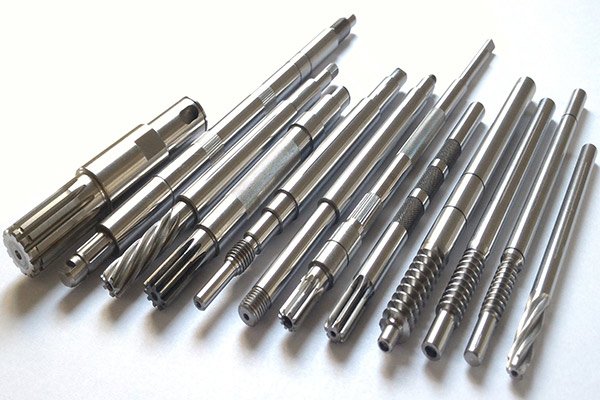
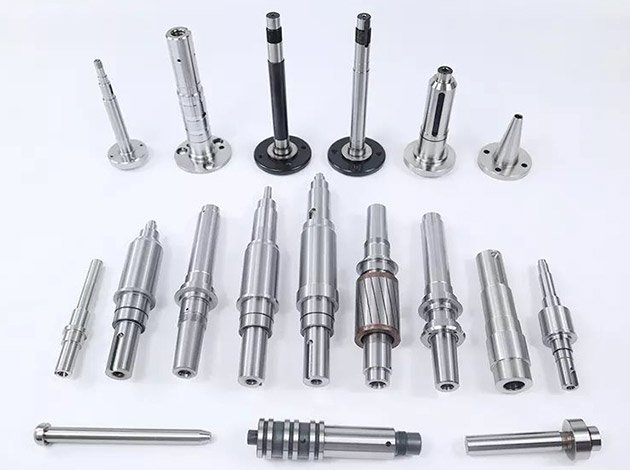
IndustryApex Technology’s process base includes 3-5 axis CNC machining, EDM, precision grinding, and industrial ceramics capability. While ruby and sapphire components may rely heavily on grinding and polishing, surrounding assemblies often include stainless steel, titanium, alloy steel, carbide, ceramics, or engineered polymers. A supplier that can support related precision components reduces coordination burden and improves design alignment across the whole assembly.
For global OEM and Tier 1 suppliers, the practical advantage is speed with control. Early supplier involvement can identify impossible tolerances, risky sharp corners, unsuitable press-fit concepts, poor inspection datum schemes, or cost drivers that do not improve field performance. The result is not simply a cheaper part. The goal is a more stable component that can move from prototype to pilot production and then into repeatable volume supply.
Supply chain resilience also depends on documentation quality. Engineering teams should expect material certificates where applicable, dimensional inspection reports, surface finish verification, cleaning specifications, and packaging controls suited to the fluid system. For medical, aerospace, and chemical applications, documentation and process repeatability can be as important as the physical part. IndustryApex’s broader machining background, including experience linked to aerospace CNC machining and medical component machining, supports the disciplined mindset required for regulated and high-reliability programs.
Cost control should be handled through engineering, not through uncontrolled simplification. The largest cost levers often include blank size, yield rate, achievable tolerance, surface finish requirement, edge specification, inspection time, and packaging class. A well-managed ODM supplier can propose changes that preserve function while reducing unnecessary process burden. For example, a nonfunctional OD may not need the same tight tolerance as a sealing bore, and a hidden edge may not require the same finish as a wetted metering edge.
Industry Applications
Ruby and sapphire components are used wherever fluid media, mechanical wear, and precision geometry intersect. In hydraulic and pump systems, they can improve the durability of check valves, metering seats, plungers, and flow restrictors. Industrial pumps operating with abrasive, corrosive, or high-pressure fluids often benefit from hard sealing interfaces that resist erosion and maintain stable flow behavior. IndustryApex’s experience in hydraulic pump parts provides an adjacent manufacturing foundation for these requirements.
In medical and life science equipment, ruby and sapphire can support precision dosing, analytical fluid paths, chromatography systems, sampling devices, and diagnostic instruments. The value proposition is not only wear resistance. Smooth, chemically inert surfaces can help reduce contamination risk and improve repeatability in microfluidic and dosing applications. These systems often demand careful cleaning, packaging, and documentation because the component may interact with reagents, biological samples, or highly sensitive analytical workflows.
Aerospace and defense fluid systems can also benefit from sapphire and ruby components in selected high-reliability control points. Fuel systems, hydraulic actuators, environmental control equipment, and sensing modules may require materials that maintain performance across temperature variation, vibration, and long service intervals. In this sector, suppliers must understand not only precision machining but also configuration control, documentation, and long-term repeatability.
In semiconductor and high-purity chemical processing, ruby and sapphire components are attractive because they resist many corrosive environments and generate low wear debris when properly finished. Flow restrictors, nozzles, precision seats, and guide elements must maintain consistency while exposed to aggressive chemistries or ultrapure media. Particle control and surface integrity become central purchasing criteria, not secondary quality details.
Instrumentation and analytical equipment are another strong application area. Flow meters, pressure regulators, mass spectrometry support systems, laboratory pumps, and high-precision dosing modules often rely on stable micro-scale geometry. In these devices, a small change in an orifice, seat, or bearing surface can alter calibration. Ruby and sapphire allow designers to specify hard, stable features that protect accuracy over repeated cycles.
Food, beverage, packaging, and specialty chemical systems may use sapphire or ruby where cleaning chemicals, repeated cycling, and process uptime justify the investment. Not every fluid control application requires these materials, but they become compelling where metallic wear, polymer swelling, or corrosion creates recurring maintenance cost.
Across these markets, the engineering decision should be application-specific. Ruby and sapphire are not universal replacements for metals, carbides, or ceramics. They are best applied at concentrated functional interfaces where high hardness, corrosion resistance, dimensional stability, and smooth finishing create measurable performance gains. The most effective projects begin with failure analysis, load review, fluid compatibility assessment, and realistic tolerance planning.
Call to Action
For OEM and Tier 1 teams evaluating ruby and sapphire components for fluid control systems, the next step should be an engineering review rather than a transactional quote request. Share the operating pressure, media, flow requirement, mating materials, duty cycle, temperature range, cleaning requirement, expected life, and current failure mode. With that information, IndustryApex Technology can help assess whether ruby, sapphire, industrial ceramics, carbide, stainless steel, titanium, or a hybrid assembly provides the best total value.
IndustryApex Technology supports customers as both a precision manufacturer and an ODM supply chain partner. The combination of 3-5 axis CNC machining, EDM, precision grinding, industrial ceramics capability, ERP-managed production control, and more than 30 years of manufacturing experience gives global buyers a practical route from concept review to repeatable supply.
To discuss a ruby or sapphire component program for pumps, valves, medical devices, analytical instruments, aerospace systems, or chemical fluid control assemblies, contact IndustryApex Technology through IndustryApex CNC Contact Us. Early collaboration can reduce redesign cycles, protect production timing, and convert difficult fluid control requirements into manufacturable, inspectable, and scalable precision components.