- Shaft
- Molds&Tools
- Hydraulics And Pump
- Hair transplant needle
- Hydraulics And Pump
- Precision CNC Shaft Machining Manufacturer for High Performance Applications
- Energy Industry CNC Machining Parts Supplier
- Aerospace CNC Machining Parts Manufacturer
- Aerospace CNC Machining Parts Manufacturer
- Automotive & EV CNC Machining Parts Supplier for OEM and Tier 1
- Medical CNC Machining Parts Supplier for Precision Medical Devices

The Future of Robotics Components: Micron-Level Precision in 2026

The Future of Robotics Components: Micron-Level Precision in 2026
Robotics is entering a phase where mechanical precision is no longer a supporting specification. It is becoming the main performance limiter. As robots move from fenced industrial cells into semiconductor equipment, surgical platforms, aerospace production, logistics automation, energy systems, and humanoid service environments, the component supply chain must deliver repeatable micron-level accuracy at commercial scale. For OEMs and Tier 1 suppliers, the question in 2026 is not simply whether a supplier can machine a complex part. The question is whether that supplier can control tolerance, material behavior, process data, inspection, documentation, and delivery risk across every production lot.
1. Executive Summary
The robotics component market in 2026 will be shaped by three simultaneous pressures: higher motion accuracy, shorter development cycles, and tighter supply chain qualification. Precision reducers, actuator housings, bearing seats, spline shafts, pump components, valve bodies, surgical robot joints, optical alignment parts, ceramic guides, and lightweight structural brackets increasingly require dimensional stability measured in microns rather than conventional machining tolerances. A few microns of error in concentricity, flatness, bore geometry, or surface texture can cause amplified effects in backlash, thermal drift, vibration, servo instability, seal leakage, or premature wear.
For global OEMs, this changes sourcing strategy. Robotics programs can no longer rely on fragmented suppliers where CNC machining, grinding, EDM, heat treatment, coating, inspection, and assembly support are disconnected. The future favors integrated manufacturing partners that understand engineering intent, process capability, material selection, and supply continuity together. IndustryApex Technology, operating through IndustryApex CNC at IndustryApex CNC precision manufacturing, is positioned for this shift as an ODM and supply chain integration partner for high-precision components. The company brings more than 30 years of manufacturing experience, controlled production systems, ERP-based workflow management, and capabilities across 3-5 axis CNC machining, EDM, precision grinding, and industrial ceramics.
The 2026 robotics component supply chain will reward suppliers that can do more than quote drawings. It will require early manufacturability review, tolerance stack-up feedback, material risk assessment, prototype-to-production transition planning, and stable documentation for international procurement teams. Micron-level precision is not a single machine capability. It is a manufacturing system discipline.
2. Technical Deep Dive
Robotics accuracy begins with the mechanical reference system. A robot arm, automated guided vehicle, semiconductor handling module, surgical positioning stage, or collaborative actuator may depend on multiple moving interfaces, but each interface ultimately relies on controlled geometry. Critical features include bearing bores, shaft journals, gear seats, dowel locations, sealing grooves, mounting faces, datum planes, keyways, spline profiles, ceramic wear surfaces, and fluid passages. In 2026, more robotics components will need geometric tolerancing that controls circularity, cylindricity, perpendicularity, parallelism, true position, runout, and surface roughness with tighter process windows than many conventional industrial parts.
One of the most important technical trends is the convergence of structural precision and motion precision. In earlier generations of automation equipment, high accuracy was often concentrated inside reducers, motors, linear guides, or sensors. Today, the surrounding machined components must also meet higher standards because compact robot architectures reduce tolerance forgiveness. Thin-wall actuator housings must remain stable after machining. Lightweight brackets must maintain stiffness without introducing resonance. Gearbox carriers must hold coaxial relationships after assembly and thermal cycling. Hydraulic or pneumatic robotic tooling must maintain internal sealing geometry while surviving repeated pressure pulses.
Material selection is also becoming more specialized. Aluminum alloys remain important where low mass and rapid motion are priorities, but titanium, stainless steel, tool steel, carbide, engineering plastics, and ceramics are increasingly used where corrosion resistance, wear life, stiffness, biocompatibility, electrical insulation, or thermal stability are required. The same supply base that supports 5-axis aerospace titanium aircraft parts is now relevant to advanced robotics because both sectors demand lightweight geometry, difficult materials, strict traceability, and repeatable high-accuracy machining.
Micron-level manufacturing also depends on managing process sequence. A robotic joint housing may require rough machining, stress relief, semi-finishing, precision boring, grinding, EDM for fine internal features, deburring under magnification, surface treatment, and final inspection. If the order is wrong, or if clamping strategy is inconsistent, the part may pass one dimension while failing functional assembly. Thermal expansion, tool wear, fixture repeatability, coolant control, machine calibration, and operator handling all influence final capability. This is why high-precision robotics sourcing should evaluate the supplier process map, not only the final inspection report.
Inspection is another dividing line. Standard calipers and basic coordinate checks are not enough for high-performance robotics programs. Mature suppliers must combine CMM measurement, roundness testing, surface roughness analysis, optical inspection, gauge design, air gauging where appropriate, and statistical process control. More importantly, they must translate measurement data into process correction. A supplier that only detects defects at final inspection will create cost and schedule risk. A supplier that tracks drift during production can protect both yield and delivery.
Surface integrity deserves specific attention. Many robotic components operate under repeated micro-motion, high cycle loading, lubrication limits, or contamination-sensitive conditions. Surface roughness, waviness, burr condition, edge break consistency, and residual stress affect performance as much as nominal size. For example, a shaft that is dimensionally correct but has poor surface finish can accelerate seal wear or bearing damage. A valve spool sleeve with poor roundness can create leakage or sticking. A precision ceramic guide with an uncontrolled edge can chip during assembly. These are manufacturing realities that must be addressed before mass production.
3. The ODM & Supply Chain Advantage
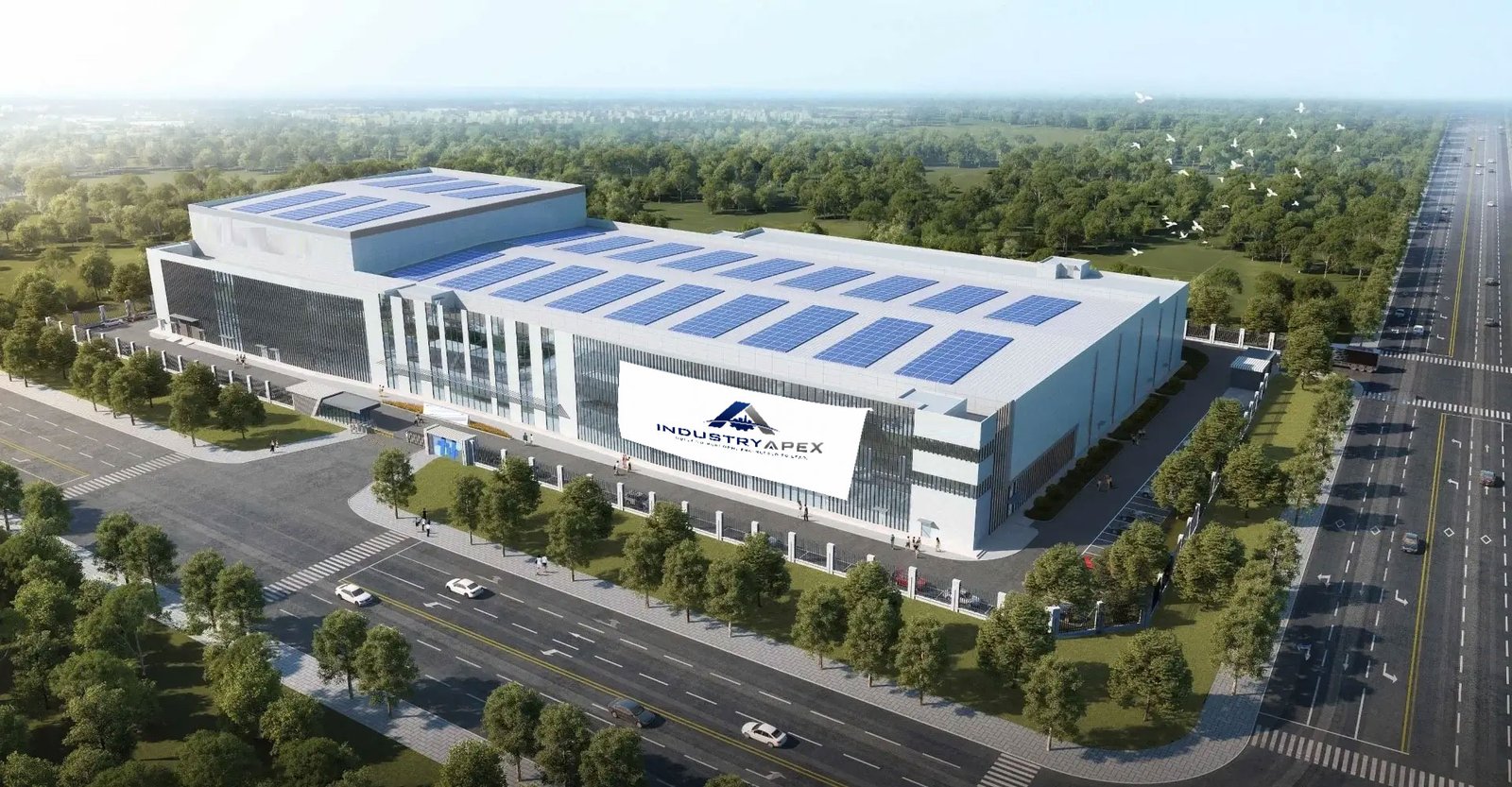
As robotics platforms become more complex, OEMs increasingly need suppliers that act as engineering partners, not transactional workshops. IndustryApex Technology serves this need through a core identity as a supply chain integrator and ODM solution provider. For global OEM and Tier 1 customers, this means IndustryApex can support product development from concept review and prototype machining through process validation, pilot production, volume manufacturing, and long-term supply management.
The advantage starts with manufacturing control. IndustryApex operates a fully controlled precision manufacturing system supported by ERP workflow management and more than 30 years of production experience. ERP discipline matters because robotics programs often involve many part numbers, engineering revisions, material batches, inspection plans, special processes, packaging requirements, and export documentation. Without system control, even a capable machining supplier can become a supply chain risk. With controlled routing, production visibility, and traceable documentation, procurement and engineering teams gain a clearer view of readiness, lead time, and quality status.
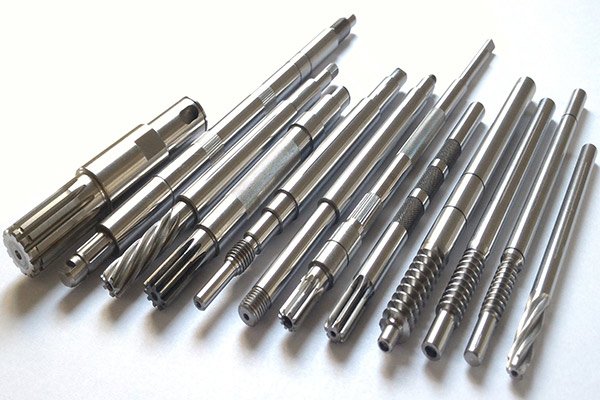
IndustryApex’s technical capabilities align with the next generation of robotics components. 3-axis and 5-axis CNC machining support complex housings, brackets, arm structures, actuator bodies, precision plates, and lightweight components with multi-face datums. EDM supports sharp internal forms, micro slots, hard materials, and features that are difficult to create with conventional cutting tools. Precision grinding supports micron-level flatness, parallelism, roundness, and surface finish on shafts, sleeves, spacers, mold-related tooling, and sliding interfaces. Industrial ceramics provide options for wear-resistant, thermally stable, electrically insulating, and chemically resistant robotic parts where metal is not the best engineering answer.
An ODM mindset also improves manufacturability. Robotics engineers often design for performance first, then discover that tolerance choices, material callouts, or feature geometry create cost and yield problems. A mature manufacturing partner can identify where a tolerance is truly function-critical and where a design can be adjusted to reduce risk without compromising performance. This is especially important for robotics startups moving from prototype to production, and for established OEMs expanding into new robot categories where supply stability will determine launch success.
Supply chain integration is equally important. A robotic system may require machined metal parts, ceramic wear components, ground shafts, EDM features, precision sleeves, surface finishing, cleaning, sub-assembly, and custom packaging. If these operations are sourced separately, the customer must manage handoffs, quality disputes, and schedule gaps. IndustryApex’s integrated approach reduces interface risk by coordinating manufacturing steps around the final functional requirement. This is the difference between buying parts and building a reliable production ecosystem.
4. Industry Applications
Robotics is not a single market. It is a set of demanding applications that share a need for accurate, reliable motion. In industrial automation, precision machined components support robot arms, end effectors, grippers, tool changers, servo housings, linear modules, rotary stages, and inspection equipment. These parts must combine strength, repeatability, and maintainability while supporting high duty cycles in factory environments. For logistics automation, mobile robots and warehouse systems require lightweight drivetrain parts, steering components, sensor mounts, structural frames, and wear-resistant guide elements that can survive continuous operation.
Medical robotics is one of the strongest drivers of micron-level component demand. Surgical robots, diagnostic automation, laboratory systems, and minimally invasive device platforms require high cleanliness, smooth finishes, traceability, and strict dimensional control. Components may need stainless steel, titanium, ceramics, or specialized engineering plastics depending on sterilization, biocompatibility, and mechanical requirements. IndustryApex’s experience with ISO certified CNC machining for medical components is relevant to customers developing high-precision robotic devices where quality documentation and material discipline are as important as machining accuracy.
Aerospace and defense robotics also require advanced component manufacturing. Inspection robots, assembly automation, unmanned systems, actuator modules, and precision tooling all demand lightweight strength and verified dimensional stability. Titanium, aluminum, stainless steel, and high-strength alloys are common, while 5-axis machining is often required for compact, complex geometry. The aerospace mindset of traceability, process control, and risk reduction is becoming a model for broader robotics manufacturing.
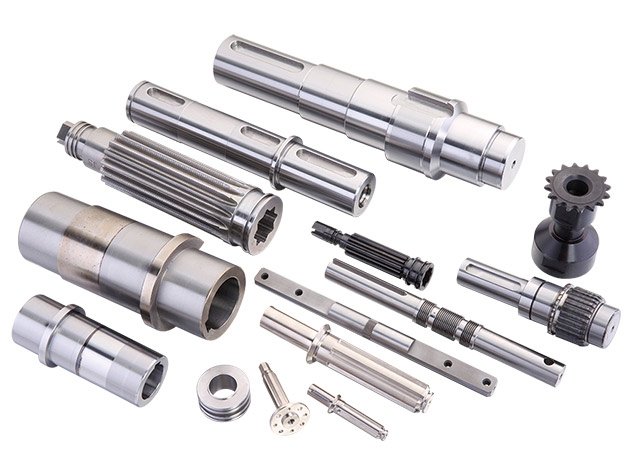
Fluid power is another critical area. Many robotic grippers, mobile platforms, heavy-duty automation systems, and industrial end effectors rely on hydraulic or pneumatic control. Valve spools, sleeves, pump parts, pistons, manifolds, nozzles, and sealing interfaces require high roundness, tight clearances, clean internal passages, and stable surface finish. IndustryApex’s capabilities in hydraulic pump parts and fluid control components support robotics applications where pressure stability and motion control are directly connected.
Semiconductor and electronics robotics will push precision even further. Wafer handling, optical alignment, test automation, and cleanroom motion platforms demand low particle generation, stable geometry, corrosion resistance, and extremely controlled surfaces. Industrial ceramics, precision grinding, and careful finishing are often essential in these environments. At the same time, optical and sensor-based robotic systems require stable mounts, lens barrels, alignment blocks, and precision frames where microns of deviation can affect calibration.
Across these applications, the core purchasing lesson is consistent: the cheapest component is rarely the lowest-cost component if it creates assembly adjustment, field failure, warranty exposure, or production delay. Robotics OEMs should evaluate suppliers by process capability, engineering communication, documentation strength, and ability to scale, not just quoted unit price.
5. Call to Action
In 2026, robotics manufacturers will compete on motion accuracy, reliability, speed to market, and supply resilience. Micron-level precision will be a business requirement, not a premium option. The companies that succeed will qualify suppliers capable of linking engineering intent to controlled manufacturing execution.
IndustryApex Technology, through IndustryApex CNC, supports global OEM and Tier 1 customers with integrated ODM services, precision CNC machining, EDM, grinding, industrial ceramics, and supply chain control. Whether your team is developing robotic actuators, precision housings, fluid control modules, surgical automation parts, aerospace robotics components, or high-repeatability assemblies, IndustryApex can help evaluate manufacturability and build a reliable production route.
To discuss drawings, tolerance requirements, materials, prototype needs, or long-term sourcing strategy, contact the engineering and supply chain team through IndustryApex Technology contact us. Early supplier involvement is the most practical way to reduce risk before production pressure arrives.