- Shaft
- Molds&Tools
- Hydraulics And Pump
- Hair transplant needle
- Hydraulics And Pump
- Precision CNC Shaft Machining Manufacturer for High Performance Applications
- Energy Industry CNC Machining Parts Supplier
- Aerospace CNC Machining Parts Manufacturer
- Aerospace CNC Machining Parts Manufacturer
- Automotive & EV CNC Machining Parts Supplier for OEM and Tier 1
- Medical CNC Machining Parts Supplier for Precision Medical Devices
The Role of Supply Chain Integrators in Agile Manufacturing

The Role of Supply Chain Integrators in Agile Manufacturing
Agile manufacturing depends on more than fast machines. It requires coordinated engineering, sourcing, production, quality assurance, logistics, and communication across the complete product lifecycle. For global OEMs and Tier 1 suppliers, supply chain integrators are becoming a strategic resource because they connect these activities through one accountable operating model.
Dixin Technology, operating through IndustryApex CNC, supports this model as a supply chain integrator and ODM solution provider. By combining product development support with a fully controlled precision manufacturing system, the company helps customers reduce coordination risk, shorten development cycles, and respond more effectively to changing demand.
1. Executive Summary
Agile manufacturing is the capability to adapt production quickly while maintaining quality, cost discipline, delivery reliability, and regulatory compliance. This capability is increasingly important as OEMs face shorter product lifecycles, volatile demand, regional sourcing requirements, material constraints, and increasingly complex component specifications.
A supply chain integrator addresses these pressures by managing the interfaces between engineering and manufacturing. Instead of requiring an OEM to coordinate separate design houses, machine shops, finishing suppliers, inspection laboratories, and logistics providers, the integrator creates a controlled route from concept to production. The result is a more coherent flow of technical information, materials, decisions, and accountability.
The value is particularly significant for precision components. A dimensional change can affect tooling, workholding, CNC programming, material purchasing, heat treatment, surface finishing, inspection plans, and delivery commitments. When these activities are managed independently, small changes can create delays and nonconformities. When they are managed within an integrated system, engineering changes can be evaluated quickly and implemented with traceability.
Dixin Technology brings more than 30 years of manufacturing experience to this operating model. Its capabilities include 3-5 axis CNC machining, EDM, precision grinding, and industrial ceramics, supported by ERP-based production control. This combination enables global OEMs and Tier 1 suppliers to access a responsive manufacturing partner while retaining the technical rigor expected in demanding industries.
2. Technical Deep Dive
The technical foundation of agile manufacturing is information continuity. Product data must move accurately from customer specification to quotation, process planning, procurement, production, inspection, and shipment. A supply chain integrator creates this continuity by establishing common ownership of the data and the decisions that depend on it.
In a conventional fragmented supply chain, engineering may issue a drawing to a purchasing team, purchasing may select a machine shop based primarily on price, and the machine shop may outsource several downstream operations. Each handoff introduces the possibility of inconsistent revisions, incomplete requirements, unclear tolerances, and delayed feedback. The customer often discovers a problem only after production has started.
An integrated model changes the sequence. The manufacturing partner reviews design intent, identifies difficult features, confirms material and tolerance requirements, evaluates inspection methods, and develops a process route before committing to production. Manufacturing engineering feedback can then inform the customer while changes are still inexpensive to make. This design-for-manufacturability loop is one of the main mechanisms through which integrators improve agility.
ERP is another critical element. An effective ERP environment connects quotations, bills of materials, routings, purchase orders, work orders, inventory, quality records, and shipment status. For the OEM, this creates a more reliable view of project progress. For the manufacturer, it supports capacity planning, material allocation, scheduling, and traceability. ERP does not replace engineering judgment, but it makes the operational consequences of that judgment visible across the organization.
Precision machining also requires a capability-based approach to routing. Complex geometries may require 5-axis interpolation to reduce setups and preserve positional accuracy. Tight internal features may be better suited to EDM. Critical flatness, cylindricity, or surface-finish requirements may require precision grinding after heat treatment. Industrial ceramic components may demand specialized tooling, fixturing, machining parameters, and inspection methods because their brittleness and hardness differ substantially from metallic materials.
A supply chain integrator can select and sequence these technologies within one manufacturing plan. This is important because agility is not simply the ability to start a job quickly. It is the ability to make the right process decision early, reduce unnecessary handoffs, and maintain stable quality as the product moves from prototype to repeat production.
Quality planning must also be integrated into the process rather than added at the end. The supplier should identify critical-to-function characteristics, define measurement methods, establish first-article requirements, and preserve material and process records. For regulated or safety-critical products, this may include documented revision control, inspection reports, certificates of conformity, and batch traceability. A coordinated quality system reduces the risk that production speed will undermine product assurance.
Agility further depends on supply chain visibility. Material availability, subcontracted operations, machine capacity, tooling lead times, and inspection resources can all constrain delivery. An integrator monitors these dependencies through a single program structure and can adjust sequencing, allocate alternative equipment, or propose a technically acceptable process change. This is more effective than waiting for a late-stage supplier escalation.
For OEM procurement teams, this integrated approach changes the evaluation criteria for a manufacturing partner. Unit price remains relevant, but it should be assessed alongside engineering responsiveness, process depth, traceability, capacity flexibility, supplier governance, and total cost of ownership. A lower quoted price can become expensive if it produces repeated revisions, quality escapes, missed launches, or excessive administrative effort.
3. The ODM & Supply Chain Advantage
The supply chain integrator model becomes more powerful when combined with original design manufacturing capability. As an ODM solution provider, Dixin Technology can participate earlier in the product development cycle and help convert functional requirements into manufacturable components and assemblies. This does not mean replacing the OEM’s product ownership. It means adding manufacturing expertise where it can improve performance, cost, reliability, and launch readiness.
Dixin Technology’s core identity is that of a supply chain integrator and ODM solution provider. Its manufacturing edge is a fully controlled precision manufacturing system supported by ERP and more than 30 years of experience. This structure allows customer requirements to be managed through a coordinated process rather than through disconnected supplier relationships.
For global OEMs and Tier 1 suppliers, the advantage is concentrated accountability. A single technical partner can coordinate drawing review, material sourcing, machining, EDM, grinding, ceramic processing, inspection, packaging, and delivery planning. This reduces the number of interfaces that the customer must manage and creates a clearer path for resolving technical or schedule issues.
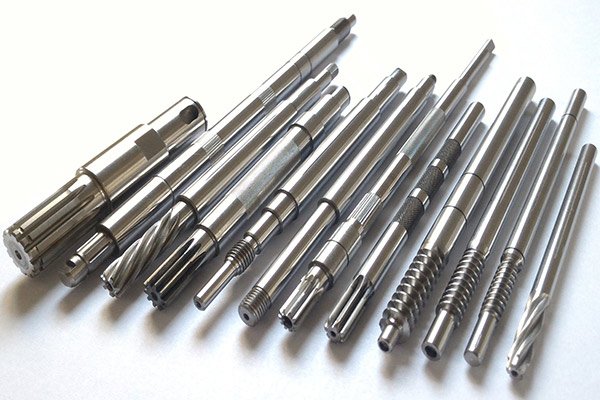
The technical portfolio includes 3-5 axis CNC machining for complex metallic components, EDM for intricate or difficult-to-machine features, precision grinding for high-accuracy surfaces, and industrial ceramics for applications requiring electrical insulation, wear resistance, thermal stability, or chemical resistance. These capabilities can be combined according to the functional requirements of the part rather than limited by the narrow scope of one process supplier.
ODM engagement can also improve cost control. During design review, engineers may identify opportunities to reduce setup count, standardize tooling, improve material utilization, simplify inspection, or eliminate unnecessary tolerances. These changes can reduce recurring production cost without compromising the component’s intended function. Early process feedback is usually more valuable than attempting to recover cost after a design has been released.
Another advantage is scalability. A strong integrator should be able to support prototype quantities, pilot builds, low-volume production, and stable repeat orders with appropriate process controls at each stage. Prototypes may require rapid programming and close engineering collaboration, while mature production requires repeatable routings, controlled purchasing, documented inspection, and capacity planning. The underlying system should support both without forcing the customer to change suppliers at every phase.
Risk management is equally important. An integrator can identify single-source materials, long-lead tooling, subcontracting dependencies, and capacity bottlenecks before they affect the launch plan. It can also help establish approved alternatives, safety stock policies, and escalation procedures. For organizations managing multiple global programs, this proactive visibility can protect delivery performance and reduce the hidden cost of supply chain disruption.
The outcome is not merely supplier consolidation. It is better control of the manufacturing system. When engineering, procurement, production, quality, and logistics work from aligned information, the OEM gains a more dependable path from product intent to delivered part.
4. Industry Applications
Supply chain integration is especially valuable in industries where part complexity, documentation, and delivery consequences are high. Aerospace programs require lightweight structural components, complex titanium parts, close dimensional control, and extensive traceability. A coordinated manufacturing partner can support these requirements through controlled machining, inspection planning, material certification, and production documentation. Dixin Technology’s aerospace CNC machining and titanium aircraft parts capabilities illustrate how integrated technical support can serve demanding aerospace supply chains.
Medical device manufacturers face similarly strict expectations, but with additional considerations related to biocompatibility, cleanliness, surface condition, and product validation. Precision implants, surgical instruments, and device components may require complex geometries and consistent repeatability across production lots. OEMs can use ISO-certified CNC machining for medical components when they need a manufacturing partner that understands both technical accuracy and documented process control.
Hydraulic and fluid-control equipment depends on reliable interfaces, controlled clearances, pressure containment, and wear-resistant surfaces. Valve spools, sleeves, pump components, and related parts often require precision turning, grinding, honing, or specialized finishing. An integrated supplier can coordinate material selection, machining, inspection, and delivery for hydraulic pump parts and other fluid-control components.
Industrial automation, energy equipment, semiconductor systems, optics, drivetrain products, and construction machinery also benefit from this approach. Each sector has different functional requirements, but the underlying challenge is similar: multiple technical and supply chain decisions must remain aligned while product demand and design requirements change.
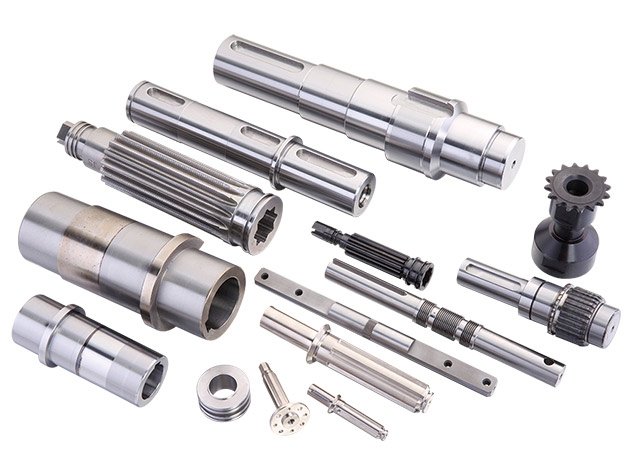
For Tier 1 suppliers, integration can strengthen their own customer commitments. A capable manufacturing partner provides additional process depth and capacity without requiring the Tier 1 supplier to build every specialized capability internally. This is particularly useful for mixed portfolios containing large structural parts, small precision components, ceramic elements, tooling, and replacement items.
When selecting an integrator, buyers should assess engineering communication, ERP visibility, quality documentation, equipment capability, material control, change management, capacity planning, and experience with comparable tolerances and materials. They should also clarify who owns process validation, how deviations are managed, and how delivery risks are reported. These questions reveal whether a supplier is prepared to act as a strategic manufacturing partner or only as a transactional job shop.
5. Call to Action
Agile manufacturing requires a supply chain that can absorb change without losing control. A supply chain integrator connects engineering, precision manufacturing, quality, sourcing, and logistics so that OEMs and Tier 1 suppliers can move from design intent to production with fewer delays and clearer accountability.
Dixin Technology combines ODM support, more than 30 years of manufacturing experience, ERP-enabled control, and capabilities spanning 3-5 axis CNC machining, EDM, precision grinding, and industrial ceramics. To evaluate a component, assembly, or new product program, visit the IndustryApex CNC home page or contact Dixin Technology with your drawings, specifications, material requirements, target volumes, and delivery objectives. Early technical collaboration can identify manufacturing opportunities, reduce supply chain risk, and create a more responsive production strategy.