- Shaft
- Molds&Tools
- Hydraulics And Pump
- Hair transplant needle
- Hydraulics And Pump
- Precision CNC Shaft Machining Manufacturer for High Performance Applications
- Energy Industry CNC Machining Parts Supplier
- Aerospace CNC Machining Parts Manufacturer
- Aerospace CNC Machining Parts Manufacturer
- Automotive & EV CNC Machining Parts Supplier for OEM and Tier 1
- Medical CNC Machining Parts Supplier for Precision Medical Devices

Titanium Implants: Challenges and Solutions in Medical CNC Machining

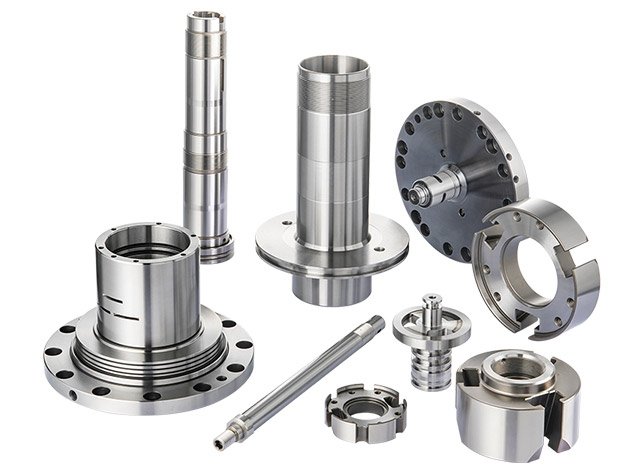
Titanium Implants: Challenges and Solutions in Medical CNC Machining
Titanium remains one of the most important materials in implantable medical devices because it combines high strength, low density, corrosion resistance, and excellent biocompatibility. However, these same properties make titanium implants demanding to machine, inspect, clean, and deliver at production scale. For global medical OEMs and Tier 1 suppliers, successful titanium implant manufacturing depends on much more than selecting a capable CNC machine. It requires disciplined process engineering, validated quality controls, reliable material traceability, and a supply chain partner able to manage design, manufacturing, and production continuity as one system.
1. Executive Summary
Medical implants such as bone plates, spinal components, dental abutments, orthopedic fixation systems, and joint replacement parts often require complex geometries, tight tolerances, controlled surface conditions, and documented compliance. Titanium alloys, especially Ti-6Al-4V, are widely used because they offer a strong performance-to-weight ratio and support long-term use in demanding physiological environments. Yet titanium is also a poor conductor of heat, chemically reactive at elevated temperatures, and prone to work hardening. These characteristics can accelerate tool wear, cause dimensional drift, damage surfaces, and increase the risk of contamination.
The core machining challenge is controlling heat and cutting forces while preserving part geometry and material integrity. Solutions include stable workholding, sharp and appropriately coated tools, conservative cutting parameters, high-pressure coolant where suitable, and continuous monitoring of tool condition. These technical measures must be supported by a quality system that covers incoming material certification, in-process inspection, final dimensional verification, surface roughness control, cleaning, packaging, and lot-level traceability.
For buyers, the most effective sourcing strategy is to evaluate a manufacturing partner as an integrated engineering and supply chain resource. Dixin Technology, operating through IndustryApex CNC, combines more than 30 years of precision manufacturing experience with ERP-controlled production, multi-axis CNC machining, EDM, precision grinding, and industrial ceramics. This structure allows global OEM and Tier 1 customers to reduce handoffs, improve change control, and build a more resilient supply chain for medical components.
2. Technical Deep Dive
Titanium implant machining begins with material selection and design-for-manufacturing analysis. Common grades have different mechanical and processing characteristics. Ti-6Al-4V is frequently selected for orthopedic and dental applications, while commercially pure titanium may be used where ductility or specific biological performance is prioritized. The selected grade, mill condition, billet or bar size, and heat-treatment history should be documented before production begins. Material certificates must remain linked to the production lot and, where required, to individual serialized parts.
Heat Management and Tool Wear
During cutting, titanium retains a large proportion of generated heat near the cutting zone instead of conducting it into the workpiece and chips. High localized temperatures can soften the tool edge, accelerate flank wear, and promote chipping. Titanium also has a tendency to react with tool materials at elevated temperatures. Once an edge begins to degrade, the process can produce burrs, poor surface finish, dimensional error, and altered surface conditions.
Machining parameters therefore need to be developed around tool engagement and heat control rather than simply maximizing material removal rate. Sharp carbide tools, suitable helix geometry, adequate chip evacuation, and consistent coolant delivery are essential. Radial engagement should be controlled to avoid sudden load changes, while feed rates must remain high enough to prevent rubbing and excessive work hardening. Tool life should be established through documented trials and then monitored using a defined replacement policy instead of relying only on operator judgment.
Complex Geometry and Multi-Axis Control
Many implants include anatomical contours, porous interfaces, undercuts, tapered surfaces, bone-contact features, and small radii. These forms can be difficult to produce with three-axis machining alone. Five-axis CNC equipment can maintain more favorable tool orientation, shorten setups, and improve access to complex surfaces. It can also reduce the number of datum transfers, which is important when multiple functional features must remain concentric or aligned.
However, five-axis capability does not automatically guarantee implant accuracy. The machine must be calibrated, the post-processor must be verified, and the fixture must be designed to control distortion without damaging the component. Thermal growth, rotary-axis positioning error, tool deflection, and workholding repeatability should be evaluated during process qualification. For high-value implants, a stable process normally includes first-article approval, defined inspection points, and statistical monitoring of critical dimensions.
Surface Integrity, Burrs, and Contamination
Surface integrity is a functional requirement, not only an appearance requirement. Scratches, torn material, recast layers, burrs, embedded particles, or excessive roughness can interfere with assembly, affect fatigue performance, or create unacceptable conditions for cleaning and sterilization. The required surface depends on the implant zone. Bone-contact surfaces may be intentionally textured or treated, while articulating or mating surfaces may require a highly controlled finish.
Deburring must be matched to the geometry and material. Aggressive manual finishing can change edge profiles or remove material from critical features. Precision grinding, controlled abrasive processes, or carefully validated finishing operations may be more appropriate for specific surfaces. When EDM is used for small features or difficult geometries, the resulting heat-affected or recast layer must be evaluated and removed when the specification requires it.
Cleanliness is equally important. Titanium parts should be protected from cross-contamination by incompatible metals, shop debris, oils, and handling materials. Dedicated or controlled tooling, approved cleaning chemistry, filtered rinse water, ultrasonic cleaning where appropriate, and clean packaging can help maintain product condition. The complete cleaning process should be validated against the customer specification and the intended downstream sterilization process.
Inspection and Documentation
Medical CNC machining requires inspection planning that connects product requirements to measurable process controls. Coordinate measuring machines can verify three-dimensional profiles, hole locations, datums, and positional tolerances. Optical systems are useful for small features and edge conditions, while surface profilometers can quantify roughness. Critical dimensions may require in-process probing to detect drift before a complete batch is produced.
A robust documentation package may include material certificates, machine and equipment calibration records, inspection reports, first-article documentation, process parameters, tool-life records, nonconformance reports, and certificates of conformity. The exact requirements depend on the customer, market, and regulatory framework, but the principle is consistent: every critical decision should be traceable and reviewable.
3. The ODM & Supply Chain Advantage
Medical device manufacturers increasingly need suppliers that contribute engineering value before the purchase order is released. A part may be technically machinable but still carry avoidable cost, lead-time, or quality risk because of unnecessary tolerances, inaccessible features, inefficient datum schemes, or difficult inspection requirements. An ODM-oriented supplier can review the design, identify these risks, and propose practical improvements while preserving the device’s clinical and functional intent.
Dixin Technology’s core identity is that of a supply chain integrator and ODM solution provider. This means the relationship can extend from design review and material planning through process development, production, inspection, finishing, packaging, and delivery coordination. The goal is to give global OEM and Tier 1 suppliers one accountable manufacturing interface for complex precision components rather than forcing them to coordinate multiple disconnected vendors.
The manufacturing edge is a fully controlled precision manufacturing system supported by ERP and more than 30 years of experience. ERP control improves visibility across quotations, engineering revisions, purchasing, work orders, inventory, inspection status, and shipment planning. For medical programs, this operational discipline supports revision control and helps prevent obsolete drawings, uncontrolled substitutions, or incomplete production records from entering the process.
Dixin Technology’s technical capabilities include three- to five-axis CNC machining, EDM, precision grinding, and industrial ceramics. This combination is valuable when a medical assembly contains multiple material types or requires secondary processes beyond standard milling and turning. Complex titanium implant bodies can be machined on multi-axis equipment, small or intricate features can be supported by EDM, and precision grinding can address demanding dimensional or surface requirements. Industrial ceramics can support specialized tooling, wear-resistant components, or adjacent medical and laboratory applications where metallic materials are unsuitable.
Supply chain resilience also depends on early capacity planning. Titanium bar, billet, forgings, and specialty finishing services may have longer lead times than conventional engineering materials. A qualified partner should assess material availability, forecast demand, safety-stock strategy, inspection capacity, and backup process options before volume production begins. This is particularly important for OEMs managing product launches, regional regulatory approvals, or programs with strict continuity requirements.
When evaluating a partner, buyers should ask how engineering changes are approved, how material lots are segregated, how subcontracted processes are controlled, and how nonconforming product is contained. They should also confirm whether inspection data can be supplied in a usable format and whether the supplier can scale from prototypes to repeat production without changing the validated process unnecessarily. These questions reveal whether the supplier is operating as a manufacturing system or simply selling machine time.
4. Industry Applications
Titanium CNC machining supports a broad range of medical applications. In orthopedics, manufacturers use titanium for bone plates, intramedullary components, spinal cages, trauma fixation devices, and custom patient-specific implants. These parts may combine curved anatomical surfaces with threaded holes, locking interfaces, countersinks, and porous or textured regions. Dimensional accuracy and surface condition must be controlled together because assembly performance and biological interaction can depend on both.
Dental applications include implant bodies, abutments, healing components, and customized prosthetic interfaces. These parts are often small, with fine threads, tight mating requirements, and demanding cosmetic or surface specifications. Stable fixturing and high-resolution inspection are particularly important because a small dimensional error can affect seating, alignment, or clinical workflow.
Instruments and surgical systems also benefit from titanium’s strength and corrosion resistance. Examples include instrument handles, cutting guides, holders, trial components, and specialized tools used in minimally invasive procedures. Not every medical part is implanted, but many still require controlled cleanliness, repeated sterilization compatibility, and reliable operation. Dixin Technology’s experience with ISO-certified CNC machining for medical components is relevant to these requirements.
Medical manufacturing programs can also benefit from capabilities developed in adjacent industries. The precision methods used for five-axis titanium aerospace parts can inform fixture design, thermal control, and multi-axis process planning for complex implant geometries. Similarly, fluid-control experience, including hydraulic pump parts, reinforces the importance of controlled clearances, repeatable surfaces, and dependable inspection for precision assemblies.
The same engineering approach can be applied to prototype and low-volume programs. Medical OEMs often need rapid design iteration before committing to a validated production configuration. A supplier able to support prototype machining, design feedback, inspection, and controlled revision release can shorten development cycles while preserving a clear path to production. For established products, the focus shifts toward repeatability, capacity, cost control, and uninterrupted supply.
Across all applications, the best results come from aligning clinical function, material behavior, machining strategy, and quality documentation from the start. A supplier should be involved early enough to influence the manufacturing plan, but disciplined enough to preserve design authority and regulatory requirements.

5. Call to Action
Titanium implants demand a manufacturing partner that understands materials, machining physics, inspection, documentation, and supply chain execution as connected requirements. Dixin Technology provides ODM and precision manufacturing support for global OEMs and Tier 1 suppliers, with ERP-controlled operations, more than 30 years of experience, and capabilities spanning 3-5 axis CNC machining, EDM, precision grinding, and industrial ceramics.
To discuss a titanium implant, surgical instrument, or high-precision medical component, visit the IndustryApex CNC home page to review manufacturing capabilities and application coverage. For drawings, prototypes, production programs, or supply chain requirements, contact Dixin Technology with the material grade, expected volumes, critical tolerances, surface requirements, inspection expectations, and target delivery schedule. Early technical collaboration can reduce machining risk, improve manufacturability, and establish a more reliable path from design release to repeatable medical production.