- Shaft
- Molds&Tools
- Hydraulics And Pump
- Hair transplant needle
- Hydraulics And Pump
- Precision CNC Shaft Machining Manufacturer for High Performance Applications
- Energy Industry CNC Machining Parts Supplier
- Aerospace CNC Machining Parts Manufacturer
- Aerospace CNC Machining Parts Manufacturer
- Automotive & EV CNC Machining Parts Supplier for OEM and Tier 1
- Medical CNC Machining Parts Supplier for Precision Medical Devices

Titanium Implants: Challenges and Solutions in Medical CNC Machining

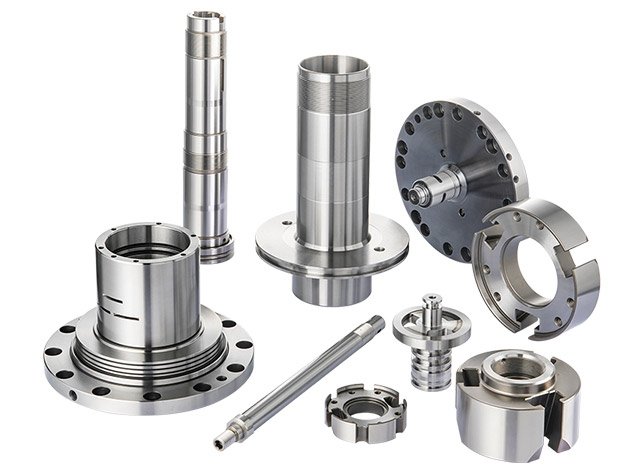
Titanium Implants: Challenges and Solutions in Medical CNC Machining
1. Executive Summary
Titanium has become the gold standard for orthopedic, dental, and cardiovascular implants, with the global titanium medical device market projected to surpass USD 18 billion by 2030. Its biocompatibility, corrosion resistance, and favorable strength-to-weight ratio make it irreplaceable for load-bearing implants such as hip stems, spinal cages, bone screws, and cranial plates. Yet the very properties that make titanium ideal for the human body, low thermal conductivity, high chemical reactivity at elevated temperatures, and a tendency to work-harden, also make it one of the most demanding materials in the precision machining industry.
For OEMs and Tier 1 medical device suppliers, the consequences of suboptimal machining are severe: surface defects can compromise osseointegration, microscopic burrs can trigger inflammatory responses, and dimensional drift can violate ISO 13485 and FDA 21 CFR Part 820 traceability requirements. The cost of a single non-conforming lot, factoring in regulatory documentation, recall exposure, and lost sterile inventory, can erase the margin on thousands of units.
This analysis examines the core technical obstacles in titanium implant CNC machining, namely tool wear, thermal management, surface integrity, and burr-free finishing, and outlines how an integrated ODM supply chain model resolves them. Drawing on more than three decades of precision manufacturing expertise, IndustryApex Technology (IndustryApex CNC) demonstrates how full-process control, from raw bar inspection to passivation and final packaging, delivers the consistency that medical OEMs require.
2. Technical Deep Dive: The Machining Challenges of Medical-Grade Titanium
Medical implants are predominantly produced from Ti-6Al-4V ELI (Grade 23) and commercially pure Grade 2 titanium, both governed by ASTM F136 and ASTM F67 specifications. Machining these alloys to medical tolerances introduces four interrelated challenges.
2.1 Aggressive Tool Wear
Titanium’s low thermal conductivity, roughly one-seventh that of aluminum, concentrates cutting heat at the tool-chip interface. Combined with titanium’s chemical affinity for most cutting tool materials at temperatures above 500 degrees Celsius, this drives diffusion wear, adhesive welding, and rapid flank deterioration. Standard carbide grades that perform well on stainless steel may last only minutes on Ti-6Al-4V. The solution lies in fine-grain submicron carbide substrates with AlTiN or TiAlSiN PVD coatings, paired with conservative cutting speeds (40 to 80 m/min for roughing) and aggressive feed rates that reduce time-in-cut per edge.
2.2 Thermal and Vibration Management
Heat that cannot escape through the chip migrates into the workpiece, distorting thin-walled geometries common in spinal cages and bone plates. Titanium’s low modulus of elasticity (around 110 GPa, half that of steel) also amplifies deflection and chatter, particularly in deep-pocket milling. High-pressure through-tool coolant at 70 bar or above, trochoidal toolpaths that maintain constant radial engagement, and rigid HSK or polygon spindle interfaces are non-negotiable for repeatable accuracy below 10 microns.
2.3 Surface Integrity and Osseointegration
For implants intended to bond with bone, surface topography is a clinical parameter, not a cosmetic one. Excessive feed marks, smeared metal, or subsurface alpha-case contamination can impair cell adhesion. Conversely, controlled micro-roughness in the Ra 0.4 to 1.6 micron range often promotes osseointegration. Achieving this consistently requires finishing strategies tuned to the implant family, ball-nose finishing for acetabular cups, precision grinding for femoral stems, and EDM for complex internal features such as cannulated screws.
2.4 Burr-Free Edges and Cleanability
Even a 50-micron burr on a pedicle screw thread is a clinical liability. Deburring titanium without rounding sharp functional edges or contaminating the surface with abrasive media demands validated processes, electrochemical deburring, cryogenic deflashing, or robotic brush deburring with documented cycle parameters, followed by ultrasonic cleaning, citric acid passivation per ASTM F86, and Class 7 or Class 8 cleanroom packaging.
3. The ODM and Supply Chain Advantage
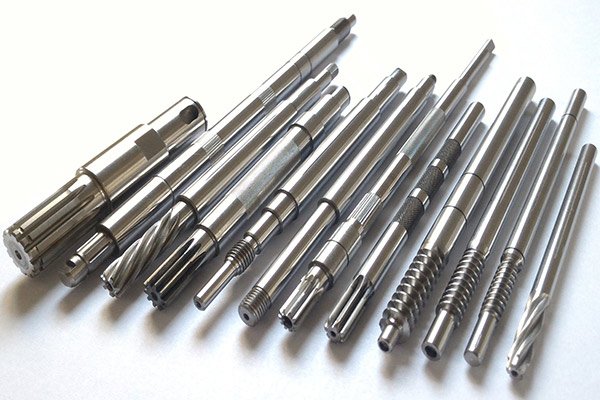
Solving the titanium machining equation at the level of a single CNC cell is feasible. Solving it across thousands of SKUs, multiple regulatory jurisdictions, and a multi-year product lifecycle is a supply chain problem. This is where the ODM model offered by IndustryApex Technology delivers measurable advantage.
3.1 Core Identity: Integrator, Not Job Shop
IndustryApex operates as a supply chain integrator and ODM solution provider for global OEMs and Tier 1 suppliers. Rather than quoting a print and walking away, our engineering team engages from the DFM stage, advising on geometry adjustments that reduce cycle time, tooling cost, and inspection burden without altering clinical performance. Customers receive a single point of accountability for raw material certification, machining, surface treatment, and logistics.
3.2 Manufacturing Edge: Fully Controlled Precision System
Over thirty years of precision manufacturing experience are codified into a fully controlled production system, governed end-to-end by an integrated ERP that tracks every bar of titanium from mill certificate to shipping carton. Lot genealogy, tool life data, in-process SPC measurements, and final inspection records are linked to the part serial number, satisfying the traceability demands of ISO 13485, MDR, and FDA audits without manual reconciliation.
3.3 Technology Capabilities Under One Roof
Medical implant programs rarely rely on a single process. IndustryApex maintains 3-axis and 5-axis CNC milling and turning centers for complex geometries, wire and sinker EDM for fine features and hardened post-treatment work, precision grinding for sub-micron form tolerances, and industrial ceramics machining for instrument components requiring electrical isolation or extreme wear resistance. Co-locating these capabilities eliminates the inter-supplier handoffs where most defects and delays originate.
3.4 Target Audience: Global OEM and Tier 1 Partners
Our customer base consists of global medical device OEMs and Tier 1 component suppliers who measure suppliers on PPM defect rates, on-time-in-full delivery, and engineering responsiveness. The same disciplines that serve these accounts are extended to adjacent regulated industries, including aerospace titanium structural components and hydraulic pump precision parts, providing a cross-pollination of process knowledge that pure medical job shops cannot match.
4. Industry Applications
The technical and supply chain capabilities described above translate into concrete deliverables across the medical device landscape.
4.1 Orthopedic Implants
Hip stems, knee components, bone plates, and pedicle screws form the largest titanium implant segment. IndustryApex produces these on 5-axis machining centers with in-process probing, achieving form tolerances within 5 microns and surface finishes tuned for both polished articulating zones and roughened bone-contact areas. Detailed capabilities are documented on our ISO-certified medical CNC machining page.
4.2 Spinal Cages and Cranial Plates
Lattice-structured spinal cages and patient-specific cranial plates demand 5-axis simultaneous machining of complex curved surfaces, often with thin walls below 0.8 mm. Vibration-controlled toolpaths and high-pressure coolant strategies allow these geometries to be milled rather than additively built, preserving material isotropy and avoiding the post-processing burdens associated with powder-bed fusion.
4.3 Dental Implants and Abutments
Dental work pushes the small end of the size spectrum, with internal hex features and conical interfaces toleranced to a few microns. Swiss-type turning combined with precision grinding delivers the dimensional stability required for reliable abutment seating and long-term clinical performance.
4.4 Surgical Instruments and Trauma Hardware
Beyond implantables, titanium is increasingly chosen for reusable surgical instruments because of its weight, sterilization compatibility, and non-magnetic properties. Drill guides, retractors, and trial components benefit from the same EDM and grinding capabilities used for implant production, allowing OEMs to consolidate their supplier base.
4.5 Cardiovascular and Neurovascular Components
Heart valve frames, pacemaker housings, and neurostimulator enclosures combine titanium with industrial ceramics and noble metals. IndustryApex’s parallel competence in ceramic machining and precision assembly supports OEMs developing next-generation active implantable devices.
5. Call to Action: Engineer Your Next Titanium Program with IndustryApex
Titanium implants reward suppliers who treat machining as a regulated, data-driven discipline rather than a commodity service. The combination of process depth, ERP-backed traceability, and cross-industry experience that defines IndustryApex Technology has been built over three decades specifically to absorb that complexity on behalf of the OEM.
Whether you are scaling an established orthopedic platform, qualifying a new spinal device, or seeking a second-source partner for risk mitigation, our engineering team is prepared to engage at the DFM stage and deliver validated parts under ISO 13485 controls. To discuss tolerances, volumes, and program timelines, contact IndustryApex Technology and request a technical consultation. Drawings and specifications shared with us are handled under strict NDA, and a feasibility response is typically returned within 48 hours.