- Shaft
- Molds&Tools
- Hydraulics And Pump
- Hair transplant needle
- Hydraulics And Pump
- Precision CNC Shaft Machining Manufacturer for High Performance Applications
- Energy Industry CNC Machining Parts Supplier
- Aerospace CNC Machining Parts Manufacturer
- Aerospace CNC Machining Parts Manufacturer
- Automotive & EV CNC Machining Parts Supplier for OEM and Tier 1
- Medical CNC Machining Parts Supplier for Precision Medical Devices

Why Choose China for High-Precision CNC Shaft Machining? A Global OEM and Supply Chain Analysis

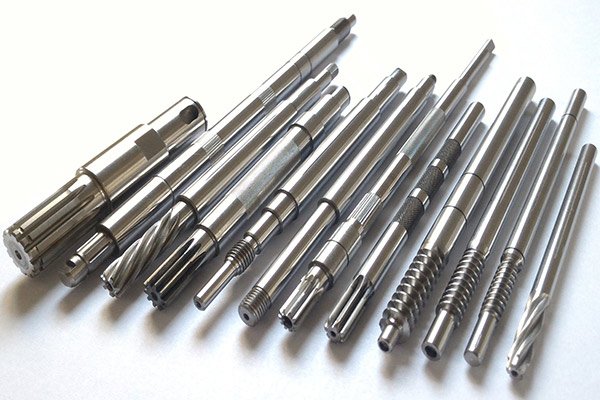
Why Choose China for High-Precision CNC Shaft Machining?
For global OEMs and Tier 1 suppliers, the decision to source high-precision CNC shaft machining is based on more than unit price. Shaft performance depends on dimensional stability, concentricity, surface finish, material control, heat treatment, inspection discipline, and reliable delivery across multiple production cycles. China has become a strategic manufacturing destination because it combines a deep industrial supply base with advanced CNC technology, experienced engineering teams, competitive operating costs, and increasingly mature quality systems.
Dixin Technology, operating through IndustryApex CNC, supports international customers with precision-machined shafts and engineered components for demanding industrial applications. Its role extends beyond contract machining: the company operates as a supply chain integrator and ODM solution provider for customers that require design support, production control, inspection, finishing, and coordinated delivery.
1. Executive Summary
China is a strong choice for high-precision CNC shaft machining when buyers need a combination of engineering capability, production scalability, material access, and supply chain responsiveness. The country has developed extensive expertise in turning, milling, grinding, Swiss-type machining, spline production, EDM, heat treatment coordination, and specialized surface finishing. This industrial density allows a qualified supplier to select the correct process route for each shaft rather than forcing every project into a standard turning-only workflow.
The commercial benefit is equally important. Chinese manufacturing ecosystems provide access to raw materials, tooling suppliers, heat treatment providers, plating and coating specialists, metrology services, and logistics networks within a relatively coordinated region. This can reduce lead times and simplify procurement for OEMs that would otherwise manage several geographically dispersed vendors.
However, the best results do not come from choosing a supplier solely because it offers a low quotation. Buyers should evaluate process capability, traceability, quality documentation, communication, engineering involvement, and the supplier’s ability to control subcontracted operations. A technically strong partner can reduce total cost through fewer rejects, more stable production, faster design feedback, and lower inventory risk.
For manufacturers comparing international sourcing options, Dixin Technology provides an entry point through its precision CNC components manufacturing platform. Its approach is suited to programs where shaft quality, delivery reliability, and long-term engineering cooperation are all essential.
2. Technical Deep Dive
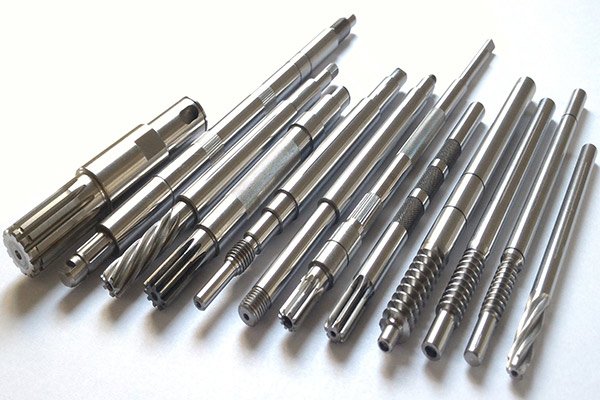
High-precision CNC shaft machining involves a sequence of controlled operations rather than a single machine cycle. Typical parts may include drive shafts, stepped shafts, splined shafts, eccentric shafts, pump shafts, actuator rods, rotor shafts, and custom transmission components. Each design introduces different requirements for runout, roundness, straightness, diameter tolerance, thread accuracy, and surface integrity.
The first technical decision is process selection. CNC turning is generally used to establish external diameters, shoulders, grooves, tapers, threads, and center features. Live tooling and multitasking machines can add cross-holes, keyways, flats, and milled profiles without additional setups. For complex geometries, 3-axis, 4-axis, and 5-axis CNC machining can reduce fixture changes and improve positional relationships between features.
For shafts with demanding bearing journals or sealing surfaces, precision grinding may follow turning. Grinding improves diameter control, roundness, cylindricity, and surface finish. It is particularly valuable when the shaft interfaces with bearings, hydraulic seals, bushings, or high-speed rotating assemblies. A robust supplier understands where machining should stop and grinding should begin, avoiding unnecessary processing cost while protecting functional performance.
Material selection also affects the manufacturing route. Common shaft materials include alloy steels, stainless steels, tool steels, aluminum alloys, titanium, brass, copper alloys, and engineering plastics. Hardened steels may require pre-hard machining, post-heat-treatment grinding, or hard turning. Stainless steel and titanium demand appropriate cutting parameters, tooling, coolant management, and chip control. Material certificates, heat numbers, and inspection records should remain linked to the finished part throughout production.
Geometric tolerances are often more important than individual dimensional tolerances. A shaft may have acceptable diameters but still fail if its bearing seats are not concentric with the datum axis. Suppliers should therefore interpret drawings using a complete datum structure and inspect the features that control assembly performance. Typical checks include total indicated runout, radial runout, concentricity, perpendicularity, parallelism, roundness, cylindricity, and profile.
Metrology capability is a critical differentiator. Depending on the part, inspection may use calibrated micrometers, air gauges, height gauges, roundness testers, surface roughness instruments, optical comparators, CMMs, and specialized spline gauges. A first article inspection report should demonstrate not only that measurements were taken, but also that the inspection method is appropriate for the tolerance and functional requirement.
Quality planning should begin before cutting metal. A manufacturing partner should review the drawing, identify critical-to-function characteristics, recommend datum and clamping strategies, assess tool access, and confirm whether the proposed tolerances are practical for the material and production volume. Design for manufacturability feedback can prevent expensive revisions after tooling or fixtures have already been released.
Environmental and process controls matter as well. Temperature variation can influence measurement results, especially for long shafts and tight bearing fits. Tool wear can shift diameters during extended runs. Long slender parts may deflect under cutting forces or require steady rests and controlled support. A capable supplier addresses these risks with staged inspection, tool-life monitoring, stable fixturing, and documented process parameters.
These technical controls explain why the right Chinese supplier can deliver value beyond labor cost. When advanced equipment is combined with disciplined engineering and inspection, China can support both prototype quantities and repeat production with consistent performance.
3. The ODM & Supply Chain Advantage
The strongest sourcing case for China often comes from supply chain integration. Dixin Technology’s core identity is that of a supply chain integrator and ODM solution provider. This means the company can participate earlier in the product development cycle, helping global OEM and Tier 1 customers translate functional requirements into manufacturable shaft designs and controlled production plans.
For an OEM, ODM support can include material recommendations, tolerance review, process-route development, fixture planning, supplier coordination, prototype production, validation samples, and production ramp-up. This is valuable when the buyer has an application requirement but does not want to manage every technical detail internally. It also creates a single engineering interface for machining, grinding, EDM, ceramics, heat treatment, coating, and inspection activities.
Dixin Technology’s manufacturing edge is a fully controlled precision manufacturing system supported by ERP and more than 30 years of experience. ERP-based planning can connect customer orders with material purchasing, production scheduling, work instructions, inspection status, inventory, and shipment coordination. For global customers, this visibility helps reduce uncertainty during repeat orders and makes it easier to manage forecast changes, engineering revisions, and replenishment requirements.
Its technology capabilities include 3-5 axis CNC machining, EDM, precision grinding, and industrial ceramics. This combination is important because many shaft assemblies contain features or related components that cannot be completed efficiently through conventional turning alone. EDM can support intricate profiles and hard materials. Grinding can deliver the final accuracy required for functional journals. Industrial ceramics can address wear, insulation, high-temperature, and corrosion-related requirements in specialized assemblies.
China’s broader supplier network further supports this model. A well-managed manufacturing partner can coordinate certified material mills, heat treatment facilities, plating and coating providers, balancing services, non-destructive testing, packaging vendors, and international freight. The practical benefit is fewer handoffs for the customer and clearer accountability for the finished component.
Supply chain resilience still requires structured controls. Buyers should establish approved material sources, quality agreements, change notification procedures, production capacity reviews, and contingency plans for critical processes. A supplier that documents these controls can help customers balance cost optimization with continuity of supply.
Communication is another decisive factor. Engineering drawings often contain implicit requirements that are not fully explained in a purchase order. A responsive supplier should ask focused questions about mating parts, operating speed, load, lubrication, corrosion exposure, service life, and inspection expectations. This dialogue helps ensure that the shaft is produced for its actual application rather than merely manufactured to a list of isolated dimensions.
For global OEM and Tier 1 procurement teams, the strategic question is therefore not simply whether China can machine a shaft. It is whether the selected partner can control the complete path from design intent to validated, repeatable, and delivered production. Dixin Technology’s integrated ODM and manufacturing model is designed around that requirement.
4. Industry Applications
High-precision CNC shafts are used wherever controlled rotation, accurate positioning, fluid sealing, or mechanical power transmission is required. The application determines the material, tolerance strategy, surface finish, heat treatment, and validation plan.
Aerospace and Defense
Aerospace components require lightweight construction, high strength, corrosion resistance, and full traceability. Shafts may be used in actuation systems, landing gear mechanisms, engine accessories, pumps, and structural motion systems. Titanium and nickel-based alloys can require specialized tooling and carefully controlled machining parameters. Dixin Technology’s aerospace CNC machining capability is relevant to customers sourcing complex titanium aircraft parts and other precision structural or functional components.
Medical Equipment
Medical devices often require biocompatible materials, clean processing, burr-free edges, repeatable surface finishes, and rigorous documentation. Small shafts can appear in surgical instruments, powered handpieces, pumps, diagnostic equipment, and implant-related mechanisms. Suppliers must understand contamination control, material traceability, and the difference between cosmetic quality and clinically relevant performance. Buyers can review Dixin Technology’s ISO-certified CNC machining for medical components when evaluating related production requirements.
Hydraulics and Pumps
Hydraulic pump shafts, valve components, and actuator parts depend on accurate fits and reliable sealing surfaces. Minor defects in roundness, surface finish, or concentricity can cause leakage, accelerated wear, or reduced efficiency. Hardened steel, stainless steel, and coated materials are common, with grinding often required for journals and seal interfaces. Dixin Technology supplies components for hydraulic pump parts and fluid-control applications.
Automotive and Mobility
Automotive shafts are produced in high volumes and must combine cost control with stable process capability. Applications include transmission shafts, steering components, motor shafts, actuator shafts, and electric vehicle drivetrain parts. Automated inspection, efficient fixturing, and tool-life management are essential for maintaining consistency across large batches.
Industrial Automation and Robotics
Robotic joints, servo systems, linear actuators, gearboxes, and automated production equipment use shafts that must maintain accurate alignment under repeated motion. Low runout and predictable surface performance improve bearing life and positioning accuracy. Shorter development cycles also make engineering responsiveness especially valuable for automation manufacturers.
Energy, Food Processing, and General Machinery
Energy equipment may require high-temperature or corrosion-resistant materials, while food-processing machinery emphasizes cleanability and compatible finishes. General machinery uses shafts across conveyors, mixers, compressors, gearboxes, and rotating tools. In each case, China offers a broad manufacturing base that can support prototypes, pilot runs, and scaled production.
When selecting a supplier, customers should align the inspection plan with the operating environment. A shaft for a high-speed spindle should be evaluated differently from a low-speed hydraulic actuator shaft, even when both require tight diameter tolerances. Application-specific engineering is what converts machining capacity into dependable component performance.
5. Call to Action
Choosing China for high-precision CNC shaft machining can give global OEMs and Tier 1 suppliers access to advanced equipment, experienced engineering, competitive production economics, and an integrated industrial supply chain. The key is selecting a partner that can manage the entire manufacturing requirement, including design review, material control, process development, precision machining, secondary operations, inspection, documentation, and delivery.
Dixin Technology combines more than 30 years of manufacturing experience with 3-5 axis CNC machining, EDM, precision grinding, industrial ceramics, ERP-supported production control, and ODM supply chain integration. Whether you need a prototype shaft, a repeat production program, or a coordinated family of precision components, the engineering discussion should begin with the drawing and the application requirements.
Contact Dixin Technology with your drawings, material specifications, annual volumes, tolerance requirements, and target delivery schedule. The team can review manufacturability, recommend a suitable process route, and develop a quotation aligned with your quality and supply chain objectives.