
- Shaft
- Molds&Tools
- Hydraulics And Pump
- Hair transplant needle
- Hydraulics And Pump
- Precision CNC Shaft Machining Manufacturer for High Performance Applications
- Energy Industry CNC Machining Parts Supplier
- Aerospace Structural Components for OEM Programs
- Aerospace Structural Components for OEM Programs
- Automotive & EV CNC Machining Parts Supplier for OEM and Tier 1
- Medical Device CNC Machining Services
Why Choose China for High-Precision CNC Shaft Machining? A B2B Engineering and Supply Chain Analysis

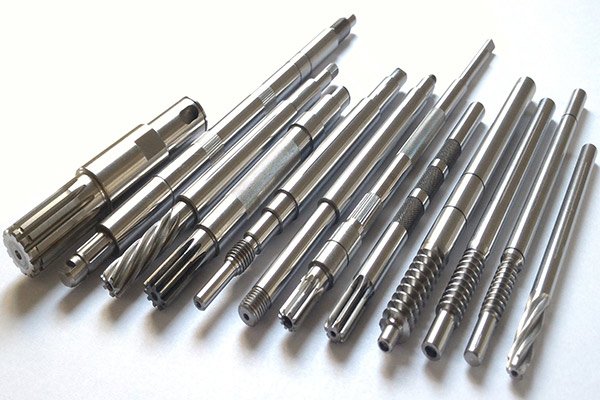
High-precision CNC shaft machining in China has evolved from a cost-focused sourcing option into a strategic manufacturing solution for global OEMs and Tier 1 suppliers. Modern Chinese machining companies combine advanced multi-axis equipment, process engineering, digital production control, material expertise, and integrated supply chain management to produce demanding shafts for aerospace, medical, hydraulics, automotive, energy, and industrial automation applications.
For engineering and procurement teams, the key question is no longer simply whether China can machine a shaft. The more important question is whether the selected manufacturing partner can consistently control geometry, surface integrity, material traceability, documentation, delivery risk, and product lifecycle support. This analysis explains why China is increasingly selected for precision shaft programs and how IndustryApex Technology, operating under the IndustryApex CNC platform, supports that decision.
1. Executive Summary
Precision shafts are deceptively complex components. A typical part may include concentric diameters, shoulders, keyways, threads, splines, cross-holes, sealing surfaces, bearing journals, and controlled surface finishes. Performance depends not only on dimensional accuracy, but also on runout, roundness, cylindricity, hardness, residual stress, and the relationship between multiple functional features.
China offers a compelling combination of engineering capacity, manufacturing scale, competitive total cost, and access to a broad industrial ecosystem. Its advantages are particularly relevant when a project requires recurring production, flexible batch sizes, multiple materials, secondary processes, or coordinated sourcing of related components.
- Advanced production technology: 3-, 4-, and 5-axis CNC turning and milling can be combined with EDM, precision grinding, probing, and specialized finishing.
- Broad material capability: Stainless steels, alloy steels, titanium, aluminum, brass, nickel alloys, hardened steels, engineering plastics, and industrial ceramics can be addressed through appropriate process planning.
- Scalable supply: Chinese manufacturing networks support prototype development, pilot runs, and stable serial production without requiring a new supplier for every phase.
- Integrated sourcing: Heat treatment, coating, grinding, inspection, packaging, and logistics can be coordinated through a qualified manufacturing partner.
- Engineering responsiveness: Design-for-manufacturing feedback can reduce unnecessary tolerances, improve tool access, simplify inspection, and lower lifecycle cost.
The best results come from selecting a partner based on process control and technical transparency rather than unit price alone. A robust supplier should provide drawing review, material certification, first article inspection, in-process controls, final inspection records, and a clearly defined corrective action process.
2. Technical Deep Dive
High-precision CNC shaft machining begins with understanding the part’s functional datums and load conditions. Shaft accuracy is often measured relative to a central axis, so the manufacturing sequence must preserve concentricity from initial stock preparation through turning, heat treatment, grinding, and final inspection. If heat treatment is required, the process must anticipate distortion and provide sufficient stock for corrective grinding.
Material and process selection
The material determines cutting strategy, tool selection, thermal management, and finishing requirements. Free-machining steels may provide excellent productivity, while alloy steels offer improved strength and fatigue resistance. Stainless steels demand careful control of work hardening and heat generation. Titanium requires rigid fixturing, controlled cutting parameters, and effective chip evacuation. Hardened materials may require ceramic or carbide tooling, hard turning, or grinding.
For demanding shafts, material certification should identify the grade, heat or cast number, mechanical condition, and applicable standard. This information is essential for traceability in aerospace, medical, energy, and safety-critical applications. When a shaft is used with a bearing, seal, hydraulic spool, or precision gear, material and hardness consistency directly affect service life.
Geometric control and datum strategy
Dimensional tolerance is only one part of shaft quality. Critical controls may include total indicated runout, radial runout, coaxiality, perpendicularity, circularity, cylindricity, surface profile, and angular indexing. A supplier should identify the primary datum structure before programming the component. Supporting the part from unstable or non-functional surfaces can create measurement results that appear acceptable while producing poor assembly performance.
Long, slender shafts require particular attention to deflection and vibration. Steady rests, programmable tailstocks, specialized soft jaws, multiple setups, and controlled material removal can reduce deformation. For very tight journal tolerances, turning may be followed by cylindrical grinding, centerless grinding, or superfinishing. The final process should be selected according to the required roundness, roughness, bearing interface, and production volume.
Inspection and process validation
Reliable inspection normally combines in-machine probing with independent metrology. CNC probing can verify work offsets and detect process drift, while coordinate measuring machines, roundness instruments, height gauges, micrometers, air gauges, thread gauges, and surface roughness testers provide final validation. The inspection method should match the tolerance and functional risk of each feature.
For production programs, statistical process control can identify trends before nonconforming parts accumulate. First article inspection establishes that the manufacturing process can meet the drawing, while capability studies help determine whether critical characteristics remain stable over time. A well-managed supplier also controls revision status, inspection equipment calibration, nonconformance records, and lot identification.
Surface treatment may include passivation, black oxide, electroless nickel, hard chrome, anodizing, nitriding, carburizing, or other engineered finishes. These processes influence dimensions, corrosion resistance, wear behavior, and friction. Therefore, coating thickness and post-treatment inspection should be included in the dimensional plan rather than treated as an afterthought.
China is especially attractive when a shaft program requires several connected processes. A qualified supplier can coordinate CNC turning, milling, EDM, precision grinding, heat treatment, surface finishing, cleaning, and inspection under one controlled production plan. This reduces handoffs, shortens communication loops, and improves accountability for the final assembly condition.
3. The ODM & Supply Chain Advantage
For global OEM and Tier 1 suppliers, the strongest reason to choose China is often the combination of manufacturing depth and supply chain integration. IndustryApex Technology’s core identity is that of a supply chain integrator and ODM solution provider. This means the value proposition extends beyond machining a drawing: it includes engineering coordination, process development, supplier management, quality control, and delivery execution.
From component supplier to development partner
Many shaft projects begin with incomplete information. The customer may have a functional concept, a legacy component, a 3D model without manufacturing notes, or a drawing that has accumulated unnecessary tolerances. An ODM-capable partner can review the design, clarify critical-to-function features, recommend practical tolerances, and identify opportunities to reduce machining time or improve reliability.
Design-for-manufacturing review is particularly valuable for shafts with deep grooves, thin walls, interrupted cuts, difficult internal features, or hardened surfaces. The supplier may recommend a different blank size, a revised transition radius, a more accessible datum, a modified groove geometry, or a process sequence that reduces distortion. These changes should be evaluated with the customer’s engineering team and controlled through formal revision management.
Fully controlled precision manufacturing system
IndustryApex Technology operates with a fully controlled precision manufacturing system supported by ERP and more than 30 years of manufacturing experience. ERP-based planning can connect customer orders with material purchasing, routing, work instructions, inventory, inspection status, and shipment scheduling. This visibility is important for international buyers managing multiple part numbers, forecast changes, engineering revisions, and phased deliveries.
A controlled system also helps reduce common supply chain risks. Material can be reserved against approved requirements, work orders can be released according to demand, and inspection checkpoints can be assigned before a part reaches the next operation. For repeat production, historical process data supports faster quotation, more accurate capacity planning, and more consistent replenishment.
Technology breadth and supplier consolidation
The manufacturing edge includes 3- to 5-axis CNC machining, EDM, precision grinding, and industrial ceramics. This breadth matters because complex shaft assemblies rarely consist of one simple turning operation. EDM can support fine slots, small holes, and difficult profiles. Precision grinding can achieve tight journal tolerances and controlled surface finish. Industrial ceramics can address applications requiring insulation, wear resistance, chemical stability, or high-temperature performance.
Supplier consolidation can lower total acquisition cost even when the lowest individual machining quote is not the objective. Fewer handoffs reduce transport between processes, packaging exposure, administrative work, and the risk of inconsistent interpretations. A single technical contact can coordinate drawing questions, quality documentation, corrective actions, and delivery priorities across the complete program.
Managing China sourcing risk
Successful sourcing requires structured governance. Customers should define approved materials, inspection plans, packaging specifications, acceptance criteria, intellectual property controls, and escalation procedures. Supplier audits, sample approval, process validation, and regular performance reviews provide additional confidence. IndustryApex Technology’s role as an integrator is designed to give global buyers one accountable interface while maintaining control over the manufacturing chain.
Logistics planning is equally important. Buyers can choose consolidated shipments, scheduled releases, safety stock, or supplier-managed inventory depending on demand volatility. Export documentation, labeling, packaging, and commercial terms should be agreed early. When these requirements are included during quotation rather than after production, the final landed cost and delivery date are more predictable.
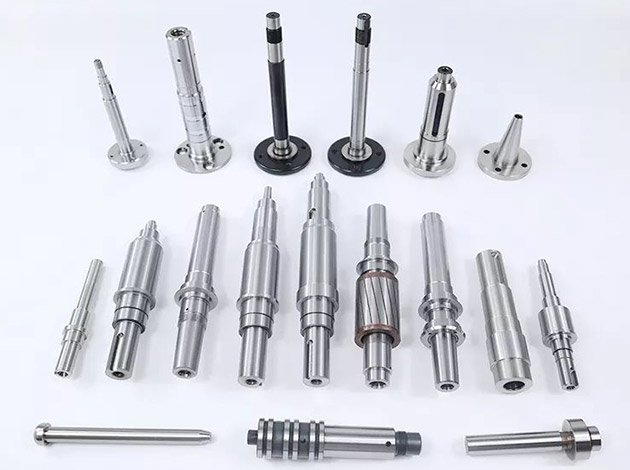
4. Industry Applications
High-precision CNC shafts are used across industries where rotational accuracy, load transmission, sealing, positioning, or controlled motion is critical. China’s manufacturing ecosystem is well suited to these applications because it supports both specialized materials and diverse secondary operations.
Aerospace and defense
Aerospace shafts may be used in actuation systems, landing gear mechanisms, pumps, transmission assemblies, and structural or control subsystems. Titanium, stainless steel, nickel alloys, and high-strength steels often require strict traceability and documented inspection. For broader aircraft and aerospace manufacturing requirements, buyers can review IndustryApex Technology’s aerospace CNC machining and titanium aircraft parts capabilities.
Medical equipment and surgical systems
Medical shafts may be found in surgical instruments, powered handpieces, diagnostic equipment, implant-related tooling, and precision device mechanisms. These parts can require burr-free edges, controlled surface finish, corrosion resistance, clean handling, and detailed documentation. Customers developing such products can explore the company’s ISO-certified CNC machining for medical components.
Hydraulics, pumps, and fluid control
Hydraulic valve spools, pump shafts, rotor shafts, and actuator components depend on controlled roundness, surface finish, clearance, and wear resistance. Small deviations can cause leakage, pressure loss, sticking, or premature seal failure. Heat treatment, grinding, coating, and cleanliness must be coordinated with the fluid system’s operating conditions. IndustryApex Technology’s hydraulic pump parts services support this broader fluid-control requirement.
Automotive, robotics, and industrial automation
Electric motors, gearboxes, robotic joints, servo systems, and drivetrain assemblies use shafts that must transfer torque while maintaining alignment at speed. Production programs may involve high volumes, short replenishment cycles, and rigorous statistical control. Chinese suppliers can support prototype-to-production transitions while coordinating gears, sleeves, spacers, housings, and other related components.
Energy, semiconductor, and specialized equipment
Energy equipment often demands corrosion resistance, high strength, and long service intervals. Semiconductor and optical equipment may require exceptionally clean surfaces, low particle generation, tight positional accuracy, or nonmetallic components. Industrial ceramics and precision grinding capabilities can be valuable where conventional metal machining is not sufficient.
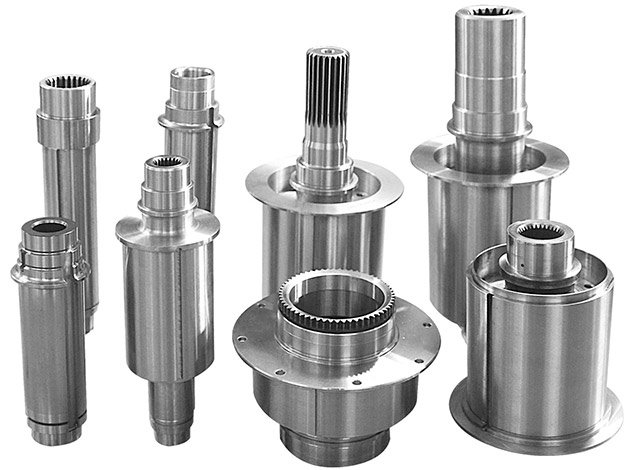
5. Call to Action
Choosing China for high-precision CNC shaft machining can provide more than competitive pricing. With the right partner, it delivers access to advanced equipment, experienced process engineering, integrated secondary operations, scalable capacity, and a coordinated international supply chain.
IndustryApex Technology, through IndustryApex CNC, supports global OEMs and Tier 1 suppliers with precision manufacturing, ODM development, and supply chain integration. Share your 2D drawing, 3D model, material specification, annual volume, tolerance requirements, and target delivery schedule for a technical review and manufacturing recommendation.
Contact IndustryApex Technology to discuss your shaft machining program, or visit the IndustryApex CNC homepage to review broader precision component capabilities.