- Shaft
- Molds&Tools
- Hydraulics And Pump
- Hair transplant needle
- Hydraulics And Pump
- Precision CNC Shaft Machining Manufacturer for High Performance Applications
- Energy Industry CNC Machining Parts Supplier
- Aerospace CNC Machining Parts Manufacturer
- Aerospace CNC Machining Parts Manufacturer
- Automotive & EV CNC Machining Parts Supplier for OEM and Tier 1
- Medical CNC Machining Parts Supplier for Precision Medical Devices

2026 Trends in 5-Axis CNC Machining for Aerospace Components: Engineering and Supply Chain Analysis

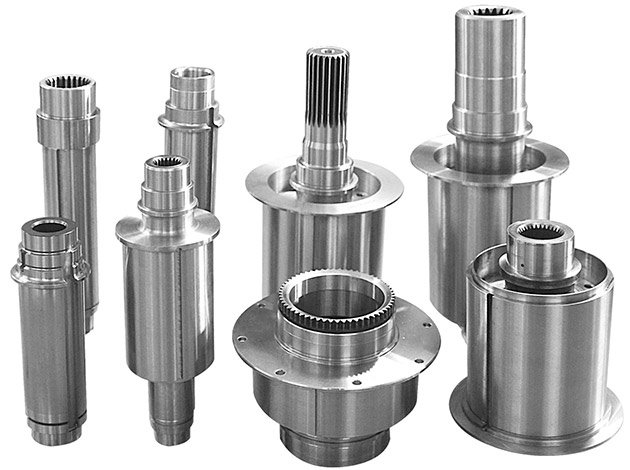
2026 Trends in 5-Axis CNC Machining for Aerospace Components
Executive Summary
In 2026, aerospace manufacturing is being shaped by a convergence of lighter airframes, hotter engines, tighter fuel efficiency targets, expanding defense procurement, and more demanding commercial aircraft production schedules. For OEMs and Tier 1 suppliers, 5-axis CNC machining is no longer simply a method for producing complex geometry. It has become a strategic manufacturing capability that directly affects design freedom, certification readiness, lead time stability, and total landed cost.
Aerospace components increasingly combine thin-wall structures, deep pockets, sculpted aerodynamic surfaces, difficult-to-machine materials, and exacting traceability requirements. Titanium alloys, nickel-based superalloys, high-strength aluminum, stainless steel, and engineered ceramics all place different demands on tooling, fixturing, thermal control, and process validation. The suppliers that succeed in this environment are not only those with advanced machine tools, but those that can integrate engineering, process planning, procurement, inspection, documentation, and delivery into one controlled system.
For global buyers evaluating aerospace machining partners, the key question in 2026 is not simply whether a supplier owns 5-axis machining centers. The more important question is whether the supplier can convert complex drawings, model-based definitions, and production forecasts into stable, repeatable, and auditable manufacturing outcomes. This is where IndustryApex Technology, through IndustryApex CNC, positions itself as a precision manufacturing and supply chain partner for high-value components. Buyers can explore our broader manufacturing platform at IndustryApex CNC, including dedicated capabilities for aerospace CNC machining and 5-axis aircraft structural components.
The strongest 2026 trend is the movement from isolated part production toward engineered manufacturing ecosystems. Aerospace buyers want suppliers who can support early manufacturability review, optimize tool paths, control material risk, validate first articles, and scale from prototype to repeat production without creating quality drift. The combination of 3-axis, 4-axis, and 5-axis machining, EDM, precision grinding, industrial ceramics capability, and ERP-driven production control gives manufacturers a practical edge when aerospace programs demand both technical precision and supply chain resilience.
Technical Deep Dive
5-axis CNC machining is central to aerospace because it allows the cutting tool to approach the workpiece from multiple angular positions in a single setup. This reduces the need for multiple fixtures, minimizes accumulated error between operations, improves surface continuity, and enables machining of features that would be inefficient or impossible on conventional 3-axis equipment. In aerospace, those advantages translate into better positional accuracy for mounting interfaces, smoother flow surfaces for aerodynamic or fluid components, and stronger process control for thin-wall and monolithic structures.
One of the most important technical trends for 2026 is the increased use of integrated machining strategies for titanium aircraft parts. Titanium remains attractive because of its high strength-to-weight ratio, corrosion resistance, and compatibility with demanding aerospace environments. However, it is also prone to heat concentration, tool wear, work hardening, and chatter when process parameters are not properly controlled. Advanced 5-axis machining addresses these risks through high-pressure coolant, adaptive tool paths, optimized cutter engagement, rigid fixturing, and real-time monitoring of spindle load and vibration.
Thin-wall aerospace structures present another major challenge. Brackets, frames, ribs, housings, and structural fittings often begin as forgings, billets, or near-net-shape blanks. The finished part may require significant material removal while maintaining tight flatness, profile, and hole position tolerances. The machining sequence must account for stress release, part deflection, clamping pressure, and thermal expansion. In 2026, leading manufacturers are relying more heavily on simulation, in-process probing, and controlled roughing and finishing strategies to reduce distortion and improve first-pass yield.
Digital manufacturing is also changing how 5-axis aerospace components are produced. Model-based definition, digital inspection records, and ERP-linked routing data help eliminate ambiguity between engineering, production, and quality teams. When a component requires aerospace-level traceability, every detail matters: material heat lot, tooling revision, fixture identification, operator sequence, inspection method, and nonconformance history. The best machining partners treat this data as part of the product itself, because documentation failures can be just as disruptive as dimensional failures.
Another technical trend is the growth of hybrid process chains. A complex aerospace component may require 5-axis milling for sculpted surfaces, EDM for narrow slots or difficult internal features, precision grinding for sealing faces or bearing interfaces, and specialized finishing for fatigue-sensitive areas. Instead of viewing these as separate operations, advanced suppliers design the full process chain around the final functional requirement of the part. That means selecting the right datum structure, protecting critical surfaces, planning inspection access, and ensuring that each operation supports the next.
Tooling strategy will remain a major differentiator in 2026. Aerospace alloys punish weak tool selection. High-performance carbide tools, variable-helix end mills, barrel cutters, ceramic inserts, and custom form tools can improve efficiency, but only when paired with the correct feeds, speeds, tool holding, coolant delivery, and machine rigidity. The goal is not simply faster cutting. The goal is a stable process that delivers consistent surface integrity, controlled burr formation, and predictable tool life across production batches.
Surface integrity is particularly important in flight-critical and engine-adjacent components. Microcracks, tensile residual stress, heat-affected zones, and uncontrolled tool marks can reduce fatigue life. As a result, process planning must include both geometry and metallurgy. Aerospace customers increasingly expect suppliers to understand how machining parameters affect the service performance of the component, especially for titanium, Inconel, stainless steel, and high-strength aluminum parts.
The ODM and Supply Chain Advantage
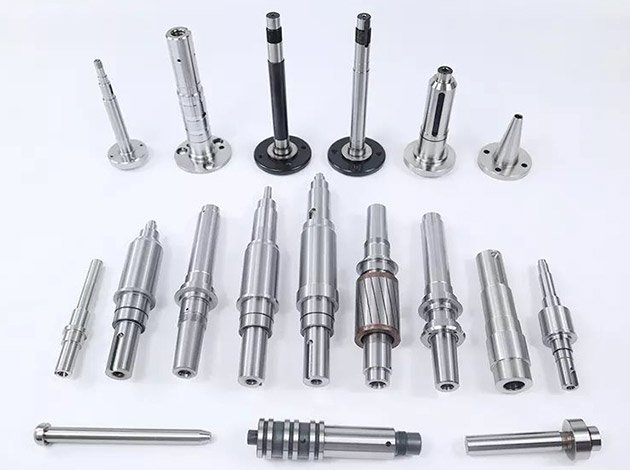
The aerospace supply chain is entering a period where capacity alone is not enough. OEMs and Tier 1 suppliers need partners that can solve manufacturing problems before they become procurement problems. This is the core identity of IndustryApex Technology: a supply chain integrator and ODM solution provider for precision components. Rather than acting only as a build-to-print machine shop, we support customers with manufacturability input, process development, material sourcing coordination, production planning, and controlled delivery.
For aerospace buyers, the ODM advantage begins at the engineering review stage. A drawing may specify the final geometry, but it does not always reveal the most reliable way to manufacture the part. Early supplier involvement can identify tolerance stack risks, difficult-to-inspect features, unnecessary cost drivers, problematic tool access, and opportunities for fixture simplification. When these issues are addressed before production release, customers reduce late engineering changes, avoid repeated first article delays, and improve long-term cost stability.
IndustryApex Technology’s manufacturing edge is built on a fully controlled precision manufacturing system supported by ERP and over 30 years of experience. ERP control is critical because aerospace production is rarely a single isolated purchase order. Programs involve revisions, forecasts, partial releases, inspection records, material planning, outsourced special processes, and delivery commitments. A controlled system allows production teams to connect engineering data with shop-floor execution and purchasing activity, improving visibility and reducing avoidable schedule risk.
Our technical platform includes 3-axis, 4-axis, and 5-axis CNC machining, EDM, precision grinding, and industrial ceramics. This breadth matters because aerospace components often require more than one manufacturing method to meet functional requirements. A structural titanium bracket may need 5-axis profiling and precision hole making. A fuel or hydraulic-related component may require tight spool, sleeve, or sealing geometries that benefit from grinding expertise. A high-temperature or wear-resistant subsystem may require ceramic component knowledge. By combining multiple capabilities under a coordinated manufacturing framework, IndustryApex Technology helps customers simplify supplier management without sacrificing technical depth.
Supply chain resilience is another defining issue for 2026. Global aerospace programs face material lead time volatility, logistics uncertainty, qualification bottlenecks, and pressure to localize or diversify sources. A capable supplier must be able to manage not only machining capacity but also upstream and downstream dependencies. This includes material procurement, certification review, secondary operations, inspection planning, packaging, and export readiness. For global OEM and Tier 1 suppliers, a manufacturing partner with integrated supply chain discipline can reduce hidden management cost and improve program continuity.
The ODM role is especially valuable when customers need custom component development across multiple industries. Aerospace practices often benefit from lessons learned in adjacent high-precision sectors such as medical devices, fluid control, hydraulic systems, optical components, and energy equipment. For example, the documentation discipline used in ISO-certified CNC machining for medical components can strengthen traceability thinking for aerospace buyers. Similarly, tight-clearance manufacturing experience from hydraulic pump parts and fluid control components supports the precision demanded in aircraft actuation, fuel, and control systems.
In practical terms, the supply chain advantage is measured by fewer surprises. Customers want accurate feasibility feedback, realistic lead times, stable quality, clear communication, and repeatable execution. They also need a partner who understands that aerospace production is governed by risk control. The lowest quote is rarely the lowest total cost if it results in rework, missed delivery windows, or inconsistent documentation. A mature ODM and supply chain integrator helps customers make better engineering and procurement decisions across the full product life cycle.
Industry Applications
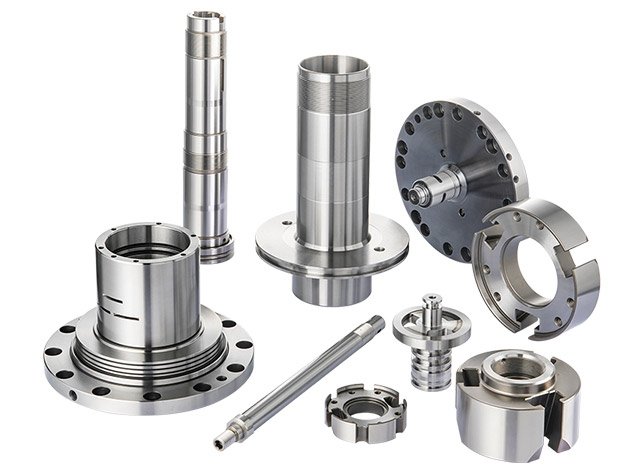
5-axis CNC machining is used across a wide range of aerospace component categories. Structural components are among the most visible applications. These include frames, brackets, hinges, fittings, ribs, supports, and load-bearing housings. Such parts often require high material removal rates, complex pocketing, tight hole pattern control, and smooth transitions between surfaces to avoid stress concentration. Monolithic machining can reduce assembly weight and fastener count, but it also demands excellent control over distortion and machining sequence.
Engine and propulsion-related components represent another demanding application area. Although not every engine component is suited for conventional machining alone, 5-axis CNC plays a major role in producing housings, mounts, impellers, blades, manifolds, heat-resistant fixtures, and support components. Nickel-based superalloys and titanium alloys require stable cutting conditions and careful process validation. As propulsion systems evolve for higher efficiency and more demanding thermal environments, machining suppliers must understand both dimensional precision and material behavior.
Aircraft interior and cabin systems also benefit from precision machining, particularly where lightweight metals, engineered plastics, or specialty alloys are used for brackets, latches, seat components, galley systems, and safety-critical hardware. While these parts may not always appear as complex as engine components, they still require consistency, surface finish control, and dependable delivery across production volumes. Weight reduction remains a persistent theme, and 5-axis machining enables designers to remove unnecessary material while preserving strength in critical load paths.
Fluid control, landing gear support systems, and actuation components are additional areas where precision manufacturing is essential. Aerospace hydraulic and fuel systems depend on tight clearances, clean surfaces, reliable sealing, and repeatable geometry. Valve bodies, sleeves, pump-related components, fittings, manifolds, and control hardware must meet demanding functional expectations. Experience in hydraulics and precision flow components can be highly relevant when serving aerospace programs that require compact, lightweight, and reliable motion or fluid management assemblies.
Defense and space applications are expected to remain strong drivers of 5-axis CNC demand through 2026. These programs often require specialized materials, low-to-medium volume production, strict confidentiality, complex geometries, and fast engineering iteration. Suppliers must be able to support prototypes, engineering validation units, and scaled production while preserving process knowledge between builds. The ability to document each revision and maintain controlled manufacturing history is vital for long-cycle programs.
Unmanned aerial systems and advanced air mobility platforms are also influencing machining demand. These markets often combine aerospace quality expectations with faster development cycles. Components may include lightweight structural nodes, motor housings, sensor mounts, cooling plates, battery-related enclosures, and aerodynamic control parts. For these customers, a supplier that can move from design review to prototype to production readiness provides real competitive value.
The most successful aerospace machining programs in 2026 will be those that align design, manufacturing, quality, and supply chain decisions from the beginning. 5-axis CNC machining is powerful, but its full value appears when it is embedded in a disciplined engineering and production system. Buyers should evaluate supplier capability through sample part complexity, inspection maturity, material experience, process planning depth, and the ability to communicate clearly across technical and commercial teams.
Call to Action
For aerospace OEMs, Tier 1 suppliers, and engineering teams preparing for 2026 production demands, supplier selection should focus on more than machine lists. The right partner should understand aircraft component function, difficult materials, tolerance strategy, inspection planning, and supply chain execution. IndustryApex Technology brings over 30 years of precision manufacturing experience, ERP-supported production control, and integrated capabilities across 3-axis to 5-axis CNC machining, EDM, precision grinding, and industrial ceramics.
Whether your program requires titanium aircraft parts, structural aerospace components, hydraulic-related assemblies, precision housings, or complex ODM support, IndustryApex CNC is ready to help turn engineering requirements into reliable production outcomes. Visit our aerospace CNC machining solutions page to review relevant capabilities, or connect directly through our contact page to discuss drawings, materials, tolerances, lead times, and program requirements.
In 2026, aerospace competitiveness will depend on precision, resilience, and engineering collaboration. IndustryApex Technology is prepared to support global customers with the manufacturing depth and supply chain discipline required for the next generation of aerospace components.