- Shaft
- Molds&Tools
- Hydraulics And Pump
- Hair transplant needle
- Hydraulics And Pump
- Precision CNC Shaft Machining Manufacturer for High Performance Applications
- Energy Industry CNC Machining Parts Supplier
- Aerospace CNC Machining Parts Manufacturer
- Aerospace CNC Machining Parts Manufacturer
- Automotive & EV CNC Machining Parts Supplier for OEM and Tier 1
- Medical CNC Machining Parts Supplier for Precision Medical Devices

Sourcing Aerospace CNC Parts: What Tier 1 Suppliers Look For in Precision Manufacturing Partners

Executive Summary
Sourcing aerospace CNC parts is no longer a simple purchasing exercise based on unit price and machining capacity. For Tier 1 aerospace suppliers, the supplier decision is a risk decision. Every bracket, actuator housing, titanium fitting, valve body, structural connector, impeller, and precision ground interface can affect aircraft performance, assembly flow, certification evidence, and long-term program stability. The strongest suppliers are not just machine shops. They are controlled manufacturing partners that understand engineering intent, material behavior, documentation discipline, traceability, and the commercial pressures behind global aerospace programs.
Tier 1 suppliers typically look for four things when evaluating an aerospace CNC machining source: repeatable process control, advanced multi-axis capability, credible quality systems, and supply chain resilience. These requirements are especially important for complex 3-axis, 4-axis, and 5-axis parts made from titanium alloys, aluminum aerospace grades, stainless steels, Inconel, engineering plastics, and specialty materials. A supplier may be able to produce a first article, but Tier 1 buyers need confidence that the same geometry, surface integrity, and documentation package can be reproduced across batches, engineering revisions, and delivery cycles.
IndustryApex Technology, operating through the IndustryApex CNC platform, positions itself as a supply chain integrator and ODM solution provider for global OEM and Tier 1 customers. With more than 30 years of precision manufacturing experience, ERP-supported production control, and capabilities including 3-5 axis CNC machining, EDM, precision grinding, and industrial ceramics, IndustryApex supports high-mix, high-precision parts across aerospace, medical, hydraulics, pumps, semiconductor, optics, energy, and industrial automation markets. For aerospace buyers specifically, the objective is clear: reduce technical risk, shorten supplier development time, and secure a partner capable of translating difficult drawings into stable, inspectable, production-ready parts.
Companies evaluating aerospace machining partners can begin with IndustryApex Technology’s IndustryApex CNC manufacturing platform and its dedicated capabilities for aerospace CNC machining, titanium aircraft parts, 5-axis aerospace parts, and aircraft structural components.
Technical Deep Dive
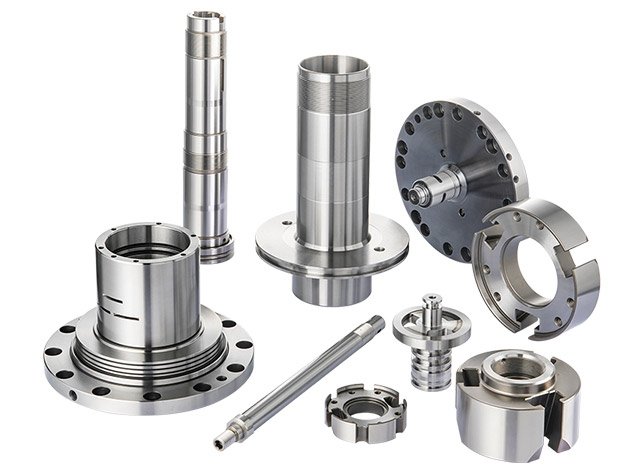
Aerospace CNC parts are evaluated through the lens of function, load path, weight, fatigue performance, thermal stability, corrosion resistance, and assembly precision. Tier 1 suppliers rarely buy parts in isolation. They buy machined components that must fit into larger flight-control systems, fuel systems, hydraulic systems, actuation assemblies, cabin structures, propulsion-adjacent systems, landing gear mechanisms, sensor housings, and avionics packaging. A single part may include thin walls, deep pockets, compound contours, datum-critical bores, tight true position tolerances, sealing faces, precision threads, and hard-to-reach surfaces that demand 5-axis machining or carefully planned multi-operation setups.
Material selection is one of the first technical filters. Titanium alloys such as Ti-6Al-4V are valued for high strength-to-weight ratio and corrosion resistance, but they create heat management and tool wear challenges. Aluminum alloys such as 7075 and 7050 machine efficiently but require control of distortion, burr formation, anodizing allowance, and surface condition. Stainless steel and nickel-based alloys introduce cutting force, work hardening, and residual stress concerns. Engineering plastics and ceramic-related components bring different concerns, including dimensional stability, chipping risk, moisture behavior, and surface quality.
Tier 1 sourcing teams also study how a supplier controls datum strategy. In aerospace, the drawing is not just a shape. It is a contract of relationships between features. A bolt pattern may depend on a machined mounting face. A bearing bore may depend on perpendicularity to a flange. A thin rib may require both mass reduction and controlled stiffness. A supplier that understands GD&T can anticipate manufacturing risk before chips are cut. This includes analyzing tolerance stack-ups, proposing fixture concepts, identifying unstable clamping zones, and protecting functional datums throughout roughing, semi-finishing, stress relief, finishing, deburring, and inspection.
5-axis CNC machining has become central to aerospace part sourcing because it reduces setups, improves access, and helps preserve geometric relationships. Fewer setups can mean fewer datum transfer errors and better positional consistency. However, 5-axis capability alone is not enough. Tier 1 buyers want to see stable CAM programming, collision control, toolpath verification, tool life management, machine calibration discipline, and inspection correlation between CMM data and shop-floor measurement. For flight-critical and mission-sensitive assemblies, process repeatability matters as much as nominal accuracy.
Surface integrity is another major differentiator. Aerospace parts may require controlled Ra values, burr-free edges, edge breaks, sealing surfaces, thread quality, fatigue-sensitive transitions, and cosmetic acceptance criteria. Sharp internal corners may create stress concentrations, while over-polishing can alter geometry. Deburring must be systematic, not improvised. For parts exposed to fuel, hydraulic fluid, temperature variation, or vibration, the quality of small features can determine long-term reliability.
Inspection capability is equally important. A strong aerospace CNC supplier should be comfortable with first article inspection, CMM reports, material certification review, process records, dimensional sampling, special characteristic control, and revision management. Buyers should ask whether the supplier can provide measurement strategy early in the project, not only after production. The best outcomes occur when manufacturing and inspection planning are developed together, ensuring that every critical feature can be produced, accessed, measured, and documented without ambiguity.
The ODM & Supply Chain Advantage
Tier 1 suppliers increasingly prefer manufacturing partners that can operate beyond build-to-print machining. This is where the ODM and supply chain integrator model becomes valuable. IndustryApex Technology’s core identity is not limited to producing individual CNC parts; it is built around helping OEM and Tier 1 customers transform complex requirements into controlled production solutions. In practice, that means supporting design-for-manufacturability review, process selection, material sourcing, fixture planning, machining strategy, secondary operations, surface finishing coordination, inspection documentation, and logistics follow-through.
The manufacturing edge comes from a fully controlled precision manufacturing system supported by ERP and more than 30 years of practical engineering experience. For aerospace supply chains, ERP discipline matters because it connects quotation, material procurement, work orders, routing, capacity planning, inspection checkpoints, delivery schedules, and traceability. A buyer does not only need a technically capable supplier; they need visibility and control across the order lifecycle. Missed delivery, uncontrolled substitutions, undocumented process changes, and unclear revision history can create expensive disruption for Tier 1 assembly operations.
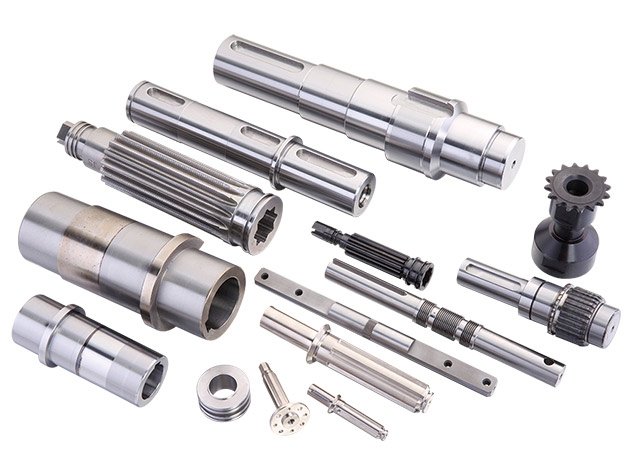
IndustryApex’s capability set covers 3-5 axis CNC machining, EDM, precision grinding, and industrial ceramics. This combination is important because aerospace programs often include families of parts rather than one geometry type. A structural aluminum component may require 5-axis contour machining. A stainless steel valve element may require EDM details and precision ground sealing interfaces. A ceramic or hard material component may require specialized handling and grinding knowledge. When these capabilities exist within a coordinated manufacturing system, buyers can reduce supplier fragmentation and improve accountability.
The ODM advantage also appears during early-stage engineering. Tier 1 teams often face pressure to reduce weight, simplify assemblies, consolidate parts, or transition prototypes into production. A capable manufacturing partner can identify whether a pocket is too deep for stable machining, whether a tolerance is tighter than the function requires, whether a fillet radius should be adjusted for tool access, or whether a part should be split, combined, or reoriented for manufacturability. These recommendations are not shortcuts; they are engineering controls that improve manufacturability, cost stability, and delivery reliability.
Supply chain resilience is now a board-level topic in aerospace. Global programs cannot rely on suppliers that disappear under volume pressure or fail when material availability changes. Tier 1 sourcing teams look for partners with controlled procurement channels, broad technical capabilities, disciplined production planning, and the ability to support both prototype and repeat production requirements. IndustryApex Technology’s IndustryApex CNC platform is designed for this environment: one manufacturing partner coordinating precision machining and supply chain execution for customers who need quality, communication, and delivery discipline across borders.
This integrated approach also allows lessons from adjacent high-precision industries to improve aerospace outcomes. For example, medical machining strengthens discipline around biocompatible materials, surface finish, and documentation; buyers can review IndustryApex’s ISO-certified CNC machining for medical components, titanium implants, surgical instruments, and high-precision device parts. Hydraulic and pump work reinforces knowledge of sealing interfaces, spools, sleeves, fluid paths, and pressure-related tolerances; IndustryApex’s hydraulic pump parts manufacturing capabilities show this cross-industry precision foundation. For aerospace Tier 1 suppliers, this breadth can be a practical advantage because many aircraft systems combine structural, fluid control, motion control, and high-reliability requirements.
Industry Applications
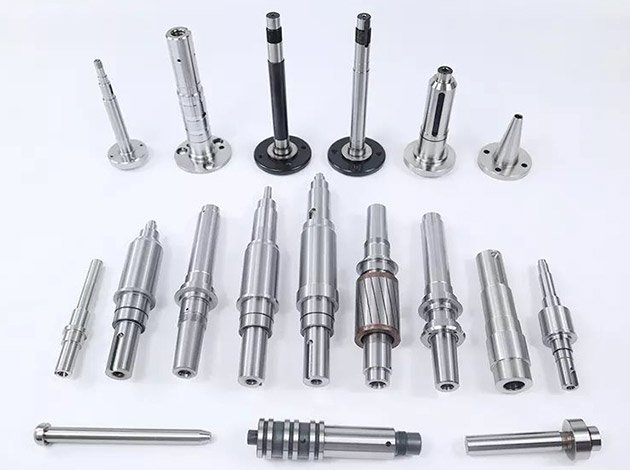
Aerospace CNC sourcing covers a wide range of applications, each with distinct engineering priorities. Aircraft structural components often emphasize weight reduction, stiffness, fatigue resistance, and positional accuracy across large machined surfaces. These parts may include frames, brackets, ribs, bulkhead elements, hinge supports, seat track components, mounting plates, and load-transfer fittings. The machining challenge is to remove material efficiently while managing distortion and protecting functional datums.
Flight control and actuation components require consistency in bores, slots, bearing seats, clevis features, linkage interfaces, and sealing areas. These parts may experience vibration, repeated load cycles, and tight assembly requirements. Tier 1 buyers reviewing suppliers for these components will look closely at geometric tolerance capability, edge control, deburring discipline, and inspection repeatability.
Hydraulic and fuel system parts bring another layer of complexity. Valve bodies, manifolds, sleeves, pistons, pump components, and fittings may include intersecting holes, precision sealing surfaces, controlled internal passages, and strict cleanliness requirements. Even when these components are not classified as flight-critical by themselves, they support systems where leakage, contamination, or dimensional drift can create serious operational issues. Experience in fluid-control machining is therefore highly relevant to aerospace sourcing.
Propulsion-adjacent and thermal environment parts may involve stainless steel, nickel alloys, titanium, and heat-resistant materials. Tool wear, heat input, work hardening, and surface condition become major process concerns. Suppliers must understand how to balance productivity with material integrity. The cheapest quote may become the highest total cost if it results in rejected lots, tool marks, poor repeatability, or delayed delivery.
Avionics, sensor, and optical support components often demand fine features, stable housings, clean surfaces, and precise alignment geometry. Thin-wall enclosures, connector features, heat sink structures, and optical mounts require attention to both machining and handling. A supplier serving aerospace buyers must therefore be comfortable moving between robust structural machining and delicate high-precision work.
Across these applications, Tier 1 suppliers evaluate not only machine lists but also engineering behavior. Does the supplier ask intelligent questions during RFQ review? Can they identify missing specifications? Do they understand critical-to-quality features? Can they support prototype iteration without losing sight of production scalability? Do they communicate risk early? These behaviors often reveal more about long-term supplier value than a capability brochure alone.
Another practical consideration is lifecycle support. Aerospace programs can run for many years, with design changes, replacement parts, service requirements, and production rate adjustments. A supplier that maintains process knowledge, documentation, tooling strategy, and revision control can support the program beyond the first delivery. This is especially important for Tier 1 companies managing global OEM commitments, where late changes and schedule pressure are common.
Call to Action
For Tier 1 aerospace suppliers, sourcing CNC parts is about selecting a partner that can protect engineering intent, delivery commitments, and supply chain continuity. The right supplier brings together precision machining, material knowledge, inspection discipline, ERP-supported control, and the ability to collaborate as an ODM solution provider rather than acting only as a transactional vendor.
IndustryApex Technology, through IndustryApex CNC, supports global OEM and Tier 1 customers with a controlled precision manufacturing system, more than 30 years of engineering experience, and capabilities spanning 3-5 axis CNC machining, EDM, precision grinding, industrial ceramics, and cross-industry high-precision manufacturing. Whether your sourcing team needs titanium aircraft parts, 5-axis structural components, hydraulic system parts, prototype support, or production-ready machining solutions, IndustryApex can help evaluate manufacturability, stabilize processes, and support reliable delivery.
To discuss an aerospace CNC machining project, submit drawings, or request engineering feedback, contact IndustryApex Technology through the IndustryApex CNC contact page. A strong sourcing decision starts before the purchase order; it starts with a supplier that understands what Tier 1 aerospace programs truly require.