- Shaft
- Molds&Tools
- Hydraulics And Pump
- Hair transplant needle
- Hydraulics And Pump
- Precision CNC Shaft Machining Manufacturer for High Performance Applications
- Energy Industry CNC Machining Parts Supplier
- Aerospace CNC Machining Parts Manufacturer
- Aerospace CNC Machining Parts Manufacturer
- Automotive & EV CNC Machining Parts Supplier for OEM and Tier 1
- Medical CNC Machining Parts Supplier for Precision Medical Devices

Cold Heading Tooling vs. CNC Machining: Which Manufacturing Route Is Right for Your Project?

Executive Summary
For global OEMs and Tier 1 suppliers, the choice between cold heading tooling and CNC machining is not simply a unit price comparison. It is a decision about material behavior, geometry, tolerances, production volume, tooling investment, lead time, quality control, and long-term supply chain risk. Cold heading can deliver exceptional productivity for fasteners, pins, rivets, electrical contacts, sleeves, and other high-volume formed components. CNC machining, by contrast, offers unmatched flexibility for complex geometries, tight tolerance features, low-to-mid volume production, and engineered parts that must be validated quickly before scaling.
The right manufacturing route depends on how the part creates value. If the design is axisymmetric or near-axisymmetric, produced in very high quantities, and suitable for plastic deformation at room temperature, cold heading may reduce cycle cost dramatically after the tooling is amortized. It also improves material utilization because the blank is formed rather than cut away. If the component requires complex 3D surfaces, multiple intersecting features, precision bores, critical flatness, advanced alloys, or frequent design changes, CNC machining is often the more reliable route, especially during prototype, pilot, and regulated production phases.
At IndustryApex Technology, operating globally as IndustryApex CNC, we evaluate manufacturing strategy from both engineering and supply chain perspectives. A part may begin as a machined prototype, transition to a near-net cold headed blank, and then receive CNC turning, milling, EDM, precision grinding, or surface finishing. In many cases, the best answer is not cold heading tooling versus CNC machining, but an integrated process plan that uses each method where it creates measurable advantage.
Technical Deep Dive
Cold heading is a cold forming process in which wire or bar stock is cut into slugs and plastically deformed inside dies using high-speed headers. The material flows under compressive force to create heads, shoulders, flanges, recesses, splines, sockets, and other formed features. Because the process displaces metal rather than removing it, cold heading can preserve grain flow and improve fatigue performance in suitable applications. It is widely used for screws, bolts, rivets, pins, bushings, bearing components, and specialized industrial fasteners.
The primary engineering advantage of cold heading is production efficiency. Once the tooling package is complete and validated, cycle rates can be extremely high. Material waste is low, and repeatability is strong for features that are compatible with die forming. However, the method imposes design constraints. Part geometry must allow material flow without cracking, folding, excessive work hardening, or die overload. Sharp internal corners, deep asymmetric pockets, thin walls, difficult undercuts, and complex freeform surfaces may require secondary machining or may be unsuitable for cold heading altogether.
Tooling is the center of the cold heading business case. Dies, punches, pins, carbide inserts, transfer fingers, and process sequences must be designed around material grade, reduction ratio, lubrication, machine tonnage, and dimensional targets. Tooling cost and development time are justified when the production volume is high enough and the part design is stable. For early-stage products, frequent engineering changes can make dedicated forming tools expensive and slow to revise. For mature programs with annual demand in the hundreds of thousands or millions, cold heading can become one of the most cost-effective manufacturing methods available.
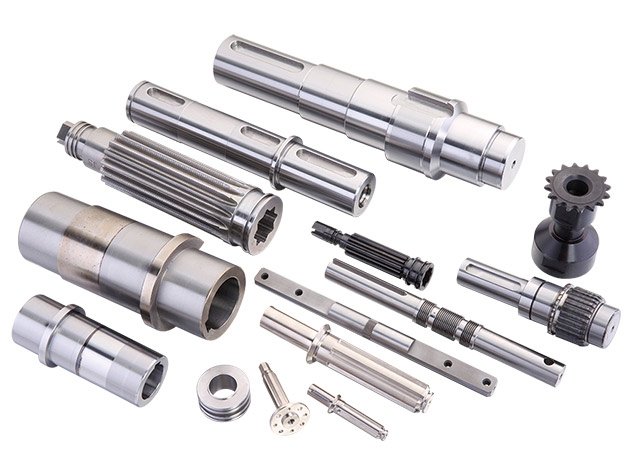
CNC machining removes material using controlled cutting tools on turning centers, milling machines, and 3-axis to 5-axis machining centers. Its strength is geometric freedom. CNC can create complex pockets, precision bores, threads, grooves, sealing faces, datum structures, thin walls, multi-angle features, and contoured surfaces across a wide range of metals and engineering materials. It is especially valuable when the project requires tight tolerances, traceable process control, and rapid iteration before committing to production tooling.
CNC machining also supports advanced secondary processes. A component may require EDM for hard metals or fine slots, precision grinding for roundness and surface finish, lapping for sealing surfaces, or ceramic processing for wear and thermal resistance. In high-performance sectors, the machining route is often selected because it gives engineers controlled access to every critical feature. For example, aerospace brackets, titanium fittings, hydraulic valve components, surgical instrument parts, and precision pump elements may all require a level of dimensional control that cannot be achieved by forming alone.
Cost modeling should account for more than cycle time. Cold heading typically has higher upfront tooling cost and lower variable cost at scale. CNC machining has lower initial investment and higher per-part cutting time, but it can shorten development lead time and reduce risk when demand is uncertain. Material utilization favors cold heading, but CNC may be more economical for low volume parts, complex parts, and components requiring several precision features after forming. Tolerance stack-up also matters. A cold headed blank may be inexpensive, but if several surfaces still require turning, milling, grinding, or inspection, the true cost must include the full route.
From a metallurgical perspective, cold heading changes the internal structure of the material through work hardening and grain flow. This can improve strength in certain directions, but it also requires careful attention to ductility, annealing condition, lubrication, and forming sequence. CNC machining is less disruptive to bulk material flow, though cutting can introduce residual stress, burrs, heat-affected surfaces, or tool marks if not controlled. For critical applications, the manufacturing plan should define burr control, cleanliness, heat treatment, passivation, coating, and inspection requirements early in the design phase.
The ODM & Supply Chain Advantage
The most successful projects begin with process selection before the drawing is locked. As a supply chain integrator and ODM solution provider, IndustryApex Technology helps customers compare cold heading, CNC machining, hybrid manufacturing, and secondary finishing from a total landed cost perspective. This includes engineering feasibility, tooling investment, production ramp, quality assurance, packaging, logistics, and continuity of supply. For global OEMs and Tier 1 suppliers, this early alignment can prevent costly redesigns and supplier fragmentation later in the program.
Our manufacturing edge is a fully controlled precision manufacturing system supported by ERP-driven planning and more than 30 years of practical manufacturing experience. ERP visibility is not just an administrative benefit; it helps coordinate purchasing, work orders, capacity planning, quality records, outside processes, and delivery schedules. When projects involve multiple routes such as cold headed blanks, CNC turning, EDM, grinding, heat treatment, coating, and final inspection, system control becomes a major factor in delivery reliability.
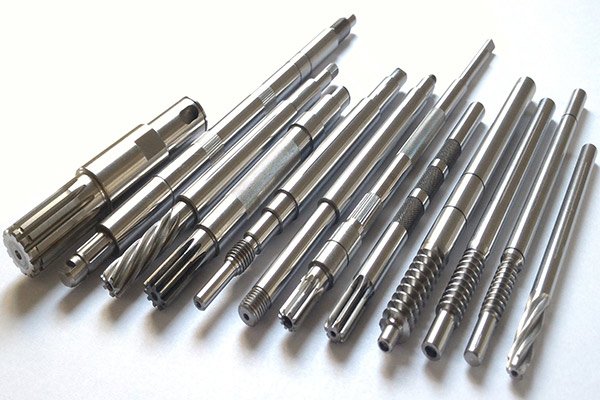
IndustryApex CNC capabilities include 3-axis, 4-axis, and 5-axis CNC machining, EDM, precision grinding, industrial ceramics, and engineered component manufacturing for demanding sectors. This range allows our engineering team to recommend the most practical route instead of forcing every part into one process. A shaft might be CNC turned and ground. A complex structural component might require 5-axis machining. A wear-resistant guide, nozzle, or insulating part might be better suited to industrial ceramics. A high-volume fastener or formed metal element may be optimized around cold heading tooling and then finished with precision machining where needed.
The ODM advantage becomes especially important when a customer has a performance target but not a fully optimized manufacturing design. We can review drawings, 3D models, material specifications, tolerances, surface finishes, and functional requirements to identify where cost and risk are hiding. Sometimes a tolerance is tighter than the function requires. Sometimes a machined feature can be formed near-net. Sometimes a formed feature requires a small machining allowance to stabilize downstream quality. These changes may seem minor on a drawing, but they can have a large impact on production cost, tool life, inspection efficiency, and lead time.
Supply chain resilience is another deciding factor. Cold heading programs depend on tooling availability, wire supply, die maintenance, machine capacity, and stable demand forecasts. CNC programs depend on material procurement, fixture strategy, cutting tool life, machine capacity, and skilled process control. A mature supplier should understand both worlds. At IndustryApex Technology, we support customers who need scalable sourcing for precision components while maintaining engineering accountability across the full manufacturing path.
Industry Applications
Cold heading tooling and CNC machining serve different application profiles across modern industry. In automotive and mobility systems, cold heading is commonly used for fasteners, pins, studs, rivets, and transmission-related formed elements where volume is high and geometry is repeatable. CNC machining is used for housings, shafts, prototypes, precision interfaces, drivetrain components, and complex metal parts that require accurate datums or multiple operations.
In aerospace, the decision is often driven by material, certification, fatigue performance, and inspection control. High-strength fasteners may benefit from forming processes, while complex brackets, titanium fittings, structural parts, and flight-critical components often require advanced machining and traceability. Customers sourcing aerospace CNC machining and titanium aircraft parts typically need process stability, documentation, and the ability to hold demanding tolerances in difficult materials.
Medical and life science applications place similar emphasis on material integrity, cleanliness, and repeatability. Surgical instruments, titanium implants, diagnostic device parts, and miniature precision components frequently rely on CNC machining, grinding, polishing, and controlled finishing. Cold forming may be suitable for selected pins, small metal elements, and simple high-volume parts, but regulated medical components usually require strong validation of every process step. IndustryApex Technology supports customers requiring ISO certified CNC machining for medical components, including titanium implants, surgical instruments, and high-precision device parts.
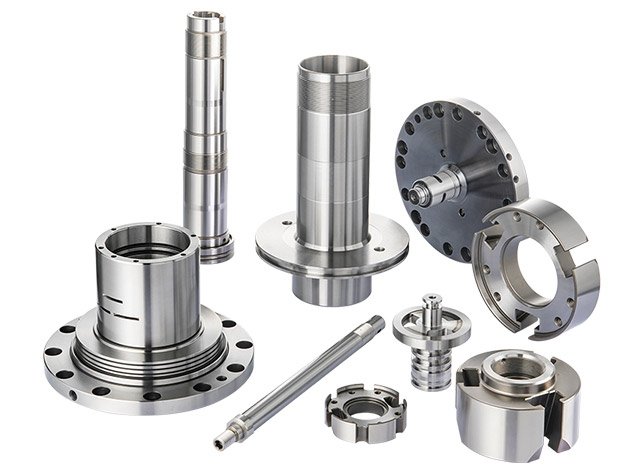
Hydraulic and pump systems illustrate why hybrid thinking matters. A spool, sleeve, valve body, piston, fitting, or pump component may include turned diameters, ground surfaces, cross holes, grooves, sealing lands, and extremely tight clearances. Some blanks can be forged or formed, but the functional surfaces often require CNC machining and precision grinding. For customers developing hydraulic pump parts, the manufacturing route must protect roundness, cylindricity, surface finish, and edge condition because small deviations can affect leakage, pressure stability, noise, and service life.
Industrial machinery, construction equipment, energy systems, electronics, semiconductor equipment, optics, and automation all present their own balance of cost, precision, and volume. Cold heading is compelling where high-volume metal forming delivers repeatable geometry and low waste. CNC machining is compelling where complexity, tolerance, material selection, and design agility dominate the business case. The best suppliers are able to analyze both options without bias and recommend the route that supports the customer’s technical and commercial goals.
Call to Action
If you are deciding between cold heading tooling and CNC machining, the next step is a manufacturing feasibility review. Share your drawing, 3D model, annual volume estimate, material requirement, tolerance table, and target launch schedule. IndustryApex Technology can evaluate whether your project is best suited for cold heading, CNC machining, a hybrid route, or a staged approach that begins with machined prototypes and transitions to production tooling after design validation.
For OEMs and Tier 1 suppliers, the right decision can reduce cost, shorten lead time, improve quality stability, and simplify supplier management. Contact the IndustryApex CNC engineering team through our contact page to discuss your project and identify the most reliable manufacturing path from prototype to scaled production.