- Shaft
- Molds&Tools
- Hydraulics And Pump
- Hair transplant needle
- Hydraulics And Pump
- Precision CNC Shaft Machining Manufacturer for High Performance Applications
- Energy Industry CNC Machining Parts Supplier
- Aerospace CNC Machining Parts Manufacturer
- Aerospace CNC Machining Parts Manufacturer
- Automotive & EV CNC Machining Parts Supplier for OEM and Tier 1
- Medical CNC Machining Parts Supplier for Precision Medical Devices

Optimizing Supply Chains with Low MOQ Micro-Batch Production for Precision CNC Components

Executive Summary
Global OEMs and Tier 1 suppliers are under constant pressure to reduce inventory exposure, accelerate engineering changes, and maintain stable component quality across increasingly volatile demand cycles. Traditional high-MOQ manufacturing models were designed for long production runs, predictable forecasts, and slow product iteration. In today’s market, that model often creates hidden cost: excess inventory, delayed design validation, obsolete stock, cash tied up in parts that may never be used, and supplier relationships that cannot flex with changing technical requirements.
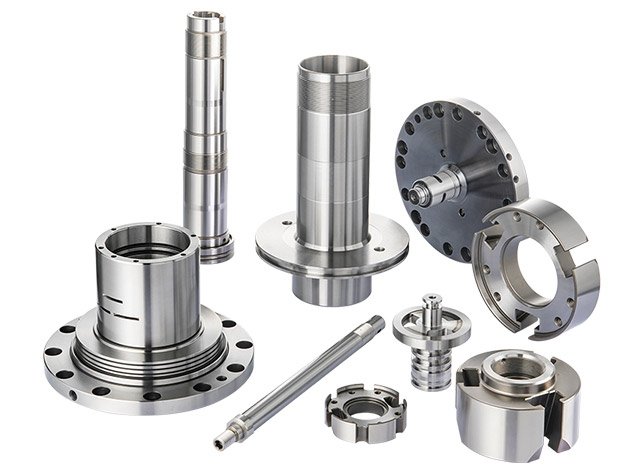
Low MOQ micro-batch production offers a more agile alternative. Instead of committing to large volumes before the design, market, or supply chain risk is fully understood, buyers can run controlled batches of precision CNC components in smaller quantities. This allows procurement, engineering, and quality teams to validate geometry, materials, tolerances, assembly fit, and functional performance before scaling into higher-volume production. For complex parts in aerospace, medical devices, hydraulics, pumps, automation, energy equipment, and precision machinery, this approach can significantly reduce total supply chain risk.
At IndustryApex Technology, operating under the IndustryApex CNC platform, low MOQ micro-batch production is not treated as simple prototype machining. It is managed as an integrated manufacturing and supply chain strategy. Through controlled CNC machining, EDM, precision grinding, industrial ceramics capability, ERP-driven process management, and more than 30 years of manufacturing experience, IndustryApex supports customers who need rapid engineering validation without sacrificing production discipline. Buyers can explore IndustryApex Technology’s precision manufacturing capabilities through IndustryApex CNC, where the focus is on custom-engineered CNC components for demanding global industries.
The key value of micro-batch production is not only smaller order size. It is smarter risk control. A well-managed low MOQ program allows teams to qualify suppliers earlier, test multiple design iterations, stabilize process parameters, and prepare documentation before mass production. This creates a smoother transition from prototype to pilot run to repeatable supply. For global OEM and Tier 1 procurement teams, it can become a practical bridge between R&D urgency and long-term sourcing reliability.
Technical Deep Dive
Low MOQ micro-batch production begins with a different engineering mindset. Instead of asking only, “How fast can this part be made?” the more important question is, “How can this part be manufactured in a way that proves the future production process?” A micro-batch should be designed to reveal manufacturing behavior: tool wear, material distortion, tolerance stack-up, surface finish stability, fixture repeatability, inspection method reliability, and operator-independent process control.
For CNC machined components, the technical foundation starts with manufacturability review. Engineers evaluate part geometry, datum structure, critical-to-quality dimensions, wall thickness, deep cavities, threads, sealing faces, bearing surfaces, and areas requiring tight concentricity or flatness. A low MOQ batch gives the team a controlled opportunity to confirm whether the design can be made consistently, whether tolerances are unnecessarily restrictive, and whether the inspection plan matches real functional needs.
Material selection is another critical area. Aerospace titanium, stainless steel medical components, hardened tool steel, aluminum alloys, copper alloys, engineering plastics, and technical ceramics each behave differently under cutting forces and thermal stress. In a conventional high-volume launch, material and process issues may not appear until significant cost has already been committed. In micro-batch manufacturing, these risks can be isolated early. Cutting parameters, coolant strategy, toolpath sequencing, heat treatment, stress relief, grinding allowance, and surface treatment can be validated step by step.
Dimensional control is where low MOQ manufacturing must be handled carefully. Some suppliers treat small orders as informal work, which creates inconsistent outcomes. A professional micro-batch program should still use defined process routing, inspection checkpoints, tool management, and documentation. First article inspection, coordinate measuring machine inspection, surface roughness verification, gauge checks, and material certification may all be required depending on the application. The purpose is to make the small batch meaningful as a technical data source, not merely a shipment of sample parts.
Fixture strategy also matters. For one-off prototypes, soft fixtures may be acceptable. For micro-batches intended to support future production, fixtures should be designed with repeatability and scalability in mind. The goal is to avoid a situation where the sample batch succeeds only because of excessive manual adjustment, but future production fails when volumes increase. A strong manufacturing partner will identify which fixture investments are justified at the low MOQ stage and which can wait until demand is confirmed.
Process sequencing is equally important. A part may require 3-axis roughing, 5-axis finishing, EDM for internal features, grinding for precision surfaces, and post-processing for corrosion resistance, wear resistance, or biocompatibility. Each operation introduces potential variation. Micro-batch production allows engineers to map those variation points and refine the route before full-scale sourcing. This is particularly valuable for components with tight sealing requirements, rotating balance considerations, sliding fit interfaces, or fatigue-sensitive features.
From a supply chain perspective, the technical deep dive should generate usable evidence. Buyers should expect clear communication around manufacturability risks, tolerance recommendations, inspection results, lead time drivers, and cost drivers. When done correctly, micro-batch production creates a technical file that supports design decisions, supplier qualification, and future production planning. It transforms a small order into a structured learning cycle.
The ODM & Supply Chain Advantage
IndustryApex Technology’s advantage is rooted in its role as both a supply chain integrator and an ODM solution provider. Many manufacturers can machine parts from drawings, but global OEMs and Tier 1 suppliers increasingly need partners who can interpret product intent, identify manufacturing risks, coordinate multiple precision processes, and help stabilize the supply chain from early development to repeat production. This is where the ODM model becomes strategically important.
As an ODM-oriented manufacturing partner, IndustryApex can support customers before a final drawing is frozen. Engineering teams may need help refining tolerances, selecting alternative materials, improving manufacturability, reducing part count, or developing a more reliable production route. In a low MOQ micro-batch environment, these inputs are especially valuable because every small batch can become a feedback loop. Instead of treating the supplier as a passive vendor, the customer gains a manufacturing partner that can help convert technical uncertainty into controlled engineering decisions.
IndustryApex’s manufacturing edge comes from a fully controlled precision manufacturing system supported by ERP management and over 30 years of experience. ERP control is essential because low MOQ does not mean low complexity. Multiple small orders, engineering revisions, material lots, inspection requirements, and customer-specific documentation can quickly become difficult to manage without disciplined systems. ERP-based coordination helps connect order planning, material control, production routing, quality records, and delivery schedules, giving customers better visibility and reducing the risk of communication gaps.
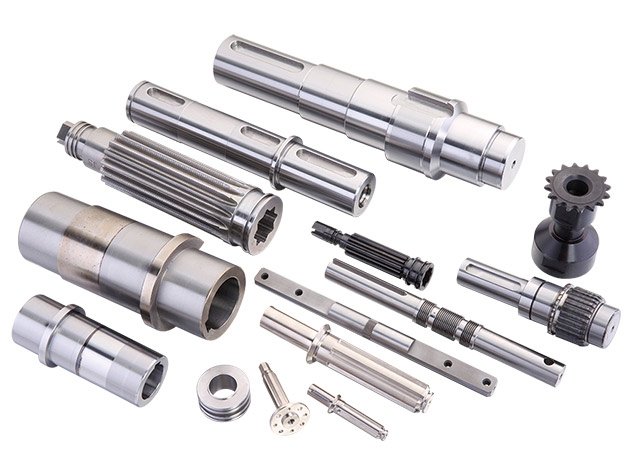
On the manufacturing side, IndustryApex Technology integrates 3-axis and 5-axis CNC machining, EDM, precision grinding, and industrial ceramics capabilities. This combination is important for micro-batch production because many high-value components are not completed by a single process. A titanium aerospace bracket may require multi-axis machining and controlled surface finishing. A hydraulic valve component may require precision grinding to achieve sealing and sliding performance. A medical device component may require stainless steel or titanium machining with strict dimensional and surface requirements. Ceramic parts may demand specialized grinding and handling processes that conventional machine shops cannot support.
For procurement teams, this integrated capability reduces supplier fragmentation. Instead of managing separate vendors for machining, EDM, grinding, ceramic processing, and inspection coordination, customers can work with one manufacturing partner that understands the complete component journey. This is especially important for micro-batch projects, where coordination costs can easily outweigh the value of the small order if the supply base is too fragmented.
The supply chain benefit also extends to risk management. Low MOQ production allows customers to qualify a supplier without committing immediately to long-term tooling or large inventories. It provides a practical path for dual sourcing, new product introduction, engineering change validation, aftermarket support, and service part replenishment. For industries with long product lifecycles, micro-batches can also support legacy parts where annual demand is too low for conventional MOQ requirements but quality expectations remain high.
For global OEM and Tier 1 suppliers, the strongest micro-batch partners are those who can scale. A supplier may be able to produce ten pieces, but can they produce the next 500 pieces with the same process logic, inspection discipline, and delivery reliability? IndustryApex’s controlled manufacturing system is designed to support this progression. The micro-batch stage is treated as the beginning of a scalable manufacturing relationship, not as an isolated transaction.
Industry Applications
Low MOQ micro-batch production is valuable across industries where component performance, certification, and design evolution matter more than simple piece-price purchasing. In aerospace, the approach is useful for structural components, titanium parts, brackets, housings, actuator parts, and assemblies that require tight control of geometry and material behavior. Aerospace programs often face long qualification cycles and frequent engineering updates, so producing smaller validation batches can reduce risk before committing to production volume. IndustryApex’s capabilities in aerospace CNC machining and titanium aircraft parts support this need for precision, traceability, and scalable manufacturing control.
Medical device manufacturing also benefits from low MOQ production. Surgical instruments, titanium implants, diagnostic equipment parts, and precision device components often require multiple design iterations before validation. Small-batch production helps engineering teams test ergonomics, assembly fit, sterilization considerations, surface finish, and material performance without overcommitting inventory. For customers in regulated environments, IndustryApex’s experience with ISO-certified CNC machining for medical components provides a practical foundation for early-stage and repeat production needs.

Hydraulics and pump systems are another strong application area. Valve spools, sleeves, pump shafts, pistons, housings, sealing components, and flow-control parts often depend on surface finish, roundness, straightness, clearance, and material stability. A small deviation can affect leakage, pressure stability, efficiency, and service life. Micro-batch production allows customers to confirm functional performance before wider deployment. IndustryApex’s work in hydraulic pump parts supports buyers who require precision machining, grinding, and controlled process planning for fluid power systems.
Industrial automation, robotics, energy equipment, semiconductor support systems, optics equipment, and precision machinery can all use low MOQ production to manage demand uncertainty. These industries often need custom shafts, housings, ceramic components, tool holders, positioning parts, impellers, gears, transmission components, and machined structural elements. Many projects start with uncertain volume forecasts, but still require production-grade quality. Micro-batching gives these teams a way to move quickly while preserving engineering discipline.
The commercial impact can be significant. Low MOQ production can shorten new product introduction cycles by enabling parallel engineering validation and supplier qualification. It can reduce working capital by preventing excessive stock. It can improve resilience by allowing customers to test alternate suppliers or alternate materials before a disruption occurs. It can also support product customization, where multiple variants are needed but each variant has limited volume.
However, low MOQ should not be confused with low-cost improvisation. The best results come when customers provide clear drawings, functional requirements, target quantities, material expectations, surface treatment needs, inspection standards, and future volume assumptions. With that information, IndustryApex can recommend a manufacturing plan that balances speed, cost, quality, and scalability. The earlier the manufacturing team is involved, the more opportunity there is to reduce risk before parts reach critical production milestones.
Call to Action
For OEMs and Tier 1 suppliers, the supply chain question is no longer simply whether a supplier can produce a part. The better question is whether the supplier can help control uncertainty from the first engineering batch through repeatable production. Low MOQ micro-batch production gives procurement, engineering, and quality teams a practical method to validate designs, reduce inventory exposure, and build a more responsive sourcing model.
IndustryApex Technology combines precision manufacturing capability, ODM engineering support, ERP-controlled production, and decades of experience to help customers manage this transition with confidence. Whether your team is developing aerospace components, medical device parts, hydraulic and pump components, industrial ceramic parts, or high-precision machined structures, a micro-batch strategy can provide the data and flexibility needed before scaling production.
To discuss a low MOQ micro-batch project, request manufacturability feedback, or explore a custom CNC component supply program, connect with IndustryApex Technology through the IndustryApex CNC contact page. A focused technical conversation at the beginning of a project can prevent costly supply chain problems later and help transform small-batch production into a long-term manufacturing advantage.