- Shaft
- Molds&Tools
- Hydraulics And Pump
- Hair transplant needle
- Hydraulics And Pump
- Precision CNC Shaft Machining Manufacturer for High Performance Applications
- Energy Industry CNC Machining Parts Supplier
- Aerospace CNC Machining Parts Manufacturer
- Aerospace CNC Machining Parts Manufacturer
- Automotive & EV CNC Machining Parts Supplier for OEM and Tier 1
- Medical CNC Machining Parts Supplier for Precision Medical Devices
Hydraulic Pump Parts: Ensuring Reliability through Precision Grinding


Executive Summary
Hydraulic pumps operate in one of the most demanding environments in industrial motion control. Whether installed in construction machinery, agricultural equipment, aerospace actuation systems, injection molding machines, energy platforms, or automated production lines, the pump must convert mechanical input into stable hydraulic power with minimal leakage, controlled vibration, and predictable service life. At the center of that performance are precision-machined hydraulic pump parts: valve plates, pistons, cylinder blocks, slippers, shafts, bushings, bearing seats, sleeves, and sealing faces. Their reliability depends not only on material selection and CNC accuracy, but also on the final surface integrity created through precision grinding.
For global OEMs and Tier 1 suppliers, hydraulic pump components are not simple metal parts. They are functional interfaces inside a high-pressure fluid system. A few microns of flatness error, roundness deviation, taper, surface waviness, or burr contamination can trigger leakage, heat generation, pressure instability, premature wear, and warranty risk. This is why precision grinding is a strategic manufacturing process rather than a finishing afterthought. It defines sealing performance, contact behavior, oil film stability, and repeatability across production batches.
IndustryApex Technology, operating through IndustryApex CNC, supports OEM customers as a supply chain integrator and ODM solution provider for high-precision components. Through a controlled manufacturing system that combines 3-5 axis CNC machining, EDM, precision grinding, industrial ceramics, inspection planning, ERP-based production control, and more than 30 years of manufacturing experience, we help engineering and procurement teams reduce component risk before it reaches the assembly line. For hydraulic and pump projects, our capabilities are aligned with the requirements shown on our dedicated hydraulic pump parts service page and supported by the broader manufacturing resources of IndustryApex CNC.
This article examines why precision grinding matters, which hydraulic pump parts benefit most from grinding control, how tolerances influence system-level reliability, and how an ODM-oriented manufacturing partner can strengthen both engineering performance and supply chain resilience.
Technical Deep Dive
Hydraulic pump reliability begins with geometry. In axial piston pumps, vane pumps, gear pumps, and high-pressure cartridge assemblies, components must move under load while maintaining fluid separation at the correct points and sealing contact at others. Precision grinding is used because many of these features cannot be fully stabilized by turning, milling, or lapping alone. Grinding provides high dimensional control, predictable surface texture, and improved form accuracy on hardened steels, stainless alloys, tool steels, ceramics, and wear-resistant materials.
One of the most critical examples is the valve plate. The valve plate controls flow timing between the rotating cylinder block and the pump ports. Its face must maintain extremely tight flatness and parallelism to reduce internal leakage while allowing a stable lubricating film. If the surface is too rough, wear accelerates. If it is too smooth without the correct texture direction and oil retention characteristics, the interface may run hot or develop adhesive wear. Precision surface grinding, followed when required by controlled lapping or polishing, allows engineers to specify the surface finish and flatness window that matches pressure, speed, viscosity, and duty cycle.
Cylinder blocks and piston bores present another precision challenge. The bore geometry influences volumetric efficiency, piston motion, friction, and leakage. Honing is often used for bore texture, but grinding may be required for reference faces, bearing areas, and hardened surfaces that locate the block in the rotating group. If perpendicularity between the bore axis and sealing face is not controlled, piston side loading increases. That can create uneven wear patterns and reduce service life under high-pressure cycling.
Pistons, plungers, and spool-like components depend on roundness, cylindricity, and surface finish. In hydraulic systems, the clearance between a moving part and its mating bore is frequently measured in microns. Too much clearance increases leakage; too little clearance risks seizure when thermal expansion, contamination, or pressure distortion occurs. Centerless grinding and cylindrical grinding provide the control needed to maintain consistent shaft-like geometries across production lots. For hardened pistons, nitrided surfaces, chrome-plated parts, or carbide-related wear surfaces, grinding parameters must be selected to prevent thermal damage, microcracking, and residual stress problems.
Surface integrity is often more important than a drawing note suggests. Grinding burn, tensile stress, smeared material, and subsurface cracks can become failure origins. In hydraulic pump parts, these defects may not be visible during basic inspection but can appear later as spalling, scoring, or seal damage. This is why process control matters. Wheel selection, dressing condition, coolant delivery, in-process gauging, magnetic particle testing where applicable, and post-grind inspection all contribute to part reliability. A supplier that treats grinding as an engineered process can reduce hidden risk in high-volume or safety-critical assemblies.
Precision grinding also supports noise and vibration control. Pump noise is not only a hydraulic design issue; it is also a manufacturing quality issue. Uneven face contact, eccentric rotating components, poorly ground bearing seats, and inconsistent gear or shaft surfaces can introduce vibration. By controlling concentricity, runout, and surface finish, grinding helps maintain smoother operation, better bearing life, and lower acoustic signatures. For OEMs selling machinery into regulated or premium markets, this directly affects product perception and compliance.
Material choice changes the grinding strategy. Carbon steels, stainless steels, bearing steels, tool steels, copper alloys, engineering ceramics, and carbide materials all behave differently under the wheel. Stainless materials can load the wheel and generate heat. Hardened bearing steels require burn control. Ceramics demand rigid equipment, correct abrasive selection, and careful crack prevention. IndustryApex Technology’s experience with industrial ceramics and high-precision machining gives engineering teams more freedom to consider wear-resistant material solutions when standard metals are not sufficient.
The technical value of grinding is therefore not limited to achieving a single dimension. It is the ability to create functional surfaces that behave consistently inside a hydraulic circuit. For engineering teams, this means fewer assembly adjustments, more stable test bench results, and reduced variation from one batch to the next. For procurement teams, it means fewer supplier quality events, less rework, and more predictable inventory planning.
The ODM & Supply Chain Advantage
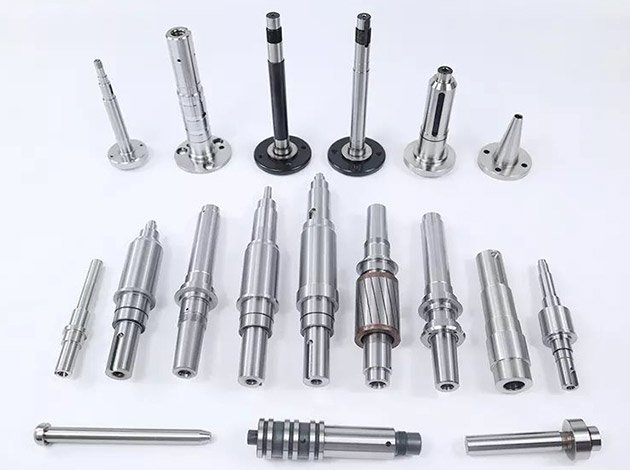
Many hydraulic component sourcing problems begin when machining is treated as a purchase order transaction instead of an engineering and supply chain project. A drawing is sent to several vendors, prices are compared, and the lowest quote is selected. This may work for simple brackets or non-critical hardware, but it is risky for hydraulic pump parts where surface finish, form tolerance, material certification, heat treatment stability, cleanliness, and inspection strategy all affect final pump performance.
IndustryApex Technology’s role is different. As a supply chain integrator and ODM solution provider, we support customers from manufacturability review through prototype validation, controlled production, inspection, and recurring supply. This is especially important when OEMs need custom pump components, replacement parts, upgraded wear parts, or localized manufacturing alternatives for complex assemblies. Our team can evaluate tolerance stacks, identify grinding-critical surfaces, recommend process routes, and help align the manufacturing plan with the functional requirements of the pump.
The manufacturing edge comes from a fully controlled precision manufacturing system supported by ERP and more than 30 years of experience. ERP control is not only an administrative tool; it is a production discipline. It helps manage routing, material status, work-in-progress, outside treatment coordination, inspection records, batch traceability, and delivery planning. For global OEM and Tier 1 suppliers, this level of organization reduces the risk of missed operations, mixed revisions, and unstable lead times.
Our technical capabilities include 3-5 axis CNC machining, EDM, precision grinding, and industrial ceramics processing. This combination is valuable because hydraulic parts often require multiple precision processes. A pump shaft may need turning, milling, heat treatment, cylindrical grinding, keyway machining, and final inspection. A valve plate may require CNC profiling, drilling, heat treatment, face grinding, lapping, deburring, and flatness verification. A sleeve or spool may require deep-hole features, EDM details, centerless grinding, and surface finish control. Keeping these processes coordinated inside a controlled supplier network improves accountability and reduces handoff risk.
ODM support also helps when customers are developing next-generation hydraulic systems. Higher pressure ratings, compact package sizes, improved efficiency targets, and longer service intervals all increase the burden on component manufacturing. Engineering teams may need to compare materials, revise groove geometry, improve sealing interfaces, or replace conventional wear surfaces with advanced materials. IndustryApex Technology can provide manufacturing feedback before designs are frozen, allowing customers to avoid tolerance schemes that are expensive, unstable, or difficult to inspect.
This supply chain model is not limited to hydraulics. The same precision discipline is used in other demanding sectors, including aerospace CNC machining, where structural integrity and traceability are essential, and medical component machining, where surface quality, biocompatible materials, and process control are tightly scrutinized. Hydraulic pump customers benefit from this cross-industry mindset because it brings a higher standard of documentation, inspection, and manufacturing discipline to industrial fluid power parts.
For procurement leaders, the advantage is practical. A qualified ODM partner can consolidate multiple part families, stabilize recurring supply, support engineering changes, and reduce the hidden costs of fragmented sourcing. For engineering leaders, the advantage is technical. A partner with grinding, CNC, EDM, and advanced material capability can solve component-level problems without forcing design compromises too early.
Industry Applications
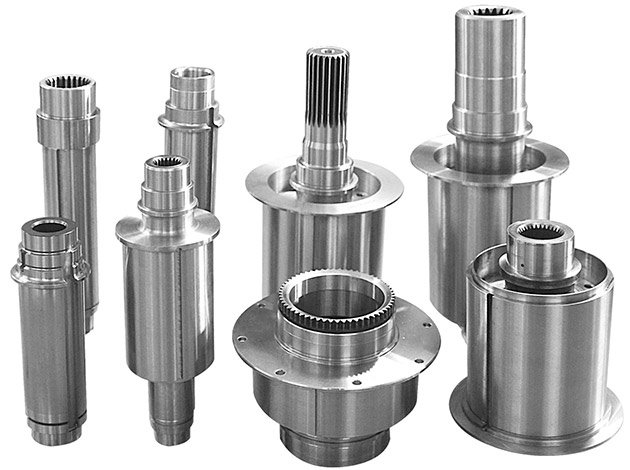
Hydraulic pump parts are used across industries where force, durability, and controllable motion are required. In construction machinery, pumps drive excavator arms, loaders, cranes, road equipment, and concrete machinery. These applications face shock loads, dust, vibration, temperature changes, and long operating hours. Precision-ground shafts, pistons, plates, and sleeves help preserve pump efficiency even when equipment works in harsh field conditions.
In agricultural machinery, hydraulic pumps support steering, lifting, harvesting, seeding, and implement control. Seasonal use patterns create a different reliability challenge: machines may sit idle for long periods and then operate intensively during narrow production windows. Components must resist wear, corrosion, and contamination-related scoring. Consistent surface finish and controlled clearances reduce the risk of leakage and unstable performance when equipment is returned to service.
Industrial automation and manufacturing equipment rely on hydraulic power for presses, clamping systems, die casting machines, forming equipment, injection molding machines, and heavy-duty positioning systems. In these environments, repeatability affects production quality. A pump that loses efficiency or generates pressure fluctuation can influence cycle time, part consistency, and machine uptime. Precision-ground pump components help maintain stable hydraulic behavior over millions of cycles.
Energy and marine systems require robust hydraulic components for turbines, drilling equipment, winches, steering systems, and offshore mechanisms. These applications often demand corrosion resistance, high load capacity, and traceable quality documentation. When replacement is difficult and downtime is expensive, component reliability becomes a supply chain priority. Grinding quality, material control, and inspection records all contribute to lifecycle confidence.
Aerospace and defense hydraulic systems place additional emphasis on weight, safety, and reliability. While hydraulic pump parts in these sectors may use specialized alloys and strict quality systems, the fundamental requirement remains the same: precision surfaces must perform under pressure without unpredictable wear or leakage. The manufacturing lessons from high-reliability sectors can also improve commercial and industrial pump programs.
Fluid control assemblies beyond pumps also benefit from the same expertise. Valve spools, sleeves, plungers, metering parts, check valve components, and actuator interfaces all depend on controlled sliding fits and sealing surfaces. For many OEMs, sourcing these related components from a supplier with hydraulic manufacturing experience simplifies qualification and improves consistency across the full system.
Call to Action
Hydraulic pump reliability is built through a chain of disciplined decisions: material selection, heat treatment, CNC machining, EDM when needed, precision grinding, deburring, cleaning, measurement, and supply chain control. If any link is weak, the final pump may suffer from leakage, noise, vibration, wear, or shortened service life. For OEMs and Tier 1 suppliers, the right manufacturing partner can reduce these risks before they become production issues.
IndustryApex Technology provides precision manufacturing and ODM support for hydraulic pump parts and other high-performance components. Our team combines engineering review, controlled production, precision grinding capability, advanced CNC machining, industrial ceramics expertise, and ERP-supported supply chain management. Whether you are developing a new hydraulic platform, replacing an unstable supplier, improving a critical wear component, or consolidating precision part sourcing, IndustryApex CNC can support the project from prototype to repeat production.
To discuss your drawings, specifications, materials, tolerance requirements, or production plan, visit our Contact Us page and connect with the IndustryApex Technology engineering team. We will help evaluate the manufacturing route, identify critical grinding requirements, and build a reliable supply solution for your hydraulic pump components.