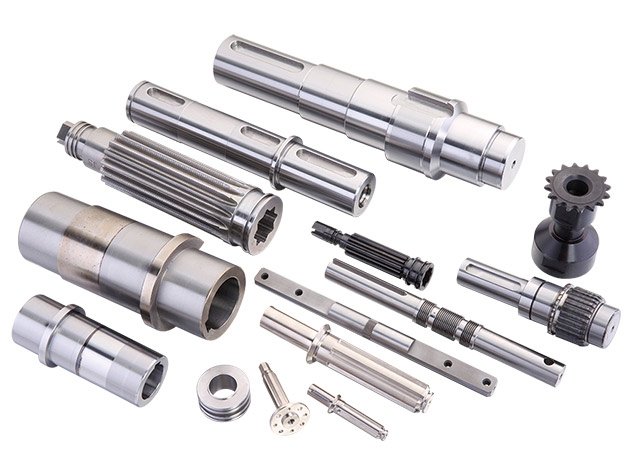
- Shaft
- Molds&Tools
- Hydraulics And Pump
- Hair transplant needle
- Hydraulics And Pump
- Precision CNC Shaft Machining Manufacturer for High Performance Applications
- Energy Industry CNC Machining Parts Supplier
- Aerospace CNC Machining Parts Manufacturer
- Aerospace CNC Machining Parts Manufacturer
- Automotive & EV CNC Machining Parts Supplier for OEM and Tier 1
- Medical CNC Machining Parts Supplier for Precision Medical Devices

Industrial Ceramics Machining: Zirconia and Alumina Applications for High-Reliability OEM Supply Chains

Executive Summary
Industrial ceramics machining has moved from a specialist process into a strategic manufacturing capability for OEMs that need higher wear resistance, better dimensional stability, electrical insulation, chemical inertness, and thermal performance than metals or polymers can provide. Among advanced ceramics, zirconia and alumina are the two materials most frequently specified for engineered components because they offer a practical balance of performance, availability, machinability after sintering, and cost control. For global OEM and Tier 1 suppliers, the key question is no longer whether ceramics can solve demanding engineering problems. The key question is how to industrialize ceramic components with predictable quality, stable lead times, and controlled total cost.
Zirconia is often selected where toughness, impact resistance, low thermal conductivity, and excellent surface finish matter. It is used in precision sleeves, plungers, valve components, medical device parts, wear guides, forming tools, and insulating components where fracture resistance is critical. Alumina, especially high-purity alumina grades, is valued for hardness, electrical insulation, corrosion resistance, dielectric strength, and high-temperature capability. It is widely used in semiconductor equipment, pumps, fluid control systems, medical and chemical assemblies, aerospace instrumentation, sensor housings, and electrical insulation systems.
The machining challenge is that ceramics do not behave like ductile metals. They are hard, brittle, and sensitive to microcracking, edge chipping, grinding heat, and internal stress. Successful ceramic part production requires early design-for-manufacturing review, material grade selection, green machining or fully sintered machining strategy, diamond grinding expertise, lapping and polishing control, inspection discipline, and supply chain coordination. IndustryApex Technology, operating through IndustryApex CNC, supports customers as a precision manufacturing partner for complex parts where material behavior, process planning, and delivery reliability must be managed together.
Technical Deep Dive
Zirconia and alumina are both engineered oxide ceramics, but their mechanical behavior and application windows are different. Zirconia, particularly yttria-stabilized zirconia, is known for transformation toughening. When stress develops near a crack tip, the microstructure can locally transform in a way that resists crack propagation. This gives zirconia higher fracture toughness than many other ceramics and makes it suitable for components exposed to sliding contact, vibration, sealing loads, or repeated assembly cycles. Alumina, by contrast, is typically harder and more chemically stable, with excellent dielectric behavior and resistance to high-temperature oxidation. It is often the preferred choice when electrical insulation, purity, and long-term wear resistance are more important than impact toughness.
From a machining standpoint, both materials require a process route that respects brittleness. Some ceramic blanks are shaped in the green or pre-sintered state, where material removal is easier and faster. After firing, the component shrinks according to the ceramic formulation and sintering profile, so the manufacturer must compensate for shrinkage and then finish critical features by grinding or lapping. Fully sintered machining provides tighter final dimensional control, but it is slower, tool-intensive, and highly dependent on diamond abrasive selection, coolant control, wheel dressing, and machine rigidity.
Design teams should pay close attention to edge conditions, wall thickness, hole geometry, slots, transitions, and tolerance callouts. Sharp internal corners increase stress concentration and may drive unnecessary scrap. Very thin walls and deep blind holes can be possible, but they demand careful sequencing and realistic tolerance planning. In many ceramic parts, the highest-risk features are not the largest surfaces but small edges, cross holes, sealing lands, and precision bores that must remain chip-free after grinding. Engineers should specify functional requirements clearly, including sealing surfaces, bearing surfaces, dielectric paths, and cosmetic zones, so manufacturing effort is directed where it creates real value.
Surface finish is another important engineering variable. A smoother ceramic surface can reduce friction, improve sealing, support cleanroom compatibility, and limit particle generation. However, extremely fine finishes can increase cycle time and cost if they are applied broadly across nonfunctional areas. Lapping and polishing should be reserved for surfaces where fluid sealing, wear behavior, optical contact, or medical cleanliness requires it. For pump plungers, valve sleeves, metering components, and high-cycle sliding parts, surface texture and roundness often matter as much as nominal diameter.
Inspection must be planned around ceramic failure modes. Dimensional inspection with CMMs, optical measurement, air gauges, and precision bore gauges can verify geometry, but quality control may also require visual inspection under magnification, surface roughness measurement, flatness testing, and process records that confirm grinding stability. For mission-critical applications, manufacturers may add dye penetrant, ultrasonic inspection, or application-specific validation. The goal is to detect microcracks, chips, warpage, and surface damage before assembly, where a small defect can become a field reliability issue.
The ODM & Supply Chain Advantage
Industrial ceramic components are rarely just catalogue parts. They usually sit inside larger systems: pumps, valves, actuators, medical instruments, semiconductor equipment, aerospace sensors, battery production tools, chemical handling modules, or high-speed automation machinery. This is why an ODM and supply chain integrator model is valuable. The manufacturer must understand not only how to grind zirconia or alumina, but also how the ceramic component interfaces with metals, seals, coatings, fasteners, springs, shafts, housings, and final assembly requirements.
IndustryApex Technology positions its IndustryApex CNC platform as a supply chain integrator and ODM solution provider for global OEM and Tier 1 suppliers. This matters because ceramic machining is often one part of a broader procurement challenge. Customers may need ceramic plungers, stainless housings, titanium fittings, carbide wear elements, precision shafts, and assembled modules delivered under one quality and logistics framework. Managing these parts through disconnected vendors can create tolerance stack problems, interface ambiguity, inconsistent documentation, and avoidable schedule risk.
With more than 30 years of manufacturing experience and a fully controlled precision manufacturing system supported by ERP, IndustryApex Technology can coordinate engineering review, quotation, process planning, production scheduling, inspection, and shipment with traceability. The manufacturing capability set includes 3-axis to 5-axis CNC machining, EDM, precision grinding, and industrial ceramics processing. This combination is especially useful when customers are developing hybrid assemblies that combine ceramic wear surfaces with machined metal bodies or when a ceramic component must be designed around nearby CNC-machined parts.
The ODM advantage begins before production. During early technical review, the engineering team can recommend whether zirconia, alumina, sapphire, carbide, stainless steel, titanium, or another material best fits the customer’s performance target. Sometimes a design that originally calls for alumina may need zirconia to improve toughness. In other cases, alumina may reduce cost while improving insulation or thermal stability. For high-pressure or high-wear systems, the optimal solution may be a ceramic insert integrated into a metal carrier rather than an all-ceramic part. These decisions affect performance, cost, yield, and lead time.
ERP-driven production control also supports supply chain continuity. Ceramic parts often have longer material preparation and finishing cycles than standard metal components, and many global buyers cannot afford late discovery of process bottlenecks. Forecast visibility, batch planning, controlled subcontract operations when needed, and inspection documentation allow purchasing and engineering teams to make informed decisions. For OEMs scaling from prototype to recurring production, the ability to stabilize the full chain is as important as the ability to machine one difficult feature.
Industry Applications
In semiconductor and electronics equipment, alumina is widely used for insulating plates, precision guides, vacuum-compatible components, wafer handling elements, and plasma-resistant parts. The industry demands low particle generation, dimensional stability, and material cleanliness. Zirconia may be selected for tougher wear components or precision alignment features where fracture resistance is required. Both materials can support high-performance equipment when machining, cleaning, and packaging are controlled appropriately.
In medical and life science applications, zirconia and alumina are used for surgical tools, instrument guides, dosing components, insulation parts, and wear-resistant device elements. Zirconia’s toughness and smooth finish potential make it attractive for components exposed to repeated contact or fluid movement, while alumina provides chemical stability and electrical insulation. For customers developing precision medical components, IndustryApex Technology also supports broader machining needs through its medical parts CNC machining capability, where documentation, repeatability, and surface integrity are central concerns.
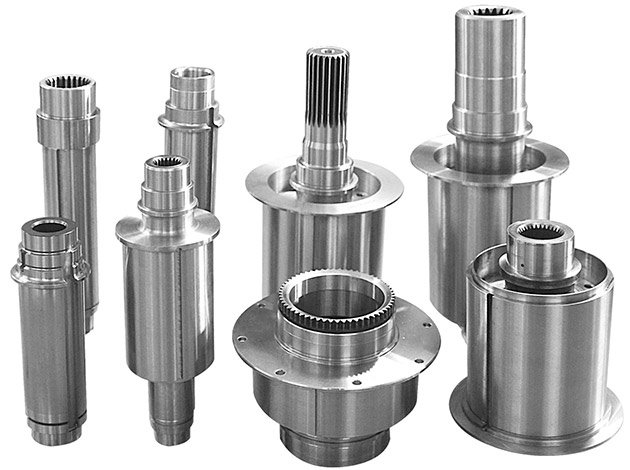
Fluid control, hydraulic, and pump systems are another strong application area. Ceramic plungers, valve seats, sleeves, seals, balls, and metering components can outperform metal parts in abrasive, corrosive, or high-cycle environments. Alumina offers hardness and chemical resistance, while zirconia adds toughness and excellent sliding behavior. In pump assemblies, ceramic components can reduce wear, maintain tighter clearances over longer service intervals, and improve resistance to aggressive media. Buyers working on these systems can connect ceramic component development with related hydraulic and pump part manufacturing to improve interface control across the assembly.
Aerospace and defense applications use technical ceramics where low weight, insulation, heat resistance, and stability are required. Ceramic components may appear in sensors, electrical feedthroughs, thermal barriers, wear pads, precision spacers, and instrumentation hardware. These parts must be designed with conservative stress assumptions and manufactured under disciplined inspection controls. IndustryApex Technology’s experience with aerospace CNC machining and aircraft structural components also supports customers who need ceramic parts integrated with titanium, aluminum, stainless steel, or high-temperature alloy components.
Industrial automation, food and beverage machinery, chemical processing, energy equipment, textile machinery, and precision tooling also benefit from zirconia and alumina. Typical examples include wire guides, forming dies, nozzles, insulation sleeves, dosing pistons, wear plates, positioning pins, burner components, sensor protection tubes, and tooling inserts. The business case is usually built on longer service life, reduced downtime, cleaner operation, improved electrical isolation, or better resistance to chemicals and heat. While ceramics may cost more per piece than simple metal alternatives, total cost can improve when replacement frequency, machine stoppage, process contamination, and warranty exposure are included in the calculation.
Call to Action
For OEM engineers and sourcing teams, the best time to engage a ceramic machining partner is before the drawing is frozen. Material choice, tolerance strategy, edge protection, surface finish, inspection method, and assembly interface decisions all influence whether zirconia or alumina components can be produced reliably at scale. A small design adjustment at the prototype stage can prevent recurring yield loss and shorten the path to stable production.
IndustryApex Technology helps global OEM and Tier 1 suppliers convert demanding ceramic component concepts into manufacturable, supply-chain-ready parts. Whether your project involves zirconia wear components, alumina insulating parts, ceramic pump elements, precision medical device components, aerospace instrumentation parts, or hybrid ceramic-metal assemblies, our engineering and manufacturing teams can support design review, prototyping, process development, and recurring production.
To discuss your application, drawing package, material requirements, target volume, or supply chain challenge, visit Contact Us. The earlier we understand the operating environment and commercial requirements, the better we can help you choose the right ceramic material, control machining risk, and build a manufacturing plan that supports long-term reliability.