- Shaft
- Molds&Tools
- Hydraulics And Pump
- Hair transplant needle
- Hydraulics And Pump
- Precision CNC Shaft Machining Manufacturer for High Performance Applications
- Energy Industry CNC Machining Parts Supplier
- Aerospace CNC Machining Parts Manufacturer
- Aerospace CNC Machining Parts Manufacturer
- Automotive & EV CNC Machining Parts Supplier for OEM and Tier 1
- Medical CNC Machining Parts Supplier for Precision Medical Devices

Industrial Ceramics Machining: Zirconia and Alumina Applications for High-Performance OEM Components

Industrial Ceramics Machining: Zirconia and Alumina Applications for High-Performance OEM Components
1. Executive Summary
Industrial ceramics have transitioned from niche laboratory materials to mission-critical engineering solutions across aerospace, semiconductor, medical, and energy sectors. Among the engineered ceramics dominating modern OEM specifications, zirconia (ZrO₂) and alumina (Al₂O₃) stand out for their ability to operate where metals fail: extreme temperatures, corrosive chemistries, dielectric environments, and tribological systems demanding sub-micron wear resistance.
Yet machining these materials is not a straightforward extension of metalworking. The hardness that makes ceramics valuable, often exceeding HRC 80 in sintered form, also makes them brittle, abrasive to tooling, and intolerant of conventional cutting strategies. For Tier 1 suppliers and global OEMs sourcing precision ceramic components, the true differentiator lies not in possessing a CNC machine, but in mastering the integrated process chain from green-state forming through diamond grinding, EDM finishing, and metrology validation.
At IndustryApex Technology, our IndustryApex CNC platform delivers this integrated capability. Drawing on more than three decades of precision manufacturing experience and a fully ERP-controlled supply chain, we machine zirconia and alumina components to tolerances as tight as ±2 μm for customers in semiconductor lithography, surgical instrumentation, hydraulic flow control, and aerospace thermal management. This article examines the technical landscape, supply chain economics, and application portfolio defining today’s industrial ceramics market.
2. Technical Deep Dive
Understanding why zirconia and alumina demand specialized machining begins with their material physics. Both are sintered polycrystalline oxides, but their performance envelopes differ in ways that drive component selection.
Zirconia (ZrO₂): The Toughened Ceramic
Yttria-stabilized zirconia (Y-TZP) exhibits a flexural strength of 900 to 1,200 MPa and a fracture toughness of 8 to 10 MPa·m¹ʷ², the highest among engineering ceramics. This toughness derives from transformation toughening, a stress-induced tetragonal-to-monoclinic phase shift that arrests crack propagation. Zirconia maintains useful strength to 1,000°C, resists acidic and alkaline corrosion, and offers a coefficient of thermal expansion (10 to 11 × 10⁻⁶/K) close to many steels, making it ideal for hybrid metal-ceramic assemblies.
Alumina (Al₂O₃): The Workhorse Ceramic
High-purity alumina (99.5% to 99.9%) delivers Vickers hardness around HV 1,800, dielectric strength exceeding 15 kV/mm, and continuous service temperatures up to 1,600°C. While its fracture toughness (3 to 4 MPa·m¹ʷ²) is lower than zirconia, alumina excels in electrical insulation, thermal stability, and cost efficiency for high-volume programs.
Machining Process Architecture
Sintered ceramics are typically machined in three sequential stages, each requiring distinct equipment and expertise:
- Green-state machining: Pre-sintered blanks at roughly 50% theoretical density are turned, milled, and drilled with carbide tooling. This stage removes 80% to 90% of bulk material at favorable economics, but accounts for sintering shrinkage of 18% to 22%, demanding rigorous geometric scaling.
- Sintering: Components are densified at 1,450°C to 1,650°C in controlled atmospheres. Distortion control during this irreversible step is a function of green density uniformity and kiln furniture design.
- Hard machining: Final tolerances and surface finishes (Ra < 0.2 μm) are achieved through diamond grinding, lapping, and where geometry demands, micro-EDM for conductive ceramic composites. Diamond wheel selection, coolant chemistry, and infeed rates govern subsurface damage and microcrack initiation.
The economic and quality trade-off is decisive: a manufacturer that can move 90% of material removal into the green stage and reserve diamond grinding only for critical functional surfaces will deliver components at 30% to 50% lower cost than a shop relying solely on hard machining, with superior dimensional consistency.
3. The ODM and Supply Chain Advantage
Procuring industrial ceramic components is fundamentally different from sourcing machined steel parts. The supply base is fragmented, lead times are long, and qualification cycles often span six to twelve months. OEMs increasingly seek a single partner capable of absorbing the full process chain rather than coordinating across powder suppliers, isostatic pressers, sintering houses, and finishing shops.
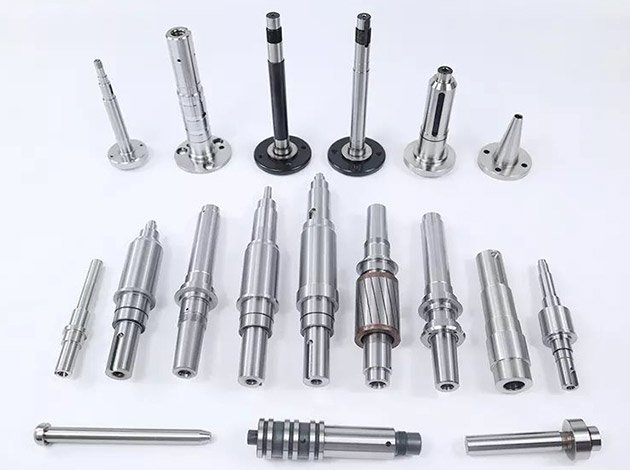
This is the position IndustryApex Technology occupies. As a supply chain integrator and ODM solution provider, we operate a fully controlled precision manufacturing system anchored by ERP-driven traceability and over 30 years of accumulated process knowledge. Our technical capabilities span 3 to 5-axis CNC machining, sinker and wire EDM, precision cylindrical and surface grinding, and dedicated industrial ceramics processing cells. This integration removes the interface losses and finger-pointing that plague multi-vendor ceramic programs.
For global OEMs and Tier 1 suppliers, the ODM model translates into three measurable advantages. First, design-for-manufacture engagement at the concept stage, where our engineers convert functional requirements into manufacturable ceramic geometries, often substituting zirconia for hardened tool steel in wear-critical assemblies and unlocking 5x service life. Second, consolidated material certification, with each lot traceable from powder batch through final inspection in our ERP system. Third, capacity scalability: prototype runs of 10 pieces and production releases of 100,000 pieces flow through the same qualified process, eliminating requalification when programs ramp.
The ERP backbone deserves specific attention. Every operation, from raw powder receipt through diamond wheel dressing intervals to CMM inspection results, is logged against the work order. When a customer audit asks why a 2024 production lot achieved a Cpk of 1.67 on a critical bore diameter, we produce the spindle data, coolant temperature log, and operator certification within minutes. This is the data infrastructure that distinguishes a strategic ODM partner from a transactional job shop.
4. Industry Applications
Zirconia and alumina components produced by IndustryApex CNC serve a spectrum of demanding applications, each leveraging specific material attributes:
Aerospace Thermal and Wear Systems
Alumina insulators in turbine ignition systems, zirconia thermal barrier inserts, and ceramic bearing elements for high-altitude actuators all exploit the temperature stability and dielectric properties unavailable in superalloys. These components frequently integrate with our titanium structural assemblies for aerospace and aircraft structural programs, where mixed-material expertise reduces supplier count for airframe and propulsion OEMs.
Medical Devices and Surgical Instrumentation
Y-TZP zirconia is biocompatible, radiolucent, and resistant to autoclave sterilization cycles. We produce ceramic guide bushings, surgical scalpel inserts, and orthopedic trial components alongside our portfolio of ISO-certified medical components including titanium implants and precision device parts. ISO 13485 process discipline applies uniformly across material families.
Hydraulic and Fluid Control
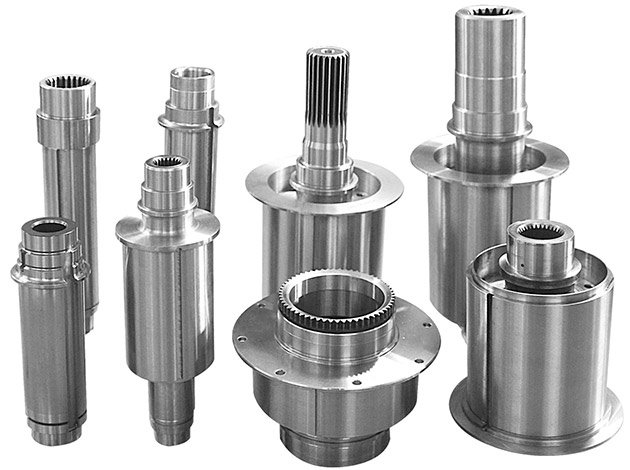
Ceramic spool-and-sleeve assemblies, valve seats, and pump plungers extend service life by an order of magnitude in abrasive or corrosive media. Our hydraulic pump and valve component capability increasingly specifies zirconia for high-pressure water hydraulics, sour-service oilfield pumps, and chemical metering systems where elastomeric seals and hardened steel fail prematurely.
Semiconductor and Optics
Wafer handling tooling, alumina insulators for plasma chambers, and zirconia chuck components require sub-micron flatness and ultra-low particulation. Our diamond grinding and lapping capability supports surface finishes below Ra 0.05 μm with full ionic cleanliness control.
Energy and Industrial Pumps
Mechanical seal faces, bearing sleeves, and metering pump pistons in zirconia or alumina deliver reliability in produced water, slurry, and high-temperature steam service. The material payback period in continuous-duty installations is typically under nine months.
5. Call to Action
Industrial ceramics reward engineering partners that combine deep material science with disciplined manufacturing execution. Selecting between zirconia and alumina, defining green-state versus hard-machined features, and structuring a supply chain that scales from prototype to series production are decisions best made with a partner who has done it thousands of times.
IndustryApex Technology and the IndustryApex CNC platform are ready to engage at any stage of your program, whether you are evaluating a ceramic substitution for a metal component, qualifying a new ODM source, or transferring a legacy ceramic part to a more capable supplier. Our engineers will review your drawings, advise on design-for-manufacture opportunities, and propose a process route that protects performance and program economics.
To begin a technical discussion or request a quotation on zirconia, alumina, or hybrid ceramic-metal assemblies, contact our application engineering team. We respond to OEM and Tier 1 inquiries within one business day with a preliminary feasibility assessment and indicative pricing.