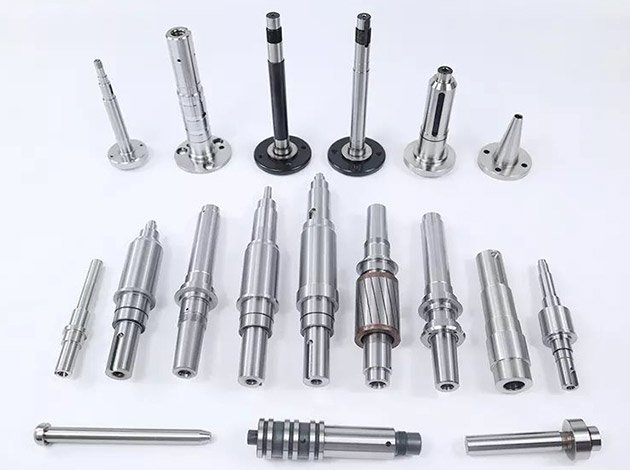
- Shaft
- Molds&Tools
- Hydraulics And Pump
- Hair transplant needle
- Hydraulics And Pump
- Precision CNC Shaft Machining Manufacturer for High Performance Applications
- Energy Industry CNC Machining Parts Supplier
- Aerospace CNC Machining Parts Manufacturer
- Aerospace CNC Machining Parts Manufacturer
- Automotive & EV CNC Machining Parts Supplier for OEM and Tier 1
- Medical CNC Machining Parts Supplier for Precision Medical Devices
Ruby and Sapphire Component Machining for Fluid Control Systems: Precision Engineering for Critical OEM Applications

Executive Summary
In precision-critical fluid control applications — from ultra-high-pressure hydraulic valves to pharmaceutical dosing systems — material selection at the component level is not a secondary consideration. It is the engineering decision that determines whether a system performs reliably under operational stress or fails at the worst possible moment. Ruby and sapphire, both crystalline forms of aluminum oxide (Al₂O₃), have emerged as the materials of choice for OEM engineers and Tier 1 suppliers specifying components for these environments.
At IndustryApex Technology (IndustryApex CNC), we bring over 30 years of precision manufacturing experience to the machining of ruby and sapphire components for fluid control systems. As a vertically integrated ODM solution provider with full ERP-controlled production, we serve global OEM and Tier 1 suppliers who cannot afford tolerance failures, material inconsistencies, or supply chain disruptions.
This article examines the engineering rationale behind ruby and sapphire selection for fluid control, the machining processes required to achieve micron-level tolerances in these hard ceramics, and how IndustryApex Technology’s supply chain integration model delivers a measurable competitive advantage for OEM sourcing teams.
Technical Deep Dive: Machining Ruby and Sapphire for Fluid Control
Why Ruby and Sapphire?
Ruby and sapphire are synthetic single-crystal aluminum oxide materials with a Mohs hardness of 9 — second only to diamond. This hardness, combined with their chemical inertness, thermal stability, and extremely low porosity, makes them uniquely qualified for fluid control environments where conventional metals and engineering polymers degrade or fail entirely.
Key material properties driving their specification in fluid control assemblies include:
- Hardness and Wear Resistance: With a Vickers hardness exceeding 2,000 HV, ruby and sapphire seats, balls, and orifice components resist erosion from abrasive process fluids and high-velocity flow — a primary failure mode that regularly compromises stainless steel and even tungsten carbide alternatives in long-duration service.
- Chemical Inertness: These crystalline oxides resist virtually all acids, alkalis, and organic solvents, making them indispensable in chemical dosing valves, semiconductor wet-process equipment, and pharmaceutical fluid paths where metallic ion leaching is unacceptable.
- Surface Finish Capability: Precision-ground ruby and sapphire sealing surfaces can achieve Ra values below 0.05 µm, enabling near-perfect fluid sealing without elastomeric elements that introduce contamination risk and finite service life.
- Dimensional Stability: With a coefficient of thermal expansion of approximately 5.8 × 10⁻⁶/°C, sapphire maintains dimensional integrity across wide temperature ranges — a critical property for cryogenic valve seats, high-temperature process control, and aerospace fuel system components.
The Machining Challenge
Despite their performance advantages, ruby and sapphire present significant machining challenges. Their extreme hardness renders conventional cutting tools ineffective. IndustryApex Technology employs a combination of diamond grinding, EDM for complex fixture and form work, and progressive lapping with diamond abrasive slurries to achieve the geometric tolerances and surface finishes demanded in precision fluid control assemblies.
Critical machining operations include:
- Core Drilling and Bore Machining: Orifice and nozzle bores in fluid control components require cylindricity tolerances within 0.002 mm and precise edge geometry to prevent turbulent flow or cavitation. Diamond-tipped core drills operating at controlled feed rates and coolant pressures are essential to prevent micro-cracking in the crystal lattice during material removal.
- Spherical Surface Grinding: Ruby and sapphire ball seats and check valve elements require sphericity tolerances of ±0.001 mm. Our 5-axis CNC grinding platforms enable continuous surface dressing and real-time dimensional verification to maintain process consistency across production batches.
- Lapping and Polishing: Final surface finish operations use progressively finer diamond lapping compounds to achieve optical-grade surfaces on sealing faces. This stage determines sealing performance under high differential pressures and dictates the leakage rate specifications achievable in final assembly.
Our industrial ceramics machining capability encompasses not only ruby and sapphire but the full spectrum of advanced ceramic materials. This cross-material expertise allows our engineering team to advise OEM customers on material substitution when performance requirements or cost targets require it — a value-add that distinguishes a true ODM partner from a commodity machining vendor.
The ODM & Supply Chain Advantage
Beyond Contract Machining: A Fully Integrated Manufacturing System
Specifying ruby and sapphire components from a conventional CNC job shop introduces supply chain risk that OEM procurement and quality teams frequently underestimate. These materials require specialized equipment, controlled process parameters, and inspection capabilities that most general machining operations simply lack. The consequence is inconsistent quality, extended lead times, and a supplier base that cannot scale with OEM production ramp-ups.
IndustryApex Technology operates as a supply chain integrator and ODM solution provider — a fundamentally different model from standard contract manufacturing. Our ERP-controlled manufacturing system connects design intake, raw material procurement, production scheduling, quality control, and delivery in a single managed workflow. For OEM customers sourcing ruby and sapphire fluid control components, this means:
- Single-source accountability: From raw crystal ingot procurement through finished component delivery, one partner owns the complete process. There are no sub-tier supplier gaps and no quality handoff failures between machining and inspection operations.
- ERP-driven traceability: Every component batch is traceable from material certificate through machining parameters to final inspection records — essential for aerospace, medical, and semiconductor customers with regulatory compliance and audit requirements.
- Scalable capacity: Over 30 years of manufacturing infrastructure investment means we absorb production volume changes without compromising lead times or quality consistency. OEM customers can ramp production with confidence rather than managing supplier capacity risk.
Technology Stack: Matching Process Capability to Material Demands
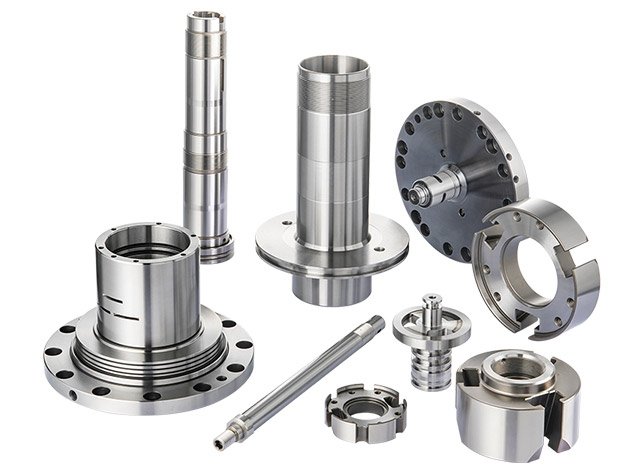
Our manufacturing capability for hard ceramic components is built on a fully vertically integrated technology stack. Three-axis and 5-axis CNC machining centers handle geometric shaping and bore operations. Precision grinding platforms — both surface and cylindrical configurations — perform dimensional finishing. EDM capability supports fixture manufacturing and complex form generation. Lapping and polishing systems complete the surface finish process.
This integrated capability means that a ruby orifice component for a hydraulic pump or valve assembly can progress through its entire production sequence within our controlled manufacturing environment. No outsourced operations, no process gaps, and no inter-facility logistics delays introducing dimensional risk through temperature or humidity exposure during transit.
For OEM engineering teams managing approved supplier lists, this consolidated capability simplifies qualification. A single audit covers the complete process chain rather than requiring separate qualification of machining, grinding, and inspection subcontractors — a significant reduction in qualification cost and time-to-production for new programs.
Industry Applications: Where Ruby and Sapphire Fluid Control Components Perform
Semiconductor and Electronics Manufacturing
Ultra-pure fluid delivery in semiconductor fabrication requires zero contamination and zero particle generation from wetted surfaces. Ruby and sapphire metering orifices, valve seats, and nozzle inserts satisfy both requirements. Their chemical inertness to HF, H₂SO₄, and NH₄OH process chemistries makes them the only viable material in many wet-etch and wafer cleaning tool fluid paths. Submicron surface finish and bore tolerances within 0.002 mm are standard specifications in this sector.
Aerospace Fluid Systems
Aircraft hydraulic systems and fuel control units operate under extreme pressure differentials and must perform across temperature ranges from −55°C to +135°C. Ruby and sapphire check valve seats and metering elements provide wear life that exceeds metallic alternatives by orders of magnitude under these combined stress conditions. For aerospace CNC machining programs where AS9100 traceability and material certification are mandatory, our ERP-controlled production provides the complete documentation chain that aerospace Tier 1 suppliers require for regulatory compliance.
Medical and Pharmaceutical Fluid Control
Implantable drug delivery systems, infusion pumps, and diagnostic analyzer fluid circuits specify ruby and sapphire components for their biocompatibility, sterilization resistance, and zero-leaching surface chemistry. The precision bore tolerances in these components — often controlling fluid flow rates measured in microliters per minute — demand the same machining rigor applied to ISO-certified medical CNC machining of metallic implants and surgical instruments. Our quality management framework extends consistently across both metallic and ceramic medical component production.
Industrial Process Control and Chemical Engineering
High-pressure liquid chromatography (HPLC) systems, precision flow meters, and chemical dosing valves rely on ruby ball seats and sapphire orifices that maintain calibrated flow characteristics across millions of operating cycles. The combination of hardness, chemical resistance, and surface finish consistency makes these components economically justified despite their higher unit cost — reduced maintenance intervals and extended service life deliver total cost of ownership advantages that procurement teams increasingly factor into sourcing decisions.
Energy and Downhole Applications
Measurement-while-drilling (MWD) tools and wellhead control systems face erosive drilling fluids and high-pressure differentials that destroy conventional valve materials within weeks. Ruby and sapphire wear components in these applications extend service intervals from weeks to months, significantly reducing costly well intervention operations. The material’s dimensional stability at elevated temperatures is equally critical in geothermal energy systems and high-temperature process plant fluid control.
Partner with IndustryApex Technology for Ruby and Sapphire Fluid Control Components
Engineering decisions around hard ceramic components in fluid control systems carry long-term consequences for system reliability, maintenance cost, and regulatory compliance. Selecting the right manufacturing partner — one with deep material expertise, integrated process control, and supply chain accountability — is as strategically important as the material specification itself.
IndustryApex Technology brings 30+ years of precision manufacturing experience, a fully ERP-integrated production system, and demonstrated capability in 3-5 axis CNC machining, EDM, precision grinding, and industrial ceramics to every ODM engagement. Whether you are developing a new fluid control assembly requiring ceramic component qualification or seeking an alternative supply chain source for an existing production program, our engineering team is equipped to support your requirements from design-for-manufacturability review through volume production delivery.
Contact our engineering team to discuss your ruby and sapphire component requirements, request process capability data and material certifications, or initiate a supplier qualification engagement. For a comprehensive view of our precision manufacturing capabilities across industries and materials, visit the IndustryApex CNC homepage.