- Shaft
- Molds&Tools
- Hydraulics And Pump
- Hair transplant needle
- Hydraulics And Pump
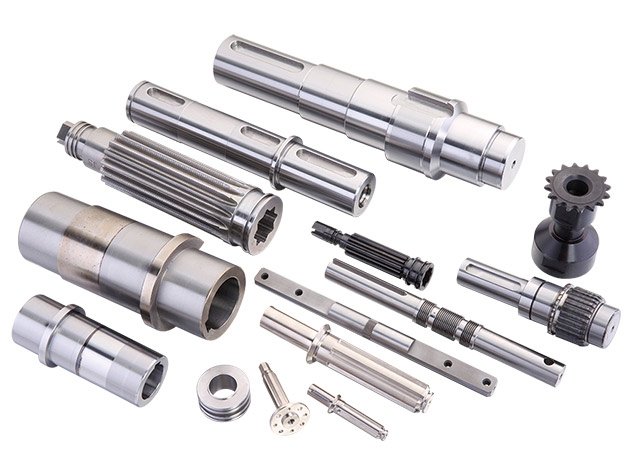
- Precision CNC Shaft Machining Manufacturer for High Performance Applications
- Energy Industry CNC Machining Parts Supplier
- Aerospace CNC Machining Parts Manufacturer
- Aerospace CNC Machining Parts Manufacturer
- Automotive & EV CNC Machining Parts Supplier for OEM and Tier 1
- Medical CNC Machining Parts Supplier for Precision Medical Devices

Precision CNC Machining for EV Motor Housings: Tight Tolerances Explained | IndustryApex Technology

Precision CNC Machining for EV Motor Housings: Tight Tolerances Explained
1. Executive Summary
The electrification of global mobility has fundamentally rewritten the specification sheet for powertrain components. Nowhere is this shift more evident than in the EV motor housing — a component that must simultaneously function as a structural enclosure, a thermal management vessel, an electromagnetic shielding boundary, and a precision bearing seat. Unlike the cast iron blocks of internal combustion engines, EV motor housings are typically machined from high-silicon aluminum alloys (A356-T6, ADC12, or AlSi10Mg) and demand geometric tolerances that were once reserved for aerospace and medical applications.
At IndustryApex Technology (IndustryApex CNC), we have observed a clear industry inflection: bore concentricity requirements on stator housings have tightened from ±25 µm in early-generation EVs to ±8 µm in current 800V platforms. Coaxiality between the front and rear bearing bores now routinely falls below 15 µm across housing lengths exceeding 250 mm. These are not marginal improvements — they are the tolerances that separate a motor humming at 18,000 RPM from one that fails NVH validation at 12,000 RPM.
This article dissects the metrology, fixturing, and process discipline required to produce EV motor housings at scale, and explains why leading Tier 1 suppliers are consolidating their machining supply base around vertically integrated ODM partners rather than transactional job shops.
2. Technical Deep Dive: The Tolerance Stack That Defines EV Performance
An EV motor housing is a deceptively simple-looking part. Strip away the cooling jackets and mounting flanges, and you are left with three critical functional zones: the stator bore, the front and rear bearing bores, and the mating flange interfaces. Each carries its own tolerance regime, and each interacts with the others through a stack-up that determines rotor balance, airgap uniformity, and ultimately, torque ripple.
2.1 Stator Bore: Roundness and Cylindricity
The stator laminations are press-fit or shrink-fit into the housing bore. For a permanent magnet synchronous motor (PMSM) operating at 400 Nm peak torque, the airgap between rotor and stator is typically 0.5 to 0.8 mm. A cylindricity error of just 20 µm in the stator bore translates directly into airgap variation, which produces measurable cogging torque and audible whine in the 500–2000 Hz range — exactly the frequency band the human ear finds most objectionable in a cabin otherwise devoid of engine noise.
Achieving cylindricity below 10 µm across a 200 mm bore requires finish boring on a rigid horizontal machining center with hydrostatic spindle bearings, active thermal compensation, and a boring bar dampened against chatter modes. Cutting parameters typically settle around 800 m/min surface speed with PCD inserts, 0.05 mm/rev feed, and coolant delivered through the spindle at 40 bar.
2.2 Bearing Bore Coaxiality
The rotor shaft is supported by bearings seated at each end of the housing. Any coaxiality error between these two bores forces the shaft into a bent condition when assembled, generating parasitic loads that shorten bearing life and increase electrical losses. Modern EV specifications call for coaxiality of Ø0.015 mm or tighter.
This is where 5-axis machining earns its keep. Single-setup machining of both bearing bores from opposing sides — using a certified reference datum and probing routines that measure the actual bore position before finish cutting — eliminates the fixture-induced error that plagued earlier three-setup workflows.
2.3 Flange Flatness and Surface Finish
The housing-to-endshield interface must maintain an oil-tight and, increasingly, a hermetic seal for oil-cooled hairpin motors. Flatness requirements of 0.02 mm across a 300 mm flange, with surface roughness Ra 0.8 µm or better, are now standard. Precision grinding or face milling with fly cutters running at 12,000 RPM delivers this consistently.
3. The ODM & Supply Chain Advantage
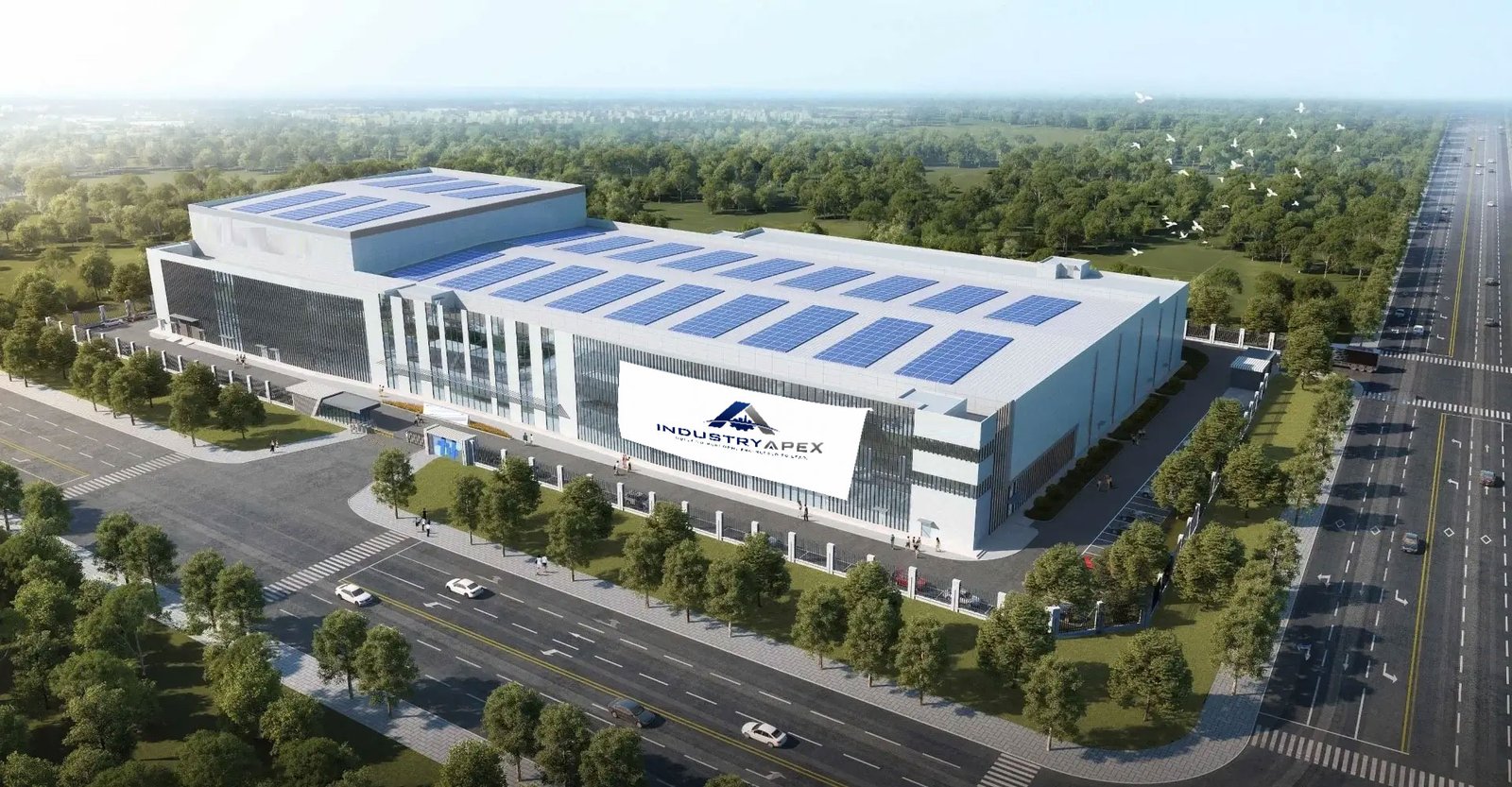
Machining a compliant part in the lab is one problem. Delivering 50,000 compliant parts per month, across 18 months, with zero PPAP deviations, is an entirely different problem. This is where IndustryApex Technology positions itself not as a machine shop, but as a supply chain integrator and ODM solution provider.
3.1 Thirty Years of Manufacturing Discipline
Over three decades of continuous precision manufacturing has produced something no capital investment can replicate: institutional process memory. Our ERP-driven production system tracks every part from raw casting inspection through final CMM verification, with SPC data feeding back into tool life models, cutting parameter libraries, and thermal compensation profiles. When a customer asks why our first-article rejection rate on EV housings sits below 0.3%, the answer is not a single machine or a single engineer — it is the accumulated calibration of a manufacturing system.
3.2 Full-Spectrum Technical Capability
An EV motor housing rarely finishes its journey on a single machine. Our internal capability stack includes:
- 3-axis and 5-axis CNC machining for primary geometry and complex cooling jackets
- EDM (wire and sinker) for feature detail on hardened inserts and mold tooling supporting the aluminum casting supply base
- Precision grinding for flange finishing and bearing seat sizing
- Industrial ceramics processing for wear-critical adjacent components such as bearing spacers and insulation rings
This vertical integration matters because the alternative — coordinating four external vendors across a single part number — introduces logistics variance that consumes any cost advantage within the first quality escape.
3.3 Built for Global OEM and Tier 1 Engagement
Our customer base is deliberately concentrated among global OEMs and Tier 1 suppliers in automotive, aerospace, medical, and industrial fluid control. This is a demanding audience, and it forces our organization to operate against APQP, PPAP, and IATF 16949 disciplines by default rather than by exception. The same measurement rigor we apply to titanium aerospace structural components flows directly into EV motor housing production.
4. Industry Applications: Where EV Housing Expertise Extends
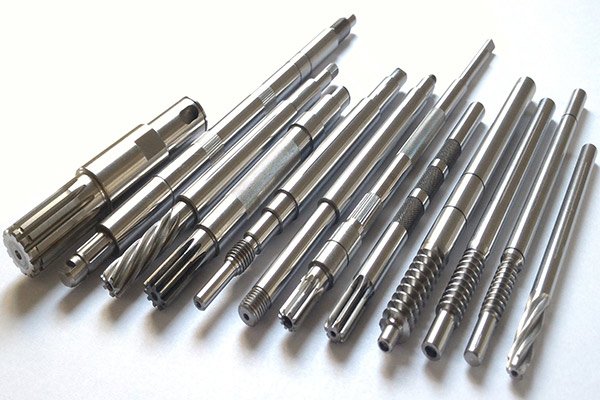
The metrology and process discipline required for EV motor housings is not siloed to automotive traction motors. The same capability envelope serves several parallel industries that our engineering teams support daily.
4.1 High-Speed Industrial Motors and Compressors
Industrial servo motors, refrigeration compressors, and turbomolecular pumps share the fundamental geometry problem of the EV housing: concentric bores, thin cooling walls, and hermetic sealing interfaces. Techniques refined for automotive volume production translate directly into these lower-volume, higher-mix industrial programs.
4.2 Hydraulic and Fluid Power Systems
The bore finishing and coaxiality methods developed for motor housings apply equally to valve bodies, cylinder heads, and pump housings. Our work on hydraulic pump components leverages the same fixturing, probing, and thermal compensation strategies used in EV production.
4.3 Medical Device Housings
Surgical robotics and imaging equipment increasingly rely on compact, high-torque servo motors whose housings demand cleanroom-compatible finishes and biocompatible material handling. Our ISO-certified medical machining operations apply the same tolerance regime as EV work, with additional protocols for material traceability and cleanliness validation.
4.4 Aerospace Actuation and eVTOL
The rise of electric vertical takeoff aircraft has created a new component category — high-power-density motor housings for aviation. These parts inherit the tolerance profile of automotive EV housings but add material certification and fatigue documentation requirements that only ITAR-aware, aerospace-experienced suppliers can support.
5. Partner With IndustryApex Technology
EV motor housing programs live or die on tolerance discipline, and tolerance discipline lives or dies on the manufacturing system behind it. Whether you are launching a next-generation 800V platform, qualifying a second-source Tier 1 supplier, or transitioning a prototype design into serial production, we can support the program from DFM review through PPAP submission and lifecycle production.
Our engineering team welcomes technical drawings, GD&T queries, and volume forecasts under NDA. To open a discussion with our EV powertrain machining group, please contact us here. We typically return a preliminary manufacturability assessment within three business days.