- Shaft
- Molds&Tools
- Hydraulics And Pump
- Hair transplant needle
- Hydraulics And Pump
- Precision CNC Shaft Machining Manufacturer for High Performance Applications
- Energy Industry CNC Machining Parts Supplier
- Aerospace CNC Machining Parts Manufacturer
- Aerospace CNC Machining Parts Manufacturer
- Automotive & EV CNC Machining Parts Supplier for OEM and Tier 1
- Medical CNC Machining Parts Supplier for Precision Medical Devices

Large-Scale Machining for Heavy Industry: Gantry Milling and Crankshaft Grinding in Global OEM Supply Chains

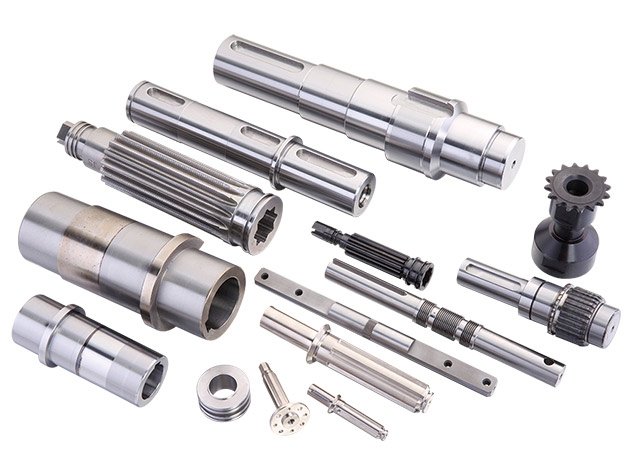
Large-Scale Machining for Heavy Industry: Gantry Milling and Crankshaft Grinding in Global OEM Supply Chains
Executive Summary
Large-scale machining sits at the center of heavy equipment, power transmission, marine, energy, and industrial automation manufacturing. Two processes dominate the conversation when parts become physically large, geometrically demanding, and unforgiving on tolerance: gantry milling and crankshaft grinding. Each process solves a different manufacturing problem. Gantry milling delivers structural accuracy, flatness, parallelism, and repeatable machining across oversized workpieces. Crankshaft grinding delivers the final journal geometry, surface integrity, and rotational precision required for dynamic assemblies that must survive cyclic load, heat, and vibration.
For OEMs and Tier 1 suppliers, the challenge is not only technical. It is also organizational. Large parts are expensive to move, slow to inspect, and costly to rework. A supplier that can integrate process planning, machining, metrology, quality control, and logistics under one controlled system reduces risk in the program launch phase and increases long-term supply stability. That is where IndustryApex Technology, operating as IndustryApex CNC, positions itself as a supply chain integrator and ODM solution provider. With more than 30 years of experience, ERP-driven production control, and capabilities spanning 3-5 axis CNC, EDM, precision grinding, and industrial ceramics, the model is built for complex industrial procurement rather than one-off job shop work.
For buyers in aerospace, hydraulics, medical, drivetrain, and structural equipment markets, the practical question is simple: can the supplier deliver dimensions, lead time, traceability, and process discipline at scale? This article breaks down the technical basis of gantry milling and crankshaft grinding, then connects those methods to supply chain execution and industry-specific applications.
Technical Deep Dive
Gantry milling is the backbone process for large structural parts and oversized machine components. A gantry mill uses a rigid bridge or portal structure spanning the work envelope, allowing the cutting head to travel over long axes while preserving stiffness. That stiffness matters because large parts amplify error. When a component is several meters long, small amounts of spindle deflection, thermal drift, or fixturing inconsistency can become functional failures in assembly.
The main strength of gantry milling is its ability to process large castings, welded structures, tool bases, machine frames, and complex plates in a single setup or limited setup count. Reduced repositioning improves relative accuracy between features. This is especially important for parts that must hold bore centerlines, datum surfaces, and mounting interfaces across a large envelope. Modern gantry systems are often paired with high-torque spindles, linear scales, automatic tool changers, probing, and temperature compensation to maintain consistency during long cycle times.
From a process engineering perspective, gantry milling is usually selected when the job requires removal of substantial stock, creation of precise reference planes, or finishing of large prismatic geometry. The process depends on careful toolpath strategy, secure fixturing, and controlled chip evacuation. On oversized parts, chip load becomes more than a tooling issue; it affects surface finish, heat buildup, and dimensional stability. A disciplined machining cell uses roughing, semi-finishing, and finishing passes to stabilize the part before final tolerance is achieved.
Crankshaft grinding solves a different class of problem. A crankshaft is not only large; it is dynamically loaded and rotationally critical. Its main journals and crank pins must maintain strict concentricity, roundness, cylindricity, and surface finish because these features directly affect bearing life, vibration behavior, and engine or drivetrain reliability. Grinding, rather than turning or milling, is the final process used to produce the needed geometry and finish on hardened or precision-critical journals.
In crankshaft production, the grinding machine must control both geometry and balance-related variation. Every journal surface must be blended into the shaft’s rotational behavior without introducing unacceptable waviness or burn. Abrasive selection, wheel dressing, coolant delivery, and in-process gauging all influence output quality. For large crankshafts, process capability is further complicated by flex, mass, and the need to maintain alignment over extended length. In practice, success depends on fixture design, center support, and a stable thermal environment.
These two processes are often complementary in the broader manufacturing chain. Gantry milling may create the large structural housings, machine beds, engine blocks, or support components that house rotating systems. Crankshaft grinding then finishes the precision rotating element that operates inside those systems. In heavy industry, the upstream and downstream parts of the build often need to be sourced together so tolerance stack-up can be managed early rather than discovered during final assembly.
Quality control is central to both processes. Large-scale machining cannot rely on end-of-line inspection alone. It requires in-process verification, coordinate measuring machine validation, laser alignment where needed, and process documentation that can survive customer audits. When an OEM qualifies a supplier for large machining, the key indicators are not just machine size or max travel. The indicators are repeatability, traceability, and the ability to hold feature relationships across batches.
The ODM & Supply Chain Advantage
IndustryApex Technology’s value proposition is not limited to cutting metal. Its core identity is as a supply chain integrator and ODM solution provider. That distinction matters because large-scale machining programs usually involve more than one process family, plus sourcing coordination for raw material, heat treatment, precision finishing, inspection, packaging, and export control. A supplier with ODM capability can shape the part specification, optimize manufacturability, and reduce the number of downstream handoffs required to bring a design into stable production.
The manufacturing edge is a fully controlled precision manufacturing system supported by ERP and more than 30 years of experience. ERP is not a back-office detail; it is the mechanism that aligns material availability, machine loading, quality checkpoints, and delivery commitments. For large machining, where a single delay can affect an entire assembly line, that system-level control is a competitive advantage. It allows the factory to manage long-lead raw material, reserve critical machine capacity, and maintain visibility across multi-step jobs.
Technical capability also matters because large parts rarely fit a single-process story. IndustryApex Technology’s portfolio includes 3-5 axis CNC machining, EDM, precision grinding, and industrial ceramics. That breadth supports hybrid manufacturing strategies. A part may require rough machining on a large gantry platform, EDM for internal detail or hardened features, and precision grinding for functional surfaces. For global OEM and Tier 1 suppliers, that reduces fragmentation across vendors and gives engineering teams a clearer line of accountability.
The practical supply chain benefit is lower program risk. When a supplier can coordinate design intent, machining route, inspection plan, and export packaging inside one production framework, engineering change management becomes simpler. Communication loss across multiple vendors is reduced. Lead times are easier to predict. Nonconforming parts are easier to trace back to the root cause. For industrial buyers, that level of control often matters more than headline machine size.
For organizations evaluating strategic sourcing for oversized components, the right question is whether the supplier can support both volume continuity and engineering change velocity. Global OEMs need stable repeatability. Tier 1 suppliers need disciplined handoff, documentation, and manufacturing resilience. A partner with deep process control and ODM capability can support both.
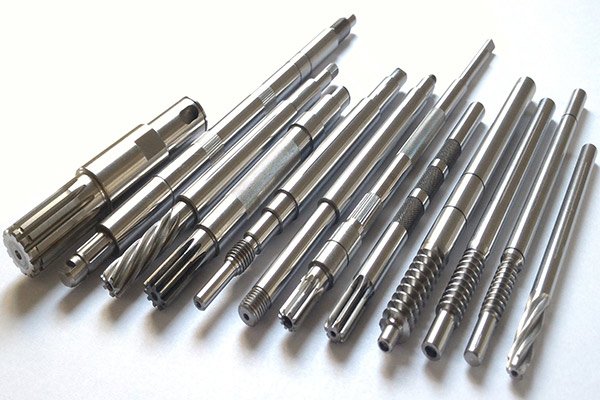
That is why the commercial model around large-scale machining should be judged as an integrated capability set rather than a single process quote. Gantry milling and crankshaft grinding are specific operations, but their real value appears when they are embedded in a controlled supply chain that can support prototype, pilot, and production demand without losing dimensional integrity or schedule discipline.
Industry Applications
Large-scale machining has direct relevance across several industrial sectors. In aerospace, large structural components, support frames, and precision subassemblies demand tight control of flatness, hole position, and datum integrity. Where needed, these programs connect naturally with aerospace parts machining, especially for titanium and structural applications that require high-process discipline.
In hydraulics and fluid power, oversized housings, manifolds, and rotary elements require reliable dimensional control to prevent leakage, wear, and instability under pressure. The same precision mindset applies to hydraulics and pump parts, where surface finish and bore accuracy are directly tied to efficiency and durability.
In medical manufacturing, the part size may be smaller than in heavy industry, but the control philosophy is similar. Highly regulated components demand traceability, process discipline, and precise finishing. That is why large machining organizations with strong quality systems often extend their methods to medical parts, where repeatability and documented control are essential.
Crankshaft grinding is especially relevant in drivetrain, engine, marine, energy, and off-highway machinery. These markets depend on rotating shafts, transmission components, and load-bearing assemblies that must survive long duty cycles. Here, large-scale machining supports both the structural housings and the rotating cores of the system. Gantry-milled frames, housings, and bearing supports work in tandem with ground crankshafts, journals, and other rotating members to create stable, efficient machinery.
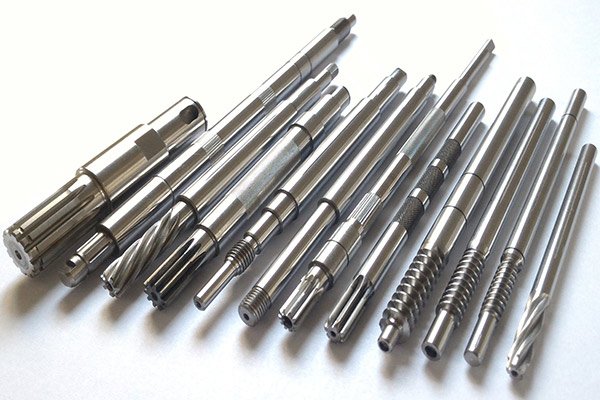
Heavy industry buyers should also consider the broader application of large machining to custom structural components. Machine beds, column structures, gearbox housings, and special frames all benefit from the same principles: rigid setup, thermal control, accurate metrology, and disciplined process planning. The supplier that understands those requirements can support multiple sectors without changing its core manufacturing logic.
Call to Action
For OEMs and Tier 1 suppliers sourcing large machined components, the decision should be based on more than machine envelope or unit price. Evaluate whether the supplier can engineer the process, control the supply chain, and preserve quality across complex, oversized parts. IndustryApex Technology, through IndustryApex CNC, is structured for that role as a manufacturing partner with ODM capability, ERP-controlled production, and a broad process portfolio built for precision industrial work.
To discuss project requirements, engineering drawings, or supply chain integration for large-scale machining programs, start with the IndustryApex CNC home page or contact the team directly for a technical review.