- Shaft
- Molds&Tools
- Hydraulics And Pump
- Hair transplant needle
- Hydraulics And Pump
- Precision CNC Shaft Machining Manufacturer for High Performance Applications
- Energy Industry CNC Machining Parts Supplier
- Aerospace CNC Machining Parts Manufacturer
- Aerospace CNC Machining Parts Manufacturer
- Automotive & EV CNC Machining Parts Supplier for OEM and Tier 1
- Medical CNC Machining Parts Supplier for Precision Medical Devices

Integrating 3D Printing with Traditional CNC for Rapid Prototyping: Engineering and Supply Chain Analysis

Integrating 3D Printing with Traditional CNC for Rapid Prototyping: Engineering and Supply Chain Analysis
For global OEMs and Tier 1 suppliers, rapid prototyping is no longer only about making a part quickly. It is about validating manufacturability, reducing engineering risk, compressing sourcing cycles, and building a reliable bridge from prototype to production. At IndustryApex Technology, operating as IndustryApex CNC, we view the integration of additive manufacturing and traditional CNC machining as a strategic manufacturing model rather than a simple process combination.
1. Executive Summary
3D printing and CNC machining are often positioned as competing technologies. In practical industrial engineering, however, they are most powerful when used together. Additive manufacturing enables design freedom, fast geometry iteration, lightweight structures, internal channels, and low-volume build flexibility. CNC machining delivers dimensional accuracy, surface integrity, material consistency, repeatability, and production-grade tolerances. When integrated correctly, the hybrid workflow shortens prototype lead times while preserving the engineering confidence required for critical components.
For B2B buyers, the value is not simply a faster prototype. The value is faster decision-making. A hybrid additive-CNC strategy can support early design reviews, functional testing, pilot production, supplier qualification, and cost-down analysis. It enables engineering teams to test complex concepts without immediately committing to expensive tooling, while still allowing critical surfaces, threaded interfaces, sealing areas, bearing bores, and datum structures to be finished by CNC to production-relevant standards.
This matters especially in industries where prototype failure can delay entire programs: aerospace, medical devices, hydraulic systems, robotics, semiconductor equipment, automotive powertrain, and advanced industrial machinery. Procurement and engineering teams need more than a shop that can print or machine. They need a manufacturing partner that understands process selection, tolerance stack-up, material behavior, quality documentation, and supply chain continuity from prototype through low-volume and serial production.
IndustryApex Technology’s role as a supply chain integrator and ODM solution provider is built around this need. With a fully controlled precision manufacturing system, ERP-driven production management, over 30 years of manufacturing experience, and capabilities including 3-axis to 5-axis CNC machining, EDM, precision grinding, and industrial ceramics, we help global OEM and Tier 1 suppliers turn early concepts into validated components with a practical path to scale.
2. Technical Deep Dive
The hybrid prototype workflow starts with a clear engineering question: what must be validated? If the objective is ergonomic review, package fit, or visual confirmation, additive manufacturing may be sufficient. If the objective is pressure testing, fatigue performance, bearing alignment, thermal behavior, surgical interface validation, or aerospace bracket load testing, CNC machining usually becomes essential either as a finishing step or as the main process.
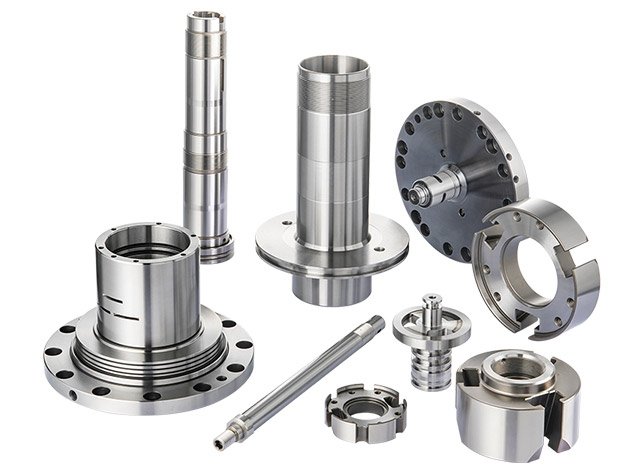
In a combined additive-CNC workflow, 3D printing can create a near-net-shape blank, complex internal feature, or early design iteration. CNC machining then refines functional features. This includes flatness-critical mounting surfaces, tight-tolerance bores, precision slots, sealing grooves, threads, tapers, bearing seats, datum references, and mating surfaces. This division of labor allows design teams to benefit from the geometric flexibility of additive manufacturing while avoiding the common limitations of printed parts, such as rough surface texture, anisotropic mechanical properties, dimensional variation, and inconsistent hole quality.
One of the most important engineering considerations is material compatibility. Metal additive processes such as DMLS, SLM, binder jetting, or directed energy deposition may produce parts in titanium, stainless steel, aluminum, Inconel, and tool steels. Polymer additive processes may use nylon, PEEK, PEI, ABS, photopolymer resins, or reinforced composites. However, a printed material is not automatically equivalent to wrought bar stock, forging, or cast material. Grain structure, porosity, heat treatment response, residual stress, and fatigue behavior must be reviewed before the part is used for serious functional validation.
CNC machining remains the benchmark for critical tolerance control. For example, an additively manufactured housing may be printed to evaluate internal flow paths, but pump interfaces, valve lands, shaft bores, and threaded ports often require CNC finishing. Similarly, a lightweight aerospace bracket may be printed to test topology optimization, but datum surfaces and bolt-hole patterns must be machined to ensure repeatable assembly. A medical prototype may be printed to validate anatomical form, while implant interfaces or surgical instrument features may require precision machining, polishing, and documented inspection.
Another technical factor is tolerance strategy. Hybrid manufacturing should not attempt to machine every surface. Instead, engineers should classify features into functional, reference, cosmetic, and non-critical zones. Functional and reference zones receive CNC machining allowances. Cosmetic and non-critical zones can remain as-printed if acceptable. This reduces cost and lead time while protecting performance. A common engineering mistake is to specify overly tight tolerances across an entire printed prototype. A better approach is to define datums, inspection priorities, and true functional requirements early in the design review.
Fixturing is also a key challenge. Printed shapes may lack the regular surfaces needed for stable clamping. The best hybrid designs include sacrificial tabs, machining bosses, reference pads, or temporary fixture features. These features can be removed later by CNC. This design-for-hybrid-manufacturing mindset reduces distortion, improves repeatability, and lowers inspection uncertainty.
Post-processing must be planned from the beginning. Heat treatment, stress relief, hot isostatic pressing, surface blasting, chemical finishing, anodizing, passivation, electropolishing, and coating can all affect dimensions. When a printed blank is machined after heat treatment, dimensional stability may improve. When machining occurs before final thermal or surface treatment, allowance must be reserved for final finishing. The correct sequence depends on material, geometry, performance requirements, and end-use environment.
In rapid prototyping, speed is valuable only when it does not create false confidence. A prototype that looks right but fails to represent production behavior can mislead engineering teams. The strongest hybrid programs define the prototype’s purpose: appearance model, assembly model, functional prototype, engineering validation unit, pre-production sample, or regulatory test article. Each category requires different process controls and documentation.
3. The ODM & Supply Chain Advantage
The business advantage of integrating 3D printing with CNC machining becomes clear when viewed from a supply chain perspective. Many suppliers can deliver one prototype. Fewer can support the transition from design iteration to manufacturable, repeatable, cost-controlled components. This is where IndustryApex Technology’s core identity as a supply chain integrator and ODM solution provider becomes important.
For OEMs and Tier 1 suppliers, prototype development often involves multiple vendors: one for 3D printing, one for CNC machining, one for heat treatment, one for surface finishing, one for inspection, and another for low-volume production. Each handoff creates risk. Drawings may be interpreted differently. Datum systems may not transfer correctly. Lead times may expand. Quality records may become fragmented. When a design changes, the entire chain must be realigned.
A fully integrated manufacturing partner reduces these risks by controlling the engineering workflow, manufacturing data, process routing, inspection planning, and supplier coordination. At IndustryApex Technology, our fully controlled precision manufacturing system is supported by ERP-based production management and more than 30 years of practical manufacturing experience. This allows us to coordinate material procurement, machining operations, EDM, precision grinding, ceramic processing, subcontracted special processes, inspection, packaging, and delivery with traceable control.
Our manufacturing edge is especially relevant for prototype-to-production programs. During early prototyping, we can help assess whether a printed geometry should remain additive, be redesigned for CNC, be converted to casting plus machining, or be optimized for a hybrid route. This prevents the common problem of developing a prototype that cannot be economically manufactured later. For global OEMs, this early manufacturability feedback can prevent expensive redesigns after validation testing.
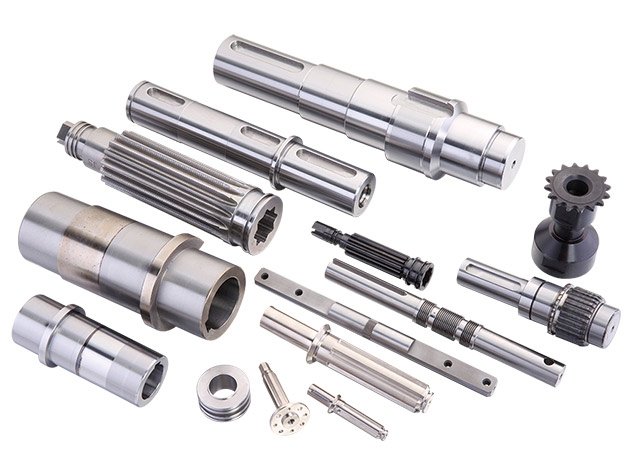
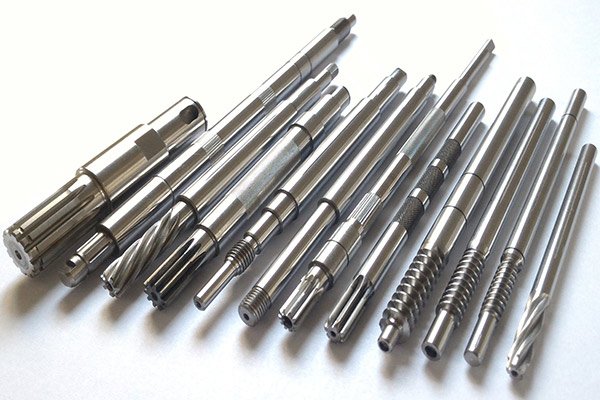
IndustryApex Technology supports 3-axis, 4-axis, and 5-axis CNC machining for complex surfaces, multi-face components, and tight positional relationships. EDM capabilities support hard materials, sharp internal features, precision cavities, and difficult conductive materials. Precision grinding provides high accuracy for shafts, valve components, sealing surfaces, mold inserts, and wear-resistant parts. Industrial ceramics capabilities support applications where insulation, wear resistance, corrosion resistance, or thermal stability are required. These capabilities allow us to support not only metal prototypes but also advanced engineering components with demanding material requirements.
From a supply chain standpoint, the hybrid manufacturing model improves both responsiveness and resilience. Additive manufacturing can reduce dependence on early tooling and allow multiple design options to be evaluated in parallel. CNC machining can then be used to establish production-critical dimensions and provide a path toward scalable manufacturing. The result is a faster learning cycle with stronger control over quality and cost.
For procurement teams, the benefit is supplier consolidation without losing technical depth. Instead of managing separate prototype, machining, finishing, and inspection suppliers, buyers can work with one engineering-led partner that understands the full lifecycle. This is particularly valuable for international programs where communication time zones, export documentation, drawing revisions, and quality expectations must be managed carefully.
As an ODM solution provider, IndustryApex Technology can also assist with design optimization, process planning, material alternatives, tolerance rationalization, and cost reduction. The goal is not simply to produce a drawing exactly as received. The goal is to help customers achieve the intended function through the most reliable and economical manufacturing route. This engineering collaboration is often the difference between a fast prototype and a successful product launch.
4. Industry Applications
The hybrid additive-CNC approach is applicable across many high-value industries, but the engineering priorities vary by sector.
Aerospace and Defense
Aerospace programs often pursue weight reduction, complex brackets, fluid manifolds, UAV structures, turbine-adjacent components, and optimized support hardware. Additive manufacturing is excellent for topology optimization and internal channel concepts. CNC machining is essential for precision interfaces, assembly datums, hole quality, and certification-oriented inspection. IndustryApex Technology supports customers requiring aerospace CNC machining, titanium aircraft parts, 5-axis aerospace parts, and aircraft structural components, where prototype accuracy must align with demanding performance expectations.
Medical Devices and Surgical Instruments
Medical applications benefit from additive manufacturing when anatomical shapes, porous structures, and custom-fit geometries are required. However, surgical interfaces, implant tapers, instrument jaws, threaded connections, and sealing features require precision machining and controlled surface finishing. For regulated medical device development, prototypes must be traceable, repeatable, and representative enough for engineering evaluation. Our experience with ISO-certified CNC machining for medical components, including titanium implants, surgical instruments, and high-precision device parts, helps customers move from early concepts to validated medical hardware with greater confidence.
Hydraulics, Pumps, and Fluid Control
Hydraulic and pump components demand tight clearances, excellent surface finish, and stable material performance. Additive manufacturing can help evaluate complex flow channels, integrated manifolds, and compact housing layouts. CNC machining, grinding, and honing remain critical for valve bores, spool interfaces, sealing lands, bearing seats, and threaded ports. IndustryApex Technology provides precision support for hydraulic pump parts, where functional validation depends on leakage control, pressure resistance, concentricity, and wear behavior.
Robotics and Industrial Automation
Robotics companies often need fast iterations of end-effectors, lightweight arms, sensor brackets, grippers, and actuator housings. Additive manufacturing enables rapid ergonomic and geometric experimentation. CNC machining ensures accurate mounting, repeatable alignment, and durable mechanical interfaces. The hybrid route is especially effective when teams are refining designs during pilot builds or customer-specific automation projects.
Semiconductor and Precision Equipment
Semiconductor and precision equipment components often involve high cleanliness, dimensional stability, thermal control, and specialized materials. Additive manufacturing may support early thermal channel concepts or lightweight fixtures, while CNC machining, EDM, grinding, and ceramics processing ensure precision and process compatibility. Hybrid prototyping is useful for chambers, handling fixtures, inspection tooling, ceramic supports, and precision alignment components.
Automotive, Drivetrain, and Performance Engineering
Automotive and drivetrain teams use rapid prototyping to validate housings, brackets, intake components, cooling structures, transmission elements, and test fixtures. Additive manufacturing accelerates iteration, while CNC machining provides final geometry for test rigs, sealing interfaces, shaft alignments, and assembly validation. This reduces development time while preserving confidence in test results.
Across these industries, the most successful hybrid programs share one characteristic: they define the production intent early. Even when a prototype is printed, engineers should know whether future production will use additive manufacturing, CNC machining, casting, forging, molding, or a hybrid process. This helps prevent design lock-in around a method that may not scale economically.
5. Call to Action
Integrating 3D printing with traditional CNC machining is not just a rapid prototyping tactic. It is a strategic engineering and supply chain model that helps OEMs and Tier 1 suppliers reduce development risk, validate complex designs, and create a realistic bridge to production. The right partner should understand both the flexibility of additive manufacturing and the discipline of precision CNC machining.
IndustryApex Technology, operating as IndustryApex CNC, provides that bridge through controlled manufacturing systems, ERP-driven management, advanced machining capabilities, EDM, precision grinding, industrial ceramics, and decades of production experience. Whether your team is developing aerospace structures, medical components, hydraulic systems, automation hardware, or high-precision industrial parts, we can help evaluate the best route from prototype to scalable supply.
If you are planning a new prototype program or need to improve the manufacturability of an existing design, contact our engineering team today. Visit our Contact Us page to discuss drawings, materials, tolerances, lead time requirements, and supply chain objectives. IndustryApex Technology is ready to support your next-generation product development with practical engineering insight and precision manufacturing execution.