- Shaft
- Molds&Tools
- Hydraulics And Pump
- Hair transplant needle
- Hydraulics And Pump
- Precision CNC Shaft Machining Manufacturer for High Performance Applications
- Energy Industry CNC Machining Parts Supplier
- Aerospace CNC Machining Parts Manufacturer
- Aerospace CNC Machining Parts Manufacturer
- Automotive & EV CNC Machining Parts Supplier for OEM and Tier 1
- Medical CNC Machining Parts Supplier for Precision Medical Devices

How ODM Solution Providers Are Transforming Medical Device Manufacturing

How ODM Solution Providers Are Transforming Medical Device Manufacturing
1. Executive Summary
Medical device manufacturing is under sustained pressure from shorter product cycles, stricter regulatory expectations, higher traceability demands, and constant cost control. In that environment, ODM solution providers are becoming more than design partners. They are now operational integrators that connect engineering, process capability, quality systems, and supply chain execution into one coordinated manufacturing model.
For OEMs and Tier 1 suppliers, this shift matters because the traditional fragmented approach to sourcing and production creates delays, rework, and quality drift. An ODM partner with deep precision manufacturing capability can reduce those risks by aligning design intent with manufacturability from the start, then sustaining that alignment through controlled production, inspection, and logistics.
IndustryApex Technology, through IndustryApex CNC, fits this model as a supply chain integrator and ODM solution provider for global industrial customers. With a fully controlled precision manufacturing system, ERP-driven coordination, more than 30 years of experience, and capabilities spanning 3-axis to 5-axis CNC machining, EDM, precision grinding, and industrial ceramics, the company is positioned to support demanding medical device programs where consistency and compliance are non-negotiable. For organizations seeking precision medical manufacturing, the technical foundation is similar to what is required across [medical components](https://cnccomponents.industryapex.com/iso-certified-cnc-machining-for-medical-components-including-titanium-implants-surgical-instruments-and-high-precision-device-parts/) and adjacent high-reliability sectors such as [aerospace parts](https://cnccomponents.industryapex.com/aerospace-cnc-machining-titanium-aircraft-parts-5-axis-aerospace-parts-aircraft-structural-components/).
2. Technical Deep Dive
ODM in medical device manufacturing is not just outsourcing design or production. The real value appears when the provider can translate a clinical or functional requirement into a repeatable industrial process. That requires capability at several levels: geometry, materials, tolerances, process control, and documentation.
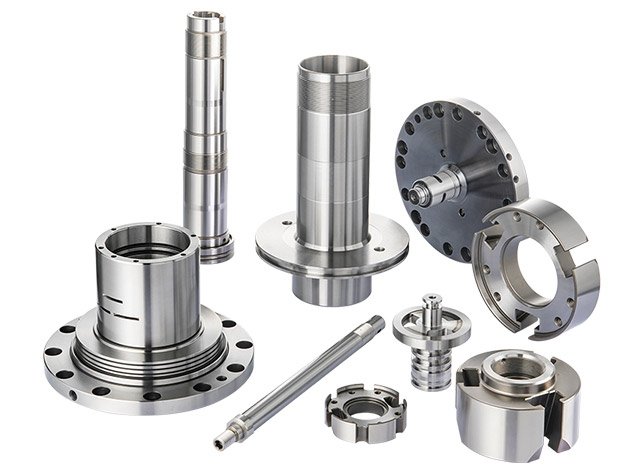
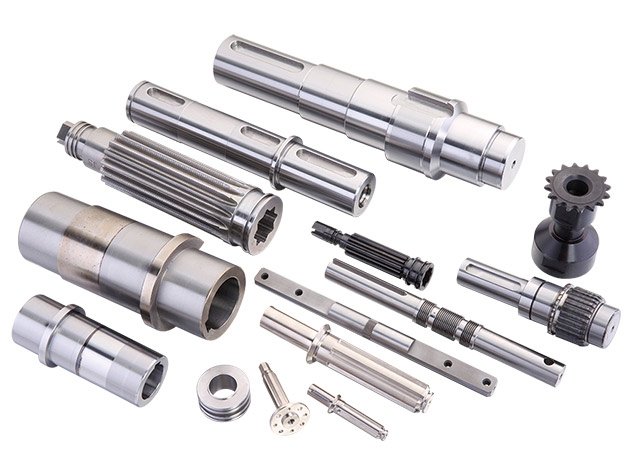
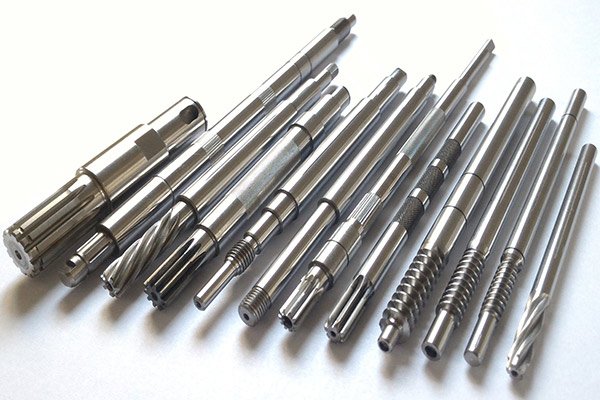
At the geometry level, many medical components contain thin walls, fine bores, complex freeform surfaces, micro-features, and interfaces that must mate with sterile, high-precision assemblies. 3-axis machining can handle many structural parts, but more complex components often require 4-axis or 5-axis CNC machining to reduce setups, improve datum control, and avoid cumulative error. Where features are too small, hard, or delicate for standard cutting, EDM becomes essential. Precision grinding supports surface finish, concentricity, and tight dimensional control for shafts, sleeves, guide features, and mating interfaces. Industrial ceramics add another layer of performance for wear resistance, thermal stability, and electrical insulation in specialized assemblies.
Material selection is equally important. Medical programs often use stainless steels, titanium alloys, cobalt-chrome, and high-performance polymers, each of which introduces different machining and verification challenges. Titanium, for example, is demanding on tools and process stability because of heat concentration and elastic recovery. That is why the manufacturing system matters as much as the machine itself. A controlled process chain reduces variability in tool wear, coolant management, fixturing, and in-process inspection. In medical production, variability is a quality risk, not just a cost issue.
Documentation and traceability close the loop. Medical device supply chains increasingly expect lot-level control, process records, inspection evidence, and change management discipline. A mature ODM partner should be able to connect engineering revision control with procurement, production scheduling, and quality release. That is where ERP integration becomes operationally important. When the manufacturing system is fully controlled, the customer is not only buying a part; it is buying a managed process with lower ambiguity and faster response to design changes.
The practical result is better manufacturability, lower launch risk, and a shorter path from prototype to stable production. This is especially relevant for high-precision parts where dimensional drift, burr formation, contamination risk, or poor surface integrity can affect both device function and regulatory confidence.
3. The ODM & Supply Chain Advantage
The strongest ODM providers are supply chain integrators first. That distinction matters. A supplier that only machines parts can deliver drawings. A supplier that integrates sourcing, process planning, machining, inspection, and delivery can deliver program stability.
For medical device manufacturing, the advantage shows up in four areas. First, schedule reliability improves because engineering, material planning, and production are coordinated inside one system. Second, quality becomes more consistent because process ownership is centralized and feedback loops are shorter. Third, cost control improves because a fully controlled manufacturing model reduces waste, duplicate handling, and late-stage correction. Fourth, scaling is easier because the same quality framework can support prototype, pilot, and volume production without rebuilding the supply chain from scratch.
IndustryApex Technology’s core identity as a supply chain integrator and ODM solution provider is relevant to global OEM and Tier 1 suppliers that need more than job-shop execution. With over 30 years of experience and ERP-supported management, the company can align procurement and manufacturing decisions with customer requirements instead of treating them as separate steps. That is important for programs where materials, tolerances, and delivery windows are tightly coupled.
The manufacturing edge also comes from breadth of process capability. 3-5 axis CNC machining supports complex medical geometries. EDM enables difficult internal features and hard materials. Precision grinding delivers the finish and geometry control required for mating surfaces and instrument components. Industrial ceramics extend the range into specialized applications where durability and stability matter. This stack is valuable because medical device programs often combine multiple part families, each with different technical constraints, but the same quality expectations.
For procurement teams, this model reduces vendor sprawl. For engineering teams, it reduces the gap between design intent and production reality. For quality teams, it simplifies root-cause analysis because the process chain is more visible. And for supply chain leaders, it improves resilience because the provider is managing both capacity and process discipline, not just reacting to purchase orders.
The same operating logic supports other high-reliability sectors, including [hydraulics & pump](https://cnccomponents.industryapex.com/hydraulic-pump-parts/) components where precision, wear resistance, and controlled production are also critical. That cross-sector discipline strengthens medical manufacturing because it reflects a system built for repeatability, not one-off work.
4. Industry Applications
ODM-enabled manufacturing is changing how medical device programs are structured across multiple application areas.
In surgical instruments, the demand is for tight dimensional control, reliable surface finish, and consistent handling performance. Instruments must withstand repeated use, sterilization, and mechanical stress without losing accuracy or integrity. ODM partners with precision machining and grinding capability can support this by holding critical interfaces and controlling finishing operations more tightly than a fragmented supply chain.
In implantable and patient-contact components, material selection and cleanliness become even more important. Titanium implants, fixation components, and high-precision device parts require not only accuracy but also process discipline that supports traceability and quality assurance. An ODM partner with experience in controlled precision manufacturing can help turn those requirements into a stable production workflow.
In diagnostic and monitoring devices, housings, brackets, sensor mounts, connector interfaces, and internal alignment features often seem simple but still require exact fit and repeatability. Small deviations can affect calibration, sealing, or serviceability. Here, ODM support helps OEMs compress development timelines while maintaining the consistency needed for regulated markets.
In fluid-management and therapeutic systems, medical-grade components may share technical characteristics with industrial [fluid control](https://cnccomponents.industryapex.com/) applications: precise bores, sealing surfaces, valve interfaces, and wear-sensitive features. The lessons from adjacent precision industries transfer directly into medical production, especially where controlled flow and mechanical reliability are essential.
Finally, ODM partners are increasingly valuable in the early design phase. Medical device companies often need help selecting materials, simplifying manufacturing paths, and reducing part count before a product reaches validation. A provider that understands machining limits, inspection constraints, and supply chain dependencies can help avoid design decisions that are expensive to correct later.
For organizations evaluating a long-term manufacturing partner, the decision should center on whether the provider can manage complexity without losing control. That is the practical promise of ODM in medical device manufacturing: less fragmentation, more accountability, and a stronger bridge between engineering and delivery. To discuss a program or request a manufacturing review, start with [Contact Us](https://cnccomponents.industryapex.com/contact-us/).
5. Call to Action
Medical device manufacturing is moving toward tighter integration between design, process engineering, and supply chain management. ODM solution providers are leading that transition by making precision manufacturing more controlled, more scalable, and more responsive to customer needs.
For OEMs and Tier 1 suppliers that need a partner capable of handling complex geometries, regulated expectations, and repeatable output, IndustryApex Technology offers the combination of ODM integration, ERP-based control, and advanced machining capability required for modern medical production. To learn more about our manufacturing capabilities and broader precision component support, visit the [IndustryApex CNC home page](https://cnccomponents.industryapex.com/).