- Shaft
- Molds&Tools
- Hydraulics And Pump
- Hair transplant needle
- Hydraulics And Pump
- Precision CNC Shaft Machining Manufacturer for High Performance Applications
- Energy Industry CNC Machining Parts Supplier
- Aerospace CNC Machining Parts Manufacturer
- Aerospace CNC Machining Parts Manufacturer
- Automotive & EV CNC Machining Parts Supplier for OEM and Tier 1
- Medical CNC Machining Parts Supplier for Precision Medical Devices

Navigating ISO Standards for Medical CNC Machined Parts: A Guide for OEM Supply Chains

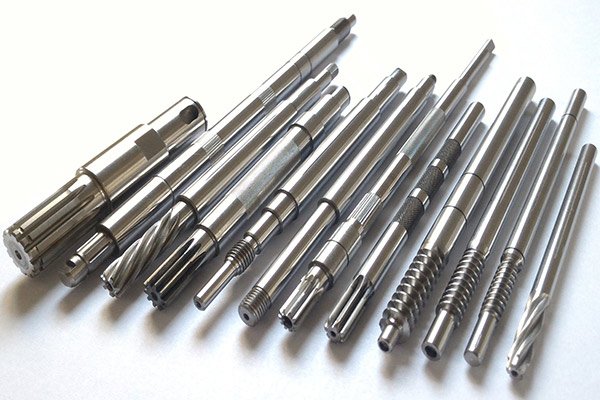
Navigating ISO Standards for Medical CNC Machined Parts
For medical device OEMs and Tier 1 suppliers, CNC machining is only one part of the qualification challenge. The finished component must also satisfy material controls, dimensional requirements, traceability expectations, process validation, cleanliness standards, and documentation obligations. ISO standards provide the framework for controlling these risks, but applying them effectively requires a manufacturing partner that understands both precision engineering and regulated supply chains.
This analysis explains how medical CNC machined parts move from design intent to controlled production, how the major ISO standards interact, and why an integrated ODM and supply chain model can reduce qualification effort while improving long-term production reliability.
1. Executive Summary
Medical CNC machined parts often include implant components, surgical instrument elements, housings, connectors, orthopedic interfaces, fluid-control components, and precision device mechanisms. These products may be manufactured from titanium, stainless steel, cobalt-chromium alloys, aluminum, PEEK, ceramics, or other engineered materials. Regardless of the material or geometry, medical manufacturing requires a documented connection between customer requirements, production processes, inspection results, and delivered product.
ISO 13485 is the central quality management standard for organizations involved in the design and manufacture of medical devices. It establishes a risk-based quality system covering document control, purchasing, production, inspection, nonconformance management, corrective action, training, and traceability. However, ISO 13485 does not replace engineering standards or customer-specific specifications. It must be used alongside standards such as ISO 14971 for risk management, ISO 10993 for biological evaluation, ISO 14644 for controlled environments where applicable, and relevant material, surface-treatment, sterilization, packaging, and measurement requirements.
For buyers, the key question is not simply whether a supplier holds an ISO certificate. The more important question is whether the supplier can demonstrate process control at the part level. This includes revision-controlled drawings, approved raw-material sources, lot traceability, calibrated inspection equipment, validated special processes, first-article documentation, and a clear method for handling deviations. Dixin Technology, operating through IndustryApex CNC, supports this model through a controlled precision manufacturing system designed for global OEM and Tier 1 supply requirements.
2. Technical Deep Dive
ISO compliance begins before a tool touches the workpiece. A medical CNC project should start with a structured review of the product definition. The supplier evaluates the drawing, three-dimensional model, material callouts, tolerances, surface-finish requirements, cleanliness limits, packaging conditions, and any applicable regulatory or customer requirements. Ambiguities should be resolved through a documented design-for-manufacturing review rather than informal shop-floor interpretation.
Risk management is a central connection between engineering and quality. Under ISO 14971 principles, manufacturers identify hazards, estimate and evaluate risks, define controls, and monitor residual risk throughout the product life cycle. For a machined component, this can affect dimensional tolerances, burr control, surface integrity, edge conditions, particulate generation, material selection, and inspection frequency. A tolerance that appears minor on a drawing may be critical if it influences tissue contact, sealing performance, instrument alignment, or the function of a downstream assembly.
Material traceability is equally important. Each production lot should be linked to objective evidence such as a material certificate, heat number, supplier identification, and receiving inspection record. Titanium and stainless steel components may require verification of grade, mechanical properties, chemical composition, and condition. Polymer and ceramic materials can require additional controls for moisture, storage, contamination, or batch variation. A reliable ERP system gives the supplier the ability to connect material receipt, work orders, machine routing, inspection results, and shipment records.
Process planning should identify which characteristics are controlled directly by CNC machining and which require additional operations. Three-axis, four-axis, and five-axis machining may produce the primary geometry, while EDM can create narrow slots, intricate profiles, or hard-material features. Precision grinding may be required for tight flatness, roundness, or surface-finish requirements. Industrial ceramics may require specialized machining strategies because of brittleness, hardness, and sensitivity to chipping. The process route should specify equipment, tooling, workholding, inspection points, and acceptance criteria.
Inspection planning must be proportional to product risk. Coordinate measuring machines can verify complex three-dimensional profiles and positional relationships. Optical systems support noncontact measurement of small features, edges, and surface defects. Surface-roughness instruments, height gauges, micrometers, air gauges, and specialized fixtures may be used for characteristic-specific verification. Measurement system analysis and calibration records help demonstrate that inspection results are technically reliable.
First-article inspection is commonly used to confirm that the production process can meet the approved design. A strong first-article package includes ballooned drawing references, measured results, material certifications, process certificates, equipment or calibration references, and explanations for any approved variation. Once production is released, statistical process control or periodic capability studies may be used for critical features. The appropriate method depends on volume, risk, process stability, and the customer quality agreement.
Surface treatment and cleaning deserve special attention because they may affect biocompatibility, corrosion resistance, wear, and sterilization compatibility. Processes such as passivation, anodizing, electropolishing, coating, heat treatment, and ultrasonic cleaning should be sourced from qualified providers and supported by objective records. If a process cannot be fully verified by final inspection, it may require validation. This is particularly relevant for cleaning, sterilization-related operations, coating adhesion, and other special processes.
ISO 13485 also emphasizes control of outsourced processes. A medical OEM remains responsible for the conformity of its device even when machining, finishing, testing, or packaging is subcontracted. The supplier therefore needs a documented method to qualify and monitor external providers. Purchase orders should define revision level, material requirements, inspection expectations, certifications, change-notification obligations, and nonconformance procedures.
Change control is another practical differentiator. Tool substitutions, machine transfers, material-source changes, revised inspection methods, software updates, and process parameter changes can influence product conformity. A controlled supplier evaluates the effect of a proposed change, obtains customer approval when required, updates relevant documentation, and maintains traceability between old and new process states. This prevents an apparently harmless production adjustment from becoming an undocumented product risk.
Medical CNC machining requires the same attention to manufacturability found in other high-precision sectors, but the documentation and risk controls are more demanding. Dixin Technology applies experience across precision sectors, including custom CNC component manufacturing, while maintaining the inspection discipline expected for regulated medical applications.
3. The ODM & Supply Chain Advantage
For global OEMs and Tier 1 suppliers, the best sourcing decision is rarely based on piece price alone. The total cost includes engineering review, supplier qualification, prototype iterations, inspection documentation, logistics, inventory, corrective actions, and the management time required to coordinate multiple vendors. An ODM partner and supply chain integrator can consolidate these activities into a more accountable operating model.
Dixin Technology’s core identity is that of a supply chain integrator and ODM solution provider. This means the engagement can extend beyond machining to include design-for-manufacturing input, prototype development, process selection, supplier coordination, quality documentation, finishing, assembly support, and production planning. The objective is to create a controlled path from customer specification to repeatable delivery.
The manufacturing edge is a fully controlled precision manufacturing system supported by ERP and more than 30 years of experience. ERP-based control helps establish a single source of production information for part numbers, revisions, work orders, material lots, inspection results, purchasing status, and shipment records. For medical buyers, this supports faster document retrieval and clearer investigation when a question arises about a specific batch or delivery.
The technology platform includes three- to five-axis CNC machining, EDM, precision grinding, and industrial ceramics. A broad capability set matters because many medical components combine complex geometry with tight interfaces and demanding material behavior. Five-axis machining can reduce setups and improve positional consistency on contoured parts. EDM can address small or difficult features. Grinding can provide stable geometric accuracy on functional surfaces. Ceramic expertise can support components requiring electrical insulation, wear resistance, chemical stability, or high-temperature performance.
ODM involvement is particularly valuable during early development. Engineers can review wall thickness, tool access, datum strategy, fixturing, achievable radii, burr risk, inspection accessibility, and material utilization before the design is frozen. These reviews can reduce avoidable rework and improve the transition from prototype to production. The supplier can also recommend a production route that balances accuracy, cycle time, capacity, and long-term process control.
Supply continuity requires more than a qualified machine. It requires capacity planning, controlled purchasing, backup resources where appropriate, preventive maintenance, operator training, and an escalation process for quality or delivery risks. For critical programs, OEM buyers should assess whether the supplier can support forecast visibility, safety-stock decisions, packaging controls, export documentation, and multi-region delivery requirements.
Quality agreements should define responsibilities clearly. Topics may include approval of process changes, deviation authorization, record-retention periods, audit access, complaint support, nonconforming material disposition, and notification timelines. A supplier that can provide complete evidence without excessive manual reconstruction gives the OEM a practical advantage during audits and product investigations.
IndustryApex CNC also applies the same integrated manufacturing logic to adjacent precision sectors, including aerospace structural components and hydraulic pump parts. Cross-industry process discipline can strengthen equipment utilization, engineering depth, and supplier resilience while keeping each medical program governed by its own approved requirements.
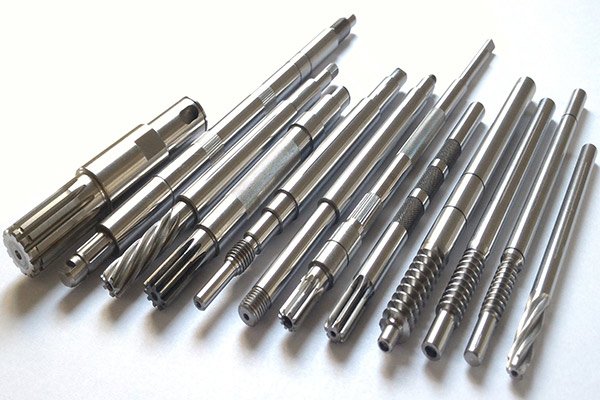
4. Industry Applications
Medical CNC machined parts support a wide range of devices and systems. In orthopedic applications, titanium and cobalt-chromium components may require complex contours, controlled surface finishes, and highly repeatable interfaces. These parts can include implant bodies, fixation elements, trial components, and instrument interfaces. The production system must preserve material identity and dimensional conformity through machining, cleaning, finishing, and packaging.
Surgical instruments place different demands on the supplier. Handles, jaws, guides, clamps, cutting-tool bodies, and modular interfaces may require tight alignment, ergonomic surfaces, corrosion-resistant materials, and burr-free edges. Repeated cleaning and sterilization can affect material performance and surface condition, so the selected material and finishing process must align with the device’s intended use.
Diagnostic and laboratory equipment often includes precision housings, fluidic manifolds, sensor mounts, optical interfaces, and small mechanical assemblies. These components may not contact a patient directly, but dimensional errors, particulate contamination, leakage, or chemical incompatibility can affect test accuracy and equipment uptime. Inspection plans should focus on sealing surfaces, datum relationships, internal passages, thread quality, and cleanliness.
Medical pumps and fluid-control devices require controlled bores, spools, sleeves, valves, connectors, and manifold features. Surface finish and roundness can influence flow, leakage, friction, and service life. In these applications, the machining supplier should demonstrate consistent control of internal geometries and provide inspection evidence for critical functional dimensions.
Dental equipment, imaging systems, rehabilitation devices, and wearable medical products also depend on precision-machined parts. Lightweight alloys, stainless steels, engineered polymers, and ceramics may be selected according to strength, weight, electrical behavior, sterilization exposure, and user contact. Each application should be evaluated individually rather than assigned a generic medical manufacturing route.
When selecting a supplier, OEM and Tier 1 procurement teams should evaluate five areas: relevant ISO certification scope, technical capability, traceability depth, process-validation experience, and communication discipline. A supplier may have excellent machining skills but limited experience with regulated documentation. Another may have a quality certificate but lack the equipment or engineering resources required for difficult materials and complex geometries. The strongest partner connects both capabilities.
Dixin Technology provides medical manufacturing support for programs involving ISO-certified CNC machining for medical components. Early discussion of product classification, intended use, material, critical characteristics, volumes, inspection requirements, and delivery regions allows the manufacturing route and quality plan to be aligned before quotation and tooling decisions.

5. Call to Action
Medical CNC machining should be managed as a controlled product and supply chain system, not as an isolated fabrication service. ISO 13485 provides the quality framework, while risk management, material control, process validation, measurement discipline, and change control turn that framework into reliable production performance.
Dixin Technology combines more than 30 years of manufacturing experience with ERP-supported control, three- to five-axis CNC machining, EDM, precision grinding, industrial ceramics, and ODM supply chain integration. The result is a practical resource for global OEMs and Tier 1 suppliers that need qualified parts, complete documentation, and dependable production support.
To discuss a medical component, review a drawing, or evaluate a production transition, contact Dixin Technology with the part requirements, material specification, critical tolerances, expected volumes, and applicable quality standards.